A glass bottle bought for a refill or deposit system has to be specified for reuse from the start: heavier walls and base, alkali-resistant glass, a finish that takes repeated capping, and decoration that survives the washer. A well-specified returnable bottle typically completes 20–40 trips, and a returnable 330ml beer bottle weighs 220–260g against 170–200g for the one-way version. Whether the model pays depends less on the bottle than on trip count, return rate and how far the empties travel back.
How a refillable bottle differs from a one-way bottle
Recycling melts the glass; refilling sends the same container round again, and that is a much harder duty. The extra weight goes into thicker walls and a heavier base, so the bottle can take dozens of knocks from conveyor rails, crate dividers and neighbouring bottles. Lightweighting methods used on one-way glass are generally unsuitable for a refill pool.
Annealing has to be done properly to relieve forming stress. Surface treatment counts for more than on single-use glass, because each scratch collected over 20 trips is a place where a crack can start: that means tin oxide at the hot end and a lubricity spray at the cold end. Every refill pool shows scuffing in a band around the shoulder where bottles touch, and the contact diameter and coating weight are engineered to keep it under control.
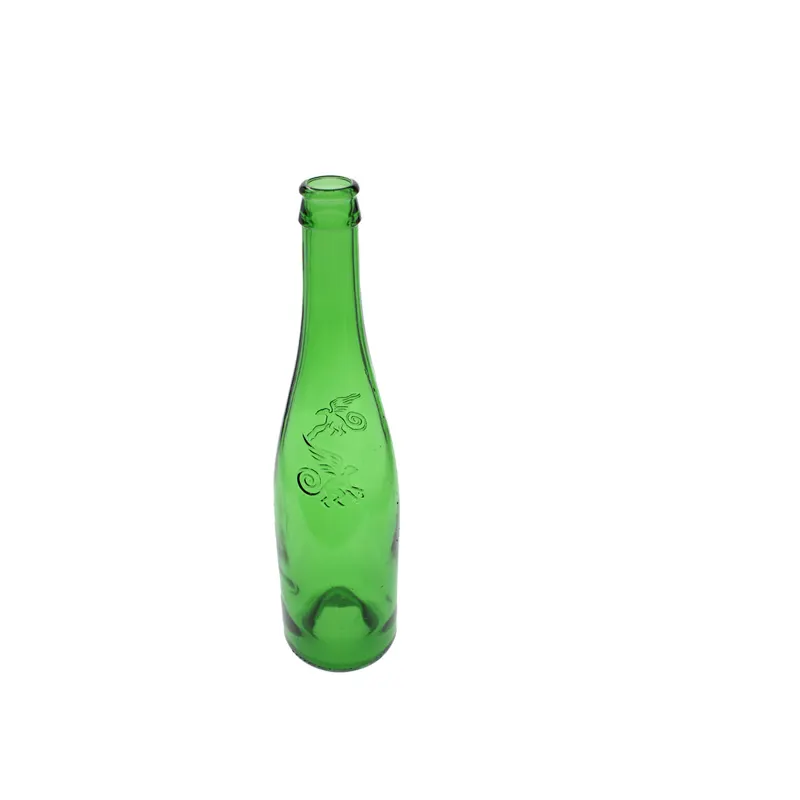
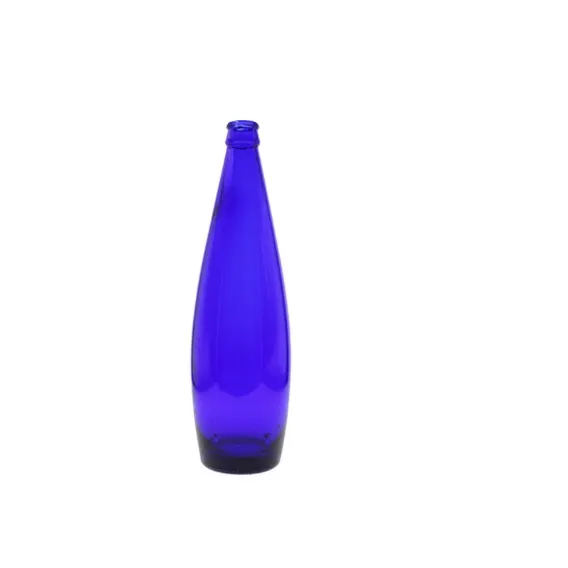
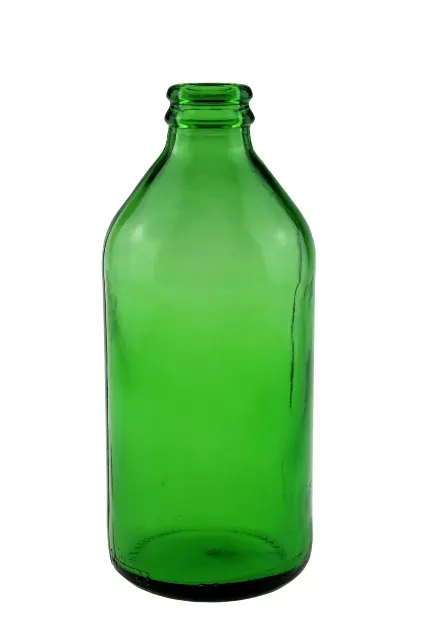
Shapes are kept conservative on purpose. A shared pool only functions if each member's bottle runs on every other member's washer and filler, so pools standardise on formats such as the euro-style 330ml and 500ml beer longneck, NRW and Steinie bottles, and 1-liter dairy and water bottles. A brand that wants its own silhouette inside a refill system should plan for a closed loop of its own.
Specifying for the bottle washer
The washer decides what the bottle must withstand. Returned bottles soak in 1.5–3% caustic soda (sodium hydroxide) at 70–85°C for 8–20 minutes, are rinsed, and then pass an empty bottle inspector whose cameras check finish, sidewall and base.
Alkali resistance
Repeated caustic immersion slowly attacks the glass surface. Poor glass hazes within a dozen cycles, leaving a milky band that drinkers take for dirt. Well-formulated, well-annealed soda-lime glass goes 40+ cycles with no visible corrosion. Ask for an alkali-resistance test result in writing.
Neck finish and closure
Bottles strike each other finish-to-finish on conveyors and in crates. Crown finishes on refillables are therefore rolled and fire-polished to resist chipping, and a chipped finish is rejected automatically because it could drop glass into the next fill. The main options are:
- Crown cork, 26mm. The refill standard for beer and soda. Crimping is gentle and the crown comes off without stressing the glass.
- ROPP aluminium cap. Usable, though the threads need closer inspection after each trip.
- Swing-top. The refill format consumers recognise for water and kombucha, with ceramic or plastic stoppers rated for repeated sealing. See our swing-top bottle range.
Decoration and labels
Embossed branding is uncommon in pools; decoration is either fired ceramic printing, known as ACL (applied color labeling), or a paper label built to come off in the wash. ACL lasts the service life of the bottle, which is why high-trip pools and dairy loops choose it even though it costs more per unit to apply.
Paper labels need caustic-soluble adhesive that lets go completely within the soak time. The stock should either disintegrate or come away in whole pieces the washer's filters can catch; labels that shred into pulp coat other bottles, block filters and stop the line. Keep the label away from the finish and the base, since a wraparound that reaches the sealing surface interferes with washing and recapping. Metallic inks and some organic coatings fail quickly. Have the decoration confirmed for refill washing and write the expected cycle count (20, 30, 50) into the purchase specification.
Sizing the pool and judging whether refill pays
Inspection removes damaged returns, and a well-run pool loses 1–3% of its bottles per cycle. On top of that, part of the stock is always in transit, in the washer or in someone's kitchen. Order 1.3–1.6 times the quantity one market cycle needs.
A refillable bottle costs more to buy than a one-way bottle and earns that back across its trips, so the result turns on trip count, return rate and the radius of the loop. On carbon, the heavier bottle starts behind: it typically breaks even with single-use glass within 3–5 trips, and at 25 trips it lowers per-fill carbon by 60–80%, depending on transport distance and washer efficiency. Run the cost side with your own numbers; the bottle price itself is quoted per project.
Distance is the sensitive variable. Hauling empties more than a few hundred kilometres wipes out the gain, and refill works best within roughly 100–300km of the filling plant. That favours craft breweries, dairies, spring water and soft drink brands with dense local distribution through retailers that accept returns. Exporters usually keep a refillable SKU for the home market and ship one-way bottles with high cullet content abroad.
For standard pool formats, look at beer bottles at wholesale; carbonated soft drink specifications are on the bulk soda bottle page, and the wholesale beverage bottle overview shows the wider range. A bottle that reaches the end of its life goes back to the furnace as cullet, as described under recycled glass bottles.
Deposit schemes and market access
Deposit return systems (DRS) are spreading quickly, and deposit schemes already operate across Europe, Latin America and parts of North America. Joining one involves bottle markings, barcode registration and deposit clearing through the system operator. Above all, the bottle format has to be one the scheme's reverse vending machines and counting equipment recognise.
For an exporter, scheme membership is a condition of entering the market, so check it before choosing a format. Dairy and juice come under stricter hygiene rules: refillable glass milk bottles circulate in closed dairy loops with tamper-evident caps, not in open public pools. Our export support desk can confirm what the destination market requires.
Frequently asked questions
How many trips does a refillable glass bottle make?
Usually 20–40, and some well-managed pools pass 50. Wall thickness, handling, washer chemistry and inspection rejects all affect the figure.
Can a refillable bottle carry our own branding?
Yes, through fired ceramic (ACL) print or wash-off paper labels made for caustic removal. Ordinary paper labels are not suitable.
Does a deposit scheme change what we can buy?
It can. The scheme's rules may set the bottle format and markings and require registration with the operator.
What is the minimum order for refillable-specification bottles?
It is quoted per project. The mould, the decoration method, the quantity and the production line the bottle runs on determine it.
Should an export brand use refillable bottles?
Seldom over long distances, because bringing empty glass home cancels the cost and environmental benefit. A regional loop is where the model works.