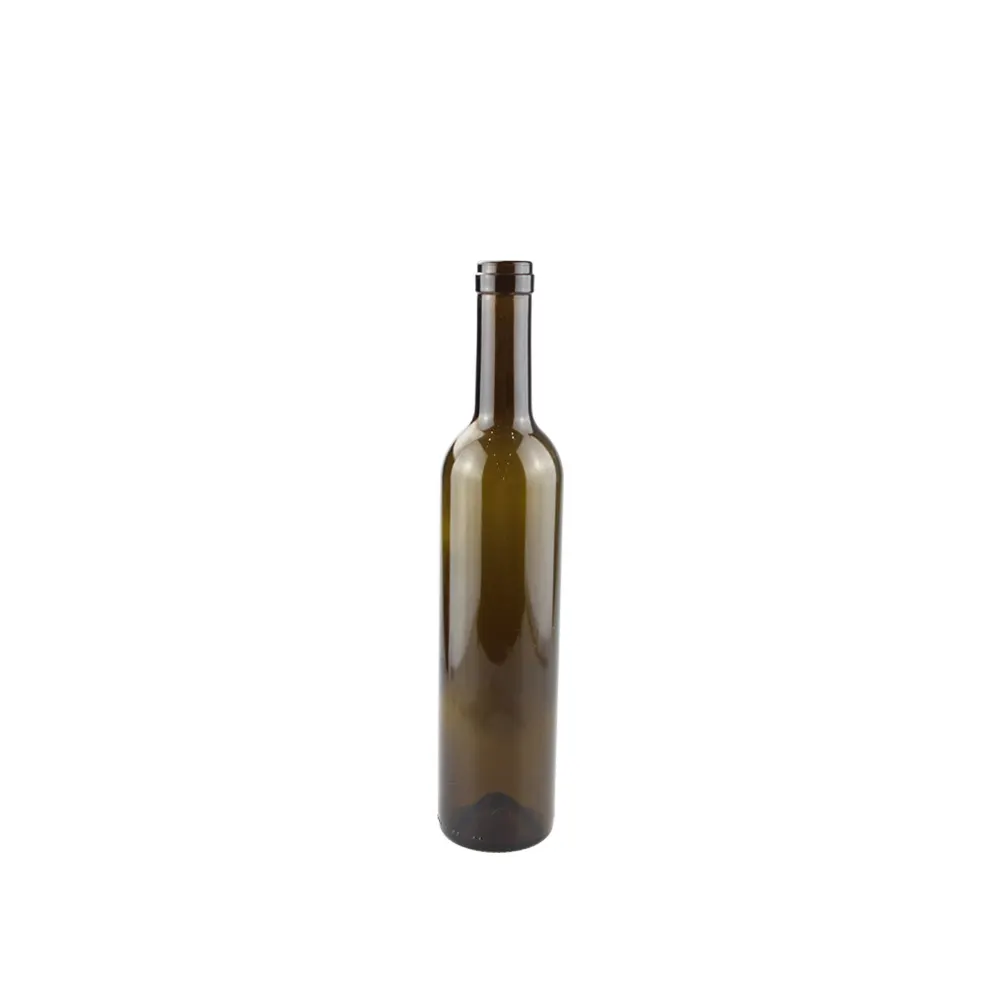
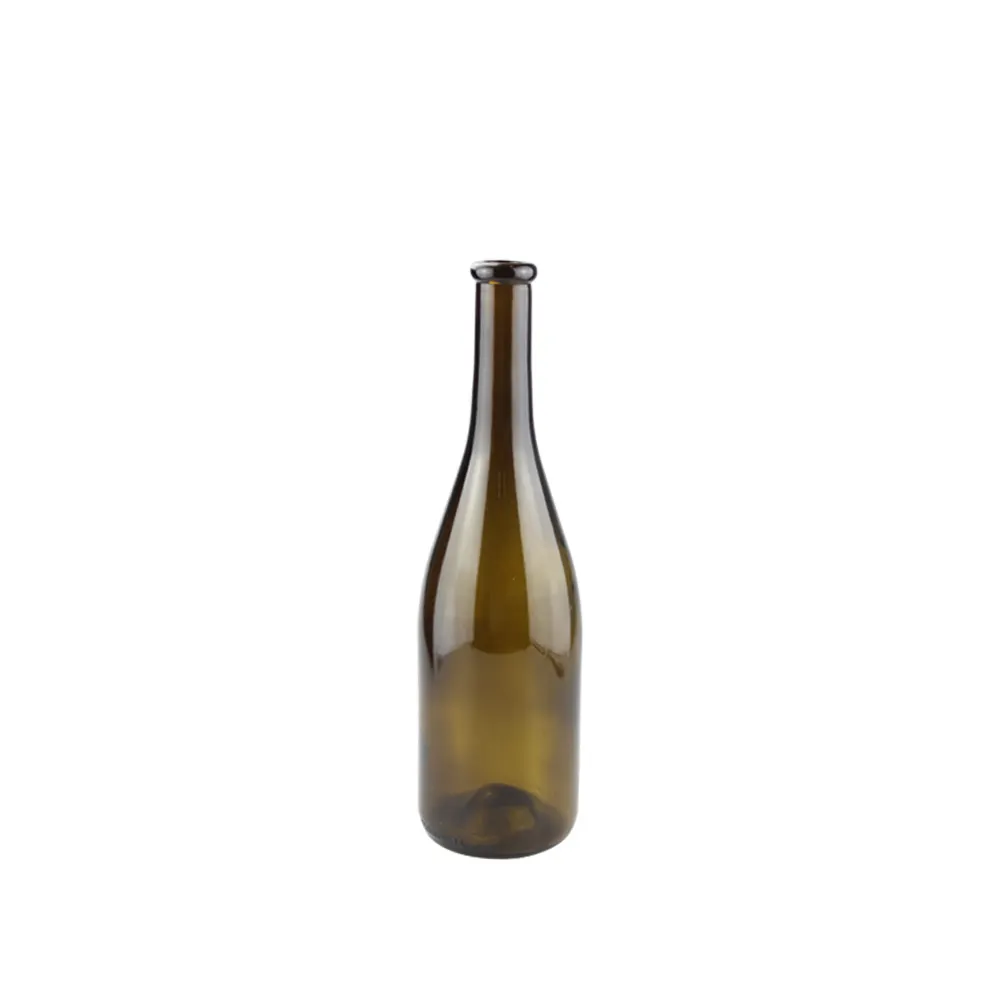
Part of our bulk wine bottles range; the stock moulds are pictured at the end of this guide.
Quick answer
How much does an empty 750 ml wine bottle weigh?
Most empty 750 ml wine bottles weigh 380–450 g, and a classic Bordeaux bottle is typically around 400–420 g. Lightweight bottles come in at 280–330 g, while reserve and luxury bottles run from 500 g up to 950 g. Each weight class is its own mould design, and a heavier bottle is not automatically stronger: strength comes from even wall thickness and good annealing.
| Class | Empty weight | Typical wine |
|---|---|---|
| Lightweight | 280–330 g | High-volume table wine, eco brands |
| Standard | 380–450 g | Mainstream premium |
| Heavy | 500–600 g | Reserve, estate bottlings |
| Ultra heavy | 650–950 g | Luxury, icon wines |
An empty 750ml wine bottle weighs anywhere from under 300g to over 900g, and the familiar "about 500 grams" covers barely a third of the market. Mainstream bottles sit at 380-450g, with a classic Bordeaux usually around 400-420g. Which weight you buy is a mould-level choice that sets unit cost, freight per bottle, carbon footprint and shelf presence, so it belongs in the first line of an RFQ.
Weight classes for a 750ml bottle
The market divides into four classes. Each one is a separate mould design with its own wall and base profile.
| Class | Empty weight | Wall and base | Usual wine segment |
|---|---|---|---|
| Lightweight | 280-330g | Narrow-weight distribution, thin base | High-volume table wine, eco brands |
| Standard | 380-450g | Conventional distribution | Mainstream premium |
| Heavy | 500-600g | Reinforced shoulder, deeper punt | Reserve and estate bottlings |
| Ultra heavy | 650-950g | Thick walls, heavy base of 20-30mm+ | Luxury and icon wines |
A mould cannot be dialled between classes. Gob settings allow a shift of a few grams, but going from 400g to 550g, or the reverse, means new blank and blow moulds with the wall distribution redesigned and the gob rebalanced.
What each extra gram changes
Cost and freight
Unit cost rises almost in a straight line with weight. Glass is bought by the tonne, and a heavier bottle also forms more slowly. Freight widens the gap. A 40HQ container carries about 24,000 x 420g bottles, yet barely 18,000 x 700g bottles before it reaches its weight limit, so heavy glass pays more freight on every unit.
Carbon footprint
Melting glass takes a great deal of energy. Lifecycle studies consistently rank bottle weight as the largest single lever in wine packaging emissions, ahead of transport distance. Retailers in the UK and Scandinavia, and more and more in North America, score suppliers on this measure. That is why 300-350g lightweighting now appears in mainstream RFP language instead of being a niche request.
Perception and protection
Heavier glass reads as quality on the shelf and in the hand. It resists breakage slightly better in distribution and puts up with rougher handling, which matters for sparkling-adjacent still wines. Strength, though, comes from wall distribution and annealing quality, not from grams alone. A 330g bottle with even walls gets through standard distribution drop tests as reliably as a badly made 500g one.
How to choose a class
Start with the sales channel. E-commerce and export-heavy programmes gain most from light glass, because freight and breakage insurance both scale with mass. Cellar-door and restaurant programmes can carry more weight.
Then consider the brand story. A sustainability-led brand should go light and say so on the label, since consumers increasingly see light glass as a virtue. The silhouette is a separate decision: pick Bordeaux, Burgundy or flute from the wine bottle collection first, and the weight is then engineered inside that shape.
Where weight is controlled in production, and what to ask a supplier
A glass plant controls weight at three points:
- Gob forming. The feeder is calibrated to ±2-3g so that each parison starts from the same mass. Drift at this stage shows up as weight scatter in finished bottles.
- Mould design. The blank mould determines where glass thins at the shoulder and heel. That distribution is worked out by finite-element simulation before any steel is cut.
- Process verification. Each shift weighs statistical samples from every cavity, and ultrasonic or Hall-effect gauges map wall thickness against the design envelope.
A capable manufacturer keeps finished bottles within ±10g at a 420g target, roughly ±2.5%, and records the result for each lot. Ask for capability data at your own target weight and not only the nominal figure. A bottle quoted at 400g that ships at 430g raises the freight bill without anyone noticing and can push a container past its payload limit.
Write the class into the specification with a tolerance, for example "420g ±10g", so the number can be enforced at goods-in inspection. We check that figure against the drawing and the plant's lot data when we match a project to a producer; the brief can be sent through the quote page.
Frequently asked questions
Is a heavier wine bottle made of better glass?
No. Durability depends on how evenly the wall is distributed and how well the bottle is annealed. A well-engineered 330g bottle passes standard drop and pressure tests as reliably as a heavier one. Extra weight mainly alters cost, freight and how the bottle is perceived.
How much does lightweighting save?
Savings are worked out per project. They depend on the mould, the decoration, the quantity and the freight terms, so compare quotes at each candidate weight.
What happens if no weight tolerance is specified?
Actual weight tends to drift upward, and the freight cost rises with it. A stated target with ±10g at standard weights gives the plant a limit to hold and gives you lot weight data to check.
Is light glass accepted for premium wine?
Increasingly, yes. Retailers now score packaging carbon in supplier reviews, and many premium producers choose lighter bottles deliberately and state it on the label.