A bulk vial order is defined by four choices — capacity, glass type, neck finish and colour — plus two tolerances that buyers tend to leave off the drawing: neck bore and total height. Most projects can run on soda-lime glass; borosilicate is only needed for USP Type I products, extreme-pH formulations and lyophilization. Whatever the specification, prove the seal with an inverted dye leak test on every lot before it reaches the filling line.
Everything below assumes stock moulds bought at the volumes that laboratories, contract manufacturers, fragrance and essential oil brands and sample-kit assemblers work with. A proprietary shape is a different route, described on our page about custom-moulded glass vials.
The four variables to fix first
| Variable | Standard options | What usually decides it |
|---|---|---|
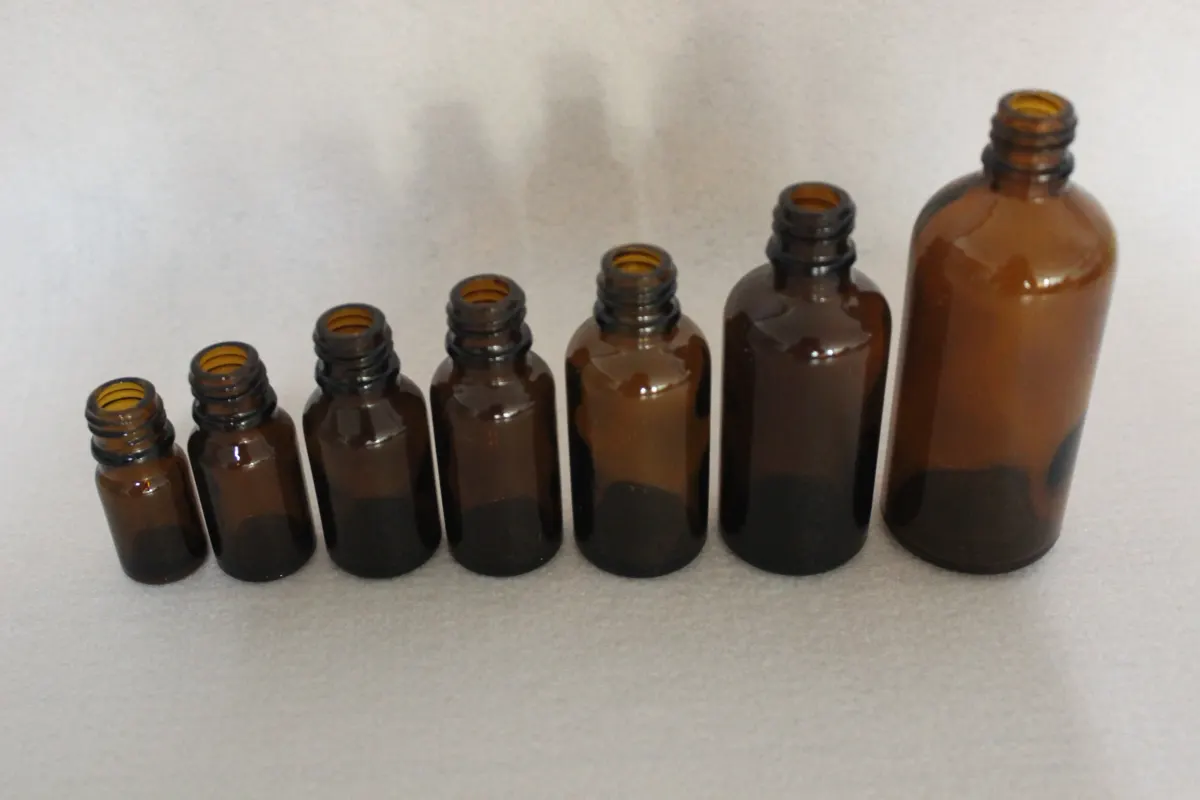
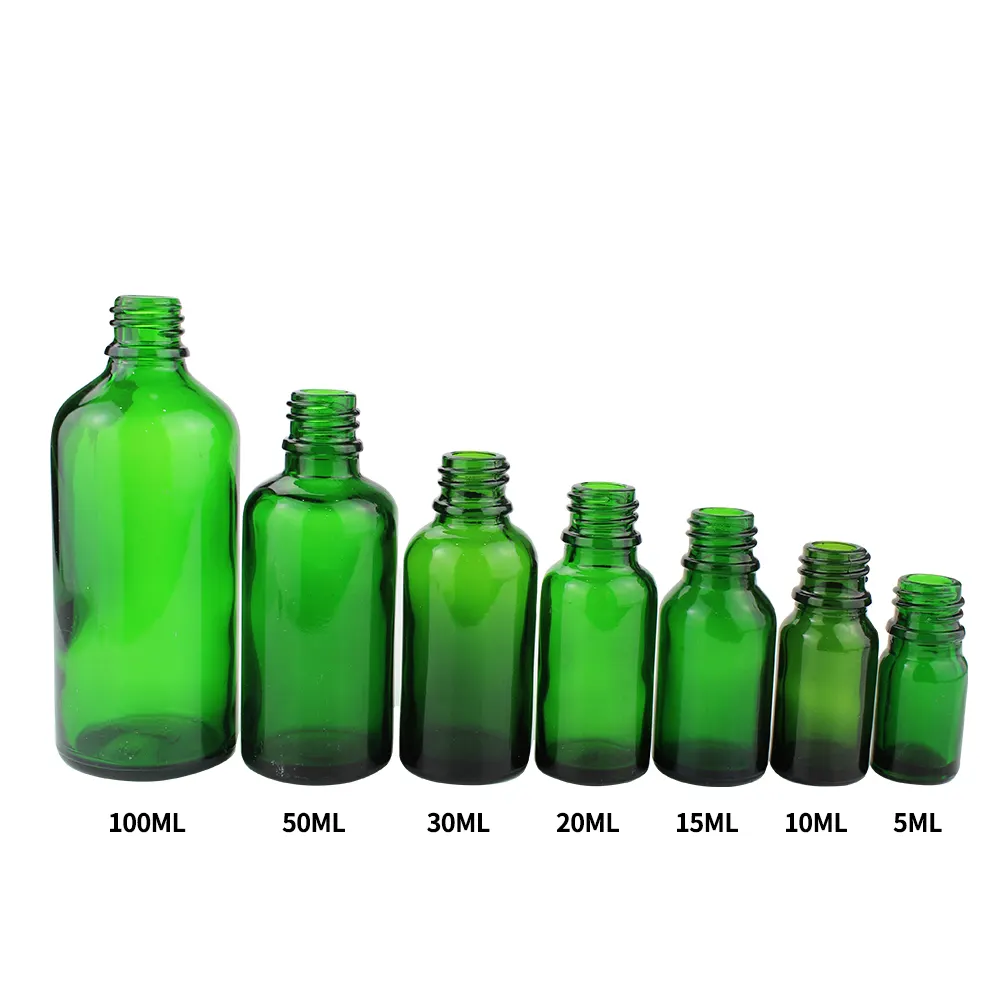
| Capacity | 2, 3, 5, 8, 10, 15, 20 and 30 ml | 5 and 10 ml carry most of the volume because they work for both sampling and retail |
| Glass type | Soda-lime or borosilicate | Soda-lime for oils, fragrance and general lab use; borosilicate where extractables matter |
| Neck finish | 13, 15, 18 and 20 mm | Screw or crimp closure system |
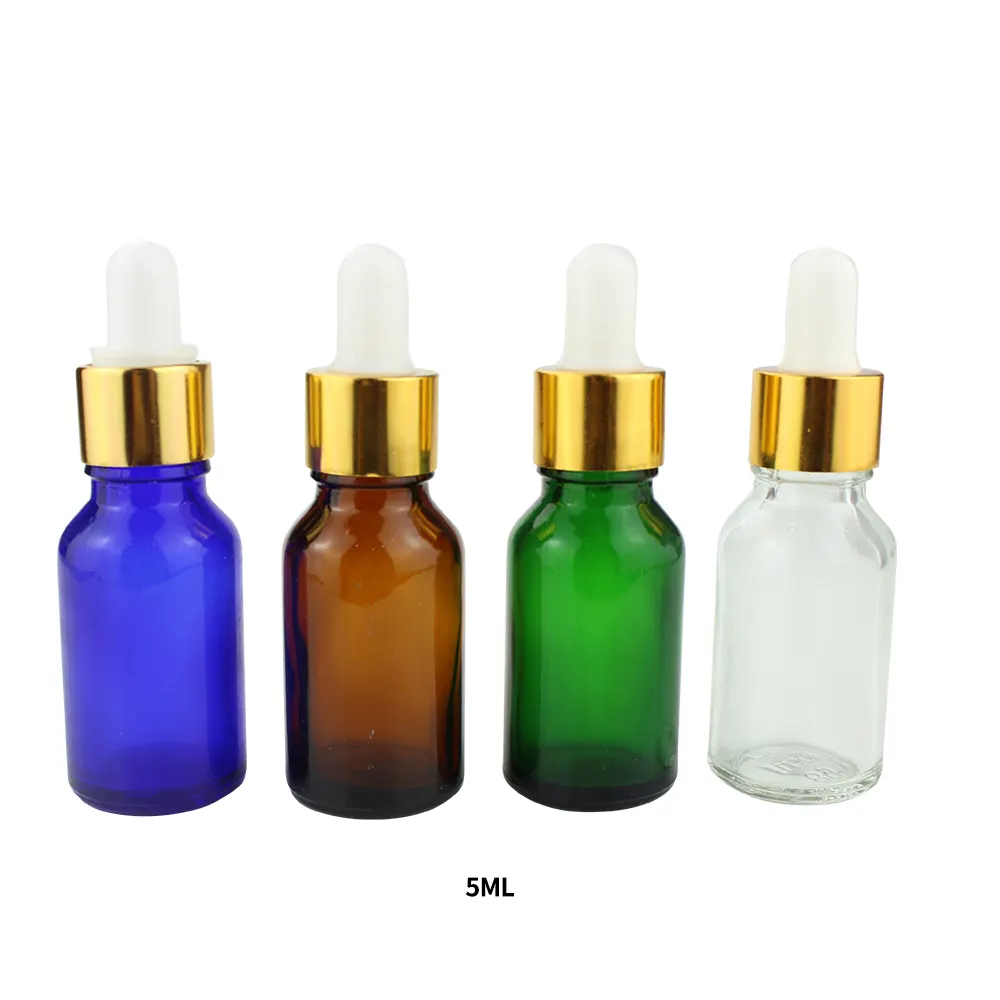
| Colour | Flint, amber, cobalt | Amber for anything light-sensitive |
Tolerances that belong on the drawing
Small containers are far less forgiving of dimensional drift than large ones. The bore of a 5 ml vial is roughly 7 mm. A plus or minus 0.15 mm allowance that nobody would question on the 18.5 mm bore of a wine bottle amounts to more than 2 percent of that opening, which is enough to turn a snug dropper into a leaking one.
Height needs the same attention when vials travel in automated trays. Hold total height to plus or minus 0.3 mm; without that limit, the tallest and shortest pieces are the ones that jam a tray-fed capper.
Choosing between soda-lime and borosilicate
Borosilicate costs more and, because tube-drawn vial lines run longer campaigns, comes with larger minimum runs. It earns its place in three cases:
- injectable or ophthalmic products that fall under USP Type I requirements;
- formulations at extreme pH, which draw alkali out of soda-lime glass over the shelf life;
- lyophilization, where the vial has to survive deep thermal cycling.
Essential oils, fragrance samples, tinctures, topical serums and reagents for non-critical assays all perform well in soda-lime. Putting a lavender oil sample into borosilicate spends money on a property the product never uses.
Hydrolytic resistance is where the two get confused. A surface treatment can bring soda-lime vials up to USP Type II performance, which narrows much of the difference. If a regulatory consultant names Type I glass, borosilicate is the answer. If the concern is a general unease about glass quality, request hydrolytic test data on treated soda-lime before paying for more. Our guide to pharmaceutical glass bottles and USP classifications covers the regulated categories in more depth.
Matching the closure to the product
The closure follows what goes in the vial.
- Fragrance and oil samples use screw caps with PE cone liners. The cone seals by being compressed into the neck bore, so the bore tolerance above is what makes or breaks the seal.
- Pharmaceutical and diagnostic vials use crimp seals over butyl or bromobutyl stoppers, specified by shore hardness and siliconization level. Stopper and vial have to be validated together as one system; matching catalogue dimensions is not proof.
- Tincture and serum dropper vials take a pipette cut to the internal depth of the vial. A 2 mm variance in that depth leaves the pipette either kinked or floating.
Small caps have a narrow torque window, typically 4 to 8 inch-pounds on a 13 mm cap. Applying torque outside it produces leakers at one end and stress-cracked necks at the other.
For essential oil ranges, the page on essential oil glass bottles shows the 5 to 30 ml sizes together with their dropper and reducer options as complete systems.
Packing format and cleanliness level
The way vials are packed sets the pace of the line that receives them. Laboratory and pharma buyers are nearly always better served by trays, because the labour of decanting loose vials overtakes the extra packing cost within the first hour of running.
Cleanliness is a separate decision. Vials straight from standard production carry forming lubricant residue and ambient dust. Oils and fragrances tolerate that; diagnostics do not. Washed and sterile-ready packing can be arranged, and the required level should be written into the purchase order itself. An email is not enough, since "clean" is understood differently from one continent to the next.
What moves the cost, and how to plan shipments
Prices are quoted per project. The main driver at volume is machine speed, not the weight of glass: a 5 ml vial forms almost as quickly as a 30 ml one, so a smaller vial is not cheaper in proportion to its size. Colour also counts, with flint the least expensive, amber above it, and cobalt highest because of its colorant. Mould, decoration, quantity and freight terms account for the rest.
Freight works the other way round from bottles. The risk is an order too small to be worth its handling. As a working rule, a programme below 200,000 pieces per year is best shipped once a year in tray packing, while a programme above a million suits quarterly container releases.
Several sizes in one colour family can be combined without penalty, so 5, 10 and 30 ml amber vials are assessed on their combined tonnage. For capacities beyond 30 ml, see the amber glass bottle range; for the round 15 to 120 ml format that often sits next to vials in one product line, see Boston round bottles.
Incoming inspection for a bulk vial lot
One trained inspector can complete a receiving check in four hours. The sequence we recommend:
- Draw samples to AQL 1.0 from at least five cartons spread over three pallets.
- Gauge the neck bore on 20 vials per lot with pin gauges, and measure total height on 20.
- Weigh 10 vials to pick up drift in wall thickness.
- Run the leak test described below with the production closures.
- Examine 100 vials on a light table for stones, seeds over 0.5 mm and neck chips, and count them against the agreed acceptance criteria.
- Before releasing the lot, send 50 vials through the real filling and capping line at speed. A machine exposes dimensional outliers faster than a gauge does.
Keep the results. The record becomes the evidence behind any later claim.
The inverted methylene blue leak test
Take ten vials from each pallet sample and fill them with dyed water. Close them with the production closure at production torque, stand them upside down on absorbent paper, and hold them for 24 hours at 40 degrees Celsius. The acceptance number is zero failures. This is the check that exposes bore-tolerance and liner-compression faults, which look fine on visual inspection and then leak in a customer's luggage.
FAQs about bulk glass vials
What is the minimum order for bulk glass vials?
Minimums are set per project. They depend on the mould and on the line it runs on, and borosilicate lines generally ask for longer runs than soda-lime.
What do bulk vials cost at high volume?
There is no list price; each project is quoted on its mould, decoration, quantity and freight terms. Glass type and colour shift the figure as well.
Can vials be supplied washed or sterile-ready?
Yes. State the cleanliness level in the purchase order so that both sides are working to the same definition.