Most glass maple syrup bottles are specified with a 28mm continuous-thread finish (28-400 or 28-410), in one of four shapes: the gallone handle jug, the round syrup bottle, the flask, or the hexagonal jar. Whichever you pick must be qualified for hot packing at 80 to 85 degrees Celsius. The remaining choice is colour: clear flint to show the syrup, or amber for stock that may sit 12 months or more.
Four shapes and the channel each one serves
Shoppers read a syrup bottle before they read its label, so the shape does much of the positioning.
- Gallone handle jug. A squat round bottle with a finger-ring handle close to the neck. It is the heritage format, and the handle is what signals authenticity to the buyer. In glass it typically runs at 250ml, 375ml, and 500ml.
- Round syrup bottle. Short neck, sloped shoulder. This is the volume format for grocery.
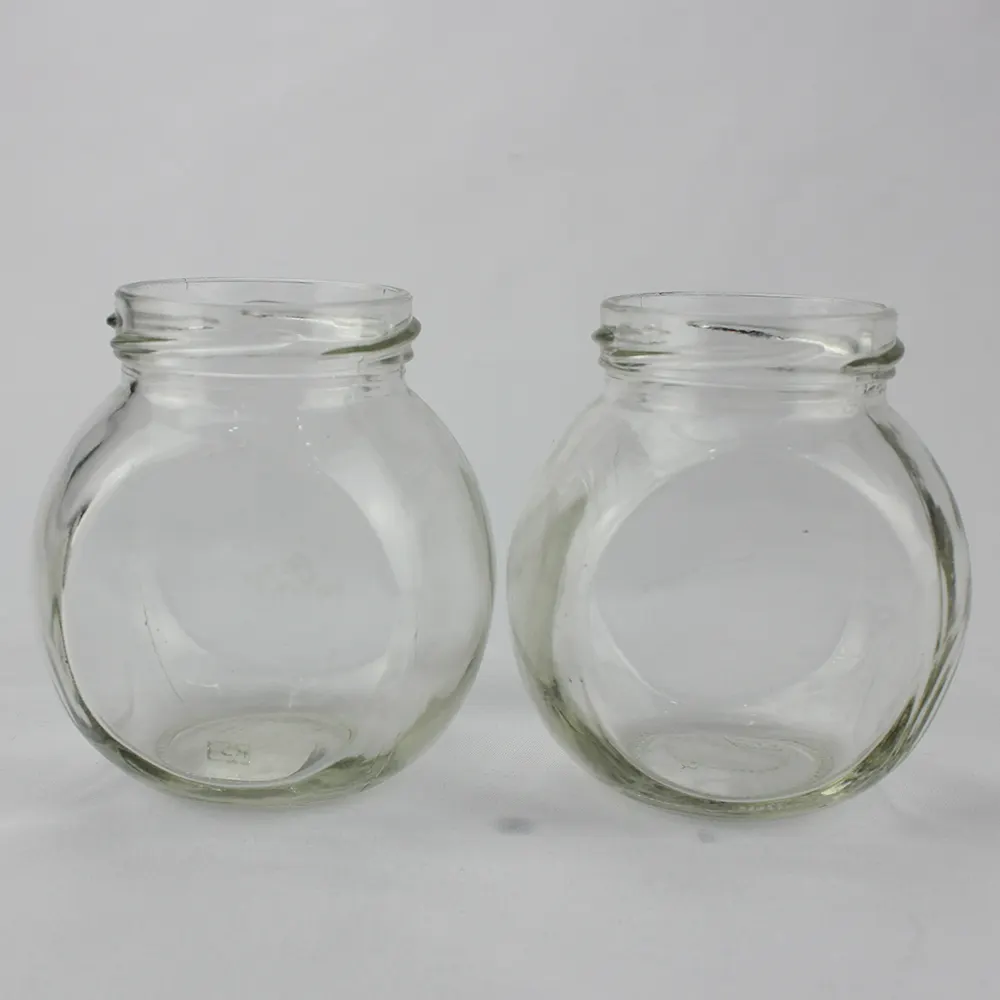
- Flask or medallion bottle. Flat-fronted, often with an embossed maple leaf, and aimed at gift and tourist shops.
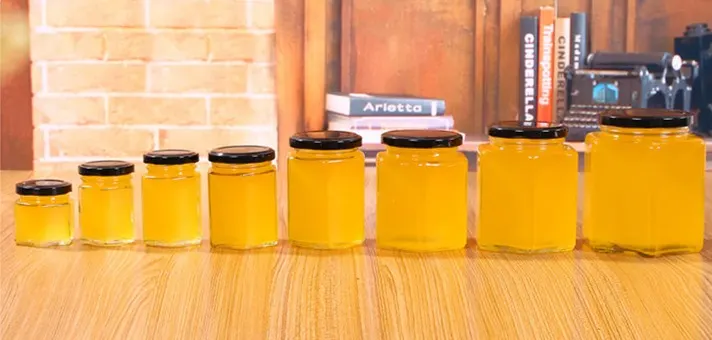
- Hexagonal jar. Taken from preserves, it places syrup next to jam and honey in specialty retail. The hexagon jar families take syrup well with a 58mm or 63mm twist-off lid.
Hot-pack qualification
Syrup goes into the bottle at 80 to 85 degrees Celsius. The heat keeps the pack sterile, and inverting the hot bottle treats the closure seal as well. Every format therefore has to pass a thermal-shock test, and we qualify syrup bottles per ISO 7459 at a 42-degree-Celsius differential minimum.
Handle jugs need one more check. Stress gathers where the handle joins the body, so we specify ASTM C148 annealing verification at that point. Weight and handle-root stress also make 500ml the practical upper limit for a hot-packed glass jug.
This requirement explains why syrup bottles are heavy for their capacity: a hot-pack rating rules out aggressive light-weighting. When one quote comes in well below the others, compare the glass weight before anything else.
Neck finish and closure
The category settled on 28mm CT for practical reasons. Syrup pours slowly, so a wide mouth brings no benefit and the 28mm bore meters the flow by itself. Co-packers already hold 28mm capping chucks from honey and sauce work. The range of stock closures for this finish is also the widest in food glass, which keeps closure cost down.
The usual cap is polypropylene with an induction-seal or pulp-backed liner, plus a tamper-evident band for retail. There are two exceptions to the 28mm rule:
- gallone jugs at 500ml and above sometimes take a 38mm finish, which pours faster in foodservice;
- hex jars use lug twist-off finishes, 58mm to 63mm, because people expect to open a jar like a jar.
Put the application torque in the purchase order. For 28mm CT, 10 to 14 inch-pounds is typical. A cap that loosens in a warm warehouse can leak over a whole case. Confirm your co-packer's chuck size before fixing the finish, and see the closure selection hub for matching caps to finishes. Honey fills in much the same way, so the honey jar guide is useful background.
Amber or clear flint glass
This is a trade between shelf life and visibility. Flint displays the colour of the syrup, and producers of Grade A Amber Color / Rich Taste generally want it seen. Amber glass filters UV below roughly 450nm and slows the light-driven flavour change that pale syrups suffer under shop lighting.
Many brands settle on flint with a full-coverage label or an outer carton, so the syrup is stored in the dark and still shown at the point of sale. Amber is the safer answer for long supply chains, club multipacks and any market where a bottle may wait 12 months or more. Settle the glass colour before the label coverage, because the second depends on the first.
Typical dimensions of stock formats
These are planning values. Each is confirmed against the project drawing, as are brimful tolerance, punt depth and label panel dimensions, which are not listed here.
| Parameter | 250ml round | 375ml gallone jug | 500ml round | 250ml hex jar |
|---|---|---|---|---|
| Brimful capacity | ~260ml | ~390ml | ~520ml | ~265ml |
| Overall height | 175 – 195mm | 165 – 185mm | 195 – 215mm | 95 – 110mm |
| Body diameter / across flats | 60 – 66mm | 85 – 92mm | 70 – 76mm | 72 – 78mm |
| Glass weight | 200 – 240g | 330 – 380g | 300 – 350g | 190 – 220g |
| Finish | 28mm CT | 28mm or 38mm CT | 28mm CT | 58mm / 63mm lug |
| Hot-pack rating (ISO 7459) | ≥42°C ΔT | ≥42°C ΔT | ≥42°C ΔT | ≥42°C ΔT |
| Carton / pallet (typical) | 24 pcs; ~2,400 pcs | 12 pcs; ~1,200 pcs | 12 pcs; ~1,440 pcs | 24 pcs; ~2,600 pcs |
Stock, modified stock or custom mould
| Factor | Stock mould | Modified stock | Full custom mould |
|---|---|---|---|
| What you get | An existing round, jug or hex format | A stock body with an embossed leaf or brand mark | A shape of your own, such as a custom flask |
| Suits | New producers and seasonal runs | Established brands that want their mark in the glass | Leaders in the gift channel and national brands |
| Main risk | Competitors can buy the same bottle | Only the surface is different | Tooling is paid for before volume is proven |
Sampling takes longest on the custom route because it includes mould trials. Cost and timing are quoted per project; the bulk syrup bottle page explains what drives them.
Frequently asked questions
Which sizes are available for the gallone handle jug?
Glass handle jugs are normally made at 250ml, 375ml, and 500ml, with 500ml the practical ceiling for hot-packed syrup.
Is a 38mm finish ever the right choice?
Only on larger foodservice jugs, where pour speed matters more than flow control. Retail bottles stay on 28mm because that is what existing capping lines are set up for.
What is the minimum order for stock maple syrup bottles?
Minimums are quoted per project. They depend on the mould, the decoration and the line the bottle runs on.
Can caps with tamper-evident bands be supplied with the bottles?
Yes. We arrange 28mm CT caps with liners and tamper-evident bands, and the torque is validated against the bottle finish.