Yogurt in glass is packed almost entirely in 100–200ml formats made from ordinary food-contact soda-lime container glass (HS 7010). Borosilicate is unnecessary. What a dairy has to settle is the shape for its product style, the closure for its filling line, and annealing good enough for the incubation, chilling or hot-fill cycle the ware will go through. A flat, chip-free rim and a filling-line trial matter more than anything exotic in the glass itself.
Choosing a shape for the product
Three shapes cover the category, and each belongs to a style of product and a type of filling line.
| Shape | Sizes | Opening | Typical products | Usual closure |
|---|---|---|---|---|
| Straight-sided pot | 100ml, 125ml, 150ml | Wide mouth, 53mm to 63mm | Set yogurt, French-style whole-milk yogurt, chilled desserts | Heat-sealed foil |
| Tapered jar | 150ml, 200ml | Wide mouth | Stirred, fruit-layer, Greek-style and high-protein yogurt | Foil or cap |
| Small bottle | 100ml to 200ml | 38mm to 48mm neck | Drinkable yogurt, kefir, cultured milk drinks | Plastic snap or screw cap |
The straight-sided pot is the glass counterpart of the plastic cup. It follows the same sequence on the line, which is fill, foil-seal, then incubate or chill. Desserts such as panna cotta, chocolate mousse and rice pudding use it because a spoon reaches every corner and the product shows well through clear walls.
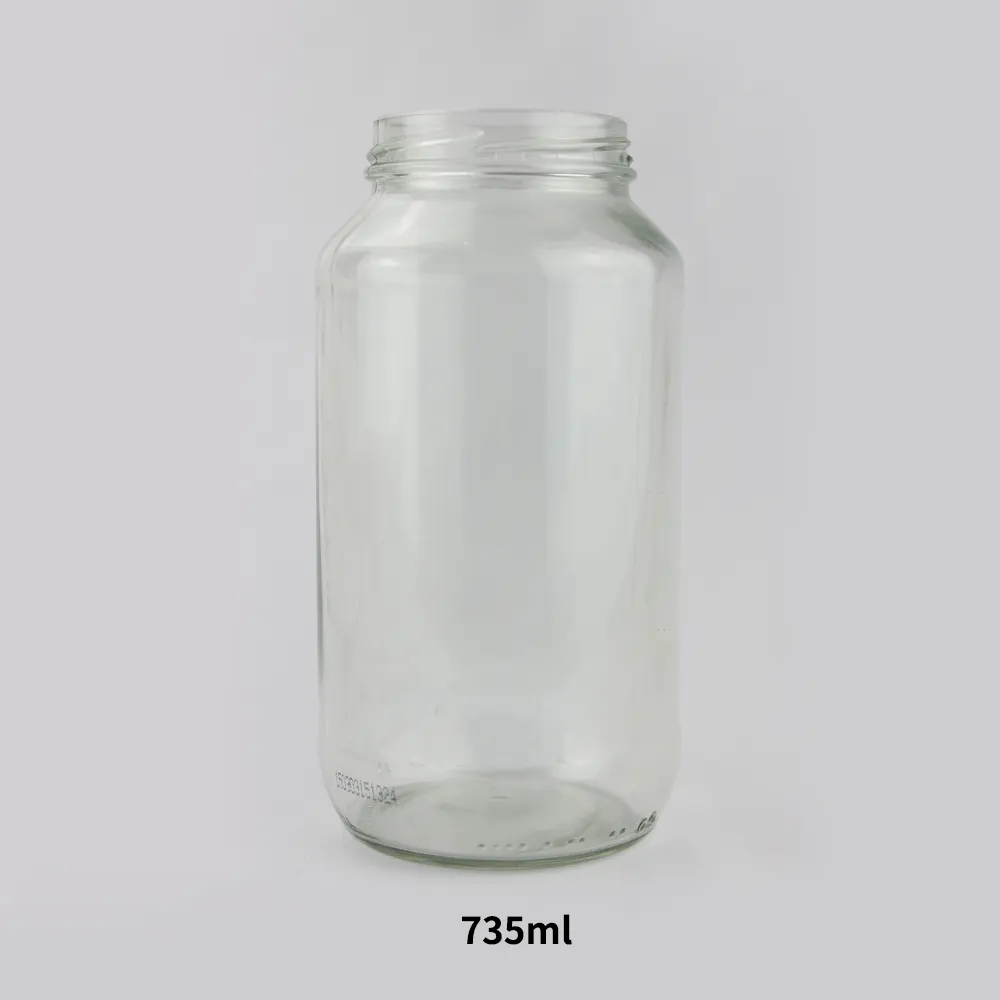
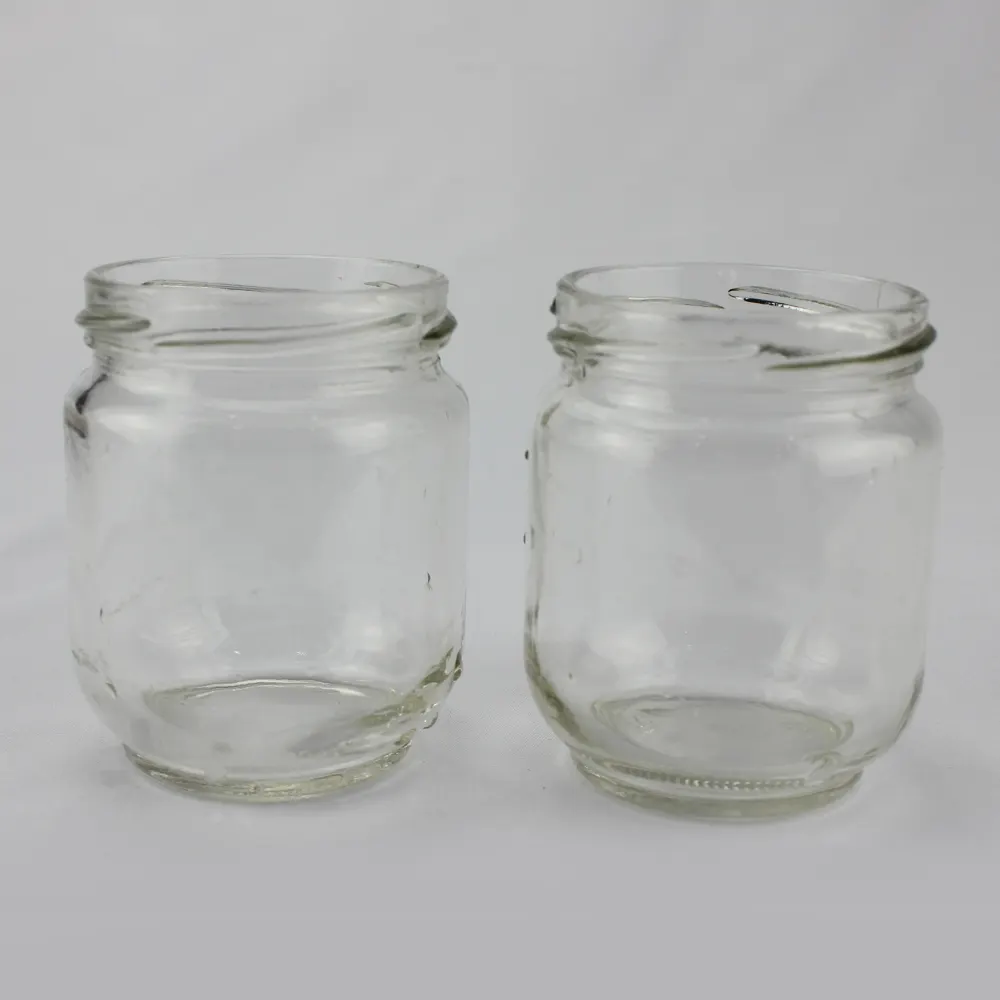
A tapered jar narrows toward its base. That taper stiffens a thin wall and helps the jars nest in shelf-ready trays. Protein-fortified yogurt is dense, so the 200ml size gives a serving that feels substantial without taking up much shelf space.
Small bottles run on bottle fillers, not pot lines, and are increasingly sold in multi-packs of four or six. A range that includes both spoonable and drinkable products is easier to manage when neck finishes and cap sources are aligned across it, and our glass milk bottle range is a practical place to do that.
Across all three shapes, wall thickness sits between 2.0–3.2mm. Thinner walls break more often from impacts on the line, and thicker ones add glass cost that the product has to carry.
Foil seal or cap
The closure shapes your line requirements more than the container does. As a working rule, use foil for products eaten with a spoon and sold on freshness, and use a cap for anything that is drunk, reclosed or sold as returnable.
Heat-sealed aluminum foil
A die-cut foil lid sealed onto a lacquered rim is the standard for spoonable yogurt in glass. The lid is normally 38–50 microns of aluminum carrying a heat-seal lacquer formulated for glass. Rotary sealers work at 180–230°C with a dwell of less than one second.
Foil gives tamper evidence and blocks oxygen and light better than a plastic cap can, and shoppers already know how to peel it. In return it asks two things of the buyer:
- A sealing rim that is flat and free of chips. Write rim flatness within 0.3mm into the specification and require 100% rim inspection.
- Compatibility testing of the foil and lacquer against your own recipe. Acidic fruit preparations can degrade an unsuitable lacquer during a 30-day chilled shelf life.
Plastic and metal caps
PP caps, either snap-on or screw caps with a short skirt, are the norm on drinkable formats and on lines positioned around reuse. They introduce a second material and a higher closure cost than foil. Their benefit is reclosure, which is useful when a 200ml drink is finished over two sittings.
Metal twist-off caps turn up on cultured milk jars of 250ml+ and on lines that also fill dessert sauces. They need a lug finish and a filling process able to pull a vacuum. If your order combines yogurt pots with larger jars of that kind, our glass jars with lids collection sets out how each closure type works.
Thermal conditions the glass must survive
Soda-lime glass tolerates a thermal shock of roughly 50°C when it has been annealed properly. Whether a yogurt line stays inside that margin depends on the process.
Set yogurt
Cultured milk is filled at 42–45°C and sealed. It then incubates in the pot at 40–43°C for four to six hours before blast chilling takes it under 6°C. The largest step is the move from incubation to the chiller, a ΔT of about 35–40°C, which is within the margin for well-annealed ware.
The consequence for the specification is that annealing quality decides the result, and the type of glass does not. Ask for annealing grade certification showing strain below 50nm/cm optical retardation.
Hot-filled and pasteurized desserts
Extended-shelf-life desserts may be filled at 85–95°C or pasteurized in the pack. Product at 90°C poured into jars standing at 20°C ambient produces a 70°C shock, more than marginal ware can take. Lines handle this with established measures:
- A pre-heating tunnel that raises the jars to 35–40°C ahead of the filler
- Cooling spirals with controlled temperature steps in place of cold-water cascades
- Annealing verified on every production campaign
Chilled storage
Cold storage places no stress on the container. Glass is unaffected at 2–6°C, lets no oxygen through and adds no flavor, so it supports the full 25–40 day chilled shelf life. Cycling between incubation and chilling exposes any drift in annealing, so our quality inspection process for glass packaging includes thermal shock sampling on each lot of a dairy order.
Specifying jars for a returnable scheme
Regional dairies and farm-gate brands in Europe, Japan and parts of North America now operate deposit schemes on 150–200ml yogurt jars. Customers bring back the empties. The dairy or a pool operator washes them at 70–80°C in caustic detergent, inspects them and fills them again. A jar routinely completes twenty to forty trips before surface scuffing takes it out of circulation.
A returnable jar differs from a one-way jar in three respects:
- Wall thickness increases toward 3.0–3.5mm so the jar withstands crates and tumbling in the washer.
- Decoration changes to applied ceramic labels or embossing. A paper label would have to either survive the caustic wash or come away cleanly in it.
- Rim geometry becomes more robust. The fine land that a foil seal needs chips when lids are removed again and again, so returnable lines generally adopt snap caps.
One-way programs lean on reuse as well. Brands print "reuse me" on lids and sell storage caps that fit the jar, giving it a second life in the kitchen. Our overview of glass packaging for food and beverage covers this positioning across categories, and the notes on food-grade glass jars deal with compliance.
Jar weight and line trials before ordering
A 125ml pot typically weighs 95–130 grams and a 200ml jar 130–170 grams. At dairy volumes, removing even 10 grams per jar changes annual glass tonnage noticeably, so agree a weight target as part of the tooling specification.
Run a trial on your own filling line before mass production. It should cover:
- Seal integrity using your actual foil and sealer
- Incubation and chill cycling on filled product
- A simulated crate wash, where the jar is returnable
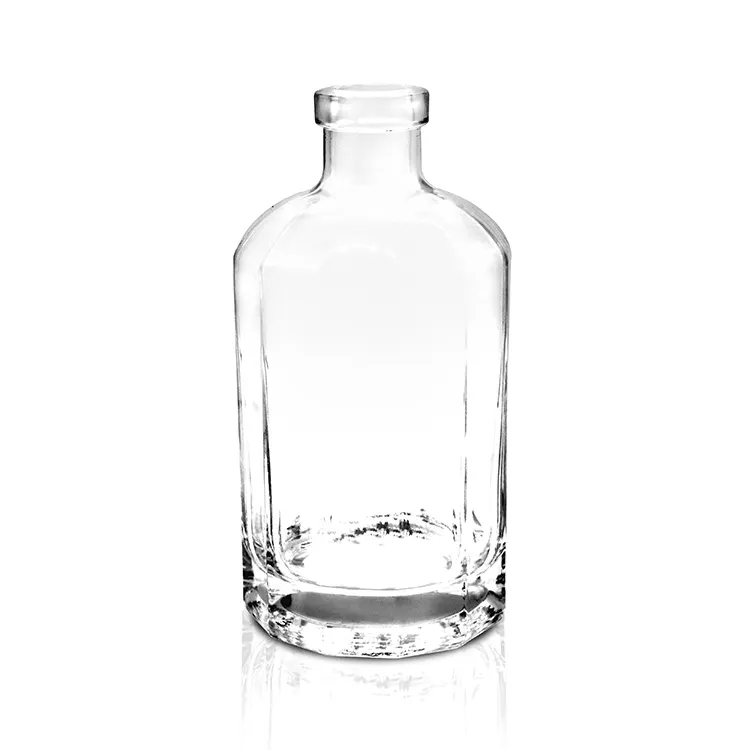
For drinkable formats, complementary sizes are listed under 100ml–200ml juice bottles. A pot designed for your brand is handled as a custom glass jar project.
FAQ
Which sizes are standard for yogurt in glass?
The core range is 100ml to 200ml, with the 125ml straight-sided pot leading for set yogurt and desserts. Formats of 250ml+ exist for family-size cultured products, but they remain a niche.
Can ordinary soda-lime glass cope with yogurt processing?
Yes, as long as it is properly annealed. Incubation followed by blast chilling stays inside the shock margin of the glass, and hot-fill dessert lines add jar pre-heating and controlled cooling. Put the effort into the annealing specification and leave special glass types aside.
Does glass change the flavor or shelf life of yogurt?
No. Glass is chemically neutral and does not let oxygen through, so it contributes no taint. A foil seal on top adds a complete light barrier. That neutrality is one reason farm-shop and dessert-style dairies choose glass over plastic cups.
What minimum order and lead time should a dairy expect?
Both are quoted per project. They depend on the mould, the decoration, the quantity and the line the jar runs on, so we confirm them once the format and closure are fixed.