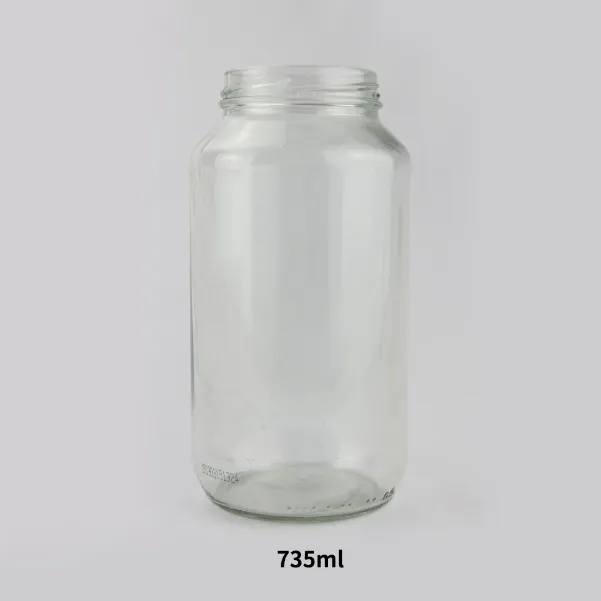
Filed under glass jars wholesale; the moulds we quote for this are pictured at the foot of the page.
A glass jar is food grade only when documents prove it: a Declaration of Compliance naming the regulation it meets, a laboratory report for lead and cadmium migration, and matching papers for the lid liner and any decoration. The glass itself is inert, so the risk sits in the heavy-metal content of the batch, the inks and coatings, the closure, and how the jars are handled. In most destination markets it is the importer, not the producer, who is legally exposed when that paperwork is missing.
Documents to request for each jar model and lot
A catalog claim will not get you through a retailer or brand audit. Ask for the following set, per jar model and per production lot.
| Document | What it shows | Usual issuer | When it is renewed |
|---|---|---|---|
| Declaration of Compliance (DoC) | The material conforms to EU 1935/2004 or the FDA framework | Manufacturer | When the formulation changes |
| Migration test report (Pb, Cd) | Heavy-metal release in 3-4% acetic acid is under the limits | SGS / Intertek / TUV | Every 12-24 months per model |
| Decoration ink and coating certificate | Printed or sprayed surfaces meet food-contact limits | Ink supplier and lab | Each ink batch |
| Overall migration, where the lid touches food | Liner and plastisol compounds comply | Third-party lab | Each liner specification |
| ISO 9001 certificate | Quality management covers the production line | Accredited registrar | 3-year cycle with an annual audit |
Migration reports should also be reissued whenever the decoration process changes, not only on the calendar.
The lid is certified separately from the jar
A metal twist-off lid carries a plastisol or PVC-free liner, and that liner is in direct contact with the product, most of all with oily or acidic foods. It therefore has its own overall and specific migration documents. Auditors treat jar and closure as a single packaging system, so request both sets together. When we quote from the honey jar range or for jam jars in wholesale quantities, the glass and closure documents are part of the quotation.
Regulations behind the term "food grade"
Regulators class soda-lime container glass as low risk because it is chemically inert. Low risk still means regulated, and two frameworks cover most export trade.
United States
Under the Federal Food, Drug, and Cosmetic Act, glass containers come within the food-contact substance framework of FDA 21 CFR. Soda-lime glass is generally recognized as safe (GRAS) for food contact. The practical work concerns heavy metals. Standards from the Society of Glass and Ceramic Decorators (SGCD), and state rules such as California Proposition 65, restrict lead and cadmium in the glass matrix and, more importantly, in applied decoration, coatings and closure liners.
European Union
Regulation (EC) No 1935/2004 is the framework law. It requires that a material does not transfer constituents to food in quantities that endanger health or alter the food's composition. Directive 84/500/EEC sets lead and cadmium migration limits for ceramics and glass-like materials, tested by extraction with acetic acid. Most buyers hold glass jars and their decorated surfaces to the same test discipline.
Other markets
Further rules apply elsewhere: Mercosur resolutions, the China GB 4806 series for food-contact glass, and GCC standards. Most Latin American and Gulf markets follow one of the main frameworks. The destination decides the test plan and the language of the declaration, so we ask where the jars are going before a quotation is prepared.
What to check on the production line
A certificate records compliance; the line produces it. Four practices separate a line managed for food-contact jars from a general one, and each can be verified in an audit.
- Cullet control. Recycled glass fed to the furnace is sourced and sorted to keep contaminated streams out. Dirty cullet brings heavy metals and ceramics with it.
- Separate handling of decoration. Printing and spraying for food jars use certified low-migration inks. Decorated areas are kept out of the fill-contact zone wherever the design allows.
- Annealing and inspection to ASTM C148. A correctly annealed jar withstands thermal shock in hot-filling and pasteurization. That is a food-safety matter as well as a breakage one.
- Hygienic warehousing. Jars for food packing are palletized and hooded, stored apart from chemical or resin goods, and covered by pest-control records an auditor can read.
We match food projects to plants that work this way. For your own audits we coordinate third-party inspections at the plant, supply production records traceable to the lot, and keep test reports on file per model, so a repeat order does not start the paper trail again.
Matching the jar and liner to the food
Foods stress a package in different ways, and the specification follows the food.
- High-acid products such as pickles, chutneys and tomato sauces need verified acid resistance and a liner compatible with the acid.
- Hot-fill lines need jars annealed for a thermal differential of 40°C+.
- Oily products such as nut butters need a plastisol liner rated for fat contact.
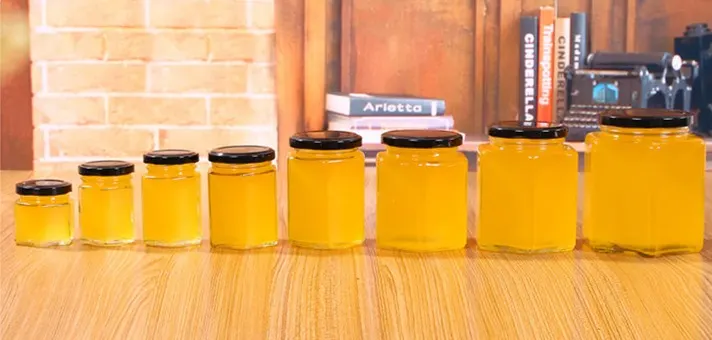
- Shelf-stable dry goods are less demanding. Our canning jars in bulk and airtight glass jars are supplied under the same food-contact documentation.
Four inputs fix the right jar-and-liner system: the product's pH, the fill temperature, the pasteurization or hot-hold process, and the target shelf life. Include all four, and the destination market, when you send us your jar brief.
Frequently asked questions
Is every soda-lime glass jar food grade?
No. The glass matrix is inert and generally recognized as safe, but the status belongs to the whole package and to the environment it was produced in. For a regulated market, treat a jar as food grade only when it arrives with a Declaration of Compliance and migration test reports.
How is the migration test carried out?
The food-contact surface is extracted with 3-4% acetic acid, and the lead and cadmium released are measured against limits in the style of EU Directive 84/500/EEC. An accredited laboratory such as SGS or Intertek issues the report for a specific jar model.
Can food grade jars be hot-filled and pasteurized?
Yes, if they are properly annealed. Jars annealed to stress levels verified under ASTM C148 cope with hot-filling at 85-95°C and the pasteurization that follows, as long as the filling line controls the temperature ramp. Give the fill temperature and process with your order so the jar weight and annealing grade can be confirmed.
What is the minimum order for food grade jars?
Minimums are quoted per project. They depend on the mold and on the line it runs on.