Filed under wide-mouth food jars; the moulds we quote for this are pictured at the foot of the page.
A wholesale jam jar has to accept an 85-88°C fill, pass through a pasteurizer tunnel and then hold a hermetic vacuum for 18-24 months. In practice that means annealed soda-lime glass with a lug twist-off finish in 63, 70 or 82mm, closed with a plastisol-lined metal cap that has a safety button. Settle the process figures first, because the jar and cap specification follows from them.
Process figures to put on the jar enquiry
Four numbers from your production line define the jar and the cap liner.
- Fill temperature, 85-88°C. Standard annealed soda-lime glass gives a thermal-shock margin of at least 42°C, so jars that reach the filler cold need preheating to 40-50°C.
- Headspace, 5-7%. This leaves room for the product to expand at fill and still draws a strong vacuum once the pack is at ambient. With less, jam is pushed into the cap liner. With more, the vacuum is weak and buttons sit flat on shelf.
- Acidity, pH 2.8-3.5. Glass is unaffected, but the acid rules out plain paper-lined closures and calls for plastisol-lined metal caps.
- Pasteurization at 90°C. A tunnel at this temperature is routine when its zones heat and cool in stages.
Lug cap sizes and finish codes
Jam makers worldwide use the lug system because the cap seals after engaging two to four threads, not a full turn. The plastisol liner is soft at fill temperature. Applied at the right torque, it flows onto the sealing land of the glass, and as the contents cool the vacuum pulls the centre button down. Shoppers can see and hear that button, which makes it the tamper evidence.
Diameter follows capacity:
- 63mm for round jars of 212-314ml
- 70mm for 314-500ml
- 82mm for family jars of 500-770ml
A wider mouth fills faster and is easier to clean. Whatever the size, quote the complete finish code, for example 70-2030, on the jar order and on the cap order. Caps and finishes are gauged as pairs, and a 70-2030 cap will not seal on a 70-2010 land. Caps come in black, gold, silver or custom lithography, with or without the button.
Continuous-thread (CT) caps with PE foam liners have their place on cold-filled, refrigerated jams and on artisan lines that are eaten quickly. For anything hot-filled and held under vacuum, choose lug. Its thicker, more conformable liner also reseals better once the jar has been opened.
Standard jam jar formats
| Format | Capacity | Finish | Shape | Where it is used |
|---|---|---|---|---|
| JM-106 | 106 ml | 53mm lug | Round | Tasters and hotel portions |
| JM-212 | 212 ml | 63mm lug | Round | Premium preserves |
| JM-314 | 314 ml | 63/70mm lug | Round | Core retail SKU |
| JM-370SQ | 370 ml | 70mm lug | Square-shoulder | Gift and shelf display |
| JM-500 | 500 ml | 70/82mm lug | Round | Family size |
| JM-770 | 770 ml | 82mm lug | Round | Foodservice |
Every format in the table takes a metal twist-off cap with plastisol liner and button. Flint is the standard colour, with amber and green available. Prices are quoted per project as a set of jar and matched cap, and they move with glass colour, cap decoration, quantity and freight terms.
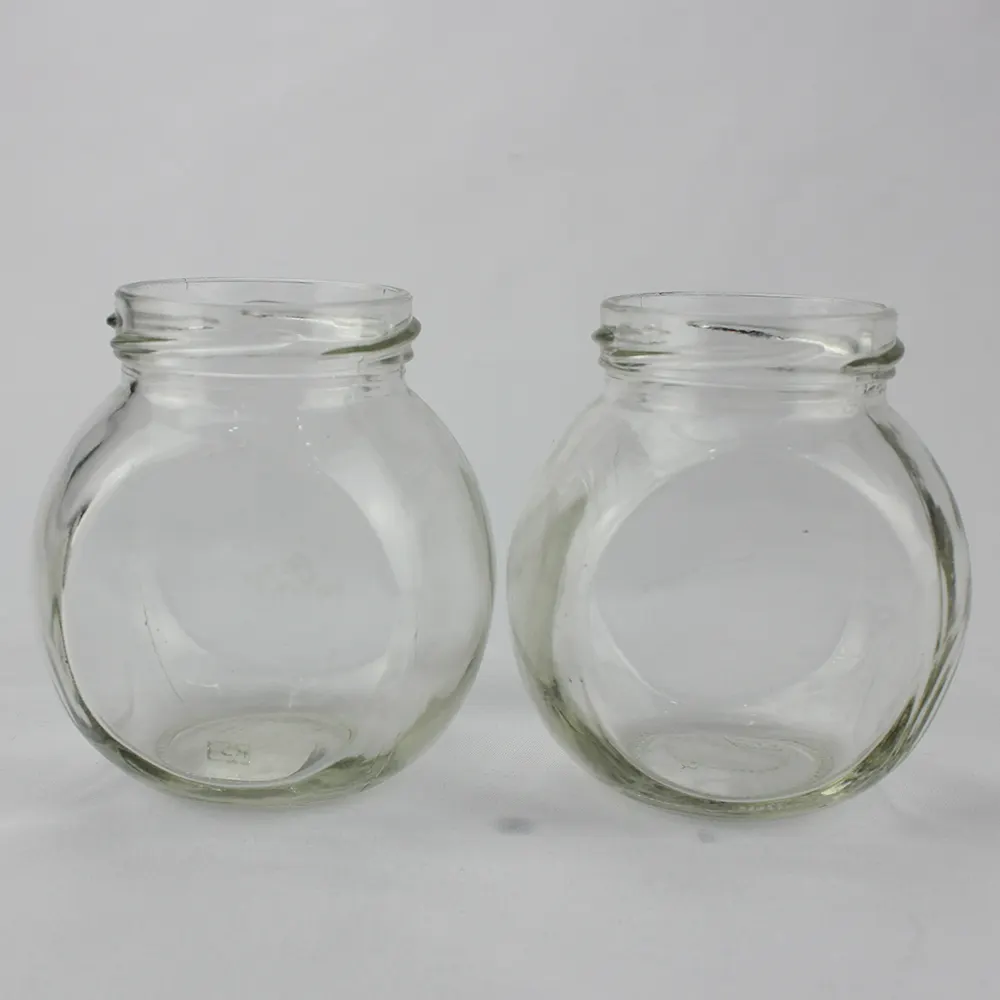
A small producer starting out is well served by 212ml or 314ml rounds in flint with a black or gold 63mm cap, the combination most premium preserves are sold in. Hexagonal and faceted gift shapes are listed under hexagon glass jars. Honey has its own formats, covered on the honey jar page, and the wider home-canning system is described under canning jars in bulk.
Hot-fill and pasteurizing without cracked jars
Breakage on a jam line is nearly always a temperature step that was too large. Jam at 88°C poured into a jar at 40-50°C stays within the 42°C rating of annealed glass. Poured into a jar at 20°C, it does not. So preheat the jars, or at least confirm the temperature of the store they come from.
Cap within 30 seconds of filling so the liner is still hot enough to flow. In the pasteurizer, raise and lower the temperature gradually: steps of 20°C are safe, drops of 40°C are not. Bases crack when a hot jar meets a cold conveyor, and the tunnel itself is rarely to blame, so never send jars straight from the filler onto cold belting.
Prove each new jar-and-cap pairing on a 200-jar pilot before a full run. Fill, pasteurize and cool the jars, check the vacuum by how far the button is depressed, then store them inverted for a 7-day leak test. The liner's resistance to fruit acid is specified from pH 2.8 upward, so ask for its acid-resistance statement when ordering caps. Heavy syrups and chutneys that are filled hotter can use the same jars with a slightly larger preheat margin. After capping, jars are either inverted or tunnel-pasteurized, as your HACCP plan requires.
Shape, label panel and cap colour
Round flint jars show the most product and run fastest on a filling line. Square-shoulder bodies stand taller on the shelf and take gift wrap well. The 106ml taster opens hotel and sampler channels.
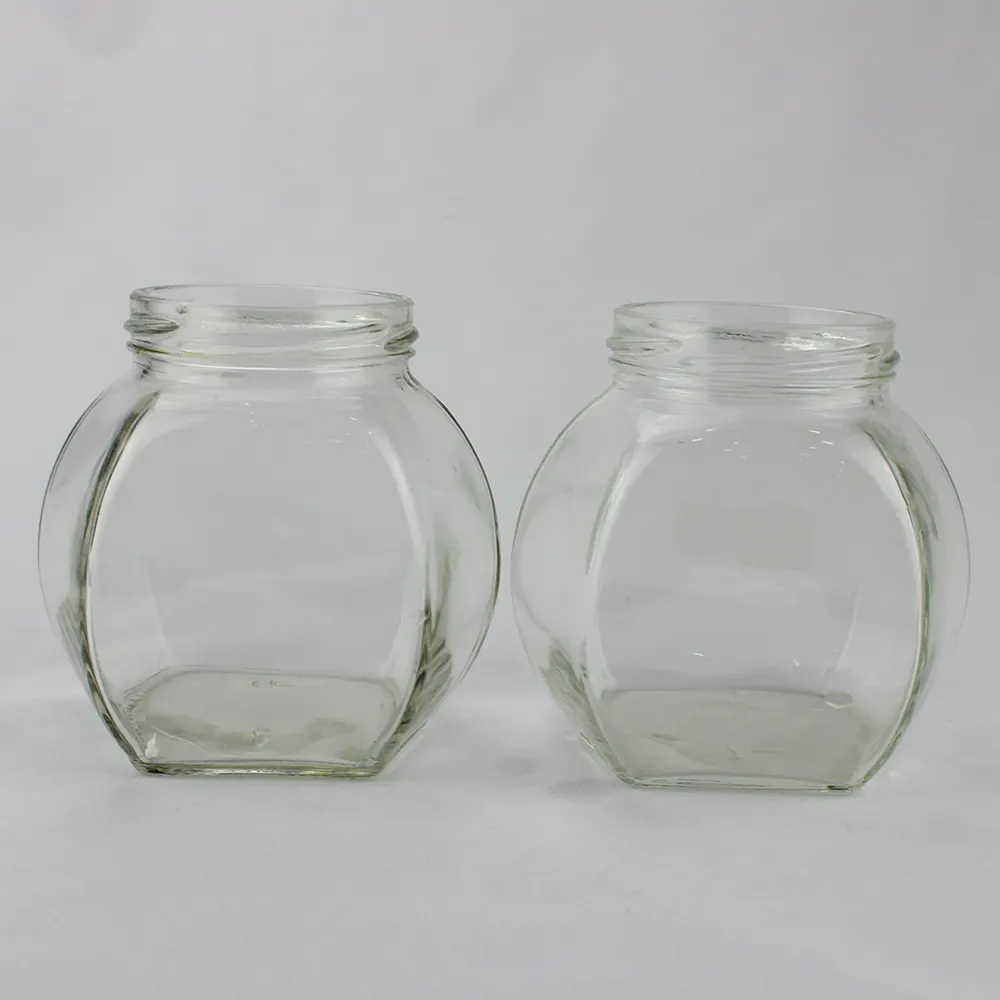
Labels go on most cleanly when the jar has a defined label panel and the mould seam sits outside it. Write both points into the drawing for a custom mould. Cap colour carries meaning as well: black signals premium, gold looks traditional, and custom lithography is typical of private-label retail.
Keep to the 63/70/82 finishes across the whole range. One cap stock and one capper head then serve every jar on the line. When the range grows into sauces and spreads, the jars can be sourced together with other food-grade glass jars.
Export packing and breakage allowance
Jam jars travel in divider cases of 12 or 24, palletized and shrink-wrapped. Caps go in separate cartons so their lacquer is not scuffed. Flint jam jars packed this way arrive with under 0.5% breakage by ocean freight.
Order 2% spare glass to cover losses, and list caps on a separate line of the packing list so customs classification stays clean. To start a project, send us the capacity, finish code, cap type, quantity and destination port.
Frequently asked questions
Can a jam jar go directly from the filler into a pasteurizer tunnel?
Yes, provided the jar was preheated and the tunnel zones change temperature gradually. The glass tolerates a differential of about 42°C, which covers a hot fill followed by a 90°C tunnel.
Do the cap and the jar have to come from the same specification?
They do. The liner and the glass land are gauged together, so both orders must carry the same lug finish code. Otherwise the lugs do not engage the threads correctly.
What does a jam jar cost wholesale?
Pricing is quoted per project. The main drivers are capacity, glass colour, cap finish and lithography, order quantity and freight terms.