Sizes are easiest to judge against the standard, and the benchmark most wine, spirits and oil buyers start from is 750 ml glass bottles.
Buy a 2 oz (60 ml) glass bottle by working backwards from the dispense: decide whether the product leaves as drops, dashes, a spray or a pour, pick the closure that does it, then choose a bottle whose neck finish accepts that closure. At this size the finish is nearly always 18-400, 20-400 or 22-400, and the full code has to match the closure. Pricing is quoted per project and depends on the shape, colour, closure and quantity.
Decide the dispense before the bottle
The mistake we correct most often is a brand choosing a shape it likes and only then asking which dropper fits. Reverse the order and roughly ninety percent of the compatibility problems we see disappear. Five uses account for almost all demand, and each one points to a different specification.
| Use | What matters most |
|---|---|
| Product samples for skincare or fragrance | An inexpensive flint bottle and a closure that survives the post |
| Travel sizes | A leak-proof closure; 60 ml sits comfortably under the 100 ml TSA limit |
| Tinctures and herbal extracts | The dropper, and the dosage markings on its pipette |
| Cocktail bitters and flavour extracts | A dasher or reducer fitment that meters drops instead of pouring |
| Spirit shots and miniatures | A pour slightly above the standard 50 ml airline miniature, suited to distillery tasting rooms |
All of these are narrow-neck bottles. Balms, spices and other solids need a wide-mouth container, covered under small glass jars with lids. Jars have mouths of 43 mm or more against the 18 to 22 mm finishes on bottles, they take different closures, and the two cannot share a filling line.
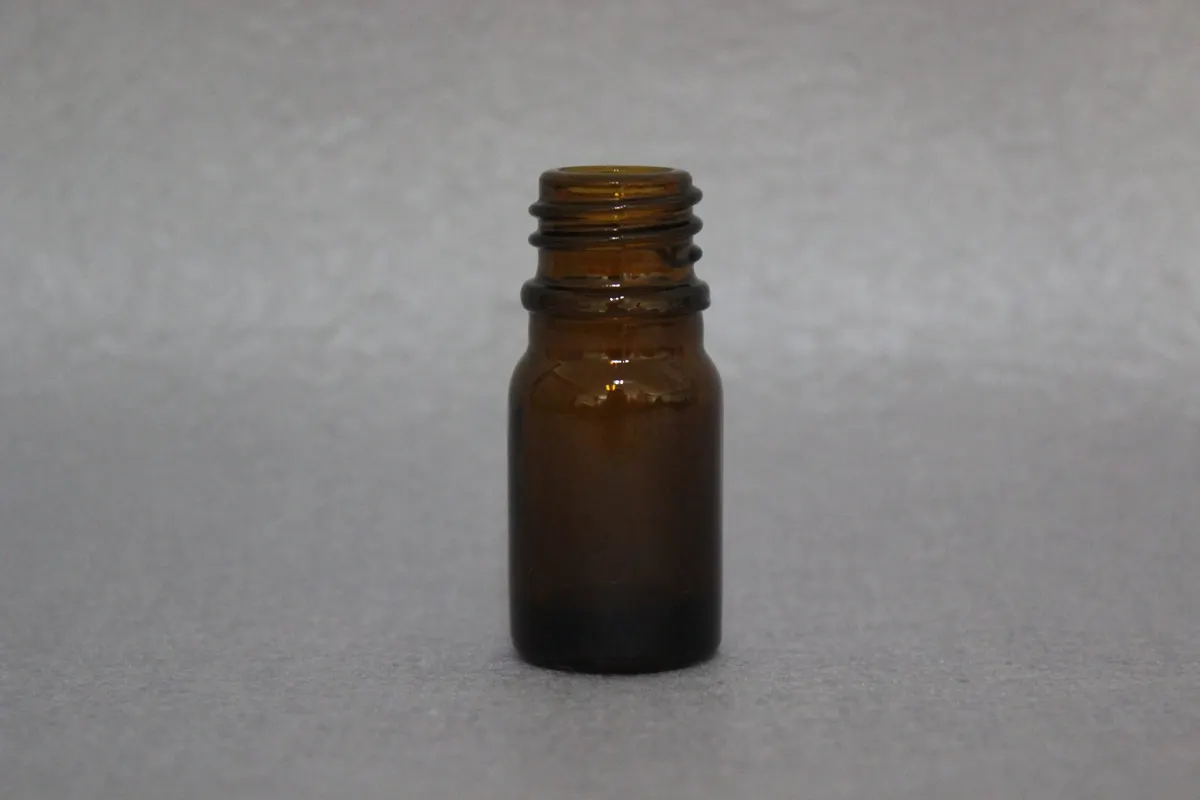
Reading the neck finish code
The finish is the thread specification on the neck. Three continuous-thread finishes cover most 2 oz glass.
- 18-400. An 18 mm neck, the classic Boston round finish. It takes the widest choice of stock closures: droppers, fine-mist sprayers, treatment pumps and phenolic caps.
- 20-400. Found on cylinder and modern-round shapes. It uses most of the same closures and flows a little more freely.
- 22-400. Found on wider-shouldered bottles, where the larger opening helps when filling syrups, oil blends and other viscous products.
The second number matters as much as the first. A 400 finish has one full turn of thread, and closures are made to suit. Put a 410 or 415 closure on it and it will cross-thread or leak.
Where possible, take the bottle and the closure from the same supply programme. A dropper built for an 18-400 finish at one plant and a bottle made at another can differ by tolerances that show up at the sealing surface.
Shape and glass colour
The Boston round is the default. Its rounded shoulder spreads stress, it travels through parcel networks better than the alternatives, and closure makers everywhere stock 18-400 and 20-400 fitments for it.
The cylinder round looks more contemporary and gives a cleaner label wrap, which is why skincare brands favour it. Square bottles pack tighter in shipping trays and gift sets, with slightly more breakage in parcel channels as the price.
Colour follows the contents. Amber blocks the UV that breaks down light-sensitive actives, so it leads in tinctures and essential oils. Cobalt blue and flint (clear) glass suit fragrance and skincare, where the visible liquid helps the sale.
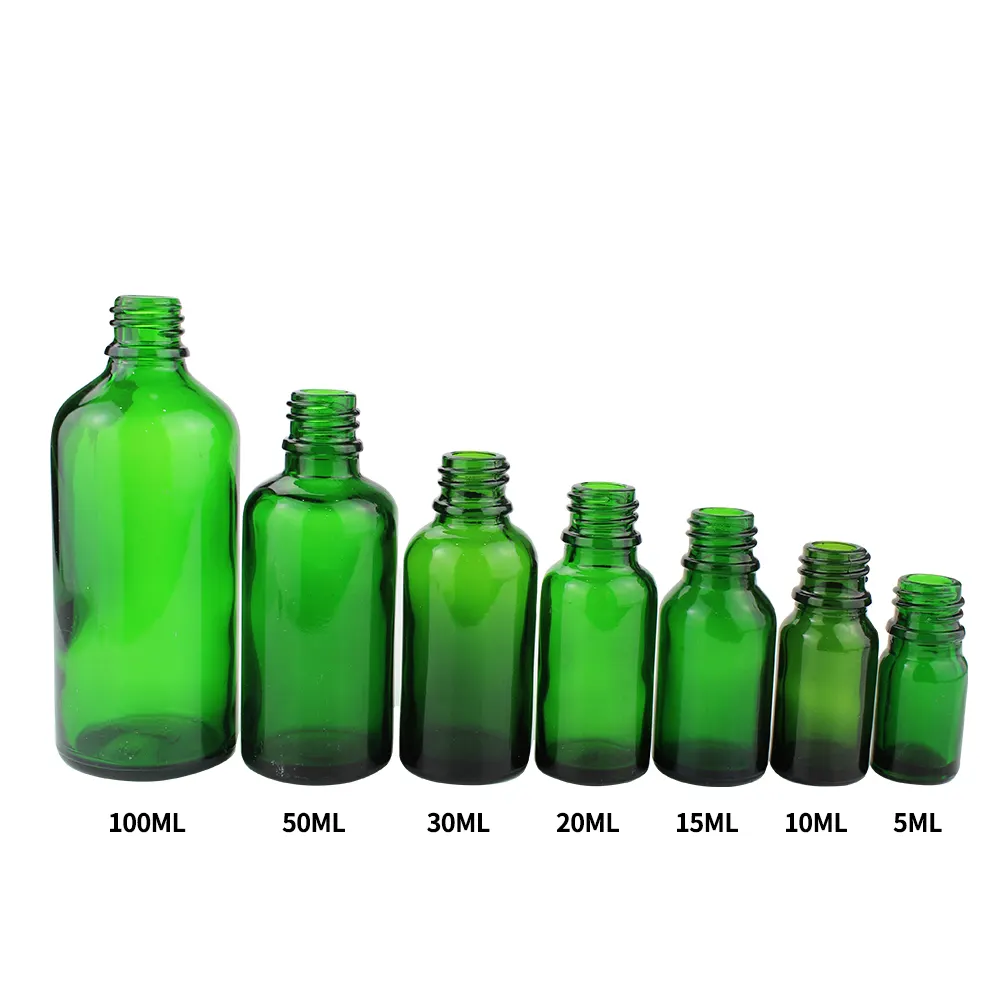
Two neighbouring categories are worth comparing. For spirit samples, a 60 ml Boston round and a 50 ml mini solve similar problems with very different closures; see miniature liquor bottles. Essential oil brands moving up to full-size packs will find the next sizes among our essential oil bottles.
Closures and the child-resistant question
Because the size serves so many dispensing methods, the closure list is long: droppers, sprayers, pumps, reducers, dashers and plain caps. Dropper-led projects can source bottle and components together through our dropper bottle application page.
Child-resistant (CR) closures need an early decision. For a tincture, a supplement or any ingestible product with active compounds, CR packaging can be a legal matter depending on the product and the state. Stock CR droppers and CR caps exist for 18-400 and 20-400 finishes, at a higher cost than standard closures.
Adding CR after launch usually means sourcing both the bottle and the closure again. Settle it in the specification, before a retailer raises it.
Case counts and freight
Boston rounds pack 120 to a case and squares 100. A pallet of Boston rounds carries 43,200 bottles, so freight per bottle is close to negligible at pallet quantities.
A case weighs only 9 to 11 kilograms. That makes parcel shipping practical for small top-ups, up to about 10 cases.
Volume changes how you should buy. When a single SKU grows into the tens of thousands of bottles a year, it is worth comparing a dedicated production run with buying from stock, and better to raise that with us early than during a stockout. For a view of how larger formats pack and specify, see the 12 oz bottle guide.
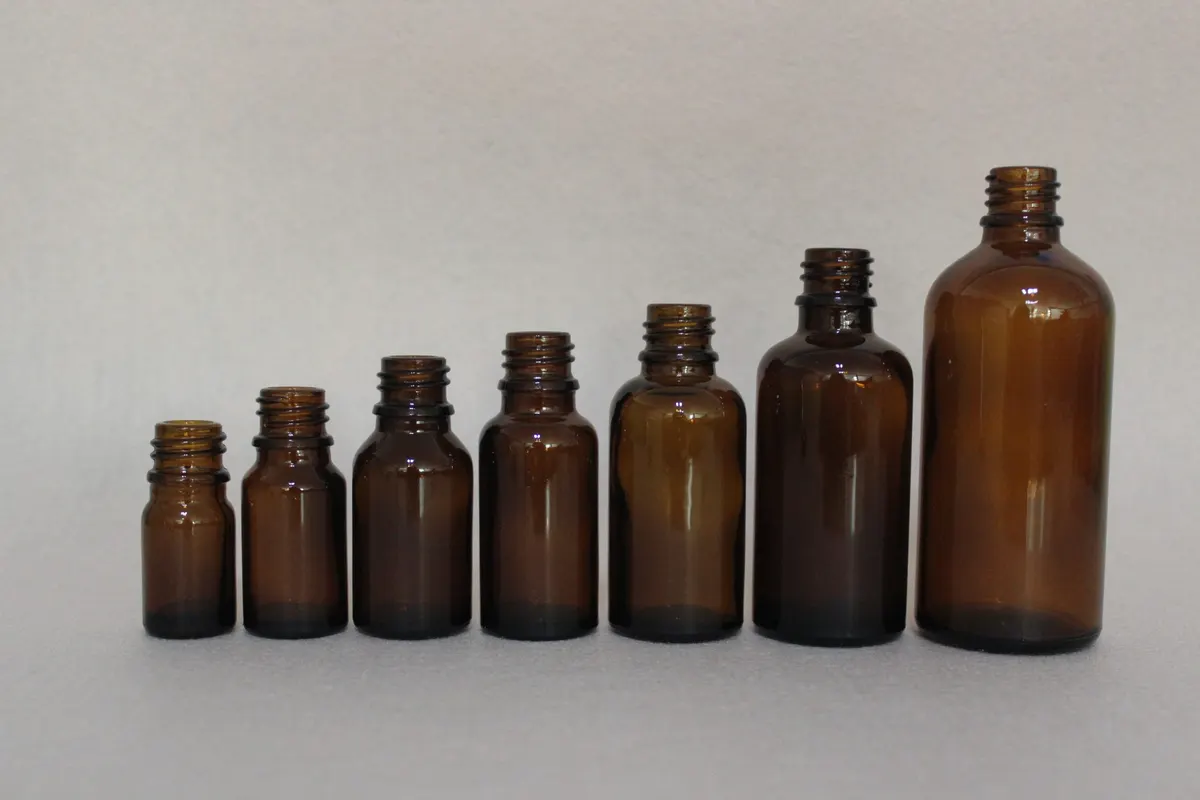
Testing samples before a volume order
Wrong finishes, shapes and closures are usually discovered after 5,000 units have landed. A short trial prevents that.
- Get a sample case of the bottle together with three candidate closures.
- Fill with your actual product, not water.
- Stand twenty filled units upside down on paper towels for 48 hours and look for leaks.
- If the end user will reopen the pack, put the closure through a hundred open-and-close cycles.
- Place the volume order only after those pass.
FAQs about 2 oz glass bottles
Which finish does a 2 oz Boston round have?
Normally 18-400. Cylinders are commonly 20-400 and wider-shouldered bottles 22-400.
How much do 2 oz glass bottles cost wholesale?
There is no fixed list. We quote per project, and the closure type, glass colour, any decoration, quantity and freight terms set the figure.
Does a tincture bottle need a child-resistant closure?
That depends on the product and the jurisdiction. Ingestible products with active compounds are often required by state or federal rule to use CR packaging, so check before the specification is fixed.
How quickly can an order ship?
Dispatch timing is confirmed per order and varies with whether the bottle is a stocked item or a production run, and with the quantity. Light cases do make small repeat shipments simple to arrange.