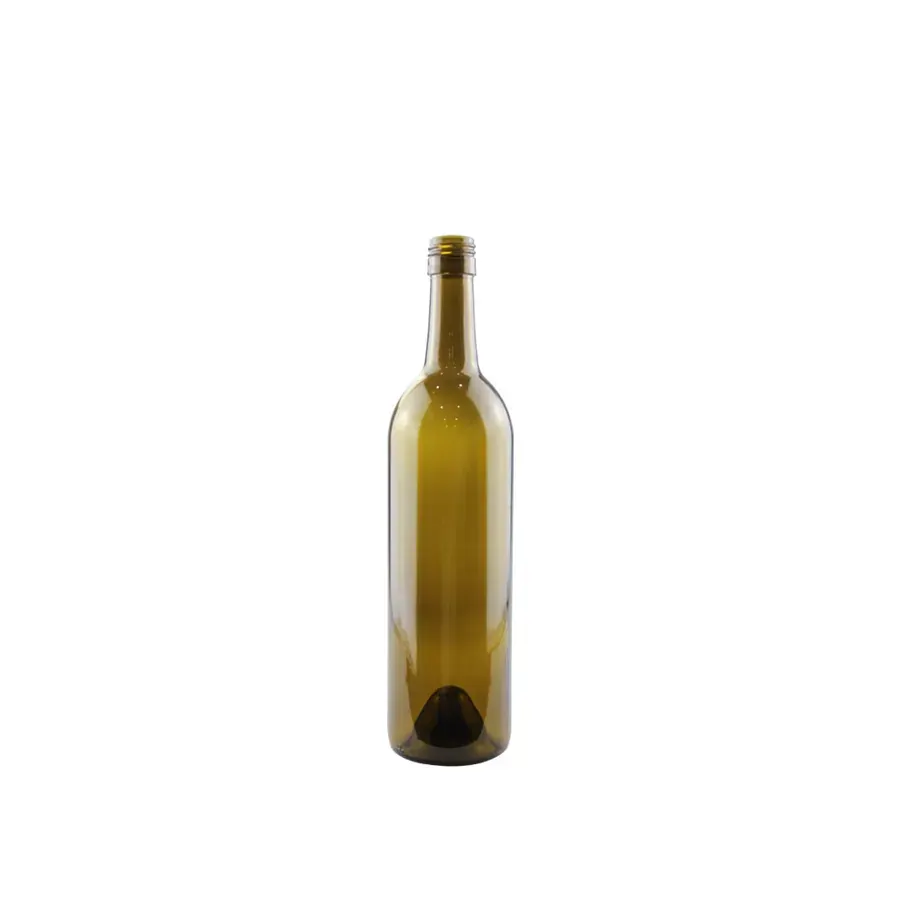
Sizes are easiest to judge against the standard, and the benchmark most wine, spirits and oil buyers start from is 750ml glass bottles.
A wholesale 250ml glass bottle order comes down to three choices: the bottle family your product belongs to, the neck finish and the closure that seals it, and how many bottles travel per pallet. Expect roughly 3,500 to 5,000 bottles on a standard export pallet and approximately 55,000 to 70,000 in a 40HQ container, with shape and carton format deciding where you land in that range. North American suppliers list the same bottles as 8 oz, because 250ml is about 8.45 US fluid ounces.
Nominal and brimful capacity to state in the brief
250ml converts to approximately 8.45 US fluid ounces, or 8.8 UK fluid ounces. That is the fill volume. Brimful capacity, meaning the volume to the rim, is 5-8% higher, so a bottle sold for a 250ml fill usually measures 260-270ml brimful.
Ask every supplier which of the two figures a quote refers to. Quotes that mix them up cause trouble later with label approval and regulatory filings. Headspace, the gap left above the liquid, also needs a stated value when the product is hot-filled or carbonated.
If your market works in ounces, the same family is described on our 8 oz glass bottle page. Neighbouring volumes are laid out in the bottle size chart.
250ml formats by product category
A 250ml bottle may be a hot-sauce woozy, a juice shot, a maple syrup sampler, an aromatherapy bottle or a quarter-bottle of spirits. Each category has settled on its own shape and neck.
| Product | Usual shape at 250ml | Neck finish and closure | How it is filled |
|---|---|---|---|
| Hot sauce and condiments | Woozy or round sauce bottle | 24-28mm continuous thread (CT) | Hot fill or ambient |
| Juice and functional shots | Tall cylinder | 38mm lug or 28mm CT | Cold, sold through the cold chain |
| Syrups and mixers | Squat round or flask | 38-48mm lug | Hot, sealed under vacuum |
| Honey and preserves | Wide-mouth round | 48-58mm lug | Hot |
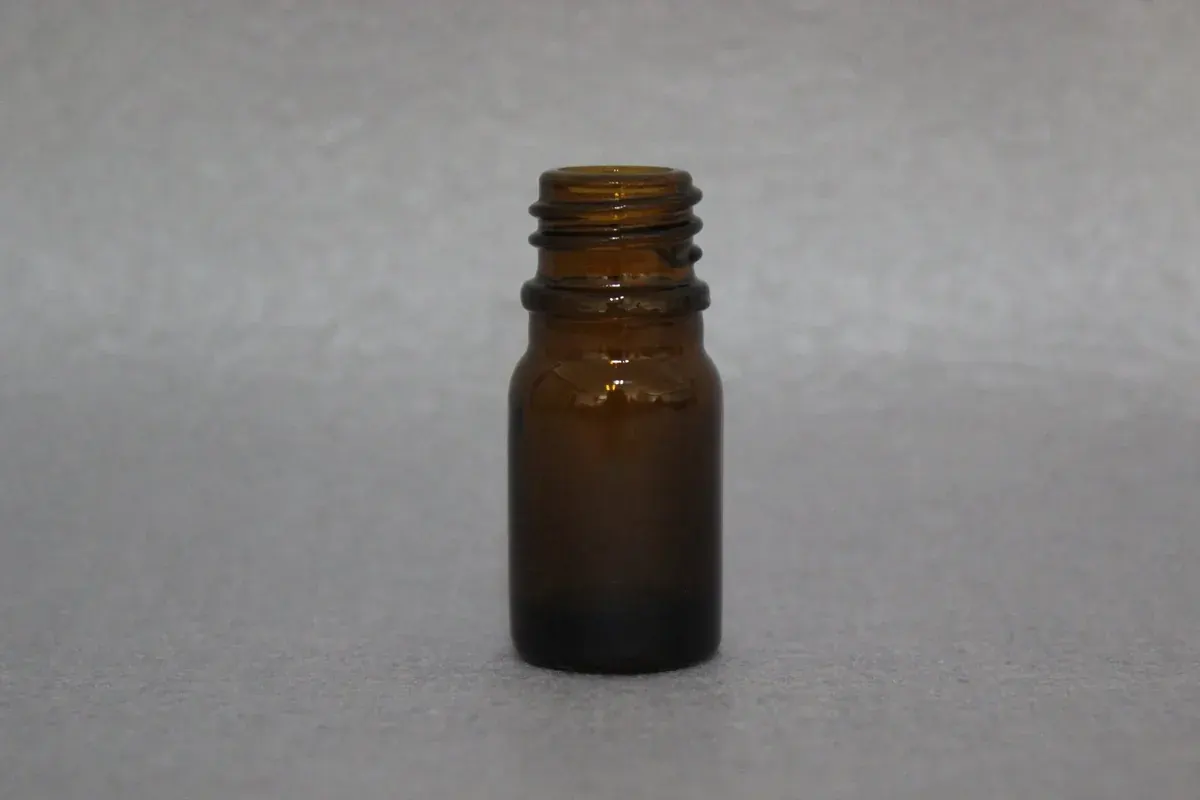
| Cosmetics and aromatherapy | Boston round, dropper bottle, roll-on | DIN18 with dropper or sprayer | Room temperature |
| Spirits and wine | Quarter-bottle or miniature | ROPP cap or bar-top cork | Ambient |
Sauce and condiment bottles account for the largest volume, bought by hot sauce, soy sauce and specialty condiment brands in container loads. Juice and shot cylinders are made for grab-and-go chilled sales. Syrup and mixer bottles take a lug neck for hot filling, or a pump-compatible neck when the product is dispensed.
Boston rounds, amber dropper bottles and roll-ons serve essential-oil, serum and home-fragrance brands. We place these formats for cosmetic and aromatherapy use only. For wine in this volume, see the wine bottle sizes guide; clear beverage bottles are covered under flint 250ml and 150ml formats.
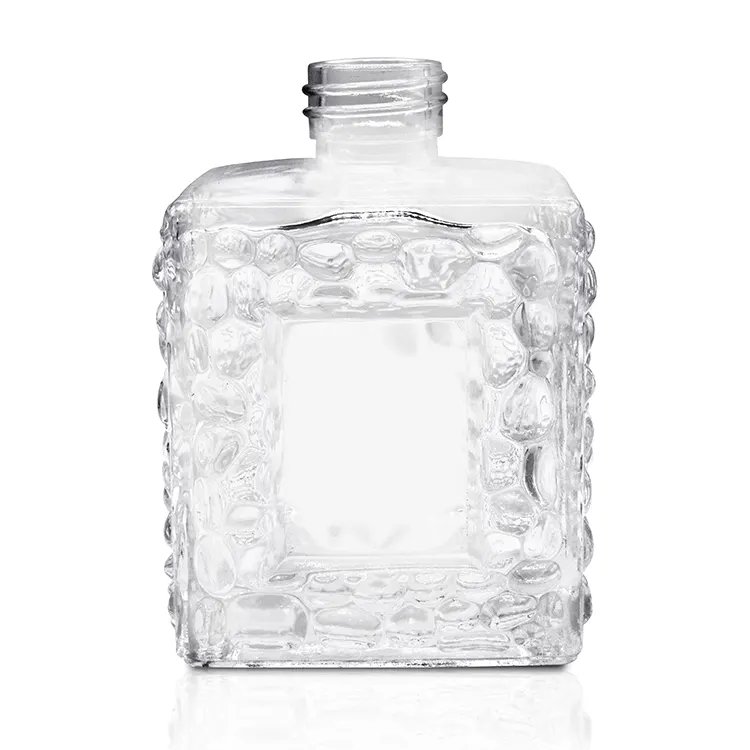
Matching the closure to the fill process
How the product is filled decides the closure more than the bottle shape does.
- Hot-filled sauces and syrups: lug caps, also called twist-off, from 38mm to 48mm with a plastisol liner. The liner pulls a vacuum as the contents cool, and the button in the cap shows the consumer that the seal has held.
- Cold-filled juice: the same lug system, or a 28mm CT cap.
- Hot sauce: a 24mm or 28mm CT cap is the usual choice, moving to a 38mm lug when a hot-fill recipe needs the vacuum seal.
- Oils and dressings: 28mm or 31.5mm caps carrying a pourer fitment, on ROPP or CT necks with a non-drip insert.
- Cosmetics and aromatherapy: 18mm to 20mm droppers, sprayers or disc-tops.
We quote each bottle with its finish code and source the closure against that code on the same order. Buying bottles from one vendor and caps from another is the usual cause of threads that do not mate. When you compare offers from several suppliers, the closure and finish guide explains how the codes are written.
The closure is also a big part of unit cost at this capacity and the part that fails most often. Have samples couriered and run a fill-and-cap trial on your own line before committing to a container.
Glass colour and bottle weight
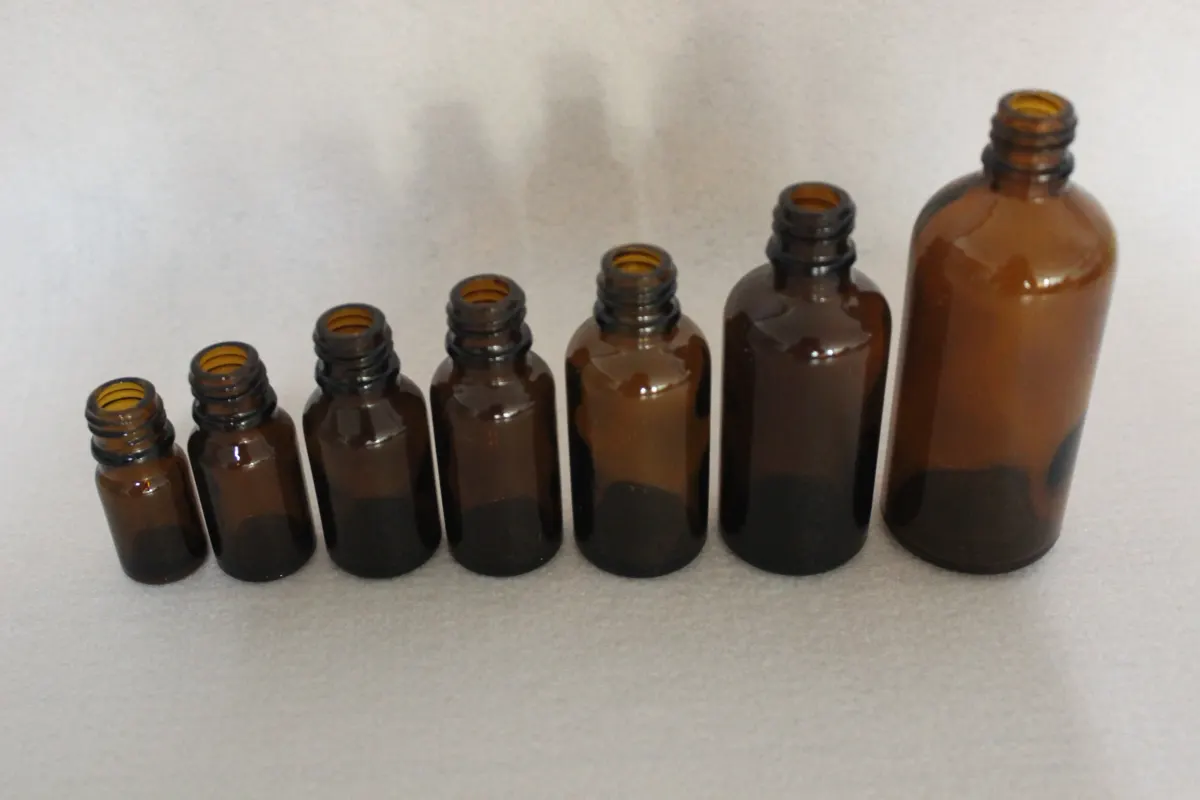
Colour follows the product. Flint, the trade name for clear glass, leads in food and drink because the contents sell themselves: a bright hot sauce, a jewel-toned syrup, fresh-pressed juice. Amber is for contents that light damages, such as some juice blends, edible oils in small bottles, and cosmetic and aromatherapy products where UV protection has a job to do. Antique green shows up mostly on wine and spirits quarter-bottles, where the category expects it.
Taking a bottle from 200g down to 170g, as an illustrative case, removes only 30 grams each, yet across one container load of 60,000 that adds up to 1.8 tonnes of glass. It shows up in material cost, in freight and in any sustainability claim.
The cost is strength. Thin walls on a small bottle break more easily under point impact, in transit and on a fast filling line. We suggest lightweight versions only once a transit test through your real distribution route has passed. First-time importers, and brands whose goods are handled at several stages, are better served by standard weight.
Labels and decoration on a small panel
The label panel on a 250ml bottle is short, often less than 90mm of usable height. Keep the front to brand, product, volume and the legally required elements, and push the rest to a back label or a neck tag.
Shape decides the label layout. Straight-wall cylinders suit separate front and back labels. Tapered woozy bottles and flasks often need one wrap cut on a custom die. For any wraparound, check the artwork against the real circumference and taper, since a design approved as a flat proof can wrap badly on a curved wall.
Screen printing is good value at this size because the decorated area is small: a one-colour print costs far less than on a 750ml bottle and reads the same on shelf. A shrink sleeve gives full-body graphics and can extend over the cap as a tamper-evident band.
Whichever route you take, approve production only after seeing a printed sample on the actual bottle.
Pallet loads, container loads and shipping documents
Small bottles pack tightly, which is why a pallet reaches 3,500 to 5,000 pieces and a 40HQ container 55,000 to 70,000.
Because one volume serves several categories, a brand with more than one line can often combine its 250ml formats with a single supplier in a single container. A sauce maker adding a syrup, or a juice brand adding shots, lowers the freight carried by each SKU this way.
For food programmes, specify food-grade soda-lime glass, divider cartons and ISPM-15 heat-treated pallets, and request food-contact documentation for both FDA and EU markets with the shipment.
FAQ
Can one 250ml bottle be used for both sauce and syrup?
Often it can. Both products are normally hot-filled, so a round bottle with a 38-48mm lug finish handles either. What differs is how well the shoulder drains a viscous product and the shape of the label panel, and we check both on samples.