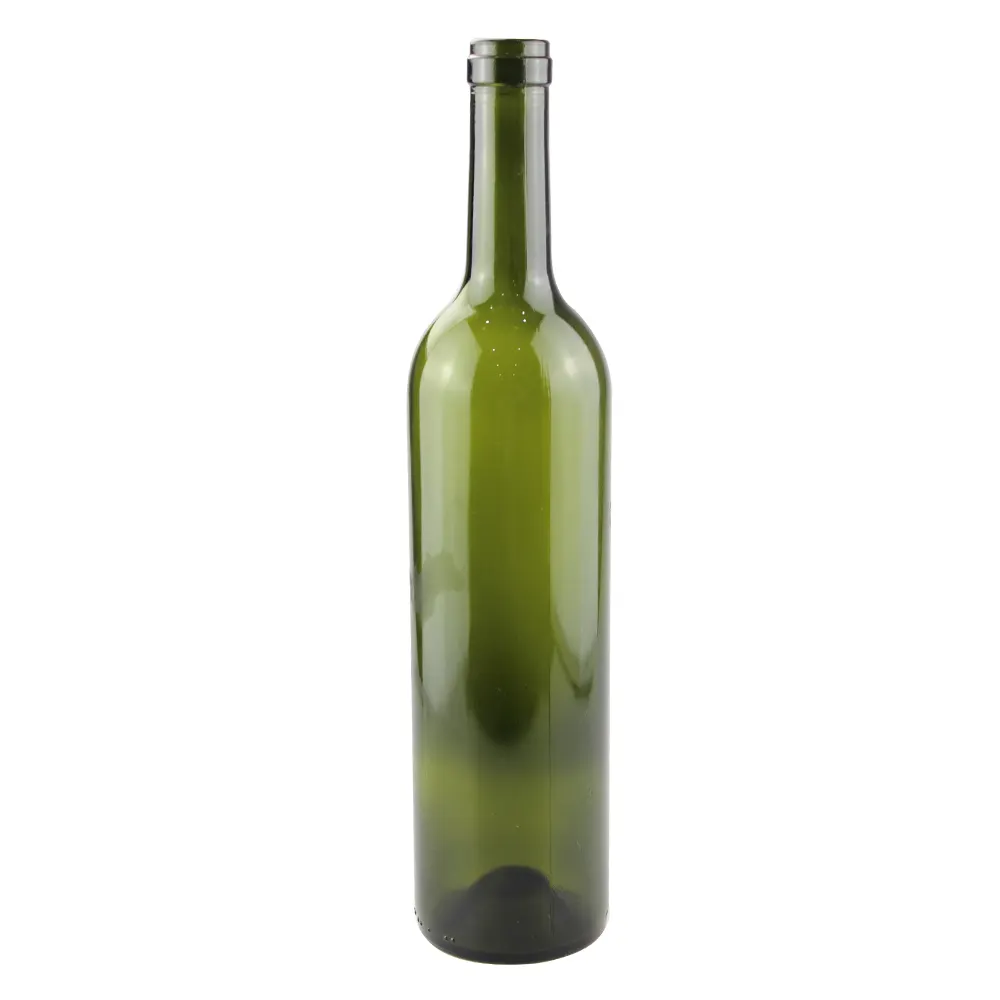
Part of our glass wine bottles range; the stock moulds are pictured at the end of this guide.
Wine bottles are etched by one of four methods: sandblasting, laser, acid or wheel engraving. Sandblasting gives the deepest frost and suits one logo repeated across a run, while laser needs no mask and can put a different name on every bottle. Keep lines above roughly 0.5mm, avoid photographic gradients on blasted work, and expect the per-bottle figure to be quoted per project, because the mask, the depth, any colour fill and the quantity all move it.
The four etching methods compared
The method sets the limits on artwork, the tooling involved and how the cost behaves as quantity changes, so it is the first decision in the project. The depths below are typical planning ranges; the working figure is confirmed against your glass, artwork and quantity.
| Method | Artwork it handles best | Depth and contrast | Colour fill | Limits |
|---|---|---|---|---|
| Sandblast | Line logos, monograms, borders, text, repeat patterns, large frosted areas | 0.08–0.40 mm carved; strong matte contrast; stepped relief possible | Gold, white or frosted; the carved channel holds paint well | One resist mask for each design |
| Laser | Fine detail, script, photos and portraits, serial numbers, variable data | 0.02–0.12 mm; a brighter, grainier frost with less contrast | Uncommon; white or gold is possible on the shallow mark | Can look faint on dark glass; heat-affected zone risk on thin walls |
| Acid etch | Even satin over a whole surface, subtle line logos and text | 0.01–0.06 mm; uniform, low-contrast frost with no relief | Rarely used | Shallow effect only; chemical handling and waste treatment add overhead |
| Wheel engrave | Crystal-cut motifs, deep facets, heritage crests | 0.20–1.00 mm cut; highly refractive; finished by hand | Gold leaf on the cut facets | Slow hand work; unsuited to volume or variable data |
All four are permanent. The mark is in the glass, so ice buckets, washing, UV and years in a cellar do not lift or fade it the way they can a paper label.
Sandblasting
Abrasive media is fired at the bottle through a resist film cut to the artwork, and the exposed glass is carved away. The result is an even frost with a soft feel, and the depth can be varied to build a multi-level carved effect. Because every design needs its own mask, the method makes most sense when one design is repeated many times.
Laser etching
A focused beam micro-fractures the surface along a digital path, so there is no physical tooling at all. That makes single bottles and short personalised runs practical. The trade-off is a shallower mark, which on dark glass may need colour fill to read clearly.
Acid etching and wheel engraving
Acid etching masks the bottle and dissolves a thin surface layer in a chemical bath. We suggest it mainly when the aim is an all-over frosted canvas, not a crisp logo. Wheel engraving is the craft option, in which a shaped wheel cuts a deep facet by hand; treat it as a low-quantity service for special pieces.
Projects often mix methods. A sandblasted crest can carry a laser-etched vintage date, and an acid-frosted body can take a wheel-cut monogram. Ask any supplier which methods they can actually run, what depth is reliable on your wall thickness, and which method gives the best contrast for the money at your quantity.
Matching the method to the order
The choice comes down to set-up cost against personalisation. Typical order sizes by occasion show how that plays out.
| Use | Typical run | Usual method | Main risk |
|---|---|---|---|
| Weddings: names, dates and motifs on centrepiece, toasting or favour bottles | 12–200 bottles | Laser, or sandblast with a shared mask; frosted monograms with metallic infill are the most requested | A fixed event date with no second attempt |
| Anniversaries and family milestones, such as a 25th anniversary or birth-year vintage | Single bottles | Laser for a one-off; sandblast for a crest reused every year | Faint contrast on dark glass |
| Corporate gifting | 100–5,000 bottles | Sandblast, since the mask is spread over the run and the frost is deep and consistent | A mis-cut mask repeating one error on every bottle |
| Winery and distillery limited editions | 500–50,000 bottles | Etching combined with frosting, coating or screen printing | Capacity in peak quarters |
A wedding for 50 guests with 50 different names is a laser job, driven by a spreadsheet with nothing to tool. A logo repeated across a gifting programme is a sandblast job, and the mask proof deserves the closest scrutiny because any fault in it is copied onto every piece. Limited editions usually draw on the wider custom wine bottle options as well.
What the bottle allows
Wall thickness and safe depth
Depth is limited by how much glass can be removed safely. A standard wine bottle wall is 1.8–3.0 mm, so a decorative sandblast of 0.08–0.40 mm takes off only a skin and leaves the structure sound. Going deeper on thin shoulder glass approaches the wall thickness and risks breakthrough, or a thinned patch that weakens the bottle under internal pressure. Heavier prestige and spirits glass tolerates deeper, more refractive cuts, and lightweight bottles should stay shallow. The maximum is set against the actual wall of your bottle, not taken from a general rule.
Flat body versus shoulder and base
The straight cylinder is the forgiving zone. A flexible resist film wraps it cleanly, a laser path stays uniform and the depth comes out even. The shoulder and the transition towards the punt curve in two directions, so a flat mask tends to bridge or lift, leaving ragged edges or bleed beneath the resist. A laser beam meets those zones at a changing angle and can leave the mark uneven or partly missing.
Put names, dates and logos on the flat band. Use the shoulder and base for patterns or wrap-around frost, where small variations in depth do not matter. If the design has to cross a curve, the mask is either pre-shaped to the contour or the artwork is split into smaller panels, and the result is proved on a test piece. Laser is the other route, since it uses no mask. Say which zone the artwork sits on at the outset, because it changes both the method we suggest and the proof you get back.
Annealing and stress
Etching is carried out on finished, fully annealed bottles, with forming stress already relieved. Decorative depths do not put meaningful stress back. The risk is confined to very deep carving near the base or neck, where a thin section can concentrate stress under heat or pressure, so deep cuts are kept out of those zones. Two questions settle it: is the work done on annealed stock, and was the maximum depth checked against the wall thickness of this bottle.
Leaving room for the label
Most etched bottles still carry a printed front label, a back label or a neck tag. Reserve a clean, un-etched panel for the front label, and place the etch on the shoulder, the back, or as a band framing the label. Etching under a label wastes the decoration and can interfere with adhesion. Give the label size and position in the artwork brief. Where the plan is an etched crest above a printed label, the wine bottle label work is scheduled in the same production flow so both arrive together.
Bottle shapes that etch well
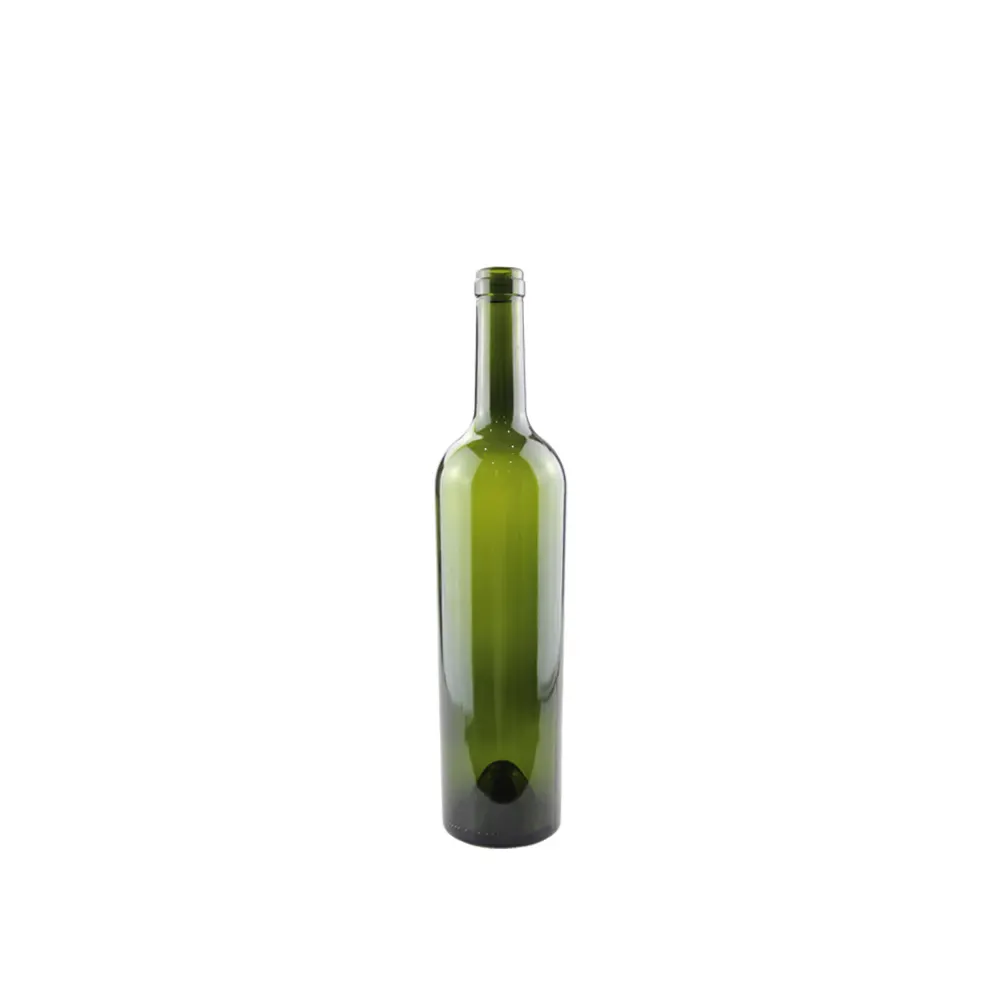
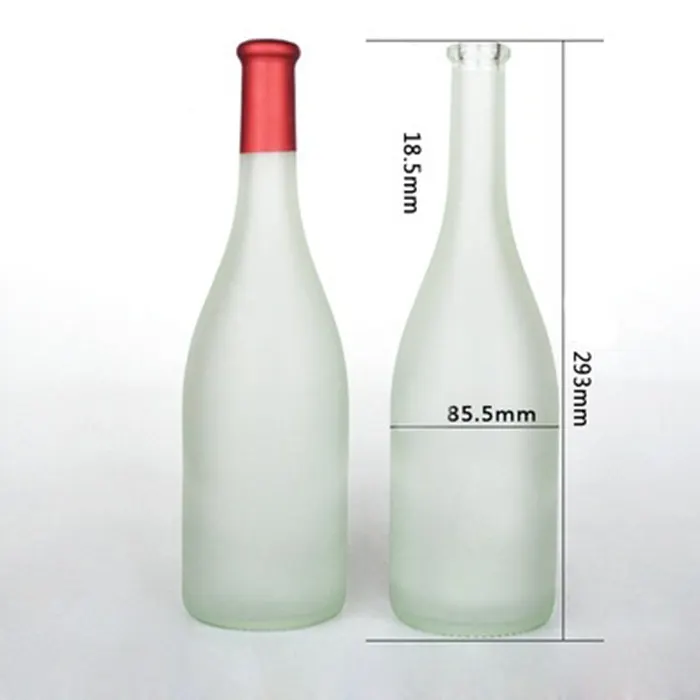
Almost any wine bottle can be etched. Bordeaux and Burgundy shapes in green or flint are the usual choice, tall hock bottles suit vertical designs, and heavy-base bottles add weight for gifting. Frosted or coated bottles give strong contrast when the etch cuts through the coating to the clear glass beneath. Base shapes are listed in the wine glass bottle collection; where a proprietary mould is needed, the etched zone should be written into the bottle brief from the start.
Sampling in five checkpoints
An etch cannot be undone, so sampling carries more weight here than with most decoration. At each checkpoint the buyer supplies something and should receive something in return.
| Checkpoint | You supply | You should get back |
|---|---|---|
| Artwork intake | Vector file (AI, EPS or PDF), fonts licensed or outlined, a dimensioned sketch of position and size, Pantone or colour code for any fill | A marked-up proof showing that line weights survive and that lines under the process minimum will not fill in |
| Mask or plate | Sign-off on the scaled proof and the method | The mask material and how it will be registered to the bottle, above all on curved zones |
| First-piece test etch | The glass colour you intend to order | Photos from several angles and a measured depth reading before more samples are cut |
| Limit sample | Written approval of a sealed reference sample | Two sealed copies, one held at the production line and one by you |
| Mass production | The confirmed order and event date | In-line inspection, a final depth report and random shipped samples before the balance is dispatched |
Inspection is run to an AQL of 1.0 for critical depth and 2.5 for the cosmetic consistency of the frost. Holding two sealed samples means every batch is judged against one physical standard and not a photograph.
Approve on the production glass colour. Frost reads differently on flint, green and amber. If the design includes colour fill, the limit sample must include it too; approving a blank etch and imagining the gold is the usual source of a mismatch.
How per-bottle cost and scheduling behave
We do not publish rates, since depth, fill and cure conditions change the figure. Pricing and minimums are quoted per project, and four things drive them: the mask or tooling, the etch depth and any colour fill, the quantity, and the freight terms.
With sandblasting the main fixed cost is the mask, not the blasting itself. On a small run that cost falls on few bottles and the decoration looks expensive per piece; on a long run of the same design the mask is reused and its share shrinks to a small, steady amount. Laser shows almost no such step, as set-up is close to zero, which is why it is kept for variable or very small jobs. Wheel engraving has the longest schedule of the four.
Capacity tightens at two points in the year: the wedding season, spring to autumn in the northern hemisphere, and the year-end corporate gifting window from about October to December. Ordering outside them reduces schedule risk. Event work is date-locked, so sampling is brought forward and the approved sample sealed well ahead; where the design permits, a small buffer of etched stock is held. Winery and corporate programmes are more flexible on date but heavy on volume, so tooling should be booked early in the peak gifting quarters.
Briefing an etched bottle project
Four items make a workable first brief:
- the artwork, as a vector file if one exists, with its position on the bottle;
- the bottle style and glass colour;
- the quantity, and whether it is one design or variable personalisation;
- the event or delivery date.
Before sending it, decide between laser and sandblast from the quantity and the contrast you need, fix the glass colour for sampling and mark the panel reserved for the front label. The order of work is the same for twelve bottles or twelve thousand: proof, sealed sample, production. For moulds, capacities and wholesale structures beyond decoration, see the glass bottle collections overview.
Frequently asked questions
How does an etched bottle differ from a printed one?
Printing lays ink or ceramic colour on the surface. Etching removes glass, leaving a frosted mark with texture. The two combine well when a design needs both texture and colour.
What is the minimum order for etched wine bottles?
It depends on the method and is confirmed per design in the quotation. Laser personalisation can begin with a single sample bottle; masked methods are governed by tooling.
Can each bottle carry a different name or date?
Yes, by laser, working bottle by bottle from your spreadsheet of guest names, table numbers or dates. Sandblasting can do it too, but each variant needs a separate mask, so it only pays when the variants are few.
How long does an etched order take?
Timing is quoted per project once the bottle, decoration and production schedule are confirmed.
Can the etched area be filled with colour?
Yes. Gold, white, silver or a custom colour can be painted into the etch, and it works best on sandblasted designs. A filled sample is made for approval before the run and sealed as the limit standard.
Which artwork file format is needed?
AI, EPS or PDF vector files with fonts outlined convert directly into masks or laser paths and scale without loss. High-resolution images can serve for laser photos and portraits. Every file is reviewed and returned as a dimensioned proof showing what will etch, at what size and where.