Part of our series on glass beverage bottles wholesale — read the overview first if the format is new to you.
A custom soda bottle is a pressure vessel first and a branding surface second. The closure has to be chosen before the mould is drawn, because a swing-top needs bail lugs formed into the neck, and embossing is limited to 0.8 mm to 1.5 mm of relief placed clear of the heel and finish. The bottles we specify carry a minimum burst pressure of 200 psi (13.8 bar). If you need glass sooner than a mould project allows, our stock soda bottles in bulk cover ready shapes.
Crown cap or swing-top
This decision belongs at mould design. A crown finish and a swing-top finish are different neck geometries, and the bail-lug shape for a swing-top is part of the glass, so it cannot be added to a finished design later.
| Crown cap | Swing-top | |
|---|---|---|
| What it offers | Efficiency on the filling line | Theatre at opening, and a bottle that reseals |
| Neck requirement | Crown finish held to plus or minus 0.1 mm | Dedicated finish with bail lugs moulded in |
| Typical use | Single-serve craft soda, such as a 355 ml body | 750 ml and 1-liter tonic or ginger beer poured over two or three occasions |
| Extra check | Fit with the counter-pressure filler | Gasket compound and seal retention |
For swing-tops on carbonated drinks, specify an EPDM or food-grade silicone gasket rated for carbonated beverages. Before approving the closure, confirm that the seal holds at 4 volumes of CO2 over 60 days. Brands that want to try the format before paying for a bail-neck mould can begin with the stock shapes on our wholesale swing-top bottle page.
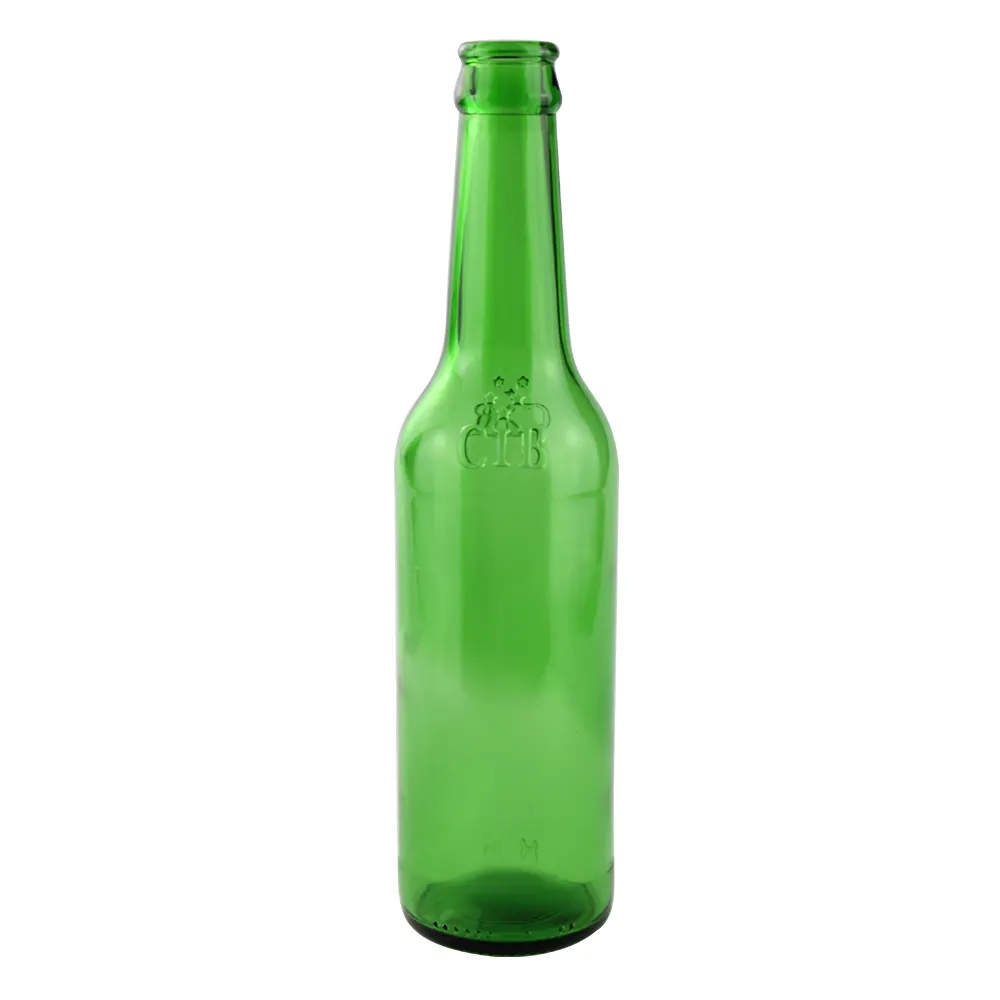
Pressure, wall thickness and filling-line fit
Carbonation sets the engineering. Craft sodas are usually carbonated to 3.0 to 3.8 volumes of CO2, and ginger beers and mixers go up to 4.0. Take 3.8 volumes in a warehouse at 38 degrees Celsius as the worst case, and the pressure inside the bottle comes close to 85 psi (5.9 bar).
Against that, the specification is a minimum burst pressure of 200 psi (13.8 bar), about 2.4 times the worst-case service pressure, confirmed by ramp testing on each production lot. Walls run from 2.6 mm to 3.2 mm, with the glass distribution from heel to shoulder tightly controlled. The embossed areas of every custom mould get a finite-element review before any steel is cut.
The bottle also has to survive your process, which is a separate question from surviving storage:
- Counter-pressure filling. The filler clamps the finish, which is why crown-finish dimensions are held to plus or minus 0.1 mm.
- Tunnel pasteurization. Craft sodas without preservatives are pasteurized at 65 to 70 degrees Celsius. Crown and swing-top formats both handle it, and the thermal profile goes into the bottle's validation file.
- Hot-fill, then carbonate. Rare for soda, common for carbonated juice. Bottles for this process are also rated for a 42-degree thermal-shock differential.
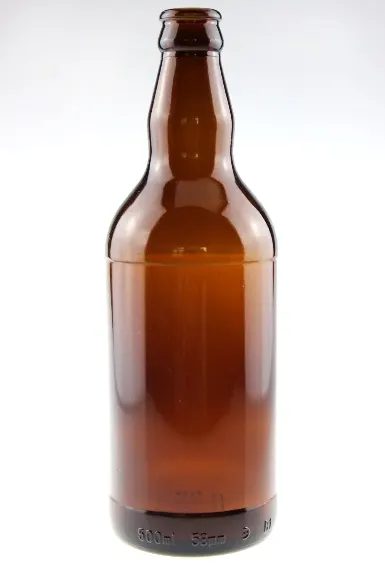
Embossing and proprietary shapes
Soda is a fast-moving, low-priced product, so a packaging mistake has no margin to hide in. Brands still pay for their own moulds, and the reasons are sound. An embossed bottle is recognisable through a cooler door before anyone reads the label, and it is the one brand asset a competitor cannot copy by redesigning a label. A private mould also fixes your neck finish and closure choice once. It is how regional sodas, kombucha-soda hybrids and upmarket mixers get away from the commodity 12 oz longneck.
Carbonation adds one rule to the usual embossing practice for food glass: relief must not create thin-wall stress points. Keep it between 0.8 mm and 1.5 mm, and keep it off the heel and the finish, where internal pressure concentrates. Three placements are traditional:
- a ring on the shoulder, which shows in the cooler;
- the brand name in a band at the heel, discovered when the bottle is in the hand;
- a mark on the base, often the founding year.
A proprietary profile might be a faceted body, a squat 250 ml mixer bottle or a retro 6.5 oz (192 ml) contour. Each starts as a 3D print, moves to a single-cavity sample mould for line trials, and then to production cavities. The complete sequence is set out in our guide to glass bottle mould development.
Printed labels and returnable bottles
Decoration can sit on top of embossing. ACL, or applied ceramic label, is screen printing fired at 600 degrees Celsius. A single-colour ACL outlasts the pasteurizer and the crate washer indefinitely, and returnable-bottle schemes specify it for that reason. Non-returnable craft lines generally use pressure-sensitive labels.
A soda brand moving into beer formats can often share a mould platform. Pressure ratings and crown finishes overlap almost entirely, as the page on custom beer bottles shows.
Development stages, packing and lot documents
A project passes through three stages. The first covers the design brief, capacity and closure selection, a 3D render and a printed model. The second is the single-cavity sample mould, trial bottles, and pressure and line tests at your own filler. The third is the production mould set and the first production campaign.
Pricing, minimum quantity and schedule are quoted per project. They move with the mould, the decoration, the quantity and the freight terms. Rated pressure ware also needs a longer furnace changeover than cosmetic glass, which pushes the first run higher than a cosmetic mould would require.
For freight planning, 355 ml custom bottles pack 24 per case, or in bulk at roughly 2,600 to 3,000 per pallet. A 40HQ container takes 24 to 26 pallets, which works out at about 65,000 to 75,000 bottles.
Ask for three documents with each lot: burst-test certification, annealing records and finish-gauge reports. Co-packers' insurers and retail buyers increasingly expect them. A useful brief names the container, closure, decoration, quantity and destination, even if some of those are still open.
FAQ
What is the minimum order for a custom soda bottle mould?
It is set per project and depends on the mould and the line it runs on.
How long does development take?
The schedule is confirmed per project once the mould, decoration and line slot are known. The three stages above always apply.
Can a logo be embossed on a carbonated bottle?
Yes, within the relief limit and away from the heel and finish. Shoulder rings and heel bands are the usual positions.