Part of our glass beer bottles range; the stock moulds are pictured at the end of this guide.
The first thing a drinker touches is not the label — it is the bottle. For craft breweries, custom beer bottles are the difference between a six-pack that disappears from the cooler and one that gets passed over for the familiar amber long neck beside it. Shape, color, and closure all tell a story about your process, your heritage, and your commitment to quality.
Yet most brewery owners discover the hard way that beer bottles are a specialized category of glass. They are pressure-rated, crown-capped, and filled on high-speed lines that tolerate zero finish variation. This guide covers the shapes, the closures, the color logic, and the supplier questions that matter when you move from stock packaging to a custom beer bottle of your own.
Key Takeaways
- Amber, green, and colorless glass each protect or expose your beer differently — amber is the workhorse for hop-forward styles.
- Crown caps and twist caps require different neck finishes; pick before you build the mold, not after.
- Filling line compatibility (height, neck diameter, cap type) must be verified before you commit to a mold.
The Three Classic Beer Bottle Shapes
Every craft brewery ends up choosing among the same three archetypes — and each communicates something different on the shelf.
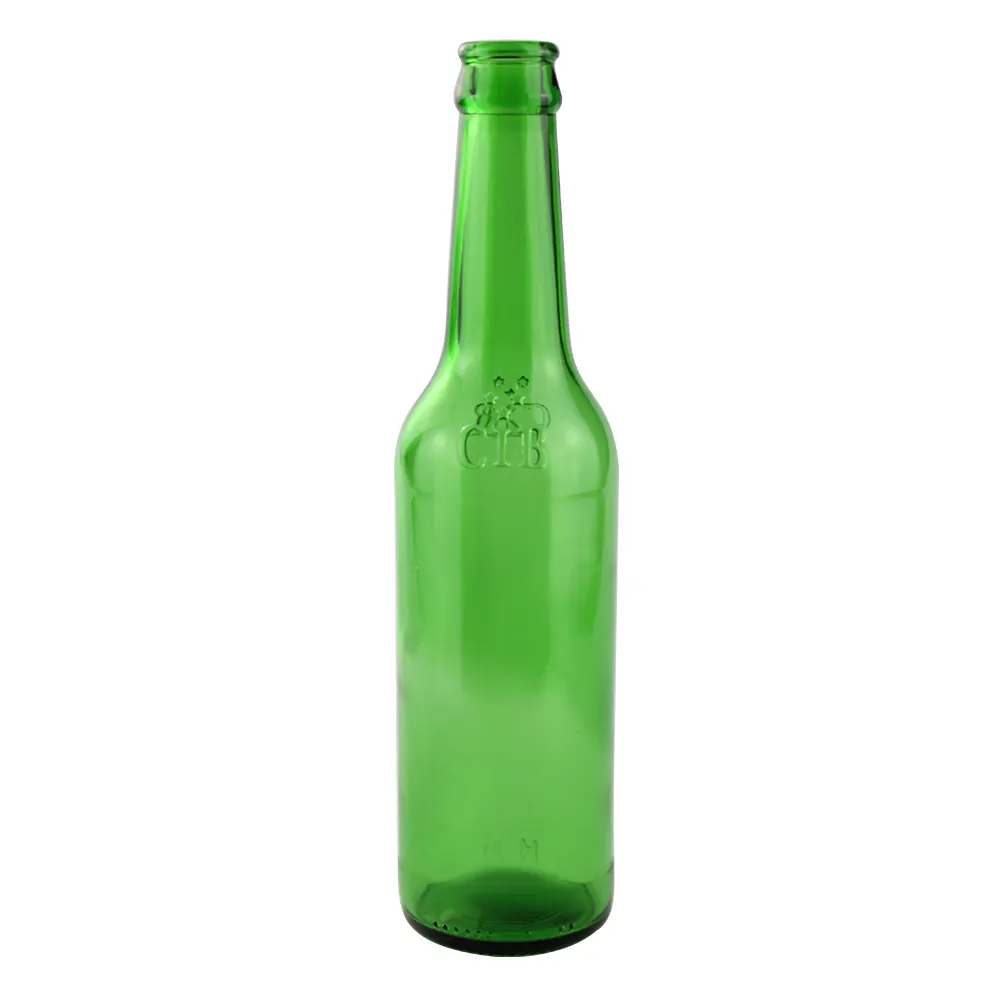
- Long neck (NR — non-returnable): The global standard. Tall, slim, with a defined shoulder and a long neck built for a crown cap. It looks premium in cans-and-bottles displays and works with virtually every filling line. Most custom long neck beer bottles are variations on this profile.
- Stubby (short neck): Squat, wide, and heavier. The stubby shouts “old-school lager” and was the default for decades in Australia and the American Midwest. Its shorter height means better pallet density — about 10% more bottles per pallet than long necks.
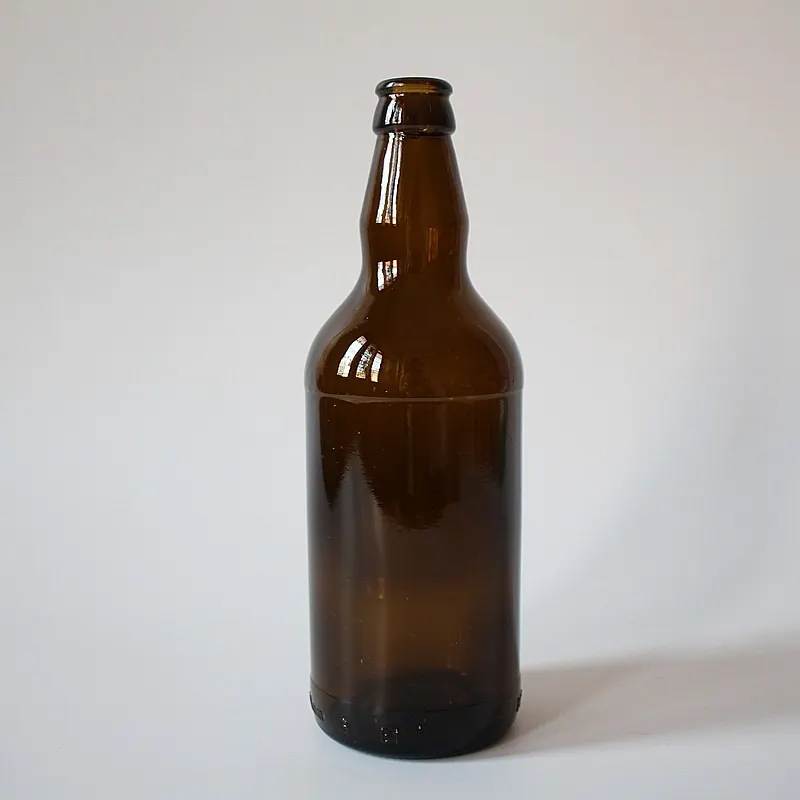
- German-style (steinie): A tapered, barrel-shaped body with a short neck and no defined shoulder. Steinhaus heritage, high perceived authenticity, and a distinctive hand feel. It is becoming the signature format for hazy IPAs and German-style lagers.
Your beer style should lead your shape choice: a hazy IPA in a stubby feels wrong; a crisp Helles in a German-style bottle feels inevitable. But shape also affects your production speed and freight — a stubby’s extra glass weight adds shipping cost per bottle, while the German profile is often lighter and stacks denser.
Color: What Amber, Green, and Clear Actually Do
Beer is more light-sensitive than most drinkers realize. The “skunky” aroma of a light-struck beer is caused by UV rays reacting with iso-alpha acids from hops. Glass color is your first line of defense.
| Glass Color | Light Protection | Best For | Considerations |
|---|---|---|---|
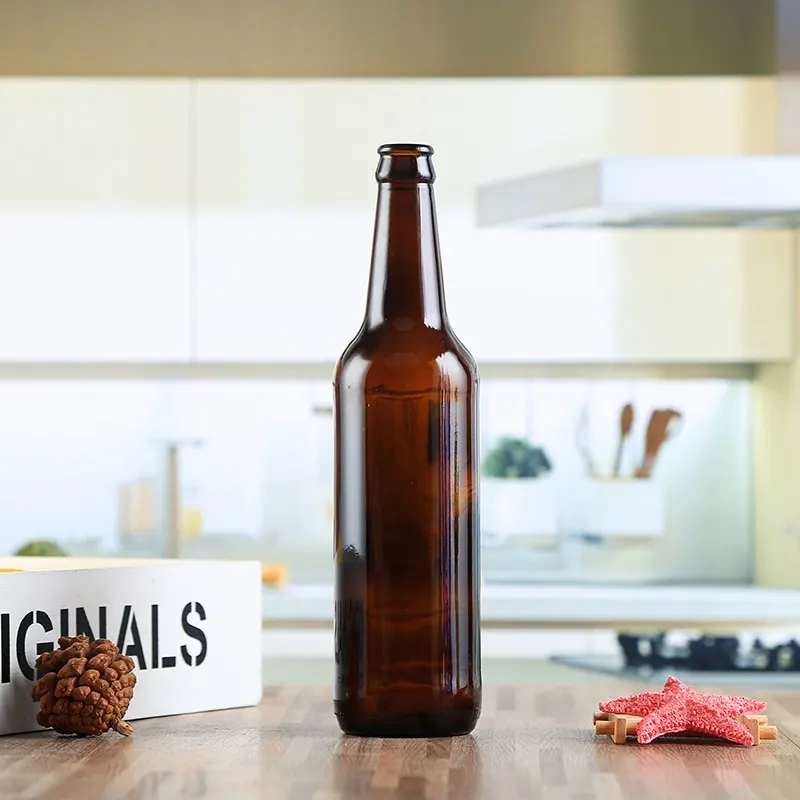
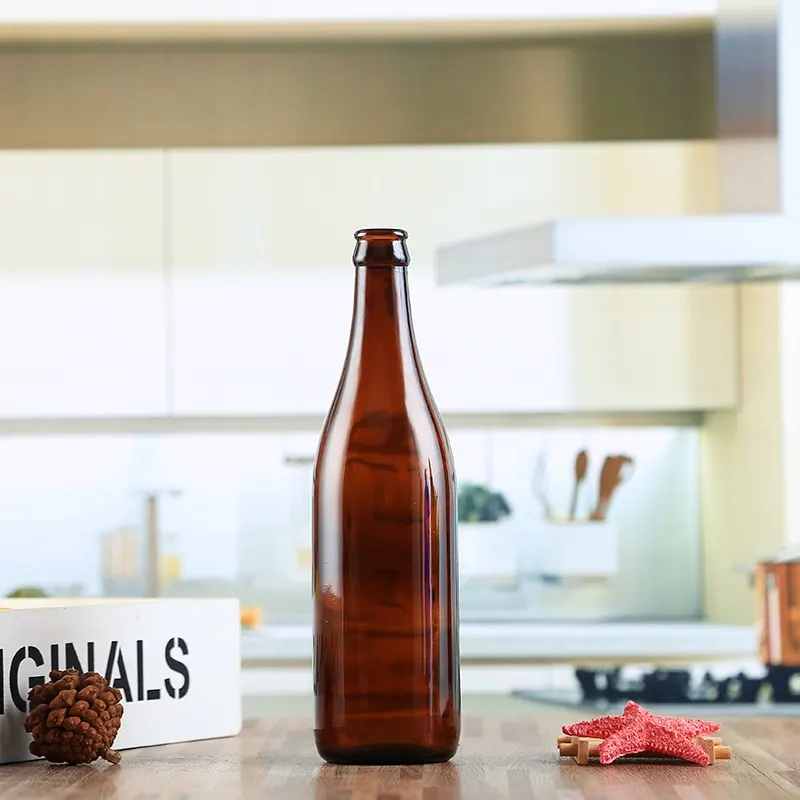
| Amber | Excellent (blocks most UV) | IPAs, lagers, anything hop-forward | The industry default for a reason; hides sediment |
| Green | Moderate | European-style lagers, imported vibes | Classy look, but offers less UV protection than amber |
| Clear (flint) | Minimal | White ales, witbier, specialty releases | Max shelf impact; requires barrier protection or dark cartons |
| Dark amber/black | Maximum | Stouts, porters, seasonal releases | Premium feel; harder to gauge fill level visually |
If you are ordering amber beer bottles wholesale, you are making the safest technical choice for hop-forward styles and the most common choice for retail — drinkers associate amber with “beer” instinctively. Clear glass only makes sense for beers you sell out of the light quickly, or where the visual of the liquid itself is the product.
Crown Cap vs. Twist Cap: Decide Before You Mold
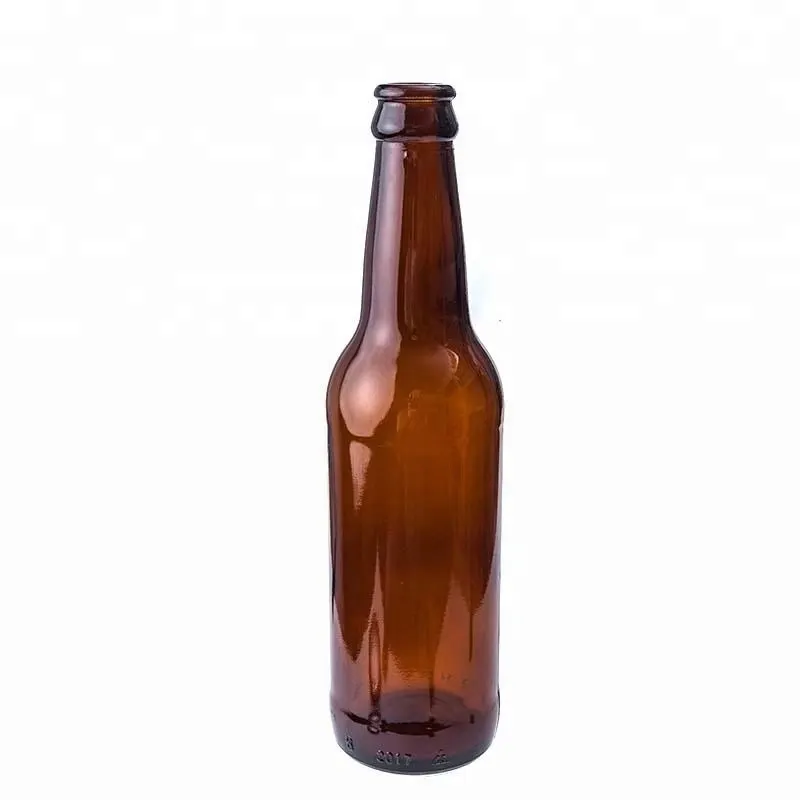
Closures are where breweries waste the most time and money, because the neck finish is built into the mold. You cannot switch from crown to twist on an existing bottle without a new mold.
- Crown cap (28 mm / 26 mm): The classic crimped cap. Requires a matching crown-cap finish (also called a “beer finish” or “crown finish”). Compatible with high-speed capping machines that are standard in most breweries and contract fillers. This is what roughly 90% of beer bottles use.
- Twist cap (RTS finish): A screw-thread finish with a rolled-on or plastic cap. Better for resealability and common in some European markets, but it changes your filling line setup and your capping cost per bottle.
Matching the filling line is non-negotiable. A craft brewery signed a mold for a decorative “short crown” neck, then discovered their filler’s crowner could not seat on the shorter finish — every bottle had to be hand-capped. Check three numbers before building the mold: neck finish diameter, bottle height, and shoulder position against your filler’s specs. A good beer bottle supplier will ask for your capping machine model before recommending a finish.
The Process: From Concept to Crown-Capped Cases
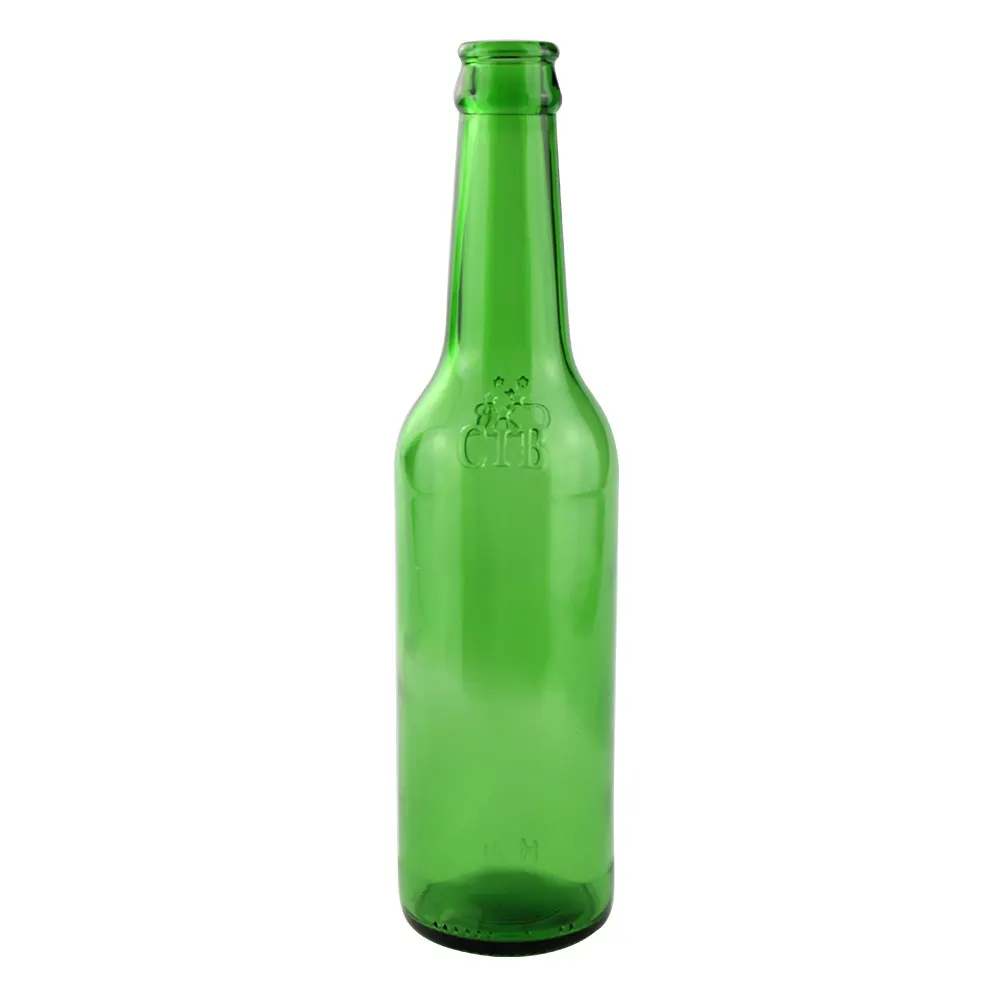
The workflow for custom beer bottles mirrors other beverage glass, but with pressure testing added at the sample stage:
1. Design brief. Shape, capacity, color, and closure. Send a sketch or a reference bottle from a brand you admire.
2. Multi-cavity molds (4 or 8 cavities are typical for beer volume). Plan 2–4 weeks.
3. Finished glass samples with your finish, checked against your capping equipment. For beer, also verify burst-pressure tolerance — especially if you bottle a refermented or heavily carbonated product.
4. Runs of several thousand bottles and up, in your color with any embossed beer bottles branding cast into the mold.
5. QC and logistics. Visual inspection for defects, finish gauging, and carton/pallet packing designed for glass-to-glass survival.
For private label beer bottles, the fast path is a stock mold in amber with a crown finish — many contract brewers and retailer brands start there, then invest in a dedicated embossed mold once volume justifies it.
Custom Beer Bottle Specification Table
| Parameter | Typical Range | Notes |
|---|---|---|
| Shapes | Long neck, stubby, German-style (steinie) | Custom profiles on request |
| Capacity | 330 ml, 500 ml, 650 ml | Other volumes available |
| Colors | Amber, green, clear, dark amber | Amber is the default for hop-forward styles |
| Closure | Crown cap (28/26 mm), twist cap (RTS) | Finish is set at the mold stage |
| Glass weight | 400–650 g | Heavier = premium feel, higher freight |
| Embossing | In-mold logo, brand name, crest | No per-unit decoration cost |
| Sample time | 3–7 days | Pressure-tested finished glass |
| Production | 15–25 working days | After sample approval |
| MOQ | Several thousand bottles | Scales with cavity count |
FAQ
1. What is the minimum order quantity for custom beer bottles?
MOQs start at several thousand bottles per size and color. Most craft breweries begin with a stock-mold amber long neck and move to a dedicated mold once they hit predictable production volume.
2. How much does a beer bottle mold cost?
Pricing is quoted per project — it moves with the mould, decoration, quantity and freight terms.
3. Can I get my logo embossed on the bottle?
Yes. Embossing is cast into the mold, so your logo, monogram, or “estate” text becomes part of the glass permanently — with no per-bottle cost. This is the standard way embossed beer bottles are made.
4. Crown cap or twist cap — which is better?
Crown caps are the industry default, cheaper per closure, and compatible with standard high-speed cappers. Twist caps offer resealability but require a different neck finish and capping setup. Choose based on your filling line, not preference.
5. How long does production take?
Lead times are quoted per project, once the mould, decoration and line schedule are confirmed.
Capping and Filling Line Compatibility
The fastest way to burn a budget is to approve a beautiful bottle that does not run on your line. Before you order, verify:
- Height and diameter against your filler’s infeed and gripper specs.
- Neck finish (crown or twist) against your capper’s crowner or spindle.
- Shoulder position — the fill nozzle must clear it without splashing.
- Empty weight consistency — ±2% is typical; wider variation causes fill-level complaints.
A serious beer bottle supplier asks for your line specs up front and will reject a finish that will not run. If a supplier only asks about color and quantity, treat that as a red flag.
Choosing a Supplier for Custom Beer Bottles
Because beer bottles must survive carbonation pressure and high-speed filling, supplier quality matters more than price per piece. Ask:
1. What is your burst-pressure test standard? Your sample should come with a documented pressure rating for your carbonation level.
2. Can you hold finish tolerance on a crown finish? Crown finishes have tight dimensional tolerances; a sloppy finish jams cappers and stops lines.
3. What is your defect allowance? Stones, seeds, and thin spots cause in-line breakage. Quality suppliers hold reject rates under 1%.
When you consolidate beer, spirits, and wine glass through one manufacturer that also produces custom glass bottles across categories, you also unlock shared mold engineering and smoother scheduling.
Ready to Brew Your Own Bottle?
You now know the shapes, the color science, the closure decision, and the line-matching trap. The next step is a finished sample in your hand.
1. Send your bottle brief — shape, capacity, color, and your capping machine model.
2. Get a mold and per-unit quote within a few working days.
3. Approve the pressure-tested sample in 3–7 days, then watch production run in 15–25 working days.
Explore the liquor and beer glass bottle range to find stock shapes you can rebrand immediately, or contact the team to spec a dedicated mold. Whether you need 5,000 bottles for a limited release or container volumes of custom glass bottles for national distribution, your brand’s bottle is one mold away.
Catalog Review and Project Confirmation
This page helps organize a beer bottle project. Optimizing Glass Bottle is a sales and export-support team. Catalog references and images help describe a direction; technical fit, available options and commercial terms are confirmed for each project with the relevant partner-factory contacts.
Published Catalog References
- Wholesale Beer Glass Bottle Series 8922 (published catalog reference)
- Wholesale Beer Glass Bottle Series 8515 (published catalog reference)
What the Published Record Can Establish
- The product family, catalog reference and image used to start the discussion.
- Any capacity, color or closure wording explicitly present in the current catalog title.
- The questions that still require a drawing, component review, sample or written confirmation.
Project Questions to Resolve
- Target application, capacity direction and destination market.
- Dimensions, neck finish and component compatibility.
- Decoration direction, artwork status, packing needs and quantity range.
Project Confirmation FAQ
Does this page confirm final specifications?
No. It provides a catalog and planning route. Final specifications and terms are project-specific and must be confirmed in writing.
Can a reference image replace a drawing?
No. A reference image communicates visual direction only. Use a controlled drawing or approved sample to evaluate details that affect the project.
What is useful in the first inquiry?
Send the application, target capacity, quantity range, destination and any reference image or drawing, then identify the points that need confirmation.
Return to the related commercial guide | Send a project brief
B2B decision brief for beer bottle packaging
Beer bottle projects depend on the filling and capping line as much as the bottle silhouette. Confirm the finish, wall weight, color, pressure-related requirements, label area and case packing before a bulk quote is accepted.
Buyer evidence to include in the RFQ
| Decision area | Record before comparing offers |
|---|---|
| Brewery process | filling line, capping equipment, pasteurization and inspection point |
| Bottle format | long neck, stubby or custom shape with capacity and weight |
| Finish | crown or other cap, neck dimensions and closure compatibility |
| Appearance | amber, green or clear glass, label panel and decoration |
| Delivery | case pack, separators, pallet pattern, destination and repeat order |
Project hand-off
Send the product direction, target quantity, destination, timeline and any drawing or approved sample. Stock, modified-stock and custom options should be quoted separately so tooling, sampling, components, packing and freight are visible.