For comparison, most wine, spirits and oil programmes start from 750ml bottles.
A 32 oz glass bottle holds one US quart, 946.35ml, and at wholesale it comes in three main forms: the Boston round with a 28-400 or 33-400 neck, the wide-mouth quart jar with a 70mm or 86mm finish, and the growler or swing-top. Which one you need follows from how the product is filled and served, and the closure follows from the neck. Pricing is quoted per project. What you can plan around is the load: roughly 1,500 to 2,000 bottles per pallet and 38,000 to 45,000 per 40-foot high-cube container.
Choosing between a round bottle, a quart jar and a growler
Start from the product, because each silhouette at this capacity grew up around a different category. The table sets the three side by side.
| Format | Typical finish | Suits | Why buyers pick it |
|---|---|---|---|
| Boston round, amber or flint | 28-400 or 33-400 continuous thread | Cold brew concentrate, kombucha second ferment, functional drinks for natural-channel retail | A single wrap label panel that the shoulder does not interrupt; packs tightly in standard case trays |
| Wide-mouth quart jar | 70mm or 86mm | Sauces, salsas, pickled vegetables, bulk dry goods | Copes with hot-fill and water-bath processing; works for spooning, or for pouring through a reducer fitment |
| Growler ("howler") and swing-top quart | 26mm crown or wire-bail swing top | Breweries, kombucha taprooms, refill schemes | The swing top is its own closure, so there is no cap to source, and it photographs well for direct-to-consumer brands |
A simple rule separates the first two rows: a product people eat belongs in a jar, a product they pour belongs in a bottle. The jar side of the range is laid out in the glass jar collection. If you want the same shape across a whole size ladder, Boston rounds run from 1 oz up to 32 oz, so a quart can share a family look with the smaller packs.
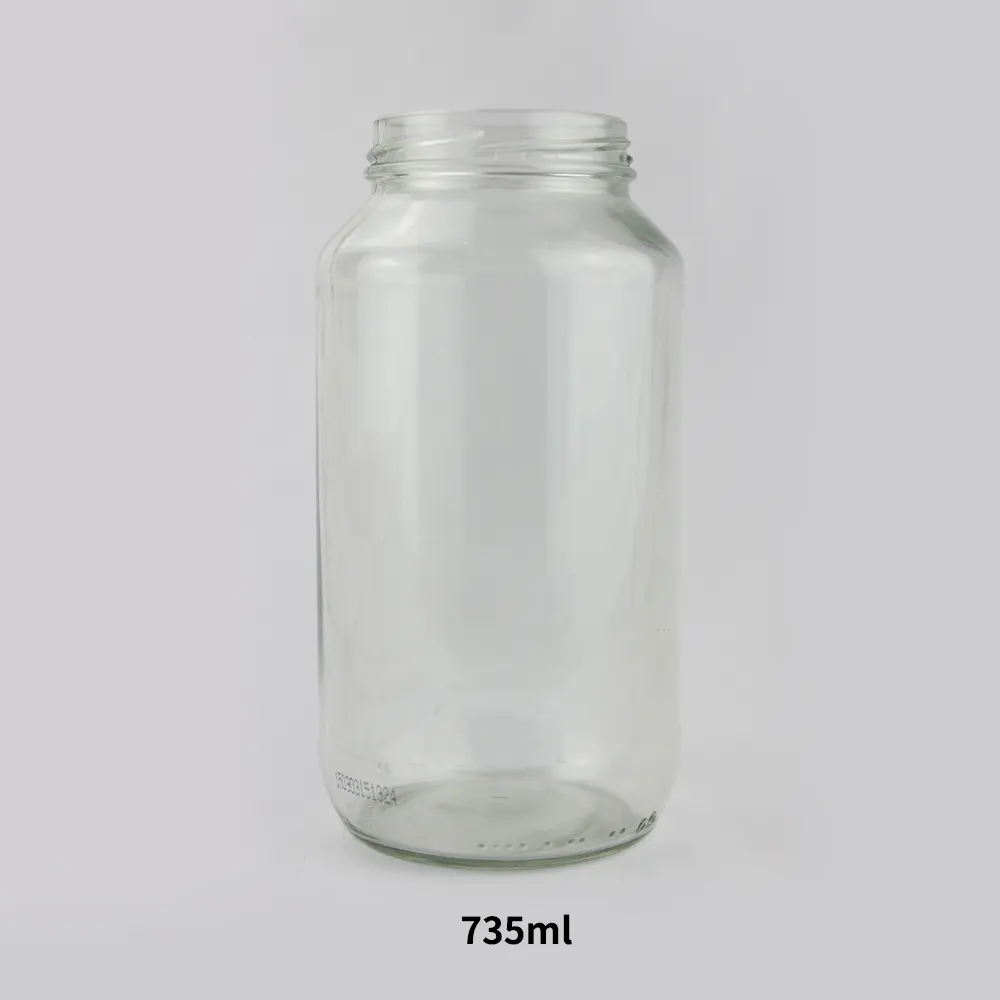
Two further shapes matter for juice and dairy-alternative lines: the French square and the juice-style quart. They are chosen for shelf footprint, since a square bottle fits roughly 15 percent more units into each linear foot of shelf than a round one. Sauce and condiment makers, by contrast, take the wide-mouth quart into foodservice and club-store packs, and kombucha producers sell the quart as a take-home size next to 16 oz singles.
Capacity figures to write into the purchase order
Nominal capacity is the volume on the label; brimful capacity is what the bottle holds filled to the very top. A bottle sold as 32 oz nominal usually measures 980 to 1010ml brimful. Your co-packer sets the fill line from one of those figures, so put both on the PO and confirm which one they work to.
A quart is also not a liter. At 946ml it is about 5 percent smaller, which means a liter bottle is too big for a label panel drawn for a quart, and a quart looks short to EU shoppers comparing price points. Brands that sell in both markets do better with two SKUs than with a 950ml compromise that suits neither shelf. The 1 liter range covers the metric side, the 16 oz range the next size down, and the size chart shows where each capacity sits.
Headspace deserves more attention at this size, because liquid expansion grows with fill volume. Carbonated kombucha needs 4 to 6 percent headspace at filling. Hot-fill sauces need a vacuum headspace set by your process authority, typically 6 to 10mm below the finish. Settle both before you commit to a stock bottle or a mould.
Closures by neck finish
The neck is larger at quart size than on an 8 or 16 oz pack, so torque and seal behaviour have more room to vary. These are the usual pairings.
- 28-400 and 33-400 continuous thread on Boston rounds: PP or phenolic caps lined with PE foam or pulp-vinyl for still products, and an induction-seal liner where a leak in e-commerce transit would be costly.
- 38-400 and 43-400 on juice-style quarts: the wider threaded finishes. If you use high-pressure processing, ask for caps rated for HPP, as on our glass juice bottle projects.
- 70mm and 86mm on jars: metal lug caps with plastisol liners give the twist-off vacuum seal for hot-fill; deep continuous-thread caps serve dry goods.
- Crown and swing top: 26mm crowns for carbonated growler fills, and wire-bail swing tops rated to 3.0+ volumes of CO2 for bottle-conditioned kombucha.
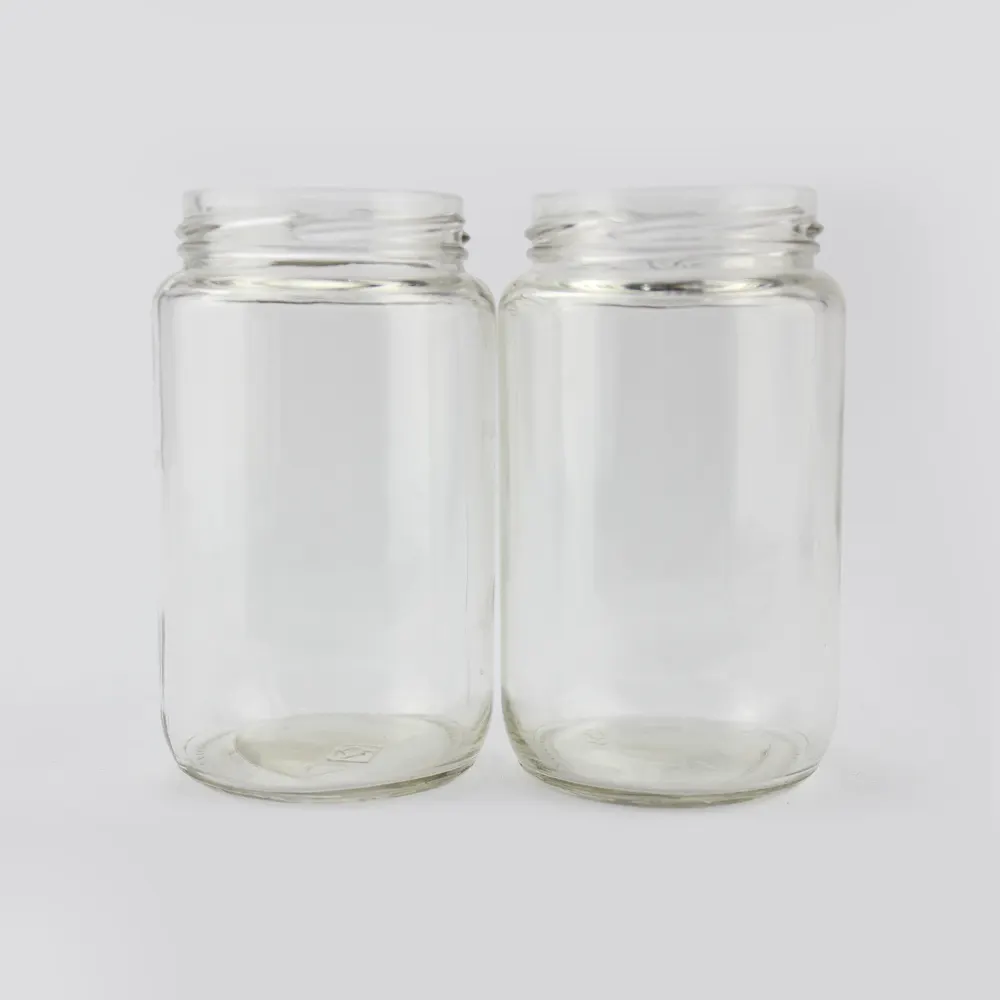
Test the cap on the real product at the temperatures it will travel through. A liner that holds water at 20°C may weep at 4°C once the contents are an oil-based sauce, or vent in a 35°C truck when the contents are live-culture kombucha. Ask for closure samples together with the bottle samples and bench-test the pair before ordering.
Hot-fill and pressure limits
Sauce or juice going in at 85 to 95°C puts real stress on a quart bottle. The panel area is larger than on a small bottle and expands more per degree, so wall thickness carries more weight in the decision. Standard beverage-grade 32 oz glass is annealed for a hot-fill differential of about 42°C at most. Retort processing and anything else past that limit calls for a heavier hot-fill design with a reinforced base and heel.
State the filling process in the enquiry in plain terms. Gravity filling at 90°C, vacuum hot-fill, and retort at 121°C each point to a different glass weight and a different inspection standard.
For cold-filled carbonated drinks, the figure to check is pressure. Ordinary quart Boston rounds are made for still liquids and not every quart bottle survives secondary fermentation, so pressure-rated glass has to be specified. A 32 oz swing-top growler is typically rated to about 3.5 bar, which is enough for kombucha and craft soda but not for force-carbonated beer above roughly four volumes of CO₂. Our kombucha bottle guide goes further into pressure specifications.
Weight, pallets and container loads
A flint 32 oz Boston round weighs roughly 520 to 580 grams, and that weight shapes the logistics. Pallets usually carry 1,500 to 2,000 bottles, the exact count depending on the divider and layer-sheet specification. A 40-foot high-cube container takes about 22 to 24 pallets, so 38,000 to 45,000 bottles is a practical full-container quantity.
Because quart glass is heavy for the space it occupies, freight per bottle is noticeably higher than on a 16 oz line packed the same way. Do not carry the smaller bottle's freight assumption into the landed-cost model for a quart SKU; recalculate it before you commit.
FAQ
What does a 32 oz glass bottle cost at wholesale, and what is the minimum order?
Both are quoted per project. The price moves with the mould, the decoration, the quantity and the freight terms, and the minimum depends on the mould and the line the bottle runs on.
Can I use a 1 liter bottle in place of a 32 oz bottle?
No. The label panel, fill line and shelf-price position all differ between the two, so US and metric markets need separate SKUs.
Will a 32 oz bottle hold carbonated kombucha?
Only a pressure-rated one. Order pressure-rated glass for secondary fermentation or forced carbonation, then validate it against your target CO2 volume with the closure fitted.
Which cap fits a 32 oz Boston round?
Whichever matches its thread, which on most bottles of this size is 28-400 or 33-400. Choose the liner by product and shipping route, as set out in the closure section above.