Part of our series on glass perfume bottles — read the overview first if the format is new to you.
Buying 50ml perfume bottles wholesale means choosing a stock flacon, usually a thick-base square or a cylinder in clear flint glass, and ordering it with a pump, collar and cap that have been tested together on that bottle. The standard neck at this size is an FEA 15 crimp finish, and a glass weight between 90 and 140 grams suits most price tiers. Because the 50ml is reordered more than any other size in a fragrance line, the fit of the closure set and the consistency between lots matter more than the shape itself.
Why the 50ml gets the most sourcing attention
In domestic retail, department stores and direct-to-consumer sales, the 50ml is the lead size. A 100ml asks too much of impulse and gift buyers, and a 30ml reads as a trial or travel size. Retail planograms, gift cartons and the full-size tier of most subscription services are built around the middle format. Travel retail, with its preference for 100ml, is the exception.
The sourcing consequence is simple: this bottle is bought more often and in greater cumulative volume than any other component. It deserves the closest quality agreement and the most careful stock planning, since a bestseller that runs out during the holiday season is hard to replenish quickly.
Stock shapes available at 50ml
| Family | Positioning | Practical notes |
|---|---|---|
| Square and rectangular | Contemporary niche, reads as modern across genders | Faces the shelf efficiently and photographs cleanly; the thick-base square with polished corners is the highest-volume stock item at this size |
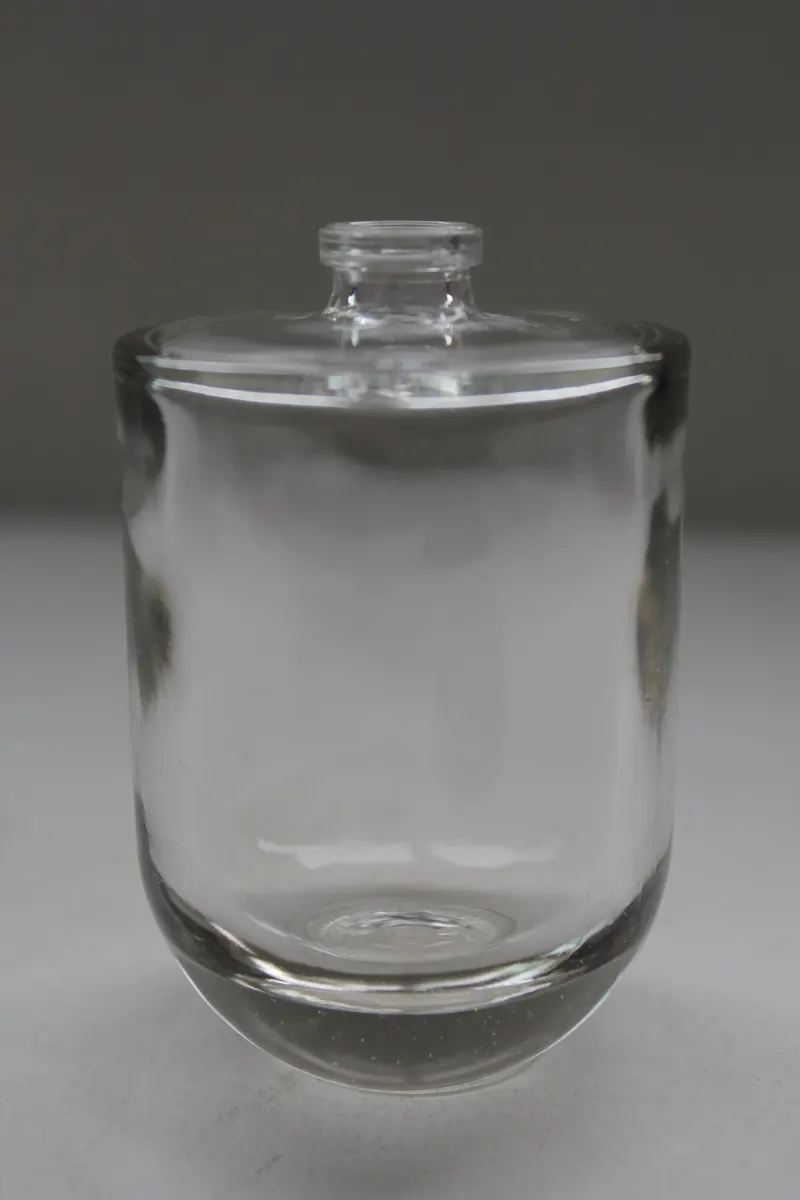
| Cylindrical and rounded | Classic and feminine | Pairs with rounded caps; often slightly lighter than the square equivalent, which helps freight |
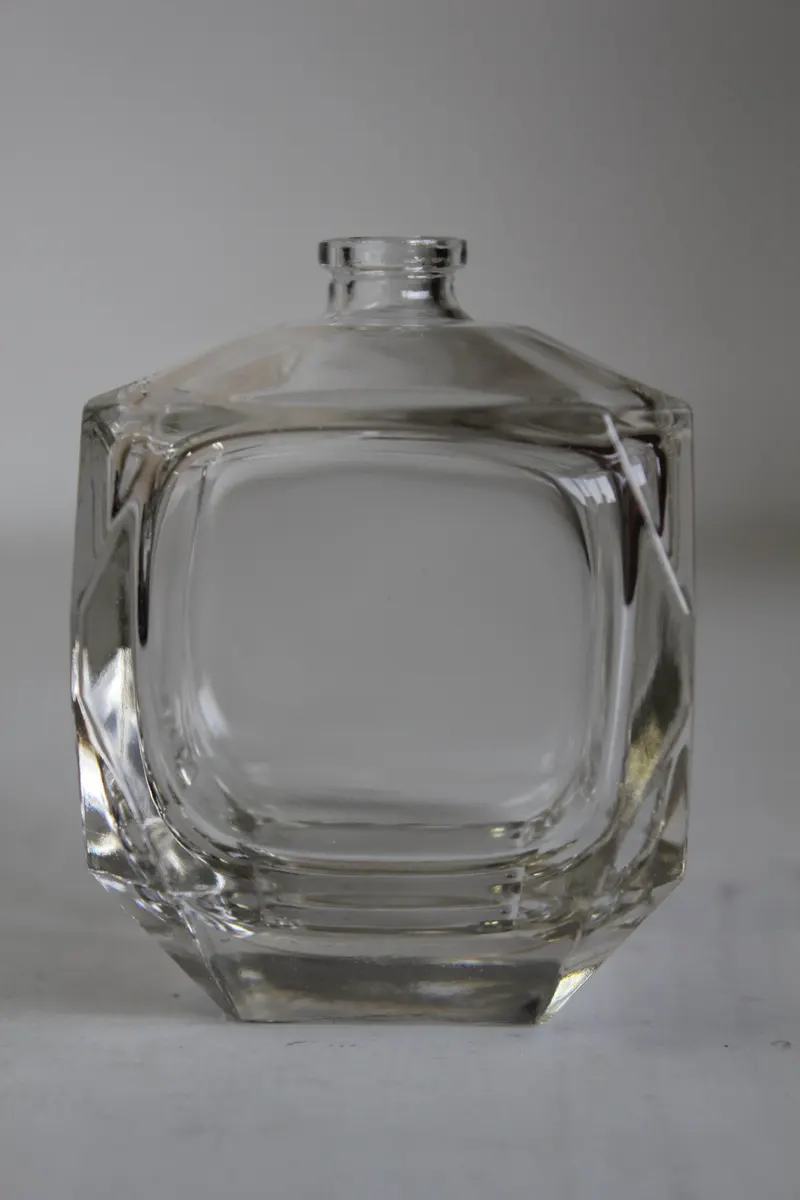
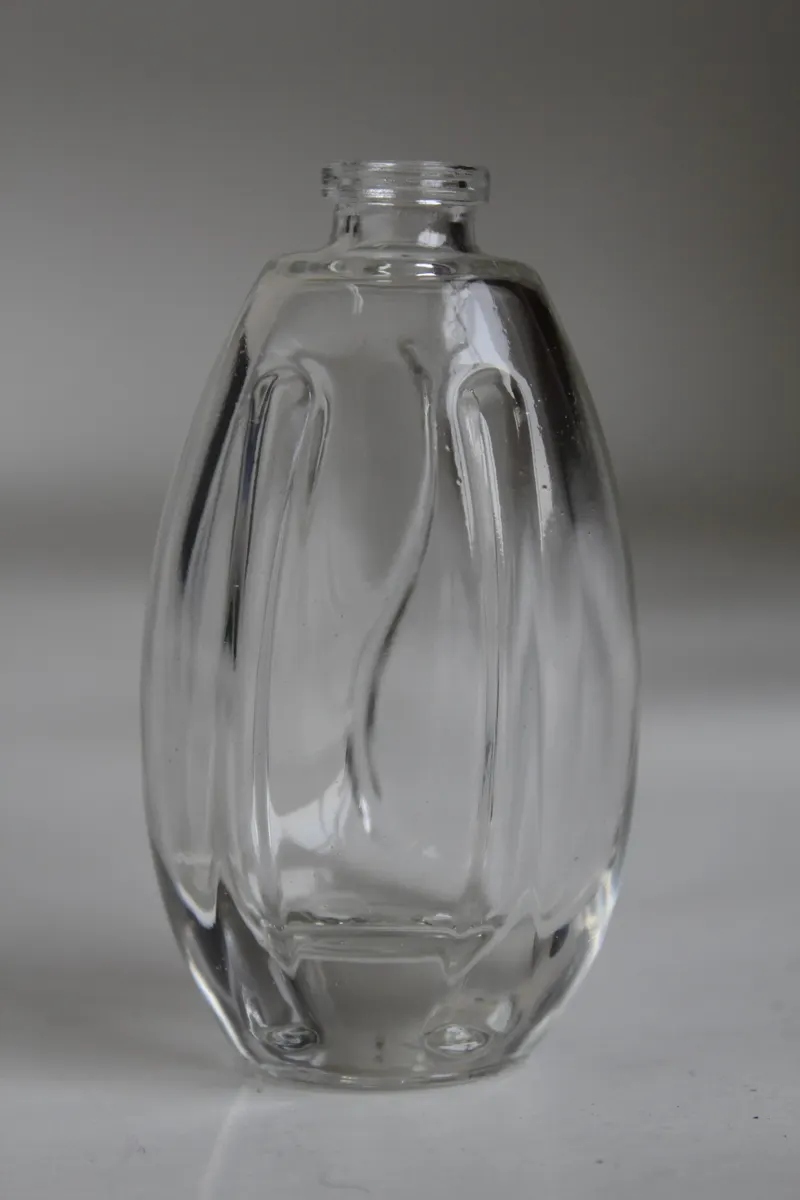
| Special profiles (faceted, shouldered, vintage-inspired) | Distinctive without a new mould | Held in thinner stock, so reorders take longer |
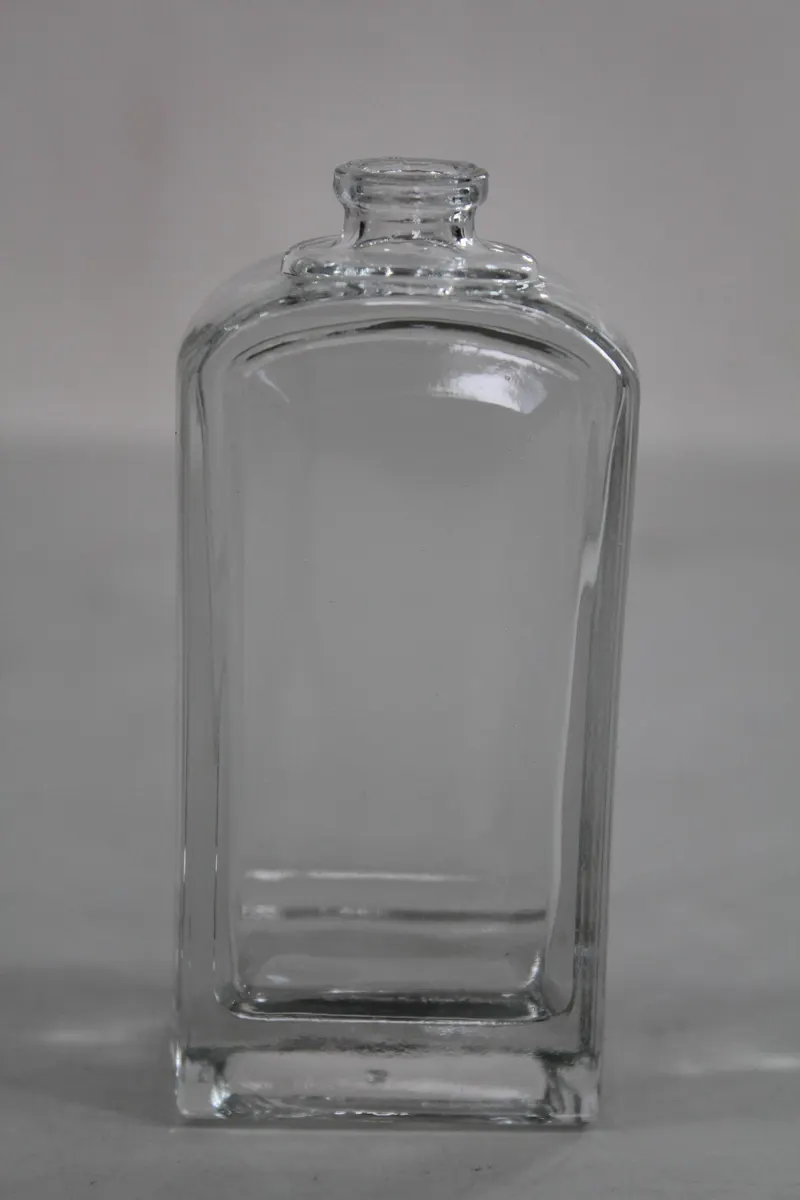
A 50ml bottle is handled constantly, so the glass has to feel right. Ask for flint glass with high clarity, walls thick enough to give weight in the hand, and a fire-polished finish. Below 90 grams a flacon feels light and cheap; well above 140 grams it adds freight weight without a matching gain for the brand.
Matching the pump, collar and cap
Closures cause more wholesale fragrance problems than glass does. Three parts have to fit each other and the bottle.
Pump
The pump crimps onto an FEA 15 or FEA 20 finish. FEA 15 is standard at 50ml and FEA 20 appears on larger formats. Specify the output dose, typically 0.07 to 0.10ml per actuation for eau de parfum, and have the dip tube cut to the real depth of your bottle. A tube two millimeters short strands product in every bottle; two millimeters long, it curls and blocks.
Aluminum collar
The collar hides the crimp and carries the visible finish: brushed, polished, anodized in a colour, or engraved. Its height has to clear the actuator. Anodized colours shift between batches, so agree a limit sample wherever colour is critical.
Cap
Caps come in surlyn, ABS, wood or zamak. The cap should grip the collar by friction, not the pump, and its internal tolerance decides whether it stays on in transit. Our guide to perfume bottle caps covers the options in more detail.
Order the four items as one tested set. Parts that each look compatible can still leak once assembled, which is why we arrange for the closure set to be assembled and pressure-decay tested against the actual bottle lot before it ships.
Checking samples before you commit
Stock glass is not automatically uniform. A short inspection of the samples prevents most later disputes.
- Wall distribution. Hold the bottle to the light. Thin patches near the shoulder point to forming drift and to breakage on a crimping line.
- Crimp finish. Try a go gauge or your own pump. A finish at the edge of tolerance crimps unevenly and leaks.
- Weight. Weigh ten samples. A spread wider than plus or minus two grams suggests unstable production.
- Compatibility. Run a storage test: one bottle filled with your own fragrance, kept warm for two weeks. Fragrance oils react with glass coatings and pump parts in ways a water test will not show.
- Record. Photograph the approved set and attach the pictures to the purchase order, so there is a reference if a later lot drifts.
Decorated stock and minimum quantities
Minimum quantities for stock flacons and for their closure components are quoted per project. They depend on the mould, the decoration and the quantity of each part.
Between plain stock and a private mould there is a middle route: take a stock 50ml and make it your own through decoration alone. Many niche lines stay on decorated stock through their early years and commission a mould only once the lead size has proven how fast it sells.
Planning 30ml, 50ml and 100ml together
Treat the 30/50/100ml trio as one purchase. The 50ml carries the volume, the 30ml covers discovery sets, travel and entry price points, and the 100ml serves loyal customers and travel retail. Drawing all three from one stock family keeps the shelf coherent and lets a single artwork be resized across them.
Combine the three sizes in one container and one closure order where you can. Pumps and collars often share components across sizes, with only the dip tube length changing. The wider size ladder is on our perfume bottle range page, and formats for the men's market are under cologne bottles.
FAQ
What is the minimum order for stock 50ml perfume bottles?
It is quoted per project. The mould, the decoration and the quantity of each closure part all move the figure.
Can bottles, pumps, collars and caps be supplied as a matched set?
Yes, and that is the safer way to buy. Components from separate suppliers are the usual source of leaks that only appear once everything is assembled.
Should the 30ml and 100ml follow the 50ml design?
Where the stock family allows it, yes. It reduces the number of closure parts you hold as well as keeping the range visually consistent.