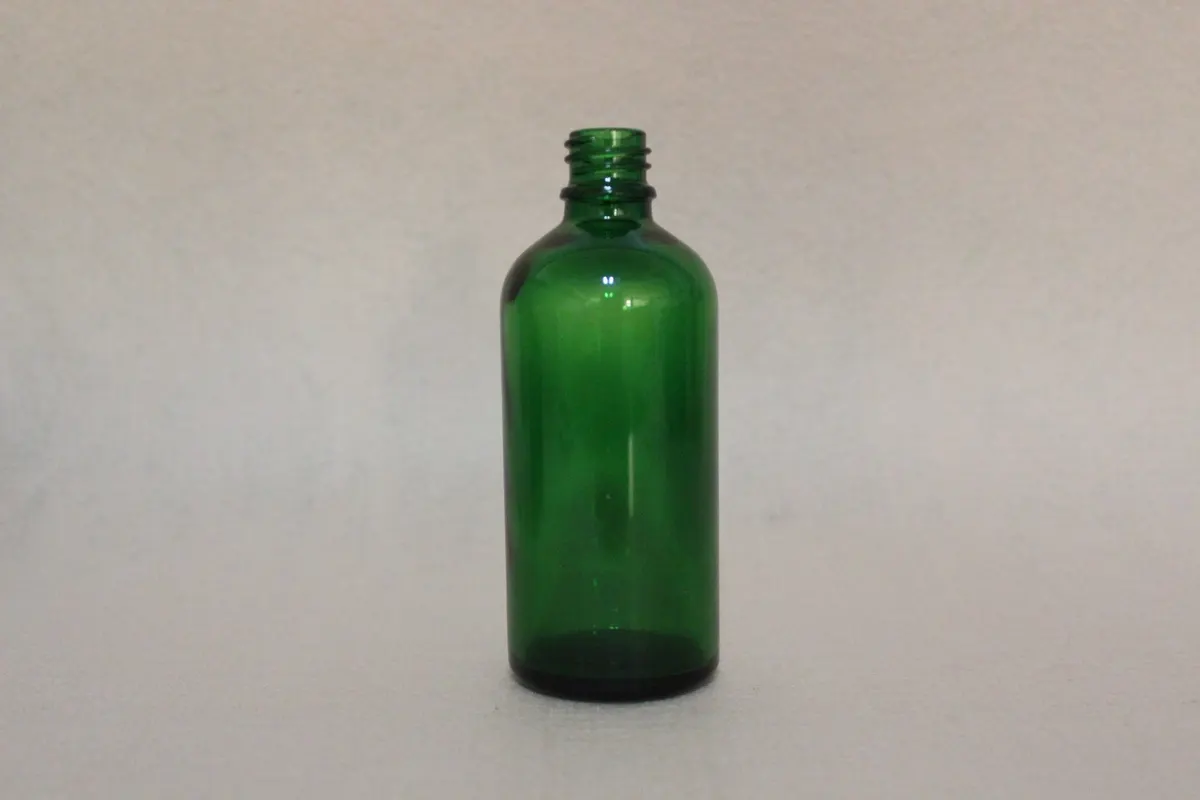
Part of our wholesale dropper bottles range; the stock moulds are pictured at the end of this guide.
Quick answer
Should a serum use a dropper or a pump?
Use a pump when the serum needs a measured, one-hand dose: it delivers a fixed chamber volume and never returns product to the bottle. Use a dropper for treatment products dosed by the drop, where the dropper is part of the ritual; the dose depends on the user’s squeeze, and more product is left behind. For an oxidation-sensitive or low-preservative formula, an airless pump is the stronger choice than either.
| Method | Dose precision | Product left behind |
|---|---|---|
| Dropper | Low to moderate, depends on the user | Higher than a pump |
| Push pump | Moderate and repeatable | A heel below the dip tube |
| Airless pump | Moderate to good | Lowest |
This page is for the buyer who has a serum or a light cosmetic formula and has to decide how it leaves the bottle. The two candidates in front of them are a dropper and a pump, and the decision is not cosmetic. It sets the dose a consumer actually receives, how much formula is left in the bottle at the end, how the product is protected between uses, and how the filling line has to be arranged. This is a comparison and selection page, and it stops at the point where a method has been chosen. The detailed dropper specification, including pipette dimensions and drop-to-millilitre conversion, belongs to the dropper bottles page, because that page owns the dropper assembly. The internal construction of a piston-based pack, including how the follow plate behaves over shelf life, belongs to the airless pump bottles page. Nothing below quotes a unit price, a minimum order quantity, a tooling cost or a lead time, because a dispensing system cannot be quoted honestly until the formula’s viscosity, the dose target and the filling route are all known.
Key Dimensions That Define a Dropper and a Pump
Buyers often compare a dropper and a pump as if they were two caps of the same kind. They are different mechanisms with different dimensional drivers, and once the drivers are named the comparison becomes concrete.
A dropper assembly is built from four parts that have to agree with each other: the pipette, the bulb or squeeze element, the collar that screws onto the neck, and the seal between the collar and the neck. The pipette has an outer diameter that must pass through the neck bore with clearance, a length that must reach close to the bottom of the bottle without touching it, and a tip orifice whose geometry sets the size of a drop. The bulb has an internal volume that determines how much formula a single squeeze can lift, and that volume is almost always larger than the dose, because the consumer controls the squeeze rather than the pack. Graduation marks on the pipette turn the assembly into a crude measuring device, and they only mean anything if the formula is thin enough to drain fully and fast enough to be read.
A pump replaces consumer judgement with a metering chamber. Its defining dimensions are the chamber volume, which fixes the nominal dose per stroke; the stem and actuator, which shape the exit path; the dip tube, whose length must be matched to the bottle height and whose inner diameter affects how easily a viscous formula is drawn up; the gasket and the plunger, which seal against the formula; and the closure, which engages the neck. A pump also carries features that have no equivalent on a dropper: a lock-up position for transit, a priming behaviour that determines how many strokes a new pack needs before it delivers the nominal dose, and a spring whose material decides whether the pack is suitable for acidic or high-water formulas.
Two dimensions are shared and are the reason the two systems are frequently interchangeable at the neck. The first is the neck finish, which defines the thread, the bore and the sealing land. The second is the overall assembly height, which has to fit the carton, the shelf and the filling machine’s capping head. A dropper and a pump built on the same neck finish can often be swapped on the same bottle, which is a commercial advantage worth knowing before the bottle mould is cut. A dropper and a pump built on different finishes cannot, however similar they look in a photograph.
One further dimensional question sits underneath both: the bottle capacity against the fill volume. A 30 ml nominal bottle does not hold 30 ml of usable formula once the dropper, the pump stem or the dip tube occupies space inside it. The usable dose count is what a consumer experiences, and it differs between the two systems even when the bottle is identical.
Tolerances, Dose Accuracy and How They Are Checked
The single most useful number in this comparison is the delivered dose, and the two systems produce it in fundamentally different ways.
A dropper delivers whatever the consumer’s squeeze produces. Drop volume is a physical result of the tip orifice, the surface tension and density of the formula, and the speed of the squeeze, so it varies between users and between strokes by the same user. Thin, water-based serums tend to give smaller drops than glycerin-rich or oil-based formulas, which means the same dropper delivers a different number of doses per bottle for different formulas. Graduated pipettes reduce the variation by letting the user draw to a mark, but they do not remove it, because the draw depends on how far the bulb is compressed and how completely the pipette drains.
A pump delivers a set chamber volume. Within a production batch, the variation between units is normally small, and it is measured rather than described: a sample of assembled pumps is primed and then discharged a fixed number of times, and each discharge is weighed on a balance. The average and the spread across the sample give the dose and its consistency. Two other figures belong with that measurement. The first is the prime loss, meaning the number of strokes and the volume of formula required before the pack delivers its nominal dose, because that volume is part of the pack’s usable content. The second is the tail behaviour, meaning what happens when the bottle is nearly empty, when a dip tube may begin to draw air and the dose falls away before the bottle looks finished.
Tolerance thinking applies to the hardware as well as to the dose. Neck dimensions on moulded glass carry a band rather than a single value, and a closure that seals only at the nominal diameter will leak at one end of the band. The customary way to handle this is an agreed sampling plan for attribute inspection, with ISO 2859-1 named as the usual public reference for sampling by acceptance quality limit. On the closure side, the equivalent checks are application and removal torque on the assembled pack, a leak test with the filled pack inverted over a defined period, and a check of the seal land for chips or moulding defects that would defeat the liner.
For anything that will contain a fragrance component, a compatibility check against the fragrance concentrate matters, and IFRA documentation is the usual reference a perfumery house will supply for the concentrate itself. For wetted plastic and elastomer parts, the food-contact and cosmetic-contact frameworks that buyers usually ask about are EU 1935/2004 with EU 10/2011 for plastics in Europe, and FDA 21 CFR in the United States. Those standards are named here as the public references an enquiry will normally be measured against; they are not a statement about any particular supplier’s certification status.
Neck Finish and Interface Compatibility Between Components
Components are not interchangeable at will, and the neck finish is where the constraint lives. A finish code describes the thread diameter and form together, and closures built for one family do not seal reliably on another even when the nominal diameter matches.
Within one finish family, the practical question is whether the dropper collar and the pump closure share the same thread and the same sealing geometry. Where they do, a brand can offer the same product as a dropper pack and a pump pack on one bottle, or change the closure at a later date without touching the mould. Where they do not, the neck has to change and the bottle becomes a new project.
The second compatibility layer is inside the pack. A pump’s dip tube has to be cut to a length that reaches almost to the base of the bottle, and it is normally cut at an angle so that the last of the formula can be drawn rather than blocked by the tube sitting flat on the bottom. A dropper’s pipette has a different requirement: it must clear the base by a small distance, because a pipette that touches the bottom can chip or break at the tip when the bottle is handled. The two therefore want different internal geometries, and a bottle designed around one is not automatically suited to the other even when the neck is the same.
The third layer is the seal. A dropper collar usually relies on a gasket or a moulded land against the neck, and it is opened and closed repeatedly by the consumer, so thread wear matters over the pack’s life. A pump closure is often fitted once and rarely removed, so it can be specified for a firmer application torque and a more permanent seal. A brand that offers both formats on one bottle should not assume one torque setting suits both, because a setting that holds a pump firmly can make a dropper collar difficult for a consumer to reopen.
Dropper, Pump, Airless and Roller: Dispensing Method Comparison
The table below puts the four dispensing methods a cosmetic brand is most likely to consider side by side. It is written from the pack’s behaviour rather than from the marketing description, and the viscosity bands are indicative ranges rather than hard limits, because the real answer depends on the specific formula and on how the pack is filled and used.
| Dispensing method | Dose precision | Suitable viscosity band | Residue characteristics | Hygiene | Filling and line requirements | Product position it suits |
|---|---|---|---|---|---|---|
| Dropper (pipette plus bulb or squeeze element) | Low to moderate and user-dependent; drop size varies with tip geometry, formula surface tension and squeeze speed, and a graduated pipette only partially corrects for this | Thin to moderately thick, roughly water-like to light oil; formulas that are too thick drain slowly and cannot be read against a graduation mark | Higher than a pump; formula clings to the pipette wall, remains below the tip reach and collects in the shoulder recess, so the last portion of a bottle is often discarded | The tip can contact skin and the pipette returns formula from the tip back into the bottle, so repeated use introduces a contamination path that no closure feature can remove | Normally fitted after filling rather than inline, because the assembly includes the pipette; torque and orientation have to be controlled, and pipette length has to be matched to the bottle | Premium and ritual-led serums, treatment oils, actives dosed by the drop, trial and sample sizes where the dropper itself signals a concentrated product |
| Push pump (metering chamber plus dip tube) | Moderate and repeatable; a fixed chamber volume delivers a consistent dose across a batch, with variation concentrated in the priming strokes and in the final portion of the bottle | Light to moderately viscous, from thin essences up to glycerin-rich gels; very thick or paste-like formulas draw poorly through a dip tube | Moderate; a heel remains below the dip tube inlet, and the amount depends on tube length, tube cut angle and bottle base shape | Good in normal use; the metering path is one-way and the nozzle is not returned into the bottle, so the consumer does not reintroduce product through the delivery channel | Can often be placed by a capping machine inline; needs the correct application torque, the correct lock-up orientation, and a fill level that keeps the dip tube submerged without blocking it | Daily-use serums and lotions, body and hair care, anything where a measured dose and a one-hand application matter more than ritual |
| Airless pump (follow plate, no dip tube, sealed base) | Moderate to good; the chamber delivers a consistent dose and the follow plate keeps the formula in contact with the inlet as the pack empties | Thin to thick, including creams, gels and high-viscosity serums; formulas that contain coarse particles or that separate are a poor match | Lowest of the four; because the plate travels with the product, very little is left behind and the pack empties almost completely | Highest in normal use; the formula is not exposed to air on the return path and the piston seals the contents from the atmosphere between uses | The most demanding of the four on the line; filling is normally from the base before the plate and pump are fitted, and the sequence and the fill temperature have to be agreed with the filler | High-value actives, oxidation-sensitive or preservative-reduced formulas, and products where a claim about protection of the formula supports a premium price |
| Roller ball (captive ball in a seat) | Low and continuous rather than dosed; the consumer controls the amount by the number of passes, so the precision is in the applicator rather than in the pack | Thin only; low-viscosity liquids and light serums flow well, while thicker formulas sit on the ball or clog the seat | Low on the glass, but a film remains around the ball seat and can dry at the interface if the pack is left unused | Moderate; the ball is in direct contact with skin each time it is used and carries a return path into the seat, though the contact area is small | Fitted after filling as a press-in unit; seat depth and ball fit have to be controlled, and the pack needs to be kept upright to avoid leakage during transit | Targeted treatments, eye and lip applications, spot and cooling products where direct application is the point |
Production Line Conditions and the Fitting Sequence
A dispensing decision is also a line decision, and this is where brands most often discover that the choice they made on the shelf is awkward in the factory.
A dropper pack is usually filled through the neck and then closed with the complete dropper assembly. That means the pipette, the bulb and the collar arrive assembled or are assembled at the point of capping, and the capping step has to control the torque on the collar while leaving the bulb undamaged. Because the pipette enters the bottle after filling, the fill level has to leave room for it, and the bottle has to be presented to the capping head in a known orientation. Where the line is not equipped for that, the step is done semi-automatically or by hand, which affects throughput and consistency rather than the product itself.
A pump pack is more forgiving on a line. The dip tube is cut to length, the pump can usually be applied by a capping head with a torque setting, and the whole operation can run at the speed of the filler. The two details that cause trouble are the lock-up position, which has to be oriented so that the pump does not actuate under the capping head, and the fill level, which has to leave enough clearance for the tube without leaving the inlet above the formula surface.
An airless pack inverts the sequence. The formula normally goes in from the base, the follow plate is positioned, and the pump is fitted last. That sequence, and the temperature and viscosity at which the fill is made, have to be agreed with the filler before the pack is ordered, because the equipment requirements differ from a standard top-fill line. Airless packs also need to be purged of air and, in some cases, primed at the filling stage, so the usable content that reaches the consumer is the fill volume minus what the priming consumes.
Whatever the method, three checks belong on the line rather than in a catalogue. The first is the dose check, made gravimetrically on a sample of finished packs after priming. The second is a leak check on the filled pack, ideally including an inverted period and a transit simulation, since the standard reference for transit procedures is normally named in the buyer’s own contract. The third is a retained sample of the filled pack, held under normal conditions with the date recorded, because the failures that matter in this category appear over months rather than over hours.
Failure Modes and How They Show Up in the Field
The complaints that reach a brand after launch are predictable, and each one points back to a specific decision.
A dropper that delivers less toward the end of the bottle. The pipette is too short, or the bottle shoulder holds formula that the pipette cannot reach. This is a geometry problem, not a formula problem, and it is fixed by confirming the pipette length against the specific bottle rather than against a general drawing. A pipette that is made longer to reach further down risks touching the base, which is a worse failure because a chipped tip introduces glass particles into the formula.
A dropper whose dose drifts over the pack’s life. The bulb has hardened, taken a permanent set or cracked, so its compression volume changes. Elastomer grade and the storage and transport temperature history of the assembled pack both contribute, and a bulb selected for general flexibility rather than for repeated chemical contact is the usual root cause.
A pump that clogs at the nozzle. Film-forming polymers, gums and high-solid actives can dry at the actuator orifice between uses and form a plug. This is not a defect in the pump; it is a mismatch between the formula and the exit geometry, and the remedies are a wider or a differently shaped orifice, a dust cap that seals the outlet, or a review of the formula’s film-forming content.
A pump that corrodes or discolours the formula. The metering chamber of a standard pump contains a spring. In water-based, low-pH or high-electrolyte formulas, a metal spring can release ions that affect colour, odour or stability over time. Pumps with a plastic spring or with a fully isolated metal path exist precisely for these formulas, and the question of spring material should be asked before the pack is chosen rather than after a stability failure.
A pump whose dose falls off on a nearly empty bottle. The dip tube is either touching the base and drawing against it, or it is too short and begins to draw air while usable formula remains. The tube length, its cut angle and the internal shape of the base have to be treated as one specification, and they are the reason a bottle cannot be changed without re-checking the pump.
A gasket or plunger that swells. Silicone-based formulas, essential oils, high-alcohol systems and some fragrance concentrates are aggressive towards certain elastomers. A material that is perfectly adequate in a water-based serum can swell, soften or extract in a different base, which changes the dose and eventually breaks the seal. This is also the case where a fragrance briefing has to include the concentrate’s documentation, because the perfumery house will hold the compatibility data for its own material and the pack supplier does not.
Leakage in transit or on a shelf. Both systems can leak, but the mechanisms differ. A dropper usually leaks at the collar, through a liner that has taken a compression set or a thread that has been cross-threaded during capping. A pump usually leaks at the actuator, through a nozzle that was not locked before packing or through a gasket that has been damaged by over-torque at the closures. Both are line and specification issues rather than consumer issues, which is why the assembled pack, not the individual components, should be the unit that is approved.
Which Page Owns Which Decision
This page compares the two delivery methods and helps the buyer choose between them. It does not own the detailed specification of either one, and keeping that boundary clean saves a round of questions on every enquiry.
If the answer is a dropper, the drop volume, the pipette dimensions, the graduation options and the drop-per-millilitre arithmetic are handled on the dropper bottles page, together with the neck finishes that the dropper assemblies are built for and the checks that should be run on the assembled pack. If the answer involves a piston-based pack, the construction of the follow plate, the filling sequence and the behaviour of the pack over shelf life are handled on the airless pump bottles page, which is also where the comparison between an airless pack and a standard pump belongs in more depth than this page can give it.
The commercial layer is separate again. Case quantities, pack configurations and the terms of a repeat order for cosmetic serum packs sit with the serum bottles wholesale page, and the wider range of glass containers and closures used across a skincare line is described on the cosmetic glass packaging hub. Read the pages in that order and the decision tree is short: which method, which dropper or which pump, then how the range is bought.
One note on switching is worth adding here, because it is the question buyers ask most often after the first order. Moving from a dropper to a pump on an existing bottle is cheap if the neck finish is shared and the fill level is compatible, and expensive if either of those conditions fails, because a new neck means a new bottle mould and a new set of line settings. That is a strong argument for settling the delivery method before the bottle is tooled, even if the launch pack will only ever use one of the two.
Frequently Asked Questions About Dropper and Pump Bottles
Is a dropper or a pump better for a face serum?
It depends on the formula and on the positioning rather than on quality. A pump suits water-thin to moderately viscous serums that need a measured, one-hand dose, and it protects the formula from being returned into the bottle. A dropper suits treatment products where the consumer expects to control a small, concentrated dose, and it is often part of the ritual a premium serum is sold on. If the serum is oxidation-sensitive or the brand wants to reduce preservative load, a piston-based airless pack is the stronger answer than either.
How accurate is a dropper compared with a pump?
A pump is more accurate in the sense that matters commercially. It delivers a fixed chamber volume, and consistency is measured by priming a sample and weighing successive discharges. A dropper’s drop size depends on the tip geometry, the formula’s surface tension and density, and how hard the consumer squeezes, so the delivered dose varies between users. Graduation marks help, but they do not turn a dropper into a metered pack.
Which one leaves more product behind in the bottle?
The dropper usually leaves more. Formula clings to the pipette, remains below the point the tip can reach, and collects around the shoulder, so a portion of the bottle is effectively unusable. A pump leaves the heel below the dip tube inlet, which depends on the tube length, the cut angle and the base shape. A piston-based airless pack leaves the least of the three, because the follow plate travels down with the product.
Can I switch from a dropper to a pump without changing the bottle?
Sometimes, and it is worth checking before the mould is cut. If the dropper collar and the pump closure are built on the same neck finish, the closure can usually be exchanged and the bottle kept, provided the fill level and the pipette or dip tube lengths suit the same internal geometry. If the finishes differ, the neck changes and the bottle becomes a new tooling project. Ask for the finish family of both closures in writing rather than comparing photographs.
Which is more hygienic, a dropper or a pump?
A pump is generally cleaner in normal use. It delivers through a one-way path, the nozzle does not go back into the bottle, and the consumer never returns used product to the reservoir. A dropper tip can touch skin, and the pipette then re-enters the bottle, which creates a repeated contamination path. A piston-based airless pack goes further still, because the contents are sealed from the atmosphere between uses, which is why it is often chosen for formulas with a reduced preservative system.
When should I choose an airless pump instead of a standard pump?
When the formula is sensitive to air, when a reduced or preservative-free system is part of the positioning, when the residual left in the bottle matters because the formula is expensive, or when a higher-viscosity cream or gel has to be delivered through a pump. The trade-off is on the filling side, because an airless pack is normally filled from the base and the sequence has to be agreed with the filler before the order is placed.
What does the filling line need to know before a dropper is specified?
Four things: the bottle height and neck finish, so the capping head and the torque setting can be chosen; the fill level, so there is clearance for the pipette without wasting usable volume; the pipette length, matched to the actual bottle rather than to a general drawing; and whether the dropper arrives assembled or has to be built at the capping station, because that determines whether the step can run inline or has to be handled separately.
Send the Formula Viscosity, the Capacity and the Filling Route
Three items are enough to turn this comparison into a recommendation. First, the formula viscosity and its base, including whether it is water-based, oil-based or alcohol-based, and whether it carries fragrance, essential oils or film-forming polymers, because those are the factors that decide which elastomers and which spring material are acceptable. Second, the capacity and the dose the consumer should receive, whether that is a fixed millilitre per stroke or a number of drops, since the dose target is what fixes the chamber volume or the pipette draw. Third, the filling route, meaning whether the pack will be filled on a fully automatic line, semi-automatically or by hand, and whether the existing line can handle a post-fill assembly step.
With those three, the recommendation can cover the delivery method, the neck finish that both closures would share if a dual-format range is intended, the dose verification that should be run on assembled packs, and the checks that belong on the line before the first shipment. Where the formula is not yet final, say so and describe the target texture instead, because texture and dose are the two inputs that change the answer most and both are cheaper to settle before tooling than afterwards. Minimum order quantities, unit prices and lead times are quoted against a finished specification, once the delivery method, the neck and the filling route are agreed.