Part of our series on empty essential oil bottles — read the overview first if the format is new to you.
For most essential oils the right bottle is amber glass in 5 ml, 10 ml, 15 ml or 30 ml, closed with a dropper, a roll-on ball or a screw cap. Amber stops most ultraviolet light below roughly 450 nm, which is what slows oxidation. The closure decides the neck finish, and the neck finish is fixed in the mould, so settle colour, size and closure together before any tooling is discussed.
Glass colour and how much light it stops
Ultraviolet light and heat oxidise essential oils. The damage affects both the scent and the active compounds, and it cannot be reversed. Colour is the cheapest protection a bottle can offer, which is why aromatherapy settled on amber long ago.
| Colour | UV protection | Suits | What you give up |
|---|---|---|---|
| Amber | Excellent; most UV below ~450 nm is blocked | Nearly every oil, citrus above all | The oil's own colour is hidden |
| Cobalt blue | Moderate | Blends sold on shelf appearance | Weaker protection and a more expensive glass |
| Green | Moderate | Herbal and earthy blends | Unusual in aromatherapy |
| Clear (flint) | Minimal | Oils that are sold and used up quickly | Needs a dark carton and fast turnover |
Citrus oils such as lemon, bergamot and lime are among the most phototoxic and the quickest to oxidise, so amber is the technically sound choice for a citrus or floral range. A brand that wants blue glass for its look should budget for a barrier carton and accept a shorter shelf life.
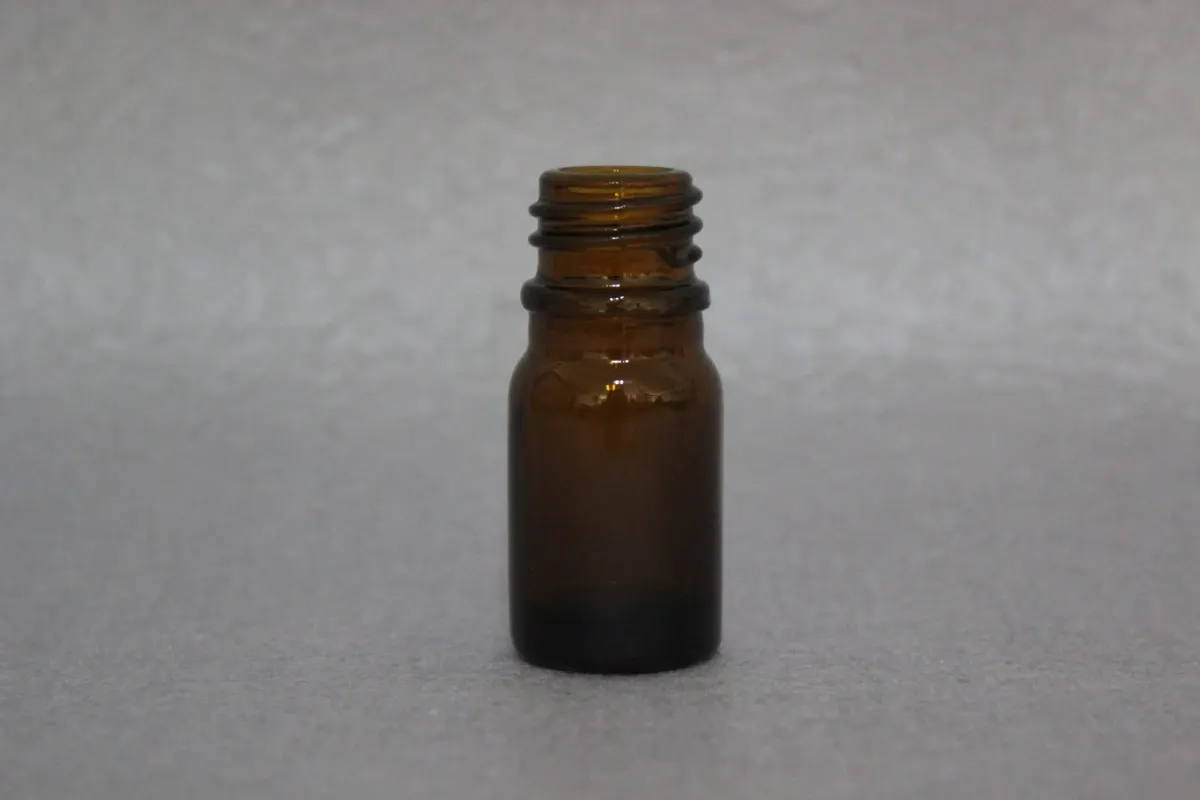
Dropper, roll-on or screw cap
How the customer applies the oil is only half of the closure question. Each closure calls for its own neck finish, and each runs differently on a filling line.
| Closure | Typical neck | Where it is used | Point to watch |
|---|---|---|---|
| Dropper (orifice reducer plus bulb) | 18 mm or 20 mm dropper assembly | Blending and precise dosing; the most ordered format in the category | Most leaks start where the reducer meets the neck |
| Roll-on | Neck and housing moulded around the ball socket | Direct application to skin; the fastest-growing aromatherapy format | Tight fit tolerances, so nearly always a dedicated mould |
| Screw cap, plain or tamper-evident | Standard 20/410 or 24/410 thread | Larger sizes such as 30 ml, bulk and subscription oils | The most economical route; takes off-the-shelf caps |
One mould cannot serve two closures. A range with a 10 ml dropper and a 10 ml roll-on therefore means two moulds and two filling set-ups. Map the whole range before the first tool is cut, and use our closure selection pages to compare the options in more depth.
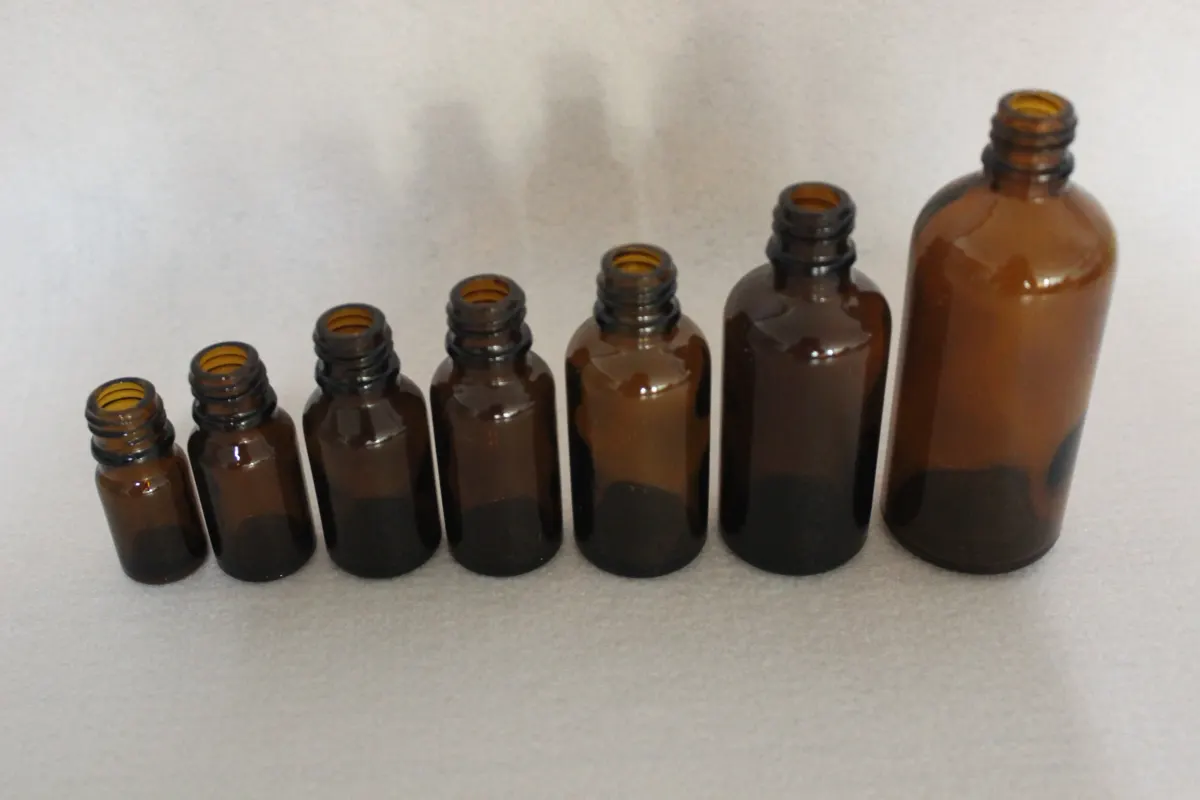
Sizes from 5 ml to 30 ml
Essential oils are sold in very small fills, and each size has a recognised job.
| Size | Role in the range | Usual closure |
|---|---|---|
| 5 ml | Samplers, travel packs and single-note trials; an inexpensive first purchase | Dropper or screw cap |
| 10 ml | The main size for blends and the bulk of wholesale volume | Dropper |
| 15 ml | Higher-priced single oils and blend refills, frequent in direct-to-consumer sales | Dropper or roll-on |
| 30 ml | Value size and carrier-oil blends, with the best value per ml for the end customer | Screw cap or pump |
A common launch pattern is a 10 ml dropper for blends plus a 5 ml bottle for trial kits, with a 15 ml roll-on added once retail sales justify it. Some briefs also call for a 50ml fill for carrier blends; treat that as a separate size to confirm.
Stock mould first, dedicated mould later
Aromatherapy brands usually start small, and small runs spread tooling over fewer bottles. Amber droppers in 10 ml and 30 ml are among the most widely produced glass items anywhere, so a stock mould is the sensible way to test demand before paying for a tool. The bottles are also tiny and light, which keeps freight modest.
The path that protects cash looks like this:
- Launch on stock glass. Amber 10 ml droppers for blends and amber 5 ml for trials, decorated with your own branding.
- Give the best seller its own bottle. That might be an embossed amber 15 ml or a custom roll-on.
- Grow one step at a time. Every further size or closure is another finish on another mould, so add them singly rather than all at launch.
Where several sizes are needed, running the 5 ml, 10 ml and 30 ml in the same production window avoids repeated set-ups and puts everything in a single shipment. The published catalogue has two starting points: the amber dropper bottle series 5572 and the amber dropper bottle series 5570. For a proprietary shape, our custom glass bottle service covers the mould route, including the neck finish codes and tolerances that determine whether a closure seats properly.
A brand that later adds serums, creams or sprays can keep the same sourcing route and extend into the cosmetic glass bottle collection.
Seal checks to run with your own oil
Leakage is the leading quality complaint in this category. Three checks catch most of it before the goods ship, and all three must be done with the actual oil, never with water.
- Bulb fit. Some oils make natural rubber and silicone bulbs swell, which alters the fit over time. Test the complete bulb-and-orifice assembly in contact with the oil.
- Reducer seating. The small plastic orifice reducer has to sit flush in the neck and stay there. If it works loose, dosing becomes erratic and the bottle leaks.
- Cap torque. A cap applied too lightly vibrates off in transit; one applied too hard is a struggle to open. Agree a torque range and have it enforced during production.
Compliance documents to ask for
Essential oils fall between cosmetics, wellness and aromatherapy rules. Building these three requirements into the enquiry and the purchase order costs little; adding them after tooling is expensive.
- Glass composition. A certificate showing the glass is suitable for contact with oil and free of harmful leachables.
- Closure materials. Bulbs and roll-on balls touch the oil and then the skin, so specify food-grade or cosmetic-grade materials and request the certificates.
- Child resistance. Certain aromatics trigger a child-resistant closure requirement in some markets. Check that the chosen finish accepts a CR cap before the mould is committed.
What to put in the brief
We are a sourcing and export-support desk, not a glass plant. A catalogue image or title sets a direction; fit, available options and commercial terms are confirmed for each project with the plant that suits it, in writing. A reference photo never replaces a controlled drawing or an approved sample.
| Area | Record before comparing offers |
|---|---|
| Formula | Oil type, light sensitivity, alcohol content, storage conditions |
| Capacity | 5ml, 10ml, 15ml, 30ml, 50ml or another approved fill |
| Closure | Dropper, roll-on or screw cap, the liner, and leakage evidence |
| Surface | Amber, clear or frosted glass; print or label adhesive requirements |
| Release | Sample, component fit, QC limit, carton, pallet and destination |
Add the target quantity, destination market, timeline, artwork status and any drawing you already hold. Ask for stock, modified-stock and custom options to be quoted separately, so that tooling, sampling, components, packing and freight each appear on their own line. You can send the project brief here or look through the full bottle collections first.
FAQ
What is the minimum order for custom essential oil bottles?
It is quoted per project, by size, colour and closure. The drivers are whether the bottle comes from a stock mould or a new one, the decoration, and the freight terms. Stock amber droppers are the low-commitment way to begin.
Can roll-on bottles be made to a custom design?
Yes. The ball socket and neck need a dedicated mould, and the tolerance on the ball fit is tight, so allow for a proper sampling round.
Are droppers supplied with the bottle?
Either arrangement works: glass and dropper bought as a set, or sourced separately. In both cases test the assembled closure on your own oil before approving it.
How long does production take?
Timing is quoted per project once the mould, decoration and production schedule are confirmed.