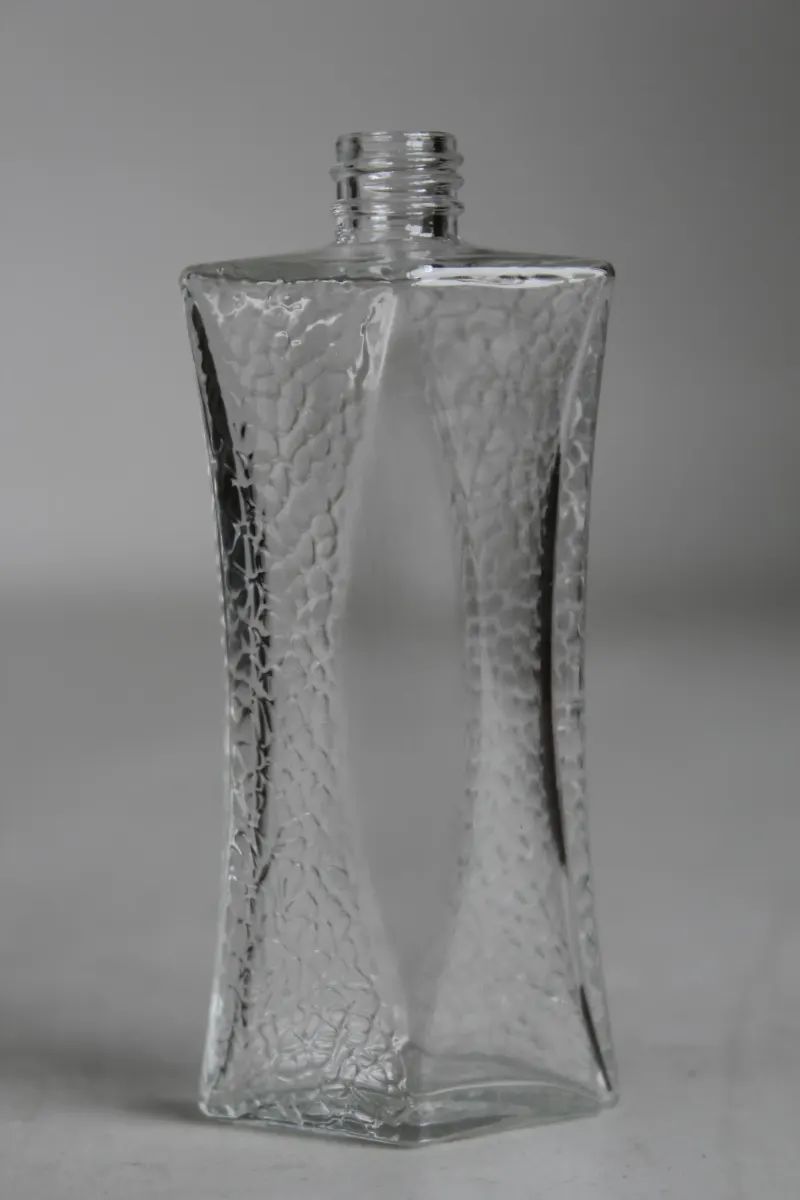
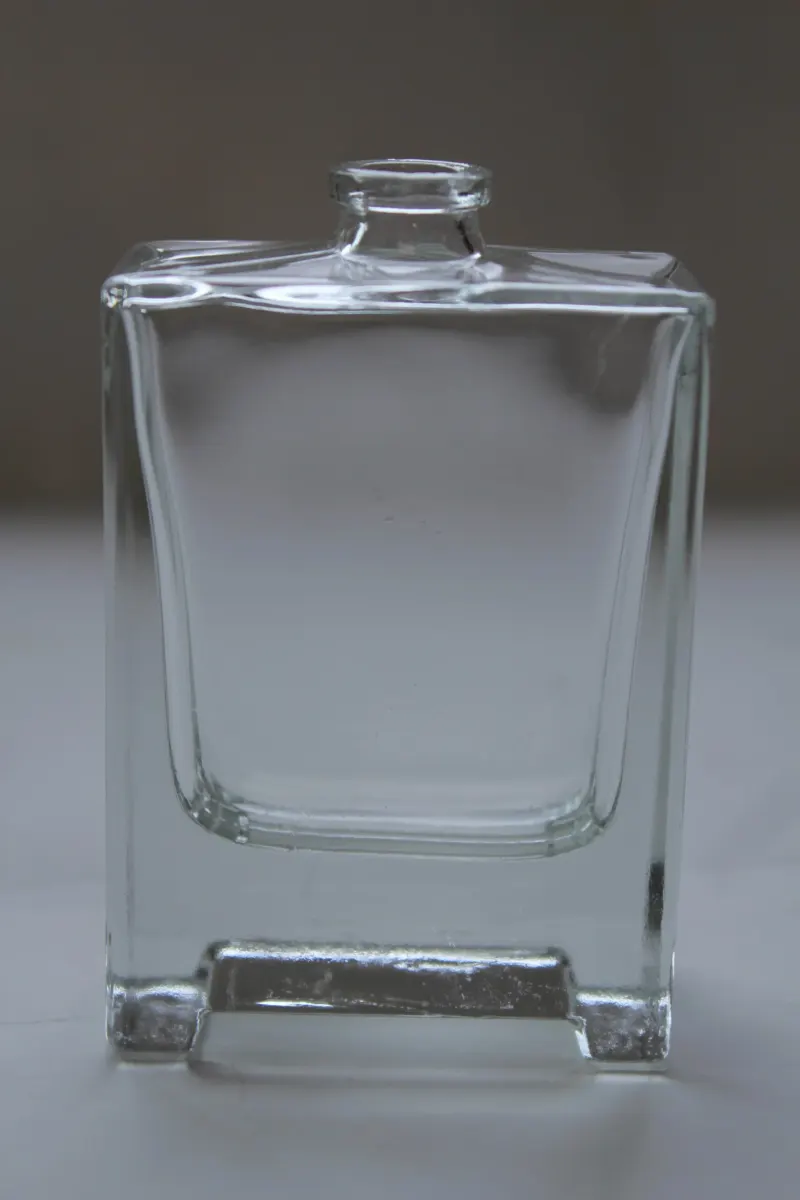
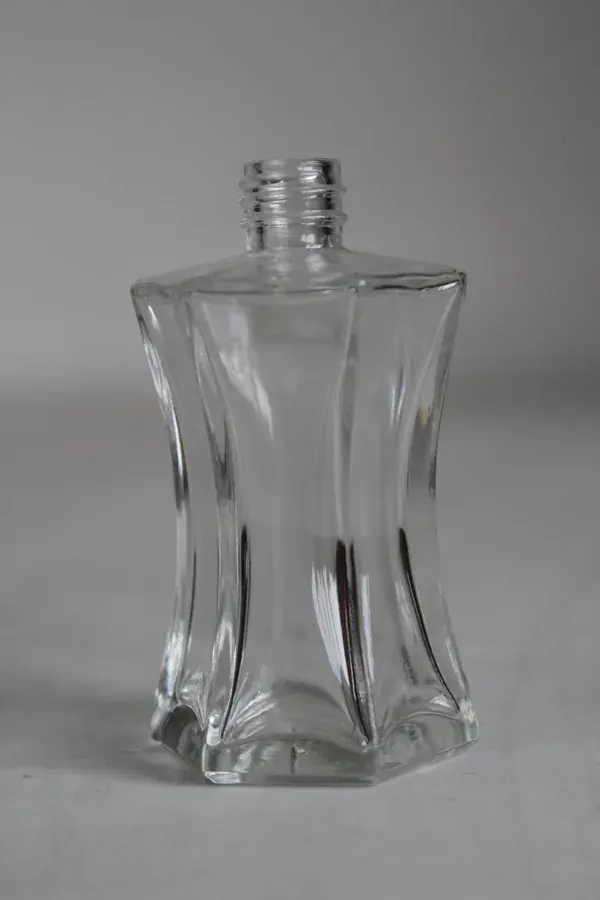
Filed under cosmetic bottles and jars; the moulds we quote for this are pictured at the foot of the page.
Specify a custom lotion bottle in this order: dispenser, neck finish, glass, decoration, then compatibility testing. The pump or sprayer has to suit the viscosity of the formula, and it fixes the neck finish (usually 18/410, 20/410, 24/410 or 28/410), which must be locked before any mould is cut. Minimum order and sampling time are quoted per project, driven mainly by how much tooling the design needs.
Choose the dispenser before the shape
Projects go wrong when a brand settles on a silhouette and only then finds that no standard pump fits the neck, the dose is wrong, or the actuator height spoils the look on shelf. Picking the dispensing system first avoids all three.
| Dispenser | Typical products | What to specify |
|---|---|---|
| Lotion pump, 1.2 to 2.0 cc per stroke | Standard emulsions for body and hand care | Output, and for thick body lotions a 28/410 pump at 1.6 to 2.0 cc with a wide dip tube |
| Treatment pump, 0.2 to 0.5 cc | Facial serums and light lotions that need fine dosing | Output per stroke |
| Sprayer | Toners, mists and light leave-on products | Spray pattern angle and droplet size, since a coarse stream is unwelcome on the face |
| Airless (piston or pouch) | Oxygen-sensitive or lightly preserved formulas | Mechanism type; these protect against back-contamination and typically evacuate 95 percent or better |
Pumps and sprayers mostly use the four 410 finishes named above, and some treatment systems use 18mm or 20mm crimp finishes. Altering the finish once the blank mould exists is among the costliest changes in a packaging project. For viscous creams, ask the pump supplier for a viscosity range and prove it in the pilot run, because a spring that is too light will stall.
Pick a capacity
Most custom programmes fall into four sizes. If you are still deciding between custom and stock, the catalogue shapes are on our wholesale lotion bottles page.
| Capacity | Main use | Planning note |
|---|---|---|
| 30 ml | Facial serums and travel sizes | Light, with many pieces per carton; buyers of costly actives expect precise dosing |
| 50 ml | Facial lotion and cream-gel | The most contested mould category, so stock-mould fallbacks are easy to find |
| 100 ml | Body lotion and salon retail | Check overall height; a tall 100 ml bottle can exceed the shelf pitch of some fixtures |
| 200 ml | Body care and professional sizes | Take a 28/410 finish and a 2.0 cc pump as the baseline and review palletisation early, since case weight rises quickly |
Two capacities can usually run in one project when they share a neck finish, shoulder geometry and overall proportions. They cannot come from one cavity, but some plants build a family mould with interchangeable cavities, which lowers the tooling bill considerably. Raise it in the first engineering discussion.
Set wall thickness and light protection
Shoppers judge a glass skincare bottle by its weight in the hand, so write the wall thickness on the drawing instead of accepting a plant default. Sidewalls of 3 to 5 mm with a thick push-up base give the heavy feel. They also add unit weight, freight per piece and annealing time, and the plant should model that trade-off for you.
Light protection matters when the formula contains retinoids, vitamin C, botanical extracts or essential-oil fragrance components, all of which lose potency under UV. Flint (clear) glass gives essentially no UV barrier. From least to most protective, the choices are:
- a UV-inhibiting spray coating over flint;
- a fully opaque sprayed finish;
- frosted glass with a UV coating;
- furnace-coloured amber or cobalt glass.
Amber blocks nearly all light below about 450 nm and is the reference choice for photosensitive formulas. An opaque sprayed coating is an acceptable substitute when the brand palette rules amber out, provided the supplier gives you UV transmission data. Let your lab's stability results set the level. Many brands mix flint, frosted and amber within one product family.
Plan decoration and its sequence
Each decoration process has a technical limit worth knowing before the design is approved.
- Silk screen printing. The standard for logos and regulatory text. One to three spot colours register well on curved glass, and ceramic inks fired in the lehr (the annealing oven) are effectively permanent, which makes them the most durable choice for a humid bathroom.
- Acid frosting. Gives the matte, soft surface. Specify a uniform depth over the full height of the bottle; patchy frosting is the leading cause of decoration rejects.
- Spray coating. Covers the Pantone range, gradients and metallic effects. Require a cross-hatch adhesion result and a rub test against the carton material you will use.
- Hot stamping. Adds real metal foil and combines well with silk screen. Lines finer than about 0.2 mm break up on a curve.
Order matters: frost before printing, and cure coatings before hot stamping. Do not put more than three processes on one bottle without a decorated pilot run, because rejects compound. A bottle that is 97 percent good at each of three stations ships at roughly 91 percent yield. Paper or film labels are the weakest option in humid conditions unless they are laminated and use a moisture-resistant adhesive.
Run compatibility testing before production
Glass is chemically inert, but the formula also touches pump springs, dip tubes, gaskets and valve parts every day of its shelf life. Test the whole assembly, not the bottle alone.
Fill pilot bottles with the real formula and with a stressed variant, then hold them at 40°C and 4°C for four to twelve weeks alongside a room-temperature control. Watch pump function, consistency of output, gasket swelling, discolouration of the formula and any reaction between fragrance components and the decoration inks or coatings. Some brands release packaging on the first four weeks of data and let the full protocol continue in parallel.
We ask the pump maker for material declarations covering PP, PE, stainless spring grades and gasket elastomers, and you should pass them to your formulator before the specification is frozen. Known problem pairings, such as high-oil formulas against certain elastomers, can then be caught before a production lot is at risk.
Minimum order, tooling and sampling
Minimums and sampling time depend on where the design sits between a stock mould and full custom tooling, plus the decoration and quantity, so we quote them per project. Brands that need matching jars can shorten the overall programme by developing the whole family through one custom cosmetic bottle programme instead of splitting components between vendors.
FAQ
What is the minimum order for custom lotion bottles?
It is quoted per project and depends on the mould and the line the bottle runs on.
Does a vitamin C lotion need amber glass?
It is the safest choice, because amber cuts out nearly all light below about 450 nm. A fully opaque sprayed finish can stand in if you confirm its UV transmission figures.
How long does compatibility testing take?
The standard protocol is four to twelve weeks of ageing at elevated and refrigerated temperatures against a room-temperature control.
Can one mould make both 30 ml and 50 ml bottles?
Not from a single cavity. A family mould with interchangeable cavities can often cover two related capacities when the neck finish and proportions match.