Part of our cosmetic glass bottles wholesale range; the stock moulds are pictured at the end of this guide.
Choose a wholesale lotion bottle by formula viscosity first and by material second. Medium-viscosity lotions run through a standard 24/410 or 28/410 lotion pump dosing 1.2cc to 2cc per stroke, thinner products pour well from a flip-top, and anything above roughly 60,000 centipoise needs a wide-orifice pump, an airless system or a jar. Glass suits facial care and gift lines; PET, PP and HDPE suit body care, family sizes and parcel shipping.
Which dispenser suits which formula
Viscosity decides the dispenser, and appearance comes after. The four formats below cover almost every lotion, and each has a finish range and a dose that should appear on the purchase specification.
| Dispenser | Usual neck finish | Output per stroke | Best suited to |
|---|---|---|---|
| Lotion pump | 24/410, 28/410 | 1.2cc to 2cc | Medium-viscosity lotions, body creams, liquid soaps |
| Flip-top cap (disc-top or snap-top) | 20/410, 24/410, 28/410 | Poured, not metered | Thinner lotions, conditioners, shower gels |
| Squeeze bottle in LDPE or PETG | Soft-wall body | Squeezed by hand | Hand lotion in shared spaces, travel sizes, one-handed use |
| Treatment or serum pump | Small glass or plastic bottles | 0.2cc to 0.5cc | Facial lotions and SPF products where the dose is part of the claim |
Output per stroke sets how many presses one application takes, so pick it against the amount you want the user to apply. A flip-top has no moving mechanism, which removes pump failure as a reason for returns on entry-level lines.
Pump heads come in standard-lock, clip-lock and up-lock versions. All travel safely on a pallet, but for e-commerce an up-lock head is the one to specify, because it is built to get through parcel handling without weeping. Our page on glass pump bottles bought in bulk goes further into pump formats.
Glass or plastic for the bottle body
Glass is inert. It does not react with essential oils, acids or preservative systems, it feels heavier and more valuable in the hand, and it meets the plastic-free commitments that a growing number of US retailers ask for. Those advantages come with weight: a glass bottle is five to eight times heavier than its PET equivalent, which shows up in ocean freight and again in parcel postage. It also breaks. Without an engineered insert, 1 to 3 percent breakage in parcel shipping is normal for glass lotion bottles.
PET, PP and HDPE do not shatter, keep dimensional-weight charges down, and come in every opacity from clear PET to fully opaque HDPE. A mono-material PP bottle fitted with a PP pump can be recycled as one piece, which answers part of the sustainability question. Two limits apply: formulas heavy in essential oils can stress-crack PET over time, so move those to PP or glass, and no plastic matches the feel of glass.
In practice the split falls like this:
- Glass: facial care, boutique hotel amenities, gift lines.
- Plastic: body care, family sizes, subscription refills.
- Both: a glass hero bottle sold alongside a plastic refill bottle or pouch.
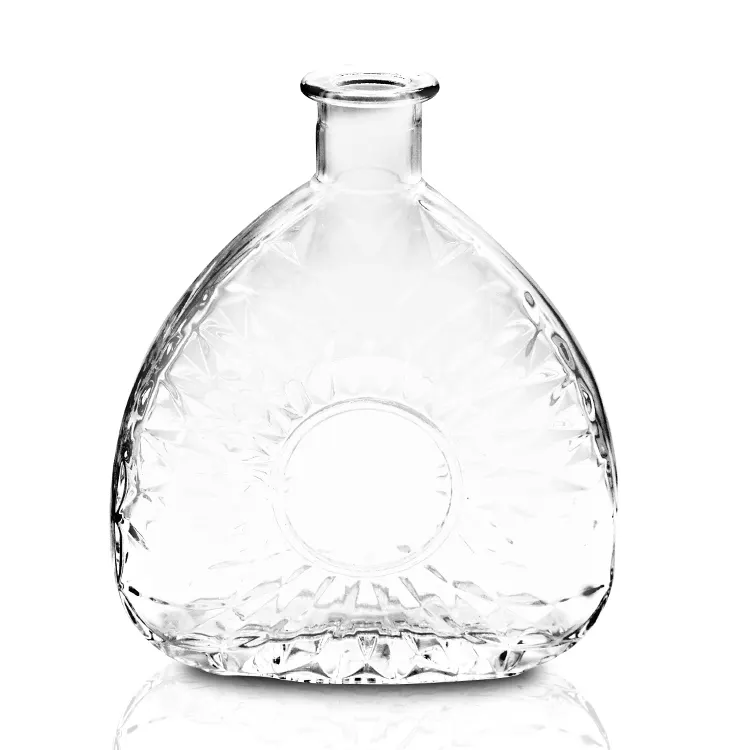
Stock formats commonly paired with each dispenser
These stock-mould combinations are the ones lotion buyers ask for most often. They are a starting point for a brief, and each pairing still needs a fit check on the actual finish.
| Bottle shape | Material | Capacity | Dispenser |
|---|---|---|---|
| Cylinder round | Flint glass | 30ml / 50ml | Treatment pump |
| Cylinder round | Flint glass | 100ml / 120ml | Lotion pump |
| Square flat-panel | Frosted glass | 100ml | Lotion pump |
| Boston round | Amber glass | 250ml | Lotion pump |
| Cylinder round | PET | 100ml / 150ml | Lotion pump |
| Cylinder round | PET | 250ml / 300ml | Lotion pump |
| Oval squeeze | HDPE | 200ml | Flip-top cap |
| Cylinder round | PP (mono-material) | 150ml | PP pump |
Glass, plastic and closures can travel in one mixed container, so freight is shared across the order while each item is quoted on its own quantity.
Four specifications to fix before filling
Most problems on a lotion filling line trace back to one of four details, and all of them can be settled on paper or with samples.
- Neck finish tolerance. A 24/410 finish held within plus or minus 0.15mm takes any standard pump. A loose finish leaks or cross-threads. We check the finish drawing against GPI tolerances before a project goes to a plant.
- Viscosity against pump type. Body butters thicker than about 60,000 centipoise will not travel through a standard lotion pump. Put the viscosity figure in writing so the dispenser hardware is chosen against it before anything is quoted.
- Dip-tube length. The tube has to match bottle height to the millimeter. A tube cut short strands 5 to 10 percent of the product at the bottom, and that is the leading consumer complaint about lotion packs. Ask for pre-production samples with tubes trimmed to your bottle.
- Material compatibility. Oil-rich and heavily fragranced formulas attack pump gaskets and springs. Stainless-steel springs last longer in oily formulas, and Viton gaskets stand up to essential oils that break down standard rubber. Testing two or three gasket and spring combinations side by side settles the choice.
Decoration across a product line
A lotion usually sits on shelf next to a cleanser, a toner and a cream, so decoration is a range decision. On glass, a frosted surface with a single-colour screen print gives the most presence for the least decoration work. On plastic, in-mould labels and full shrink sleeves carry photographic artwork that glass cannot reproduce.
Fix one decoration specification for the whole range early. Brands that mix processes from item to item tend to end up with six slightly different whites in the same display. Where the range includes jars, plan them with the bottles so finishes and visual details are shared.
How to run the order
A workable sequence for a US personal-care brand has four stages:
- Request samples of your two or three shortlisted bottles together with the dispenser options, including lock styles if the product ships by parcel.
- Fill them with the real formula and hold them for a two-week compatibility check.
- Run a fill test to confirm pump output and that the dip tube reaches the base.
- Place the order, adding 3 to 5 percent extra pumps and caps as service spares. Dispensers have moving parts, and a spare on the shelf settles a lost-pump complaint quickly.
For parcel channels, also verify the application torque on your capping line, drop-test the lock styles, and consider an induction seal under the closure.
Frequently asked questions
Which dispenser handles a thick lotion?
Up to medium viscosity, a standard lotion pump on a 24/410 or 28/410 neck does the job. Past roughly 60,000 centipoise the formula needs a wide-orifice pump or a jar. Send the viscosity figure with the enquiry so the hardware is matched to it.
What is the minimum order for wholesale lotion bottles?
Minimums are set per project. They follow the mould and the production line the bottle runs on, so a stock shape and a custom shape will not carry the same figure.
How much do wholesale lotion bottles cost?
Pricing is quoted per project. The main drivers are the mould, the decoration, the quantity, the dispenser chosen and the freight terms.
Will one pump fit bottles from different suppliers?
Yes, provided every neck follows the same standard. A finish made to GPI tolerances, such as 24/410 or 28/410, accepts a standard pump from any compliant source. Compare finish drawings to confirm before mixing suppliers.
Can the same sourcing brief cover refillable oral-care bottles?
It can. Concentrate-and-refill mouthwash programmes need durable glass that looks good on a counter, in 30-500ml formats with pump or cork closures, and they also sell into hospitality. Our page on glass mouthwash bottles covers those options.