A glass water jug is a storage vessel of one to five liters with a load-bearing handle and a lid that seals, built to be filled, poured from, washed and refilled every day. For most hotel, restaurant and office programs the right starting point is a 1.5–1.8 L soda-lime jug with a gasketed stainless screw lid. Move to borosilicate glass if the jug will ever hold hot water, and put a handle pull test in the purchase order, because the handle joint is where jugs fail.
How a jug differs from a carafe
Search results treat the two as one product, but they do different jobs. A carafe is tableware: open or loosely stoppered, usually without a handle, taken to the table and emptied within the hour. Those are covered under our glass carafe sourcing page.
A jug is closer to equipment. Its handle has to carry the full weight of the contents and its closure keeps out dust and refrigerator odors. Hotels fill jugs for conference rooms, offices keep them in break areas, restaurants hold filtered water behind the bar, and households stand them in the fridge door. If the vessel will sit filled for hours or days, specify a jug.
Hospitality buyers who once served from polycarbonate pitchers now face guests who expect plastic-free service, which is the main reason the category keeps growing. A glass jug also outlasts a plastic pitcher by years.
Capacity bands and their typical buyers
| Capacity | Typical buyer and use | Mechanical notes |
|---|---|---|
| 1.0–1.3 L (34–44 oz) | Fridge door and desk; home retail and office amenity kits | 700–950 g empty in soda-lime glass, an easy one-handed pour when full |
| 1.5–1.8 L (50–60 oz) | Hotel meeting rooms, restaurant water service, family kitchens; most reorder volume sits here | A full 1.8 L jug weighs about 2.7 kg, and the handle joint carries all of it |
| 2.0–2.5 L | Back-of-house and buffet drink stations | Often ordered with a stainless lid and a printed fill line |
| 4–5 L (1–1.3 gal) | Bulk storage, cold-brew batches, home kombucha fermentation | A two-hand lift; walls go from 3 mm to 4–5 mm and the handle joint carries over 5 kg |
The largest band has a niche following among home brewers, who ferment in the jug and then decant into kombucha bottles. Buyers who need a gallon format specifically can compare glass gallon jugs.
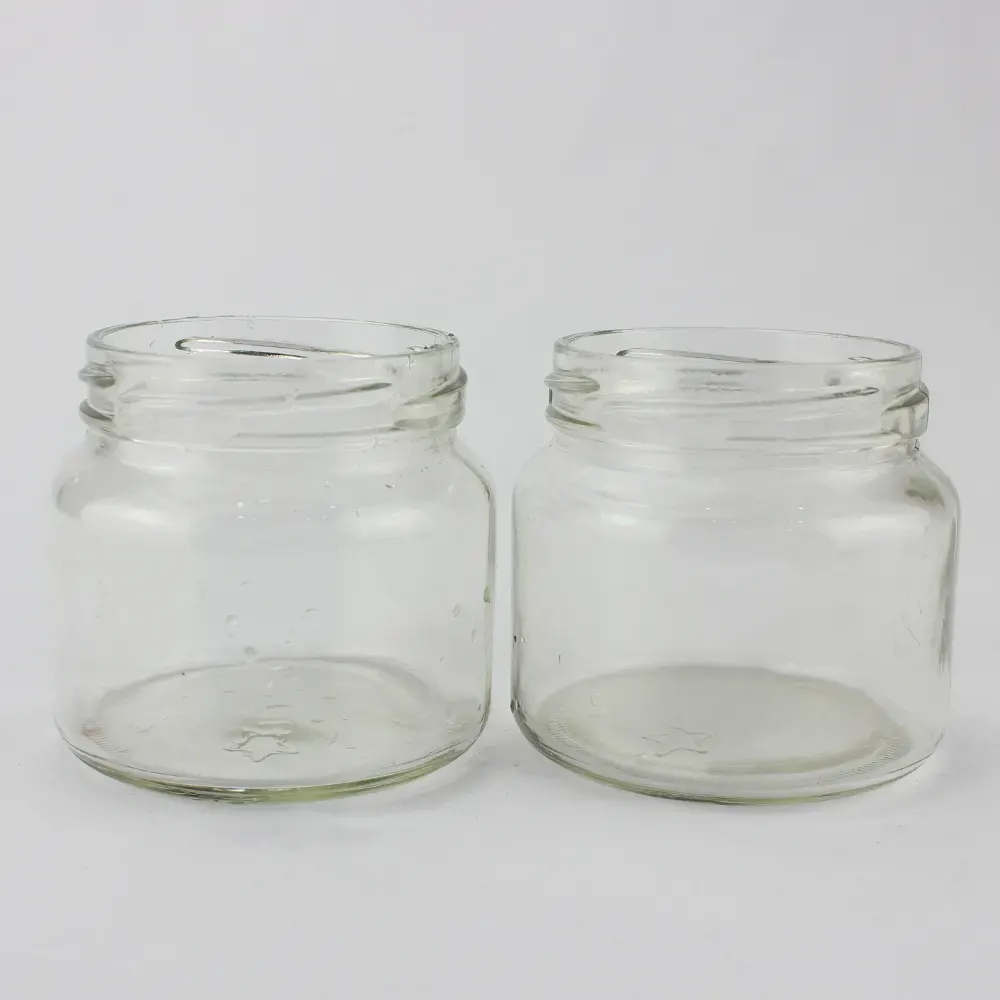
On the spec sheet, state brimful capacity as well as nominal. A jug sold as 1.8 L generally holds 1.95 L to the rim, and any program that fills to a marked line needs both figures.
Soda-lime or borosilicate glass
Roughly 80% of the jug market is soda-lime flint glass. For cold water it is the correct choice: clearer than borosilicate and offered in far more mould shapes. It suits a jug that stays in the fridge, the office or the buffet line and never holds liquid above 40°C.
The limit is thermal shock. Standard soda-lime jugs are rated for a temperature differential of around 40°C, and many hotel breakfast services pour water at 60–70°C. Borosilicate 3.3 tolerates 120°C and more, so it is the glass for hot water, rapid temperature swings and commercial dishwashers with high-temperature sanitize cycles. Because it is formed differently, the shapes on offer tend to be plainer cylinders.
Some buyers run both: soda-lime for cold service, borosilicate for the tea and hot-water line, and one lid design across the two. Our page on custom glass water bottles applies the same reasoning at bottle scale. Declare any hot-fill use in the enquiry so the glass type and annealing cycle are chosen for it.
Three closure options compared
| Closure | Seal | Best suited to | Watch for |
|---|---|---|---|
| Stainless or bamboo screw lid with silicone gasket | Seals against fridge odors; the jug can lie on its side without weeping | Refrigerator and office storage | Gasket quality; bamboo is not a dishwasher item |
| Swing-top (flip-top) wire bail | Hermetic | Table presence and jugs that double as fermentation vessels | Hardware cost and wide mouths of 60–100 mm |
| Loose stainless infuser lid | Does not seal | Fruit-infused water in hotel lobbies and spas | Not for storage where odor or dust matters |
Screw lids
The usual construction is a 304 stainless disc with a food-grade silicone ring. Bamboo looks better on a retail shelf but needs a closely fitted gasket and a care instruction. In either case the gasket decides how long the seal lasts. Specify platinum-cured silicone and request a compression-set test report: a ring that has taken a permanent set after six months leaves the lid acting as a dust cover.
Swing-tops
This is the wire-bail closure known from swing-top beer bottles, enlarged for a jug mouth. It is the usual choice for kombucha or water kefir, since it holds its seal between pours and vents CO2 safely if pressure builds. The wire assembly often costs more than the glass it closes, and a wide mouth is harder to seal consistently across a large run. Where any fermentation is planned, ask for a pressure test at 1 bar.
Infuser lids
A built-in strainer lets water through and holds ice and fruit back. The loose fit makes it the least costly of the three. Properties that use it often add glass water bottles for guest rooms in a matching style.
Handle strength and the tests to write into the order
Every structural failure report we see for jugs concerns the handle, and the cause is nearly always the same. The handle was attached to a body that had already cooled, and the joint was never annealed properly. Residual stress stays in the joint and it breaks months later under load.
A sound jug has the handle applied hot in the same furnace run. The joint is reheated and worked, and the whole piece then passes through the lehr, the annealing oven, so joint and body relax together. We ask for three checks in the purchase order:
- Pull test on the handle joint at no less than three times the filled weight, which means 8+ kg for a 1.8 L jug.
- Polariscope inspection for stress at the joint, on first articles and then once per shift.
- Thermal-shock test at the joint itself. It is a thick section, and it is where a crack begins when a cold jug receives hot water for tea service.
Planning a hospitality, office or retail program
Hotels plan in par levels and breakage rates. A 300-room hotel with jugs in its meeting rooms typically sets a par of 1.5 jugs per room-capacity unit, allows for 8–12% annual breakage and reorders quarterly. What it needs from supply is a mould that will still exist in three years and lids available separately, since lids are lost or stolen at 3x the rate jugs break. Cartons should fit a housekeeping cart, so 6-packs rather than 24-packs; export cartons of 12–24 make better use of a container and suit a central storeroom.
Offices and co-working spaces look first at dishwasher fit. Measure the jug against a 400 mm rack before approving a tall design. Several good-looking 2 L jugs do not fit a standard commercial rack and end up washed by hand.
Retail and direct-to-consumer brands are where customization happens: frosted bands, screen-printed logos, silicone sleeves and gift boxes. Buyers adding bottles to the same order can refer to our one-liter glass bottles and, for carton and pallet detail, the packing specification guide.
Frequently asked questions
Which jug size do hotels and restaurants order most?
The 1.5–1.8 L band. It serves a four-glass meeting table, fits most commercial dishwasher racks and stays at about 2.7 kg when full, which service staff can pour with one hand.
Can a glass jug take hot water for tea?
Only if it is borosilicate. Pouring water at 60–70°C into a cold soda-lime jug risks a thermal-shock crack, most likely at the handle joint.
Which lid is right for a jug kept in the refrigerator?
A 304 stainless screw lid with a platinum-cured silicone gasket. It blocks odors, stands up to daily washing and avoids the expense of wire hardware. Choose a swing-top only if the jug will also ferment.
What is the minimum order for custom glass water jugs?
It is quoted per project. The figure depends on the mould, the line it runs on, the lid tooling and the decoration.
How should a hotel plan for breakage and spares?
Budget for 8–12% of jugs breaking each year and reorder against the 1.5x par. Buy lids as a separate spare line, and fix both the jug mould and the lid tooling in the supply agreement so replacements match for the life of the program.