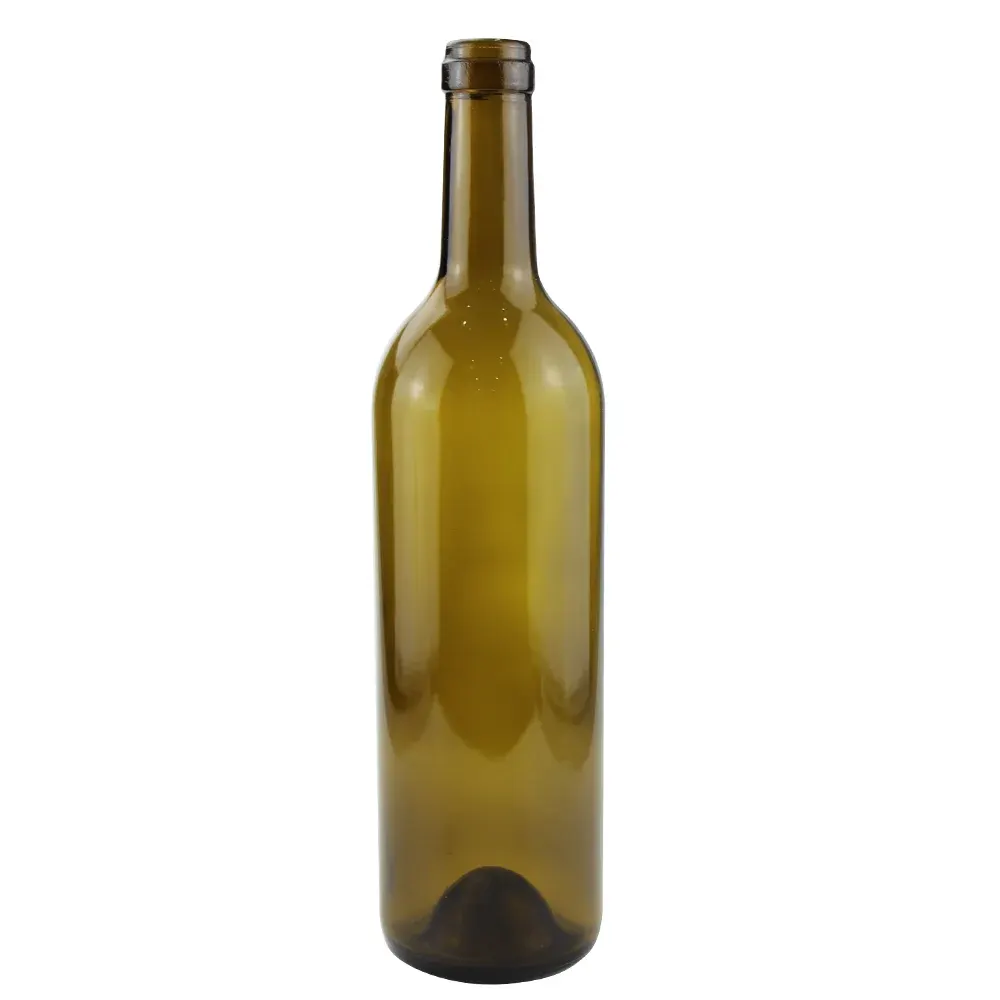
Part of our glass wine bottles range; the stock moulds are pictured at the end of this guide.
A wholesale glass carafe is a 1 L or 1.5 L pouring vessel in flint soda-lime glass, and the same shape serves table water, house wine and cold brew. The 1 L pours four 250 ml glasses and suits a two-top; the 1.5 L covers a four-top without a refill. Decide capacity first, then mouth width and lid, and confirm that the glass is annealed and rated for commercial dishwashing.
Check that a carafe is the right vessel
Some buyers ask for a carafe when the job calls for a growler or a pitcher, and sorting that out before ordering prevents returns.
| Vessel | What it is | Use it when |
|---|---|---|
| Carafe | Lid-optional pouring vessel with a rolled rim, 0.75-1.5 L, for still liquids | It is carried to the table and poured for guests |
| Growler | Sealed transport vessel of 32-64 oz with a swing-top or poly-seal cap rated for carbonation pressure | It is filled at a tap and taken home |
| Pitcher | Handle and ice-lip spout for fast, casual pouring | It stays on a self-serve buffet |
A carafe lid is not a pressure closure. For draft beer, kombucha on tap or anything sparkling, look at glass growlers.
A decanter is different again. Its wide base maximises contact between wine and air, while a carafe is taller and narrower and built for portioned, low-drip pouring. A carafe aerates a young red gently, but it does not replace a decanter for aged vintages.
1 L and 1.5 L specifications
| Attribute | 1 L (33.8 oz) | 1.5 L (50.7 oz) |
|---|---|---|
| Height | About 260-280 mm | 300-320 mm |
| Glass weight | 450-550 g | 620-700 g |
| Typical table | Two-top; four 250 ml glasses | Four-top without a refill trip |
| Fill-line etching (250/500/750 ml) | Stock option | Custom run |
The 1 L has a belly diameter of 95-105 mm. Both sizes are blown with a 3-4 mm wall and a base 7-9 mm thick, which keeps them steady on a tray. The rim is fire-polished and rolled slightly outward, so liquid sheets off cleanly and does not run down the belly.
Hotels and banquet operations tend to standardise on the 1.5 L. A 1 L carafe also gives three generous 330 ml pours.
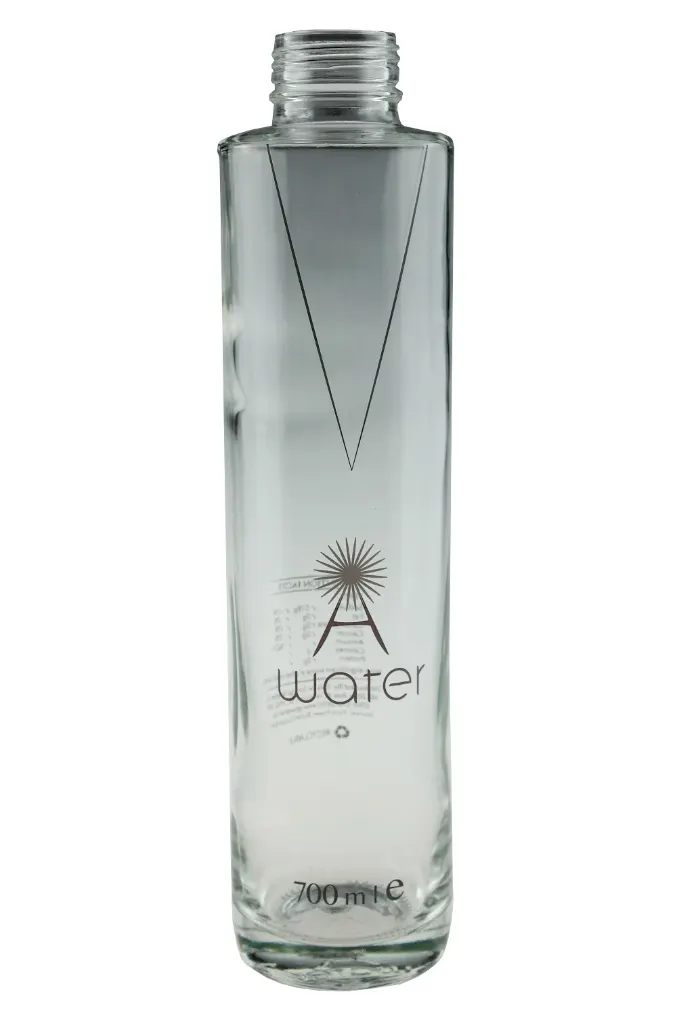
Water, wine and cold brew from one shape
Few buyers order a carafe for a single purpose, and that is the case for a stock item: a distributor can sell one SKU into three channels.
- Table water. The open 1 L flint carafe is the restaurant standard.
- House wine. A graduated version with 250 ml and 500 ml fill marks is legal for trade in markets that require measured pours, and it doubles as the portion-control tool for by-the-glass service.
- Cold brew and infusions. The wide-mouth variant takes whole fruit and standard cold-brew filter inserts, and sells at retail as a home pitcher.
Where a closed, measured format is needed instead, see our 1 liter glass bottles. Single-serve formats are under glass water bottles, and branded retail lines under custom glass water bottles.
Mouth width and lid systems
Mouth diameter defines the carafe. A narrow mouth of 38-45 mm gives the pour control wine service needs and accepts bar-top style closures. A wide mouth of 60-80 mm admits ice cubes, fruit and a cleaning brush, which makes it the choice for water and cold brew.
Inserts matter too. A 38 mm mouth takes the standard speed pourers used behind bars, and a narrower 28 mm neck suits drip-free oil and vinegar service. Tell us how the carafe will be poured and we match the mouth to the insert.
Three lids cover most needs:
- Natural or agglomerated cork, for a traditional cellar look and for wine that is finished the same evening. Related shapes are in our cork-stoppered glass bottles.
- A 304 stainless steel lid with a food-grade silicone gasket, for modern tableware lines and a drip-free stream in juice service.
- A full-silicone suction lid, for spill-safe storage in the fridge.
An open carafe pours fastest and suits high-turnover table water. Anything batched ahead, such as iced tea, infused water or house wine, needs a lid.
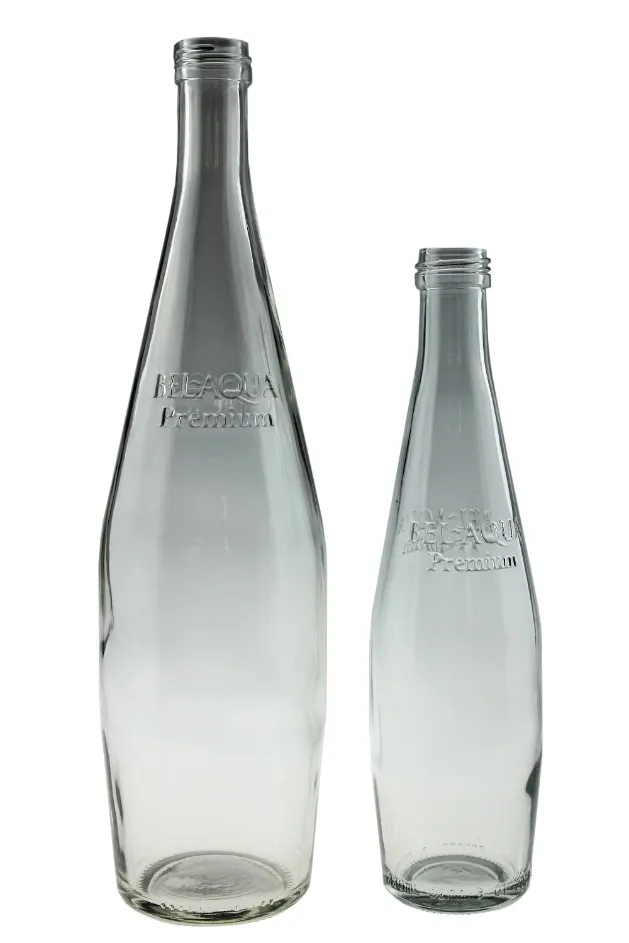
Durability in restaurant service
A restaurant carafe goes through 2-5 wash cycles a day, moves between a 4°C fridge and a 75°C dishwasher rinse, and knocks its rim against tray edges and other glass. Three points in the specification address this.
- Annealing. The glass should be fully annealed in a controlled lehr, with random samples from each lot checked on a polariscope for residual stress.
- Rim. Fire-polishing removes the micro-checks where chips begin, which is what makes the rolled rim durable.
- Wash and thermal rating. The stock carafe is tested beyond 500 commercial dishwasher cycles before haze appears and rated to a 60°C thermal differential.
Pass one rule on to end users: never pour boiling liquid into a cold carafe. Soda-lime glass is for cold and warm drinks, and boiling-water service calls for borosilicate, which we can source separately. The carafes also do not stack inside one another. The nested-shoulder shape is stored rim-down in racks.
Branding that survives the dishwasher
Plan decoration around washing. An acid-etched logo lasts indefinitely, a fired ceramic decal lasts thousands of cycles, and organic screen-print ink fades within a few hundred commercial washes. We suggest etching for hospitality groups and decals for retail gift sets that will be hand-washed, since decals allow full colour.
Keep artwork below the shoulder in either case, so that rack storage and the pouring grip never rub the logo.
Case packs and loading
Carafes are packed in master cartons with egg-crate dividers: the 1 L at 12 per case, about 7.5 kg gross, and the 1.5 L at 6 per case. A pallet carries 900-1,100 of the 1 L or 500-600 of the 1.5 L, and the two sizes can share a pallet. A 40HQ takes roughly 28,000 of the 1 L, limited by cube, not by weight.
Frequently asked questions
Can a glass carafe take hot liquids?
Warm drinks, yes. Boiling water poured into a cold carafe can crack it, so specify borosilicate for boiling service.
Are the carafes dishwasher safe?
Yes. They are annealed, fire-polished at the rim and tested past 500 commercial wash cycles. Rack them rim-down.
What is the minimum order for carafes?
Minimums are quoted per project and depend on the mould, the decoration and the quantity per size.