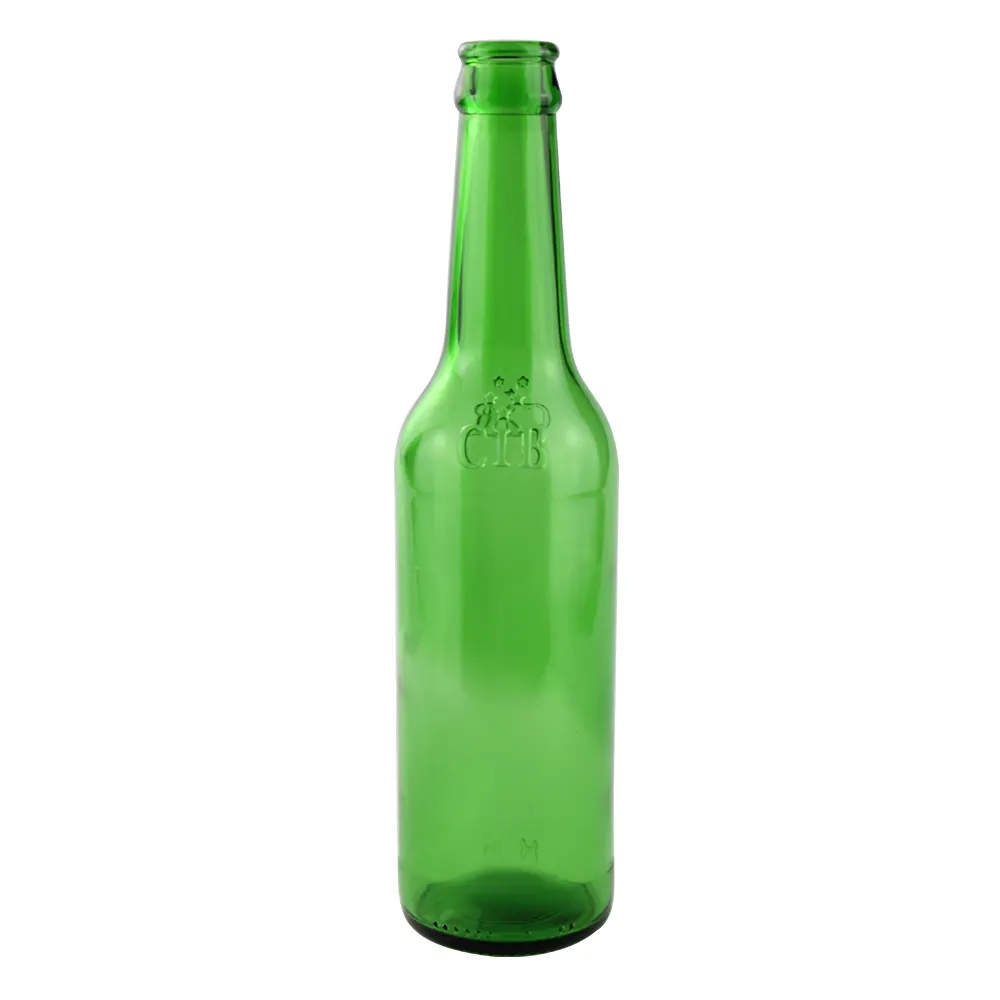
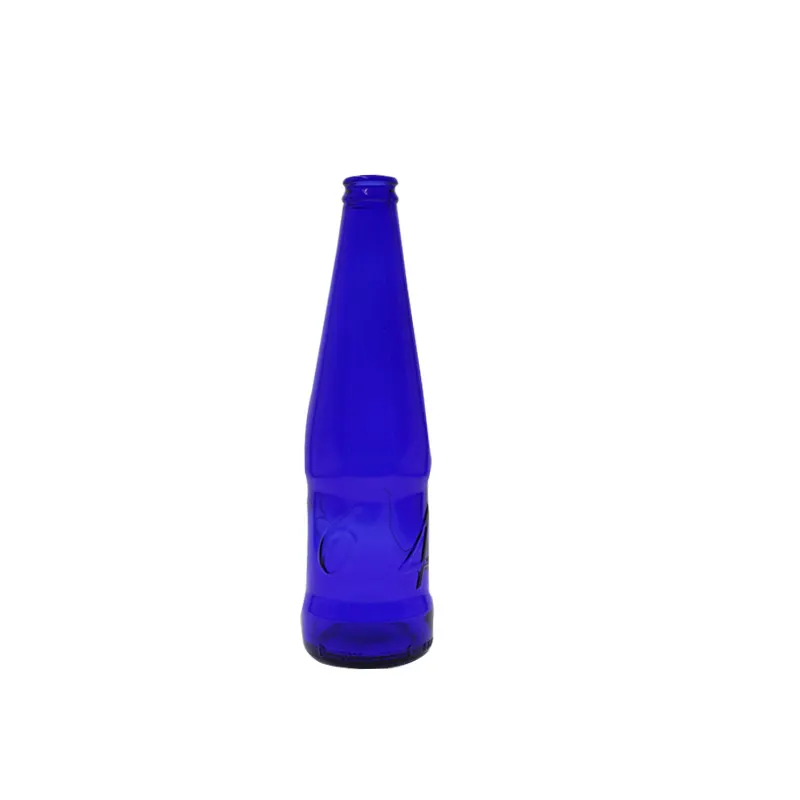
Filed under beer bottles wholesale; the moulds we quote for this are pictured at the foot of the page.
Stock glass growlers come in two sizes: the 64 oz half-gallon (1.89 liters, four pints) and the 32 oz howler (about 946 ml). Both use the same 38 mm neck finish, so one closure inventory serves the whole range, and amber is the default color because it blocks roughly 90 percent of light below 450 nm. They ship in divider cases of 6 and 12 respectively.
Choosing between 32 oz and 64 oz
| 32 oz | 64 oz | |
|---|---|---|
| Volume | About 946 ml | 1.89 liters, exactly four pints |
| Also called | Howler, grumbler | Half-gallon |
| Occasion | One or two drinkers | Sharing: dinner parties, tailgates, the weekend fill |
| Per divider case | 12 | 6 |
| Per full export pallet | About 3,300 | Approximately 1,900 |
The smaller size lowers the refill price point for the customer and turns product over while it is fresher. Kombucha and cold-brew sellers lean heavily toward it, since their customers buy a fill as a two-day supply. Most taprooms begin with roughly a 2:1 ratio of 64 oz to 32 oz and adjust once they have a quarter of refill data.
For single-serve packs instead of refill jugs, see our beer bottle collection for the 330/500 ml range and our kombucha bottles for fermented tea.
Amber or flint
Draft beer and kombucha are unfiltered and unpasteurized far more often than packaged product, which makes them much more sensitive to light. UV and blue light below about 450 nm isomerizes hop compounds, and the skunky thiol off-flavor appears within minutes in direct sun. A customer crossing a sunny parking lot with a clear growler can spoil the beer before reaching the car.
We therefore quote amber first for anything hopped or fermented. Flint (clear) growlers suit cold brew, water and shrubs, where light does no harm, and brands that want the fill to be seen. The wider amber range is on our amber glass bottle page.
Screw cap or swing-top
Either closure seals reliably after a counter-pressure or bottom-up fill. The difference is in how the program runs.
| 38 mm polyseal screw cap | Swing-top (flip-top) | |
|---|---|---|
| Construction | Cone-shaped polyseal liner that compresses into the bore; 38-405/38-439 finish family | Wire bail, porcelain or plastic stopper, food-grade silicone gasket |
| Carbonation | Held for the practical life of a filled growler: two to three days at full pressure, longer if left unopened | Held by the gasket under the bail |
| Reuse | Close to single-use; sold with each fill or folded into the refill charge | Sanitized and refilled hundreds of times; only the gasket is replaced now and then |
| Cost pattern | Low per closure | Higher upfront, spread over many fills |
Busy refill stations usually recover the extra outlay on swing-tops quickly, and the closure looks good on a back bar. Our swing-top bottle page shows the same closure on other sizes.
Designing the return loop
Glass suits refilling because it survives the caustic cycle of a commercial jug washer, 80 degrees C with alkaline detergent, thousands of times without scratching, hazing or holding aromas. A growler that carried an imperial stout last week can carry a pilsner this week. Unlike plastic, it also admits no oxygen during the days a filled growler spends in a home fridge.
Return rate depends on how the program is built more than on customer goodwill. Operators with the best rates do three things:
- Charge a real deposit. It has to be enough that the jug comes back, yet low enough that a first-time customer does not hesitate. A heavy amber jug with a deposit on it gets treated as equipment.
- Swap at the counter. The customer hands in a dirty growler and takes a sanitized one from the shelf. Nobody waits on a wash cycle, and hygiene rests on the taproom's own validated wash, not on a kitchen sink.
- Print the glass. A screen-printed or serialized growler can be tracked, is harder to walk off with, and works as a loyalty item.
Both stock sizes fit standard jug-washer racks. The 38 mm finish drains completely on an inverted peg, so no one has to shake jugs between the rinse and sanitize stages.
Cases, pallets and stock levels
Cases are sized so a bartender can lift a growler out, fill it and put it back without a worktable. Mixed pallets carrying both sizes plus closures are the usual wholesale configuration, because that matches how taprooms buy.
A workable stocking rule for a refill station is two turns of weekly refill volume on the shelf and one pallet in the back room. Growlers take up space, but running out on a Friday costs more than the freight on a safety pallet.
Branding is one- or two-color screen printing on the shoulder or body, typically the classic ring-and-logo layout fitted to the jug's print panel. Pricing and minimum print quantities are quoted per project and depend on decoration, quantity and freight terms. Specifications for the related brewery glass can be checked on the amber beer bottle product page.
FAQ
Can a brewery logo be printed on the growlers?
Yes. Send artwork and we size it to the print panel and return a digital proof before production.
How many wash cycles does a glass growler last?
Properly annealed soda-lime growler glass goes through commercial washing at 80 degrees C many times over without flavor carryover, hazing or scratching.