Green glass gives moderate light protection, not full protection: emerald green still passes about 35% of light at 450 nm and antique green about 20%, against roughly 8% for amber. Choose green when that level is enough for the product and when wine tradition or brand colour is doing part of the selling. For contents that are truly light-sensitive, amber is the sounder specification.
Light transmission of green glass compared with flint and amber
Light damage shows up as "light-struck" flavour in beer, vitamin loss in juice and faster oxidation in wine. It is caused mainly by wavelengths below about 520nm, and the 350–450nm band is the most harmful. Coloured glass protects by absorbing that light, and the gap between colours is wider than many buyers expect.
| Glass colour | Transmission at 350 nm | Transmission at 450 nm | Transmission at 550 nm | UV protection class |
|---|---|---|---|---|
| Flint (clear) | ~85% | ~90% | ~91% | None |
| Emerald green | ~20% | ~35% | ~75% | Moderate |
| Antique green (dark) | ~10% | ~20% | ~55% | Good |
| Amber | <2% | ~8% | ~40% | Excellent |
Green is a middle ground. It stops most of the worst UV band yet lets through several times more harmful light than amber does. IPA beer, cold-pressed juice and pharmaceutical-adjacent liquids belong in amber; for jar formats in that colour, see amber glass jars with lids. Write the colour and its protection level into the specification instead of assuming it.
Which green to specify
Wine set the vocabulary that the rest of the trade borrowed, over some five hundred years of use. The shade tells a shopper the grape and region before the label is read, which is why a Cabernet in flint glass looks wrong to an experienced buyer.
| Shade | Appearance | Where it is expected |
|---|---|---|
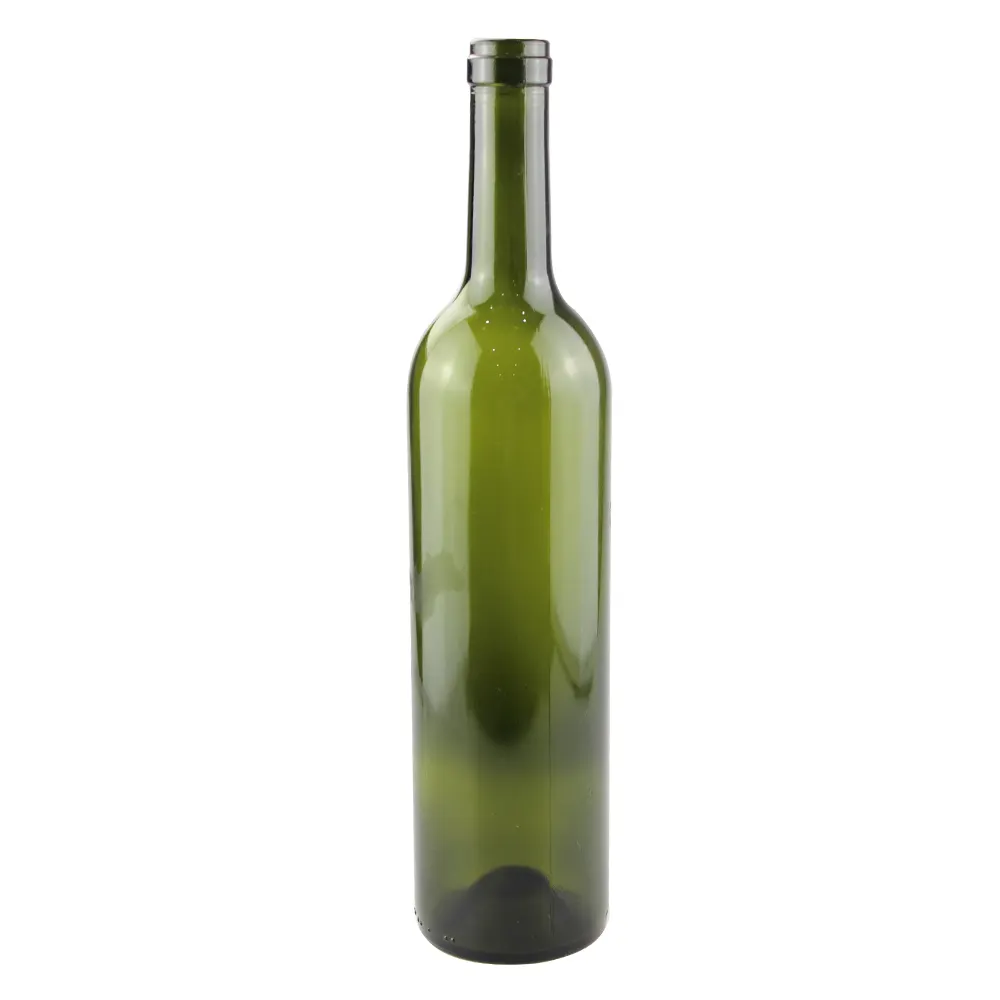
| Antique green | Deep, close to black-green | Bordeaux bottles and structured reds; the strongest UV protection among the greens; premium extra virgin olive oil |
| Dead leaf green (feuille morte) | Lighter yellow-green | Burgundy and Rhône shapes, Pinot Noir and Chardonnay |
| Emerald or champagne green | Between the two | Premium sparkling waters and Italian-style sodas |
| Light green | Pale | Second-tier olive oil |
Green swing-top bottles are likewise the convention for European-style lemonades. Standard wine shapes and capacities in these shades are listed in the wine glass bottle collection.
Green as a brand colour outside wine
Away from category rules, green signals natural, botanical and heritage. It also reads as recycled glass to shoppers, even at ordinary cullet ratios, which supports a sustainability position. Picking a green is therefore a positioning choice first and a protection choice second, and that is a sound commercial reason provided it is made knowingly.
Craft drinks brands use it in two ways. One green SKU in an otherwise flint range pulls the eye to that product, and a signature green bottle builds shelf recognition faster than a label redesign. Shapes for juices, waters and mixers are on the glass beverage bottle page. A carbonated fill needs a pressure rating as well as a colour; those are explained under bulk glass soda bottles.
What to write into a green glass order
Coloured glass adds two variables that flint does not have.
- Colour tolerance. Shade is governed at the plant by feeder colourants and the cullet ratio. "Green" described in words drifts visibly over a year of reorders, so tie the tolerance to a physical master sample. We agree that sample at the first order and have batch records kept against it.
- Cullet content. Green glass takes a high share of recycled glass very well. Bodies commonly run at 40–60% cullet with no visible effect on quality, a figure you can use in your packaging story.
When you request a quote, include the bottle drawing, capacity, closure type and annual volume alongside the shade.
Frequently asked questions
Does green glass protect contents from UV light?
Partly. Antique green blocks roughly 80–90% of light below 350nm, but every green lets through far more of the damaging band than amber. It suits products that need moderate protection only.
Is green glass more expensive than clear glass?
Pricing is quoted per project. Colourant cost and narrower production scheduling for coloured glass are what set green apart from flint, alongside quantity, decoration and freight terms.
What is the minimum order for green glass bottles?
It is quoted per project and depends on the mould and the line it runs on.