Part of our cosmetic bottles and jars range; the stock moulds are pictured at the end of this guide.
The Nail Polish Bottle: Small Package, Unforgiving Tolerances
Nail polish bottles look like the simplest product in the cosmetic glass catalog — a tiny bottle, a cap, a brush. Buyers who have actually run a polish program know better. This is a category where a 0.2mm neck deviation makes brush bristles splay, where the formula is a solvent system aggressive enough to attack wrong resins, and where a bottle spends its whole life being shaken. The 5ml to 15ml glass bottle at the center of it must hold dimensional tolerances tighter than most 100ml cosmetic flacons, marry perfectly to a brush-cap assembly the brand usually buys separately, and survive chemical contact that would craze lesser packaging. This page covers what procurement teams need to spec when sourcing nail polish bottles at wholesale.
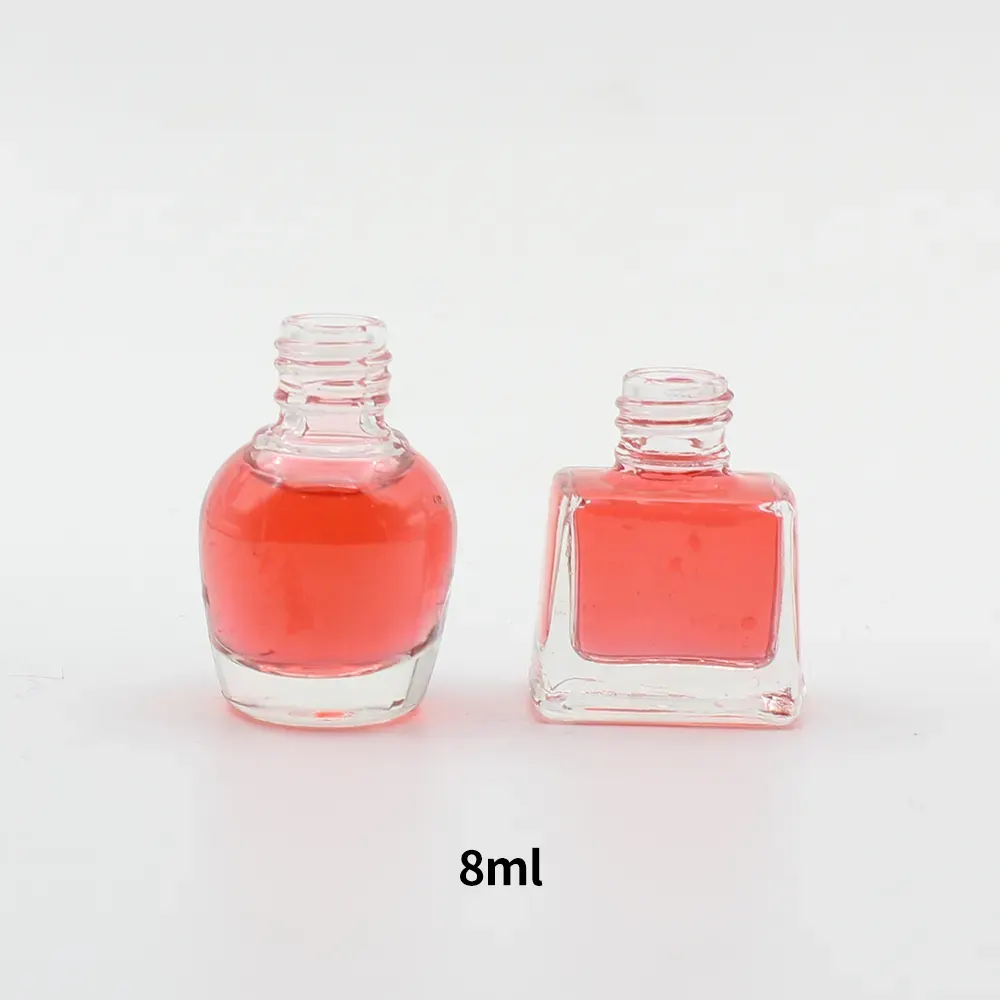
Capacity Standards and Shape Families
The category consolidated long ago around a narrow capacity band:
5ml. Mini and gift-set size, plus the standard for indie and “5-free” boutique brands testing colors. Light walls, 13mm or 15mm finishes, high cavitation molds.
8ml to 10ml. The traditional full size in European and Asian markets, and the premium size in North America. The 8ml round with a 13/415 finish is the single highest-volume polish bottle geometry in the world.
12ml to 15ml. The North American mass-market standard (0.5 fl oz). Slightly taller profiles, usually 13/415 or 15/415 finishes.
Shape families split into rounds (cheapest, fastest, most forgivable in filling), squares (better shelf blocking, need corner-radius discipline like any square cosmetic ware), and novelty profiles — the fluted, skull, and diamond shapes brands use for limited editions. Novelty shapes cost 15% to 30% more and demand the same neck precision as rounds; the decoration changes, the tolerance budget does not. Brands planning full color ranges usually anchor on one body geometry and differentiate purely with caps and cartons, which keeps one mold and one filling setup across forty shades.
Neck Tolerance and Brush-Cap Mechanics
This is the section that separates polish bottles from every other small cosmetic bottle, and the section most RFQs underweight. The brush cap is a system: cap shell, stem, and brush tuft, and the bottle neck controls how that system behaves.
Why the neck matters so much. When the brush is withdrawn, bristles drag across the neck bore’s wiper edge — that drag strips excess polish and shapes the tuft for application. Bore diameter sets the wipe rate: our 13/415 finish holds a bore of 12.5mm ±0.15mm, and ±0.15mm is not pedantry. A bore 0.3mm oversize leaves too much polish on the brush (drips, flooding at the cuticle); 0.3mm undersize over-wipes (starved application, streaks) and accelerates bristle fatigue, because the tuft compresses harder on every pass. Over a bottle’s life of 100+ open-close cycles, an undersize bore visibly frays the brush — the “brooming” consumers hate and photograph for social media.
Bristle rebound and neck finish. Natural and nylon bristles both lose rebound resilience when repeatedly over-compressed. Specifying the neck to the brush vendor’s drawing — not the reverse — is the professional sequence.
The 415 thread detail. Polish finishes use the 415 thread series (deep, multi-turn) rather than the 410 series common in lotion, because the cap must seal solvent vapor over years and resist the torque of consumers opening a bottle whose threads carry dried polish. Thread engagement should hold torque retention above 8 inch-pounds after 24 hours at 40°C with actual formula — the test that catches liner incompatibility before your customers do. The closure guide covers the finish families in detail.
Formula Compatibility: Living With a Solvent System
Nail polish is chemically hostile packaging territory: nitrocellulose in a solvent blend (ethyl acetate, butyl acetate, isopropyl alcohol) with resins, plasticizers, and pigments. Glass itself is inert to all of it — one reason glass owns this category absolutely — but every non-glass component must survive the system:
Cap liners and seals. The cap’s sealing liner contacts solvent vapor continuously. Wrong liner compounds swell, leach, or embrittle; the symptom is a cap that seizes or weeps after months on shelf. Specify liner validation against the actual solvent blend: 72-hour immersion at 40°C, then torque and seal re-test. This is standard protocol in our qualification for polish programs.
Brush stems and cap resins. PP and PE stems resist the solvent system; some styrenics do not. Cap resin choice belongs to the cap vendor, but the buyer should demand solvent-exposure data, especially for gel-effect and long-wear formulas with higher solvent loads.
Mixing balls. Most polish bottles carry one or two stainless mixing balls (typically 4mm to 5mm, 304 or 316 grade) for shake-redispersion of pigment. Specify ball count and grade in the PO — and specify that bottles ship clean enough to accept them: any mold-release residue inside the bottle contaminates formula. Our polish ware goes through an extra wash-and-flame-polish pass for this reason.
Filling-line notes. Polish fills at ambient temperature on explosion-proof lines (the solvent vapor demands it — your filler’s problem, but it affects which co-packers can take your project). Viscosity of 300 to 3,000 cP fills cleanly through small-bore nozzles; leave headspace of 8% to 12% for the mixing balls and shake volume.
UV Protection and Color Integrity
Polish pigments — especially reds, neons, and any shade using organic lakes — photo-fade under retail lighting and sunlight. A display rack of red polish in a sunlit shop window can show shade drift within a season. The options mirror other light-sensitive cosmetics:
Flint glass dominates because seeing the shade is the entire point — consumers buy polish by eye. Protection then comes from secondary packaging (cartons) and retail handling.
UV-absorbing flint and coatings filter the damaging spectrum while staying visually clear — the standard answer for premium lines sold in open displays.
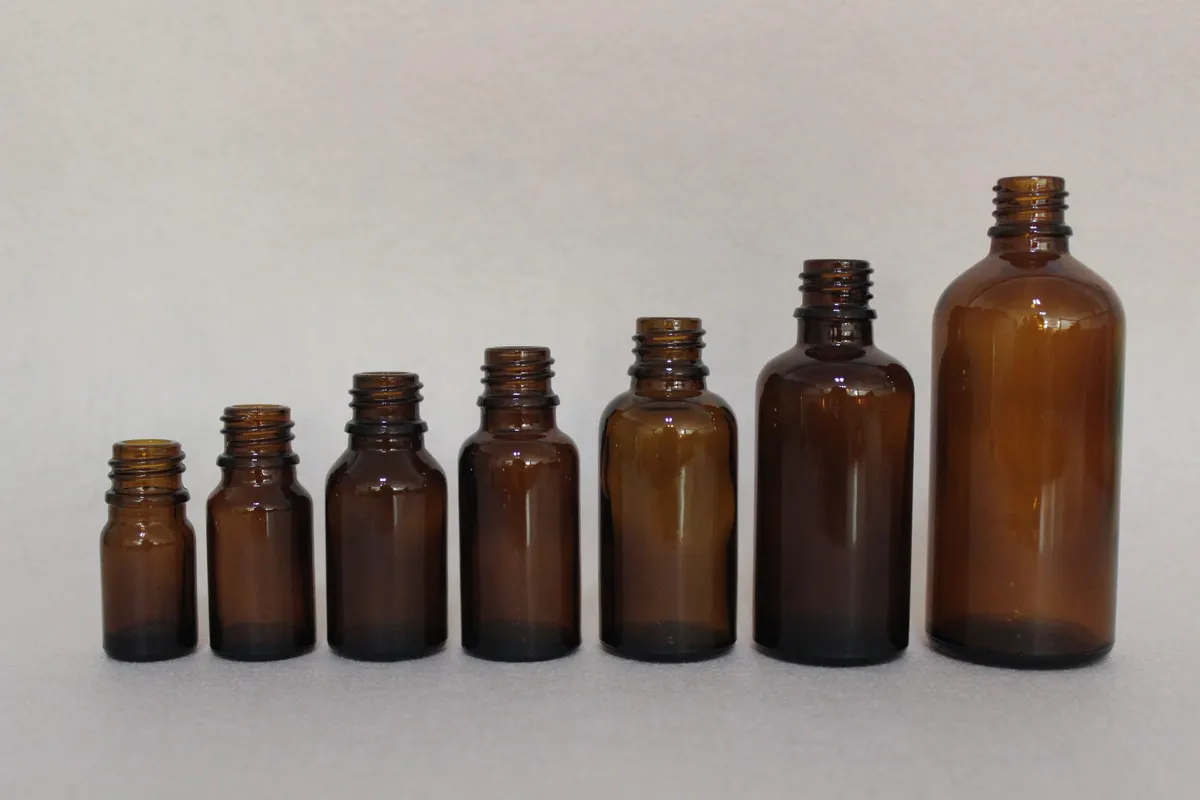
Amber and opaque sprayed bottles appear in treatment products (strengtheners, cuticle oils, base coats) where formula stability outranks color display. These share shelf space and finishes with our amber cosmetic bottle family, and cuticle-oil droppers overlap with the serum and dropper line.
Decoration, Compliance, and Ordering Realities
Polish bottle decoration is restrained by surface area: one-color silk screen or a small hot-stamped logo is the norm, fired ceramic for permanence since bottles live in solvent vapor and get handled with acetone-wet hands. Adhesive labels survive poorly in the nail environment — salon technicians handle bottles with remover on their gloves — so direct print earns its setup cost for any SKU with a real shelf life.
Compliance sits squarely in cosmetic packaging: EU 1223/2009 packaging-contact provisions, FDA cosmetic packaging expectations, California Prop 65 screening on decoration inks, and heavy-metal release certification (ISO 7086) per batch. Nothing in this category touches pharmaceutical claims — these are cosmetic packages, full stop.
Buyers building adjacent color-cosmetic lines can consolidate freight with the broader cosmetic packaging and custom cosmetic bottle programs, and the quality inspection page documents the gauge and torque testing behind every polish shipment.
FAQ: Nail Polish Bottles
Why does neck tolerance matter so much on a polish bottle? The neck bore is the wiper that meters polish onto the brush. A deviation of ±0.3mm changes wipe rate visibly — oversize causes drips and flooding, undersize starves application and frays bristles over the bottle’s life.
What capacity is standard for nail polish? 8ml to 10ml dominates European and Asian markets and premium North American lines; 12ml to 15ml (0.5 fl oz) is the North American mass standard; 5ml serves minis and gift sets. One body geometry across all shades keeps mold and filling costs flat.
Can the bottle and brush cap come from different suppliers? Yes, and they usually do — but spec the bottle to the brush vendor’s finish drawing, not the reverse. Verify bore, thread series (415, not 410), and torque retention with actual formula before committing to either PO.
How do we prevent cap seizure or weeping over shelf life? The cap liner must be validated against your solvent blend: 72-hour immersion at 40°C, then seal and torque re-test. Solvent vapor attacks wrong liner compounds slowly, so this test is the only reliable predictor.
Do polish bottles need UV protection? Display-driven color sales require flint glass, so protection comes from UV-absorbing flint or coatings plus cartons. Treatment products (strengtheners, cuticle oils) can use amber or opaque sprayed bottles where stability outranks color display.
What are MOQs and lead times? Minimum quantities are quoted per project, because they depend on the mould and the line it runs on.