Part of our series on empty perfume bottles — read the overview first if the format is new to you.
A perfume bottle's price is set by four things in descending order of effect: how much the glass weighs, how hard the shape is to form, how many decoration processes it carries, and the cap and pump fitted to it. The closure typically accounts for 20-40% of the bottle-plus-cap total and passes 50% on prestige builds, so a glass-only figure tells you little. Actual numbers are quoted per project, because they move with the mould, the decoration, the quantity and the freight terms.
What drives the cost, from largest to smallest
Glass weight
Perfume glass is costed largely by the tonne. Two 100ml flacons can weigh 120g in a standard build and 280g with a heavy prestige base, and the heavier one carries close to double the material before any other choice is made. The thick luxury base is, quite literally, extra glass on the invoice.
Shape complexity
Deep facets, asymmetric curves and sharp shoulders make the IS machine run slower, call for better moulds and push the reject rate up. A complicated silhouette therefore costs noticeably more than a plain cylinder of equal weight.
Decoration
Frosting, spray coating, metallisation and printing each run on a separate production line. Every one brings a minimum quantity and a per-unit charge of its own, so the count of processes matters more than any single finish. Water-transfer and hand-applied finishes are costed design by design.
Cap and pump
On a prestige pack the closure assembly costs more than the glass. Give it a budget line from the first day instead of treating it as an accessory; our page on perfume bottle cap manufacturers goes through the options.
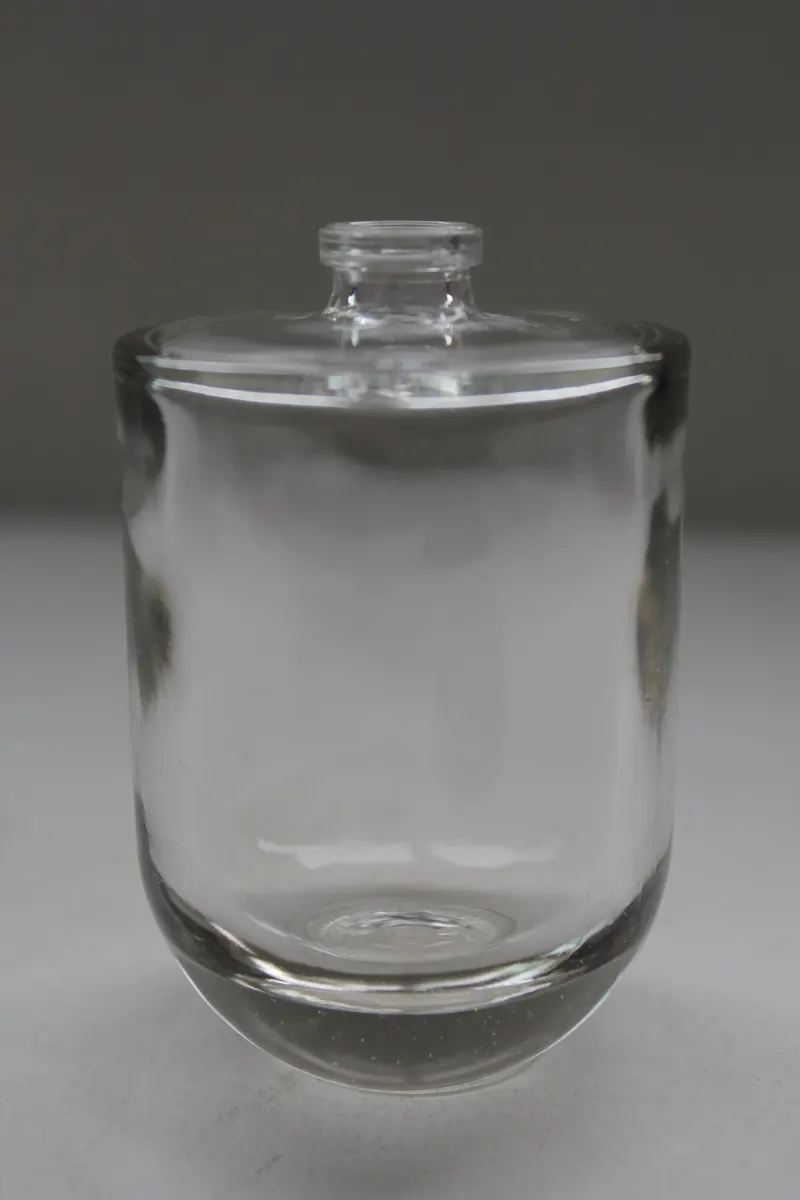
Three budget tiers and the glass each one buys
| Tier | Mould | Glass weight | Shape and decoration |
|---|---|---|---|
| Stock entry | Stock | 100–140g | Clean flacon, screen print |
| Mid custom | Stock | 180–220g, heavy base | Frosting plus print |
| Luxury ODM | Custom | 240–300g | Complex curves, several decoration processes |
These tiers describe the bottle on FOB terms. The box and cellophane sit outside them.
Why the cap decision comes early
Because the closure takes such a large share, two rules follow. Compare offers as a fitted kit, meaning bottle, cap and pump either assembled or matched, and never on glass alone. And settle the cap before the design is frozen: its material and counterweight fix both the cost ceiling of the pack and how it feels in the hand. A luxury cap added later to a budget bottle convinces nobody.
Small sizes reverse the usual ratio. If you want bottle and cap developed together as one object, that route is described on our custom perfume bottle design and supply page.
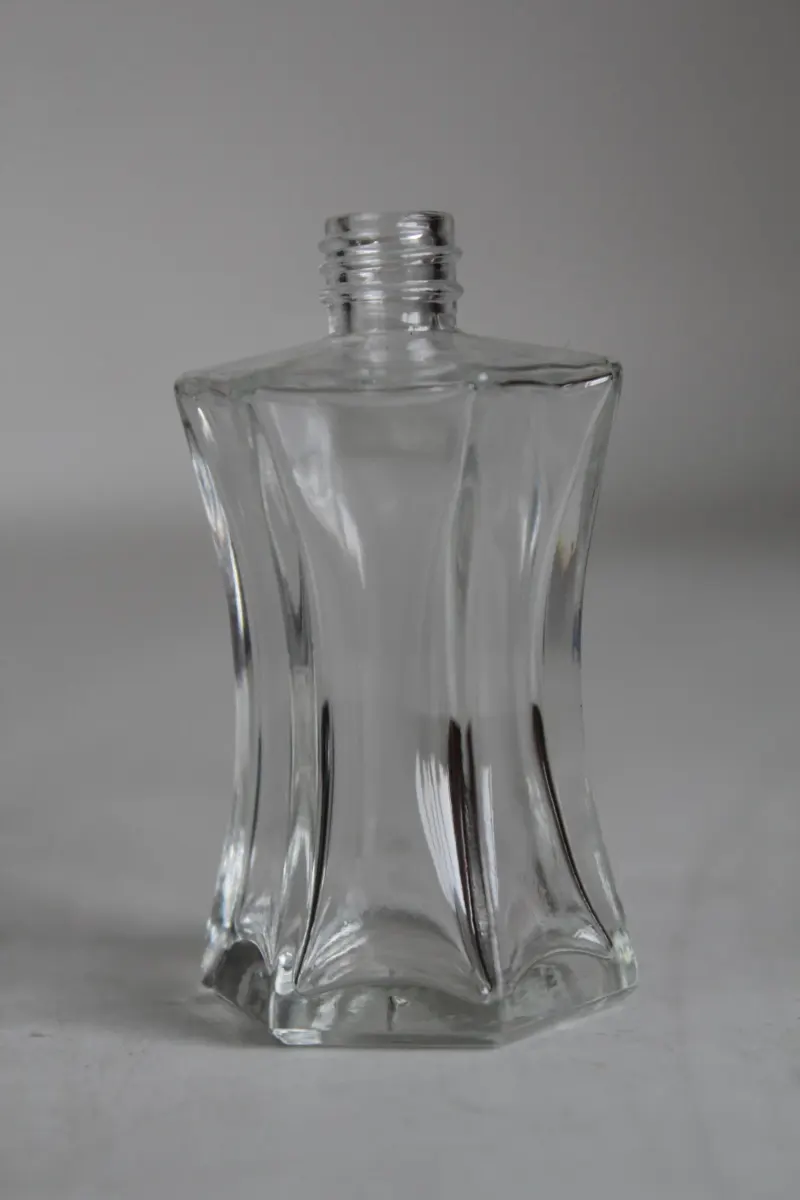
What to send so quotes can be compared
Asking "how much is a perfume bottle?" with no specification produces a figure that means nothing. Five details make an offer usable:
- target capacity;
- a silhouette reference, as a photo or a link;
- target glass weight, or a reference bottle to match;
- the decoration list;
- quantity and destination port.
Add the cap material and the neck finish, then require every supplier to cost the same fitted kit. An offer that leaves out the cap, the decoration minimum or the annealing spec is an opening bid, not a quote. With the brief complete, send it to us and we will match it to a suitable plant.
Frequently asked questions
What does a perfume bottle cost from the factory?
There is no single figure. It is quoted per project and depends on the mould, decoration, order quantity and freight terms.
Why are two 100ml bottles priced so far apart?
Weight and shape. One may hold 120g of glass and the other 280g, and material is charged largely by weight. Facets and complex curves then add forming time and rejects on top.
Which decoration gives the most luxury for the money?
That depends on the design and the run, so it is costed per project. Remember that each added process brings its own minimum and unit charge.
What is the minimum order at each tier?
Minimums are set per project. They depend on the mould and on the line it runs on, and decoration lines have minimums of their own.