Part of our series on empty perfume bottles — read the overview first if the format is new to you.
Cologne is sold on six capacities: 30 ml, 50 ml, 75 ml, 100 ml, 150 ml and 200 ml, with travel sprays, rollerballs and discovery vials below them. In prestige retail 50 ml and 100 ml carry most of the volume, and the other rungs exist to solve a channel problem. Each figure is a declared net content, not the size of the glass, so a size is only specified once the brim capacity, fill height, neck and sprayer are written down next to it.
The six capacities in millilitres and fluid ounces
The ladder is short because every rung stands for something shoppers in a market already recognise: a position on the shelf, a place in the range and a rhythm of repurchase. Fragrance labelling grew up in the United States, so each rung also has a fluid-ounce name, and the two units do not line up neatly. One US fluid ounce is approximately 29.5735 millilitres.
| Sold as | Ounce name | What the ounce figure converts to |
|---|---|---|
| 30 ml | one ounce | about 29.6 ml |
| 50 ml | 1.7 ounce | about 50.3 ml |
| 75 ml | 2.5 ounce | about 73.9 ml |
| 100 ml | 3.4 ounce | about 100.6 ml |
| 150 ml | 5 ounce | about 147.9 ml |
| 200 ml | 6.8 ounce | about 201.1 ml |
On a carton the rounding does no harm. It turns into a real error when the rounded figure is fed into a fill-height, dip-tube or net-weight calculation, so go back to the true millilitre value for any arithmetic.
Three smaller formats sit under the ladder and are not part of it: the 10 to 15 ml travel spray, the 8 to 10 ml rollerball and the 8 to 10 ml discovery vial.
Four quantities to write on the specification
Buyers tend to say "100 ml" and mean four different things. Separating them is the most useful step to take before comparing one supplier's offer with another's.
Declared net volume
The nominal volume is the figure printed on the carton. Metric markets show millilitres; markets that require dual declaration show millilitres and fluid ounces together. It is a legal claim, and most markets police it with an average quantity system instead of testing single units. The fill therefore has to be centred comfortably on the declared figure, not approached from underneath.
Brim-full capacity
Brim-full, or overflow, capacity is what the glass holds when liquid reaches the very top of the neck. It always exceeds the declared volume. A high-alcohol liquid expands as it warms and needs headspace, and the filling nozzle must stop short of the neck so that seating the pump or crimp does not push product out. Put the gap on the drawing as a number; do not let it fall out of the shape by accident.
Fill height
Fill height is what a filler actually controls: a level measured from a datum on the neck or shoulder. It is the link between the moulded glass and the declared volume. Change the internal profile and the level moves, so 50 ml in a tall cylinder sits nowhere near where 50 ml sits in a squat square. Washers and labelling sensors are set to a level, not to a volume, which is why a size chart cannot be carried from one shape family to another.
Net weight
Ethanol has a density of roughly 0.789 grams per millilitre at room temperature. Once water, fragrance oil and additives are in, a typical alcohol-based eau de toilette comes out at around 0.85 to 0.88 grams per millilitre, so a 100 ml fill weighs roughly 85 to 88 grams and not 100 grams. Read a gram specification as millilitres, or the other way round, and the fill is about fifteen per cent out. That is enough to fail a net-content check and to throw off a shipment's declared weight. When a filler or plant quotes in grams, ask which density was assumed and convert on purpose.
Spray count per bottle
Capacity divided by the pump's dose gives the number of presses a customer gets. A fragrance pump typically delivers somewhere between roughly 0.05 and 0.10 millilitres per actuation, and the stroke and orifice of the pump fix the exact figure.
| Bottle | At a 0.10 ml dose | At a 0.07 ml dose |
|---|---|---|
| 50 ml | around 500 sprays | around 700 sprays |
| 100 ml | about 1,000 sprays | around 1,400 sprays |
A wearer who uses three to five sprays per application gets roughly four to six months of daily use from 100 ml, and that is the repurchase interval a brand plans around. Dose belongs to the pump and capacity to the bottle, yet the two have to be picked as a pair, because the spray count is what the customer eventually weighs against what they paid.
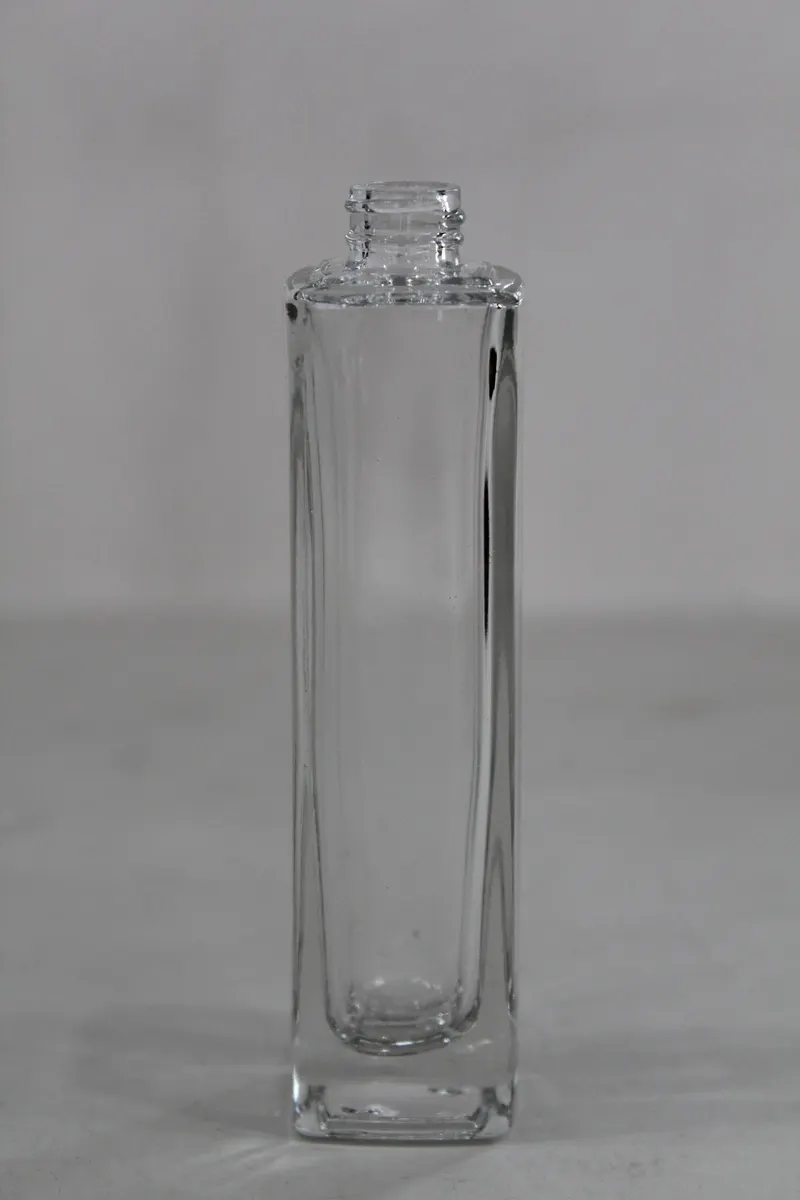
What each capacity implies by market and channel
The table records conventions, not rules. A brand with a reason to break one usually should, as long as it does so knowingly. The last column lists what we ask the supplier to confirm before a size is committed.
| Capacity | Where it is conventional | Usual bottle form | Sprayer interface | Channels and set use | Confirm with the supplier |
|---|---|---|---|---|---|
| 30 ml | Entry size almost everywhere and a mainstream size in Asia. In Europe it doubles as the travel-adjacent size for shoppers who want the smallest full-size unit. | Small square or short cylinder, occasionally a tall slim form. Necks are often short because the bottle is held in the hand. | Usually a small crimp ferrule family. A screw family where the pack must be refillable or the filler has no crimping head. | E-commerce discovery offers, pharmacy, travel retail and men's gift sets. Paired with an after-shave or shower gel of equal nominal size, or sold as a two-pack. | Exact fill height for the declared 30 ml, internal height if a sprayer is fitted, and whether the mould can also yield a slightly taller variant without a new tool. |
| 50 ml | Middle of the ladder nearly everywhere. Often the default full size in Europe; in North America the second size under a 100 ml flagship. | Square or rectangular with a heavier base on men's lines, where a chunky outline signals weight. Round and oval in unisex ranges. | The middle crimp ferrule family is the commonest pairing. Screw families where refill or multi-SKU flexibility matters. | Department store counters, e-commerce and mid-range gift sets. The classic set anchor, with a matching 10 ml travel spray or a second 50 ml companion product. | Declared fill level against actual brim capacity, whether the shoulder allows a clean crimp, and a dip tube cut for the internal height, not the nominal volume. |
| 75 ml | Mainly North America and travel retail. Rare as a main size in continental Europe, where ranges step from 50 ml directly to 100 ml. | Normally a taller take on the 50 ml outline so the family reads as one design. Sometimes a slim tall bottle filling a 100 ml shelf footprint. | In most programs the same middle ferrule or screw family as the 50 ml, which helps if that hardware is already in the range. | Travel retail exclusives, where a size that cannot be compared with domestic shelves is useful, and club or warehouse channels. Mostly sold alone. | Whether the tool can be scaled from an existing 50 ml or 100 ml design, since a truly new 75 ml outline is a new mould, and how it is told apart on shelf. |
| 100 ml | Flagship in North America, mainstream full size in Europe and the Gulf. The most recognised fragrance volume and the usual choice for a hero launch. | Square and rectangular with a heavy base and flat shoulder for men's lines; round, oval and faceted for broader ranges. Walls are deliberately generous because the bottle is judged in the hand. | Middle to large crimp ferrule families. Larger screw families on value and refill programs and on splash-neck versions. | Department store, hero e-commerce listing, duty free. Anchor of most gift sets, usually with a 10 ml travel spray or a 100 ml companion product. | Internal height and the dip tube length it gives, wall thickness distribution against the declared fill, and whether the neck takes the sprayer family used elsewhere in the range. |
| 150 ml | A value and body-format size, strongest in North America and in club or mass channels. A secondary SKU in European prestige retail. | Larger square or cylinder, often with a splash neck or wide shoulder. The outline has to stay simple or the bottle looks bulky. | Larger crimp families when sprayed; a screw family or splash neck when poured. | Club and warehouse, value e-commerce bundles, after-shave and body splash. Commonly a two-pack or value pack, seldom a single gift box. | Poured or sprayed, because the neck changes completely, and how brim capacity is held so net content is met without overfill showing at the shoulder. |
| 200 ml | A body-format or economy size, concentrated in North America and in markets used to a large after-shave or body splash. | Large cylinder or broad square on a wide base. | Large screw families or a splash neck with a restricted orifice insert. Any pump is a large-dose body pump, not a fine-mist fragrance pump. | Mass and club retail, promotions and seasonal value offers. Rarely a boxed gift set; bundled with another large format or sold as a twin pack. | Dose per actuation if a pump is fitted, since a body spray is judged on coverage and not fineness, and the shipping arithmetic of a heavier filled unit. |
Two things stand out. The rungs look evenly spaced as numbers but not as business: 50 ml and 100 ml do the prestige work, while 75 ml, 150 ml and 200 ml answer a channel need, whether a size that escapes direct comparison, a value offer or a body format. And the pump interface tends to follow the capacity. A range on 50 ml and 100 ml can often share one sprayer family and one crimp setting, whereas adding a 200 ml body format normally brings a different neck, closure and filling setup.
Regional starting points
- North America: 50 ml and 100 ml, with 100 ml as flagship; the region most at home with 75 ml and the larger body formats.
- Europe: built around 30 ml, 50 ml and 100 ml, with little appetite for 75 ml.
- Asia: 30 ml and 50 ml, plus a strong travel, rollerball and discovery culture under the ladder.
- Gulf and Middle East: 100 ml and above, particularly for heavier concentrations.
How capacity and bottle form constrain each other
A volume sets the smallest workable footprint, wall thickness and base area. A form decides how that volume is stacked vertically, which fixes the fill height and the label area. Neither can be chosen first and left alone.
In men's fragrance the larger sizes lean square, heavy and architectural. A 100 ml square with a thick base and flat shoulder feels substantial, which is the point of buying that size. Shrink the same design to 30 ml and it reads as a block, so the smallest rung usually gets softer corners or a shorter neck. Round and oval bodies read as more fluid, cross genders easily, and are the default for many women's and unisex lines. They also carry a given volume lower and wider than a square does, which shifts the fill level and with it the label position.
Three consequences are worth planning for:
- Artwork does not transfer. Equal declared capacity in two shape families still means two fill heights, two dip tube lengths and two label positions, so each needs its own layout.
- Small bottles are heavier per millilitre. They need proportionally thicker walls to survive handling and feel solid, which matters if a range is compared by glass weight instead of by appearance.
- Tall is not just stretched. The centre of gravity rises while the base may stay the same, so check stability and top-heaviness on the filled pack, not the empty glass.
For a family look across several rungs, the workable route is one design language, two or three distinct moulds and shared decoration, not a single proportion stretched up and down. Shape families, shoulder profiles, surface finish and colour are covered on our perfume bottle overview; settle the silhouette there before fixing a ladder, because form decides fill height. If the outline has to be proprietary, the private-mould route is described under custom perfume bottle development.
Neck and sprayer families by capacity
Capacities fall into groups by neck. Knowing the groups avoids a familiar failure: a range drawn around one size, then the discovery that the intended sprayer does not fit the neck the chosen mould carries.
- Around 15 to 30 ml: the smallest crimp ferrule families. A metal ferrule is rolled over a plain, threadless neck to hold the pump.
- 50 ml and 100 ml: the middle ferrule families, the most common setup in fine fragrance.
- 150 ml and above: a larger ferrule, a larger screw thread, or a splash neck with a restricted insert for pouring, depending on whether the product is sprayed or poured.
Screw families run alongside the crimp ones. They carry a two-part code: the first number is the nominal diameter, the second the thread style. Value, refillable and multi-SKU programs favour them because glass and pump can be ordered and stored apart.
A capacity does not, strictly, dictate a neck. A 100 ml body can be moulded with several, so the neck is a deliberate design choice that settles which sprayer families are open to you and which fillers can run the pack.
Two rules belong in every brief. Dose is a pump property, so one capacity can be a fine mist or a coarse body spray; choose it from the product's viscosity and alcohol level, not from the bottle size. Dip tube length is purely a bottle property, set by the internal height of that specific mould. Recalculate it for every shape and capacity, because a tube borrowed from another bottle either stops short of the bottom or curls against the wall.
Across a range, hold to one sprayer family wherever the volumes allow and take on a second only when a volume forces it. Each extra family adds a crimp or torque setting, a spare part and another way for a reorder to go wrong. Matching caps, collars, ferrules, dip tubes and pumps to an existing neck is a sourcing question of its own and should not be assumed to follow from a size chart.
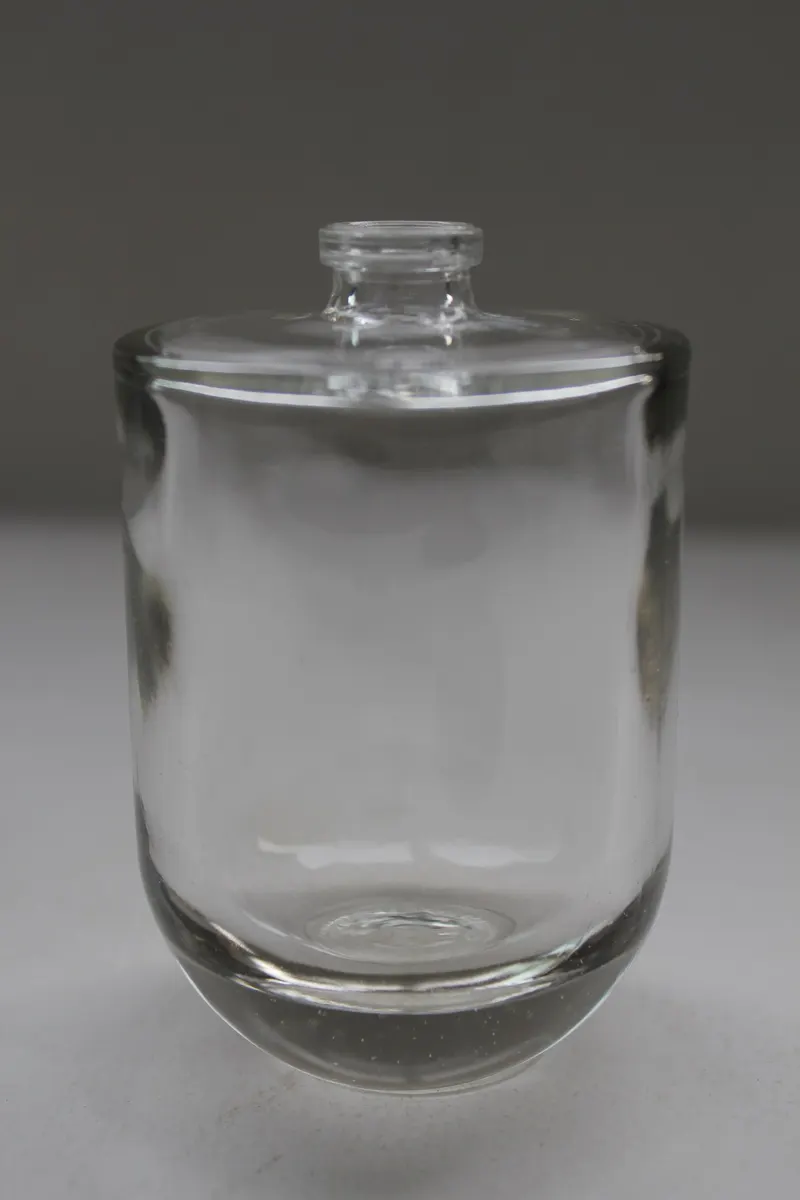
Travel formats, gift sets and multipacks
The formats under the ladder extend a product; they are not the product.
- Travel spray, 10 to 15 ml. A companion bought with a full-size unit that keeps the brand in a bag or pocket. The carry-on rule that a single container must not exceed 100 ml is why the 10 ml size multiplied, and why it so often ships in the same box as a 50 ml or 100 ml.
- Rollerball, 8 to 10 ml. Puts a small amount straight on the skin with no pump or propellant. Popular where lighter application is preferred.
- Discovery vial, 8 to 10 ml. A sampling device, not a retail pack, sized for two or three wears so a shopper can decide without receiving a meaningful share of a full bottle.
A gift set has to look like more than its parts while staying one item on the shelf. The usual builds are a 100 ml hero plus a 10 ml travel spray, a 50 ml plus two 10 ml sprays, or a 100 ml fragrance with a 100 ml companion such as an after-shave. Multipacks run the opposite way, towards more volume for the money, which is why 150 ml and 200 ml suit two-packs and promotional twins.
Adding a travel size changes the carton, the insert and sometimes the shipping weight. Treat a set as a packaging decision and settle it before the outer box is tooled.
Six ways a size chart gets misread
Most sizing errors come from using a number outside the context in which it was measured.
- Reading nominal capacity as glass capacity. A 100 ml bottle does not hold 100 ml to the neck. Overflow capacity is larger, and the declared figure is a fill level with headspace over it.
- Treating ounce conversions as round. Fine on a label, wrong in a fill-height or net-weight calculation.
- Applying a chart to the wrong shape family. A boston round, a fragrance square and a tall cylinder of equal declared volume have unrelated internal profiles. A chart that does not name its shape family describes nothing.
- Swapping millilitres and grams one for one. A 100 ml high-alcohol fill weighs closer to 86 grams. Treat the units as interchangeable and the result is more than ten per cent out.
- Assuming the capacity picks the neck. It does not; the neck is chosen.
- Counting volumes instead of cartons. One nominal size multiplies into several SKUs once decoration, sets and channel exclusives are added. Two or three volumes with controlled decoration variants is usually the leaner structure, commercially and on the line.
When a size chart stops being enough
Conventions carry a project up to a point. Past it, the answers have to come from moulds and drawings, and that is where we take the brief to a plant. Five triggers mark the change:
- The declared fill has to be assured. Meeting net content under a market's average quantity rules depends on brim capacity, fill height and the filler's nozzle control, not on the nominal number.
- The range needs one look across several volumes. That is tooling work: two or three moulds with shared decoration.
- The intended sprayer and neck belong to different families. The choices are a new neck, a different sprayer or an added component, and only someone holding the drawings can put a cost on each.
- A market sets a requirement the size must meet. Dual net-content declaration, a carry-on rule or a refill obligation under a packaging regulation are easier to handle as design inputs than as surprises at artwork approval.
- Logistics outgrow the chart. Carton footprint, pallet arithmetic and filled-pack shipping weight can shift a container's loading noticeably once bottle, closure and box are all counted.
Once volumes are fixed, how the order is structured, decorated and packed, including purchases that bundle glass, sprayer and outer carton as one set, is covered on our wholesale cologne bottle page.
Frequently asked questions about cologne bottle sizes
Which sizes should a new range start with?
Two or three volumes are easier to run than the whole ladder. Since 50 ml and 100 ml carry most prestige volume, they are the usual core, with 30 ml as the entry rung where the market expects one. Add 75 ml, 150 ml or 200 ml only when a specific channel calls for it.
Is 100 ml the same as 3.4 ounces?
Not quite. 3.4 fluid ounces works out at about 100.6 ml, which the industry rounds down for the carton. Use the label figure for labelling and the true millilitre figure for any calculation.
Does the declared volume equal the capacity of the glass?
No. The glass has a larger brim capacity, and the declared volume is a fill level beneath it. The headspace allows for thermal expansion of an alcohol-based liquid and leaves room to seat the pump or crimp without displacing product. Both figures should appear on the drawing.
How do I choose a size for a particular sales channel?
Start from the channel and work back to the volume.
- Department store counters expect 50 ml and 100 ml.
- Travel retail takes 100 ml plus an exclusive size with no direct domestic equivalent.
- E-commerce runs on 50 ml and 100 ml plus discovery formats.
- Subscription and sampling use 8 to 10 ml.
- Club and mass channels use 150 ml and 200 ml body formats and two-packs.
With the channel decided, the choice usually narrows to two options without further effort.
What should I send to get a capacity and form recommendation?
Begin with three fields: target market, sales channel and positioning. Then add the number of SKUs planned, whether a travel size or gift set is included, whether the product is sprayed or poured, and any net-content declaration rule the market imposes. From those we can propose a ladder, a form direction, a sprayer family and a set build together, and calculate fill height and dip tube length against a specific mould. A rough carton or a reference bottle speeds this up more than any written description.
Why settle the size before the drawing exists?
Because the choices chain. The volume selects the mould, the mould the neck, the neck the sprayer family, and the sprayer family the fillers able to run the pack. Agreeing market, channel and positioning beforehand is a short conversation; changing them afterwards means a new tool.