Developing a custom glass spray bottle starts with the pump, not the glass. The neck finish is drawn around the pump's closure specification, and the faults that matter (leaking threads, a sputtering spray, a collar that loosens after 500 actuations) occur where bottle, pump engine, dip tube and actuator meet. Choose and secure the pump supply before any mould is cut, then validate the assembled package with dose, pattern, leak and 5,000-cycle fatigue tests.
Development stages and what each one delivers
| Stage | Output |
|---|---|
| Specification and pump selection | Finish drawing, shortlist of pumps, target spray rate |
| Bottle design and 3D proof | Technical drawing and a 3D-printed mock-up |
| Mould fabrication | Production mould set of 2–6 cavities |
| T1 samples and pump-fit validation | 30–50 T1 bottles with a torque and leak report |
| Atomization and fatigue testing | Spray pattern, dose and 5,000-cycle report |
| Mass production | Released once the reports are accepted |
T1 means the first samples off the new mould. They are always checked with the actual production pump. Pumps from different vendors built to one nominal finish can still seat and seal differently, so a catalogue stand-in proves nothing.
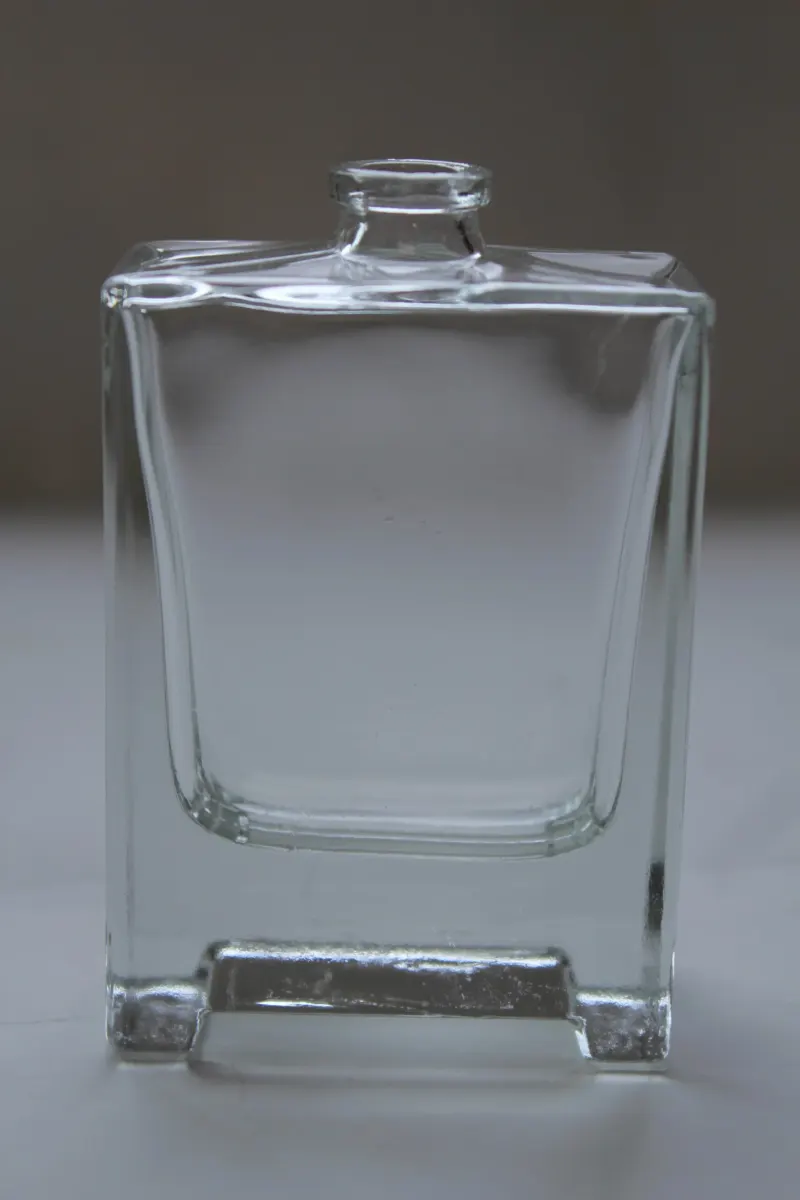
Choosing the neck finish and pump output
Bottle finish and pump closure have to agree to within tenths of a millimeter. The finishes used most for sprays fall into three groups.
| Finish | Pump output | Typical products |
|---|---|---|
| 18/410, 20/410 | 0.10–0.16 ml/stroke | Facial mists, hair sprays and products close to fragrance |
| 24/410, 28/400 | 0.25–0.4 ml/stroke; 28/400 also takes trigger sprayers at 0.9–1.3 ml/stroke | Room sprays, cleaning concentrates, garden products |
| GL18 / DIN18 | Medical-grade pumps | Essential-oil and pharma sprays with tamper-evident closures |
Tolerance is what separates a spray finish from an ordinary container neck. We specify custom spray finishes at ±0.12mm on the T-dimension and ±0.15mm on thread engagement, against the ±0.25mm general container standard. The same discipline applies to custom perfume bottles, which use similarly fine finishes. If your product needs the larger output, see the notes on glass bottles for trigger sprayers.
State the viscosity of the liquid along with the spray rate you want, because output per stroke moves with it.
Matching the spray engine and dip tube
Each candidate bottle is paired with its intended actuator before approval. A standard fine-mist pump gives 0.12–0.14 ml per stroke in a 60–80° cone. The pairing is checked for output per stroke, photographed for spray pattern at 15 and 30 cm, and run through a 5,000-stroke fatigue cycle.
The dip tube is cut to the internal height of your bottle, leaving 2–3 mm of clearance above the base. Torque retention is measured after 24 hours at 40°C, which shows whether the closure will back off during summer transit.
The four validation tests
A custom spray project is signed off against a report with four parts.
- Dose consistency. 30 consecutive actuations are weighed on a 0.1mg balance. The acceptance limit is ±8% of target output, for example 0.13 ml ±0.01 ml on a fine-mist specification.
- Spray pattern. Cone angle and droplet distribution are recorded on pattern paper at 10cm. A fine mist aims for a Dv50 of 40–80 microns, with no streaming once the first 3 priming strokes are done.
- Leak and torque. Bottles stand inverted for a 48-hour leak test at 40°C, and application and removal torque are mapped. The application target for 20/410 is 8–14 in-lb.
- Fatigue. The pump is actuated 5,000 times on a cycling rig, after which dose and leak are measured again. Collar creep and spring fatigue only appear at this stage.
What to include in a project brief
Send the following through the project inquiry form:
- target capacity and a sketch or reference for the bottle;
- the liquid and its viscosity;
- the spray rate and pattern you are aiming for;
- a preferred pump vendor, if you have one;
- an estimate of lifetime volume.
Frequently asked questions
What is the minimum order for a custom glass spray bottle?
Minimums are quoted per project. They depend on the mould, its cavity count, decoration and the line the bottle runs on.
How long does development take?
The schedule is quoted per project. It is set mainly by mould fabrication, T1 validation with the production pump, and the atomization and fatigue tests, followed by the production slot.
What happens if I design the bottle first and pick the pump later?
You risk a finish that no available pump fits properly. A pump that is discontinued partway through a project has the same effect: the mould has to be revised, which is costly. Fix the pump and its supply first.
Which spray rate suits my product?
Fine-mist face and hair products sit at 0.10–0.16 ml/stroke, room and linen sprays at 0.25–0.4 ml/stroke, and trigger applications at 0.9–1.3 ml/stroke.