The default wholesale format for a glass trigger spray bottle is the 500ml / 16oz boston round: 177mm tall, 73mm across, with a 28mm continuous-thread neck and a working fill of 480ml. Order it as a matched set with the trigger head. The glass is inert to nearly every home care, garden and automotive formula, so the two things that actually cause leaks are a neck finish that does not match the sprayer (28/400 against 28/410) and sprayer seals that the formula attacks.
The 500ml boston round and its neck finish
We suggest this size for a first run. The 480ml working fill leaves headspace for the 28mm trigger head and for thermal expansion. Body diameter is held to ±0.4mm and height to ±0.6mm, tight enough for automated capping and labeling further down the line.
Most compatibility errors start at the neck. Both common finishes are 28mm threads, but they are not interchangeable:
| Finish | Geometry | What happens with the wrong sprayer |
|---|---|---|
| 28/400 | Flat shoulder, 12.7mm thread engagement | A 28/410 sprayer threads on, but the collar can show a gap and the head may rotate |
| 28/410 | Taller 13.0mm shoulder with a small locating ledge that centers the trigger collar | A 28/400 sprayer does not seat fully and leaks at the gasket |
The two finishes come from separate molds, and the finish code is laser-etched on the heel of the bottle, so receiving inspection can sort stock quickly. Match the sprayer to that code every time.
Capping torque belongs in the specification as well. Hand-applied heads take 10 to 14 in-lb (1.1 to 1.6 N·m); automated capping takes 18 to 22 in-lb (2.0 to 2.5 N·m). Above 28 in-lb, measured fracture risk at the thread root rises by 3.4x. When bottle and head are sourced together through our spray bottle range, neck, gasket and trigger are matched before the goods reach your filler.
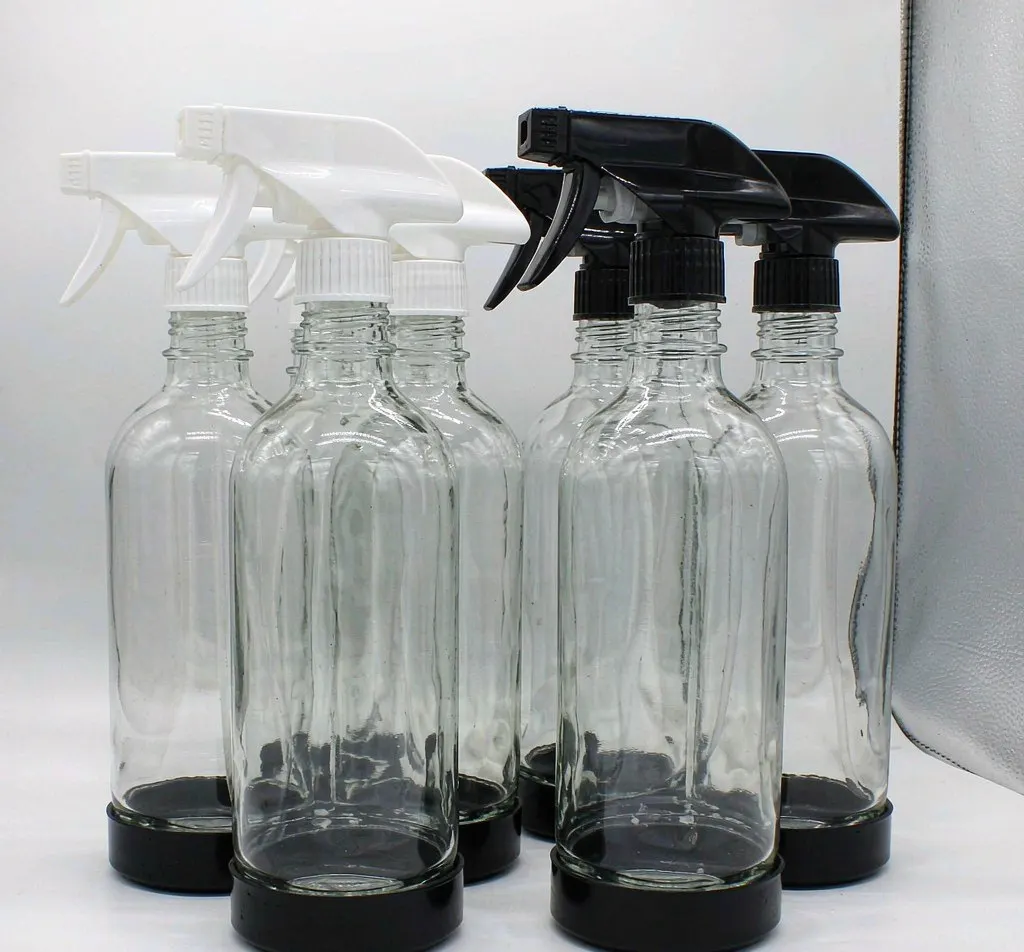
Trigger output, spray pattern and dip tube
Standard commercial heads for this bottle dispense 0.9ml to 1.3ml per stroke at 18 to 22 N of actuation pressure. The orifice gasket and vent insert chosen at assembly set the figure, and output should stay within ±0.08ml across a 5,000-stroke durability band.
- 0.9ml/stroke gives a finer mist for delicate surfaces such as plant foliage and interior automotive trim.
- 1.3ml/stroke covers more area per pull and suits heavy degreasers. Choose it for any formula above 50 cP too, because the larger orifice is less likely to clog on suspended baking soda or clay.
The nozzle insert sets the pattern. Three are routine:
| Insert | Result | Typical products |
|---|---|---|
| Stream | A coherent 1.2mm jet reaching 600mm at 1.0ml/stroke | Stain pre-treat, garden pest spray |
| Mist | 60-micron median droplet in a 220mm cone | Foliar feeds, interior surface disinfectants |
| Foam | Stable cling foam at 0.9ml/stroke from a turbulent mixing chamber | Bathroom and oven cleaners that need dwell time |
Across all three, actuation force sits between 18 N and 24 N. Heads above 28 N should be rejected: high force goes with early spring fatigue and with complaints about tired hands.
Buyers often forget the dip tube. For the 177mm bottle it is cut to 168mm, which stops 9mm above the inner heel, clear of settled sediment but low enough to reach the last of the product. The cut is held to ±1.5mm and the end is beveled at 45° to help thick formulas draw. A tube 5mm too long sits on the heel and sucks air once the bottle is half empty. One that is 10mm too short strands 25ml in the base. For that reason heads are supplied with the tube already fitted to the specified length, not loose in a bag.
What glass resists that HDPE does not
Glass is an amorphous silicate with no plasticizers, Bisphenol A, phthalates or residual monomer to migrate into a product. Only hydrofluoric acid and strong hot alkali attack it. HDPE is a semi-crystalline polyolefin that every solvent permeates at some rate, and that permeation causes both scent loss and embrittlement over shelf life.
| Challenge | Glass | HDPE |
|---|---|---|
| 10% acetic acid | Excellent / unlimited | Good / 12 months |
| 30% limonene | Excellent / unlimited | Fair / 6 weeks |
| 25% isoparaffinic solvent | Excellent / unlimited | Poor / not recommended |
Three formula families show the difference in practice.
Essential-oil cleaners. d-limonene passes through HDPE at roughly 0.8 mg/cm²/day and softens the wall. In a glass boston round the same kind of formula showed zero permeation over a 24-month accelerated study, and headspace gas chromatography at month 18 found the limonene peak unchanged within 1.3%.
Vinegar cleaners. A descaler at 5% acidity, or a degreaser at pH 3.2, leaves glass unchanged at 365 days. The sprayer is less tolerant: a standard EPDM gasket swells 4% to 7% in 5% acetic acid.
Solvent cleaners. These include brake cleaner substitutes, adhesive removers and degreasers based on d-limonene, isoparaffinic fluid or low-aromatic naphtha. A 500ml HDPE bottle filled with a 30% naphtha degreaser gains 1.2g over 90 days as solvent soaks into the wall, and it visibly balloons. Glass gains 0.0g.
Refill life points the same way. A 38g HDPE bottle rarely gets past three refill cycles before stripped trigger threads or wall crazing retire it, while glass recycles indefinitely without down-cycling. In every case above the bottle is not the limit; the trigger head is, which is why a custom glass spray bottle brief begins with a chemical-compatibility questionnaire.
Sprayer internals to specify for each formula
The head for this bottle has eleven parts: polypropylene (PP) trigger body, PP shroud, piston and cylinder, return spring, ball check valve, dip tube, gasket, nozzle insert, actuator, vent insert and collar. Four of them change with the formula.
| Part | Neutral water-based mist | Vinegar or acid cleaner | Solvent or naphtha degreaser |
|---|---|---|---|
| Bottle gasket | EPDM | FKM, which keeps dimensional change under 1% | FKM |
| Return spring | Plastic acceptable | 304 stainless steel | 304 stainless steel |
| Piston | PE ring seal | PE ring seal | PTFE-lined piston in a PP pump body |
| Check-valve ball | 3.2mm glass bead | 3.2mm glass bead | 304SS |
A standard PP pump with a nitrile seal swells and seizes in naphtha, so solvent heads are cycled 2,000 times before shipment to confirm they neither swell nor stick.
The spring choice is the one buyers ask about most. A 304SS spring lasts 50,000 actuations with under 8% force decay and is required for solvent and high-pH formulas. A glass-filled nylon or PP spring is adequate for neutral water-based mists, but its rated life stops at 15,000 cycles. A bottle sold as refillable for years needs the steel spring.
The glass-bead ball is chemically inert, yet it chips when a bottle is dropped. Automotive and garden products get rough handling, so the 304SS ball is the safer pick there.
The body and shroud are homopolymer PP with a melt-flow index of 12 g/10min. PP stands up to the alkalis and surfactants in cleaners better than ABS. The seal face must be flat within 0.05mm, since any bow opens a path for weeping.
Tests and acceptance limits to put in the order
Sprayer heads
- Pressure test: every 50th head at 0.4 bar for 30 seconds; the batch is rejected if more than 0.5% weep.
- Output over life: 30 heads per 10,000-unit lot are plotted against stroke count. A qualified head stays at 0.9 to 1.3ml/stroke from stroke 1 through stroke 10,000, with a coefficient of variation under 6%.
- Drift: heads that go above 1.5ml or below 0.7ml before 8,000 strokes are traced to the piston-seal batch, and the lot is quarantined.
Filled bottle with head fitted
- Inversion. Filled bottles, torqued to specification, stand upside down at 23°C for 48 hours on absorbent media. The lot passes at zero weep across a 200-bottle sample per 20,000-unit run.
- Pressure decay. The sealed head is charged to 0.3 bar and must hold for 20 seconds with under 5% decay. This finds micro-leaks that inversion misses on viscous formulas.
- Drop. Filled bottles fall from 1.2m in each of six orientations, with under 5% loss of seal integrity allowed.
Glass
The bottles are formed on individual-section (IS) machines, the usual equipment for narrow-neck containers, then annealed in a 580°C lehr with a 28-minute soak. Two coatings follow: a hot-end tin-oxide layer at 0.02 micron to reduce scuffing and a cold-end polyethylene emulsion at 0.005mm for line slip. In a 1.2m drop onto a concrete-equivalent surface, coated bottles broke at a 4% rate against 19% for uncoated controls. Glass is still more fragile than plastic, and e-commerce shipments need protective secondary cartons.
Two further controls are worth asking a plant about. A monthly thermal-shock audit moves bottles from 5°C water to 45°C water in a 30-second transfer, to mimic a container crossing climate zones, and requires zero fracture across 50 samples. Wall thickness at the thread root is monitored daily by X-ray; a cavity that falls below 2.1mm is stopped and the mold re-cut.
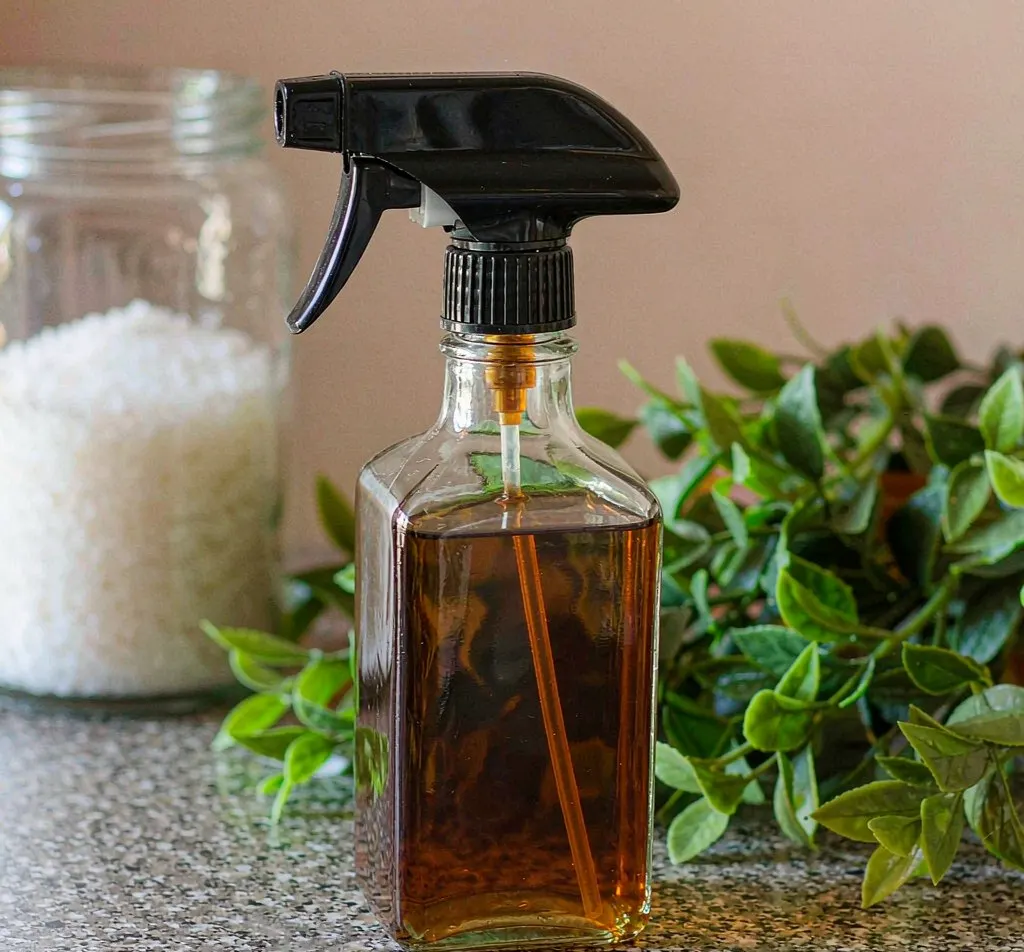
Glass color, printing and labels
Color comes either from a tint fused into the melt or from a coating applied after molding. Fused tints hold uniformity within ΔE 1.5 across a lot, read by spectrophotometer at the heel and the shoulder.
| Glass | How it is made | Reason to choose it |
|---|---|---|
| Clear flint | Default glass | Transmits 91% visible light; a clean laboratory look with white silk-screen |
| Amber | Iron-sulfide at 0.08% | Blocks 380–500nm UV to protect light-sensitive essential-oil formulas |
| Cobalt blue | Cobalt oxide at 0.12% | Decorative standard with 450nm transmission |
Frosting is not advised for solvent products. The etched microtexture slightly raises the permeation path at the surface, which is negligible for water-based formulas but worth knowing for naphtha systems.
Direct silk-screen printing runs up to four Pantone-matched colors with ±0.3mm registration. The usual private-label layout is a one-color logo on the shoulder and a two-color panel on the body. Cured at 180°C for 12 minutes, the print survives 50 industrial wash cycles. For smaller runs, a UV-cured screen at lower temperature holds for 25 cycles.
The other route is a pressure-sensitive label in PP or paper, applied on the contract packager's line. Labels grip glass better than HDPE because no plasticizer bloom weakens the adhesive.
Ordering the bottle and sprayer as one set
A trigger bottle is a two-component pack, and it is best bought as one. A private-label order can put bottle, sprayer and decoration on a single purchase order, with the dip tube pre-cut and the neck finish already matched.
Brands that also sell a fine mist can share a platform. Room spray bottles use the same 28/410 neck, so one sprayer family serves a room mist and a heavy-duty cleaner.
For ocean freight, consolidated loading works out at 28,800 sets per 20ft container and 62,400 sets per 40ft high-cube, and SKUs can be mixed in one container. Larger programs are handled through bulk spray bottle supply.
Unit cost, minimum quantity and timing are quoted per project. The drivers are whether the bottle is stock or custom, the tint (a furnace color change plus ΔE verification), the silk-screen work (art approval, screen making and cure), the quantity and the freight terms.
Frequently asked questions
Can I use a 28/410 trigger on a 28/400 bottle?
It will thread on, but expect a visible gap at the collar and a head that can turn. The reverse is worse, since a 28/400 sprayer on a 28/410 neck leaks. Read the finish code etched on the heel and order the matching head.
Will vinegar or essential-oil cleaners damage the bottle?
Not the glass. Vinegar combined with citric acid chelants causes micro-fissuring in HDPE, and essential oils permeate it, but neither affects a glass boston round. Put the attention on the gasket, and specify FKM for vinegar products.
How much does one pull dispense?
Between 0.9ml and 1.3ml, depending on the orifice gasket and vent insert selected. The lower setting is for misting, the higher for degreasers and thicker formulas.
What is the minimum order, and how long does production take?
Both depend on the project: stock or custom mold, tint, printing and quantity. We quote them once the specification is settled.
Which sprayer build suits solvent-based automotive cleaners?
A PP pump body with a PTFE-lined piston, a 304 stainless steel return spring, an FKM primary gasket and a 304SS check-valve ball. Ask for the pre-shipment cycling check described above.
Can my logo go directly on the glass?
Yes, by silk-screen in up to four matched colors. Where the run is too small for a custom screen, the options are a UV-cured screen print or a pressure-sensitive label.