Choose the sprayer before the bottle: a trigger delivers roughly 0.9–1.4 ml per stroke for cleaners, a fine-mist pump 0.10–0.20 ml for room, hair and facial sprays, and a foamer works only with very thin surfactant solutions. Then fix the neck finish by its number, such as 28-410, because a pump and bottle that merely share a millimetre size are the most common reason a bulk shipment leaks. Bottle material and order quantity come after those two decisions.
Start with the formula
Every sprayer has a spring, gaskets and a dip tube sitting in the product. Formulas high in alcohol, essential oils, bleach or solvents attack ordinary components, so for these we specify stainless springs and gaskets in a chemically resistant material such as Viton or EPDM. Write down the alcohol percentage, the oils and the surfactants before asking for quotes; the spring and gasket specification follows from that list.
The order of decisions is the same for every product: formula chemistry, then sprayer specification, then bottle material, and quantity last. Buyers who begin with quantity are the ones left holding a pallet that does not work with their product.
Sprayer types and what each one handles
| Sprayer | Output | Suitable viscosity | Common uses |
|---|---|---|---|
| Trigger (28/400, 28/410) | 0.9–1.4 ml per stroke | Water-thin up to light gel | Cleaners, disinfectants, garden products, auto detailing |
| Fine-mist pump (18–24 mm) | 0.10–0.20 ml per stroke | Water-thin and alcohol-based liquids | Room spray, hair mist, facial toner, sanitizer spray |
| Foamer pump (40–43 mm) | 0.8–1.6 ml per stroke, dispensed as foam | Very thin surfactant solutions only | Hand soap, lash cleanser, carpet foam |
| Continuous, aerosol-style mist | Sustained 1.2 ml/sec | Water-thin | Hair styling, fabric refresh, plant misting |
Output has to suit the job. A 1.3 ml trigger that soaks a worktop is right for a cleaner and wrong for a linen spray, where the same dose leaves a wet patch on fabric.
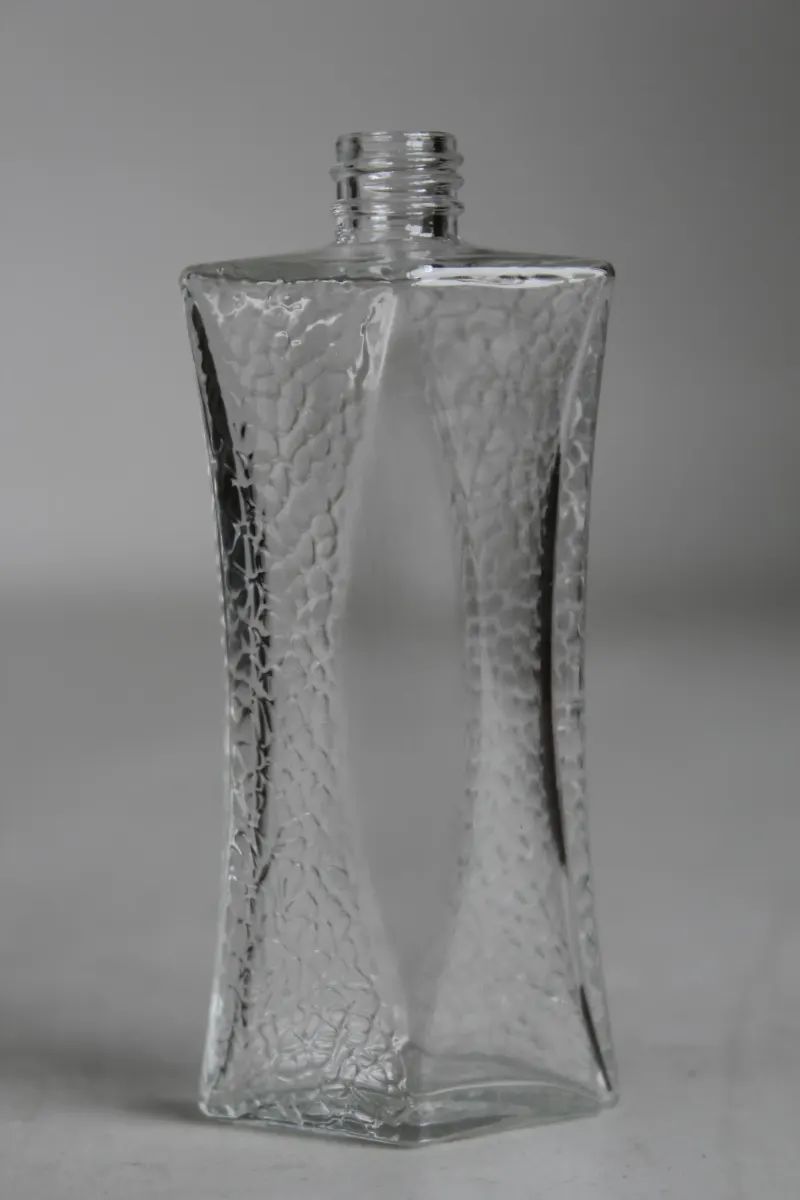
Sprayer choice by product line
Household cleaners
This is the largest trigger category. All-purpose and glass cleaners are water-thin and work with any decent trigger. Bleach-based products and degreasers need chemical-resistant gaskets and are better packed in HDPE. A foaming trigger is worth specifying only when the formula is built to cling to vertical surfaces.
Personal care
Hair mists, setting sprays and facial toners use fine-mist pumps with an output of 0.10–0.14 ml. How the actuator feels and how fine the mist is are part of the brand, so ask for pump samples and compare their spray patterns on dark paper before choosing. Glass or aluminium bottles lift the positioning, and a lockable actuator stops the pump weeping inside an e-commerce parcel.
Home fragrance
Room sprays are alcohol-heavy and usually go into 100–250 ml glass bottles with a 24-410 fine-mist pump. Check gasket compatibility with a high ethanol content first, and use amber or coated glass with UV protection when the blend contains essential oils. Our room spray bottle range shows shapes designed to be left on display.
Janitorial and refill
These lines run 32 oz HDPE bottles with chemical-resistant triggers. Durability counts for more than appearance here, so ask for triggers rated to 10,000 actuations or more.
Glass, PET or HDPE
| Material | Strengths | Typical use |
|---|---|---|
| Glass | Chemically inert; amber and cobalt add UV protection for light-sensitive ingredients | Essential-oil blends, natural cleaning concentrates, formulas where interaction with plastic or the sustainability image matters |
| PET | Clarity close to glass at one-tenth the weight, so freight is cheaper and breakage lower | Room sprays and hair care |
| HDPE | Opaque, squeezable and the most chemically resistant of the three | Harsh cleaners and industrial formulas |
Oil-rich natural products are covered in more detail under essential oil spray bottles, and alcohol-based programmes under hand sanitizer bottles. The standard shapes are listed on the main spray bottles page.
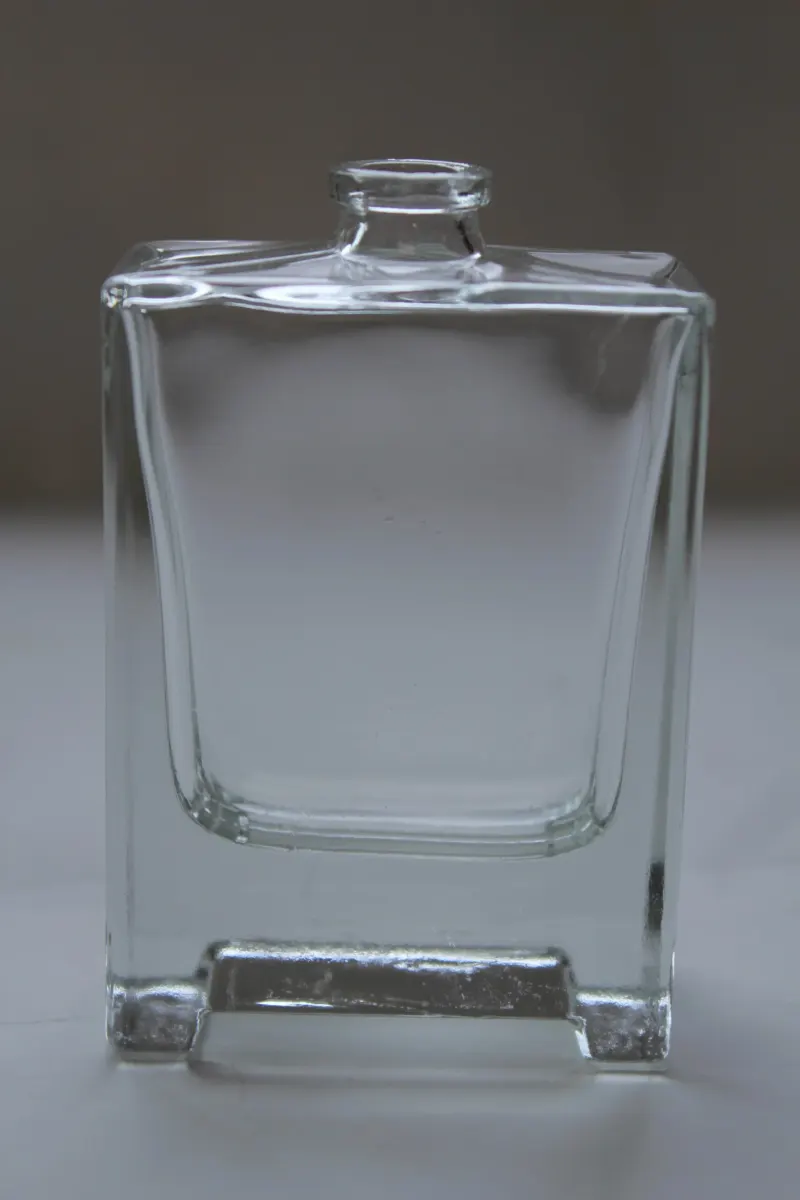
Capacities and neck finishes
Most bulk demand sits in five sizes: 2 oz and 4 oz for travel and samples, 8 oz for personal care, 16 oz (500 ml) as the household standard, and 32 oz for refill and janitorial use.
Give the neck finish as a number. "28-410" and "28-400" both get described as "28 mm", yet their thread profiles differ and one will not seal on the other. Trigger bottles in 16 oz and 32 oz most often carry 28-400 or 28-410; fine-mist personal care bottles run from 18-410 through 24-410.
It also pays to standardise. With 24-410 on the 4 oz and 8 oz bottles and 28-410 on the 16 oz and 32 oz, two pump SKUs serve the whole catalogue, which makes purchasing simpler and concentrates pump volume. If the numbering system is new to your team, our closure guide for glass bottles explains how finishes are named.
What quantity changes
Prices are quoted per project and fall in steps as quantity rises. Larger runs also open up options: a custom dip-tube length first, then custom pump colours, and at full-container quantities a custom bottle colour or an embossed logo. Custom pump colours do not need custom tooling, so they are often the most useful step for a growing brand. Glass sets cost more than PET sets at equal volume. The separate page on spray bottle price factors goes through the individual cost items.
Packing, dip tubes and leak testing
Spray shipments tend to fail in the same few ways, and each has a specification that prevents it.
- Loose pumps. A pump inserted before shipping can work loose under vibration. Ask for pumps bagged separately, or torque-verified with induction liners.
- Dip-tube length. Cut the tube to bottle height minus 3–5 mm. A longer tube buckles; a shorter one leaves product stranded in the base.
- Closure torque. Put a torque figure in the purchase order, typically 12–18 in-lb for 28 mm closures.
- Leak test. Run a 24-hour inverted leak test on pre-production samples.
- Cartons. Glass sets need cartons with dividers. PET can travel in poly-bagged case packs, which lowers packaging cost.
Briefing a bulk spray bottle order
- Describe the formula chemistry so that springs and gaskets are specified correctly.
- Settle the neck finish numbers for the whole line before you request quotes.
- Ask for production-line samples, then run compatibility and leak tests on them for two weeks.
- Decide whether your annual volume justifies custom pump or bottle colours.
- For a branded or shaped glass bottle, send the brief through our custom glass spray bottle page. What we cover on the supply side is set out under glass spray bottle supply.
FAQ on bulk spray bottles
What is the minimum order for bulk spray bottles?
It is quoted per project, because it depends on the mould and on the line the bottle runs on.
How much do bulk spray bottles cost?
There is no single figure. Material, sprayer type, mould, decoration, quantity and freight terms all move the price, so we quote each project separately.
How do I stop sprayers clogging or leaking?
Match the sprayer's output to the viscosity of the product and use resistant gaskets for aggressive formulas. Get the dip-tube length and closure torque right, and finish with a two-week compatibility trial plus an inverted leak test before mass production.
Can sprayers be coloured to match my brand?
Yes. Pump and bottle colours are matched to your Pantone references, and you approve a physical pre-production sample before the run.