One of our guides on empty essential oil bottles; start there for the overview.
An essential oil spray bottle has to be specified as a system: the pump output per stroke, the gasket and spring materials, the dip tube and the bottle neck all have to suit the oil. For most lines that means a fine-mist pump between 0.05 and 0.14 ml per stroke, an EPDM or Viton gasket instead of standard PE, and amber glass with a neck finish that matches the pump exactly. Published pump ratings are measured with water, so test with your own blend before you fix the bill of materials.
Pump output by product type
Dosage per actuation is the figure that shapes how the product feels in use. Start from the application and read across.
| Output per stroke | Spray character | Suits | Usual bottle size |
|---|---|---|---|
| 0.05–0.07 ml | Very fine cloud that evaporates quickly | Facial mists, pillow sprays, perfumed waters | 10–50 ml |
| 0.08–0.10 ml | Soft mist with even coverage | Aromatherapy body sprays, hair mists | 30–100 ml |
| 0.12–0.14 ml | Wetter mist that carries further | Room, linen and yoga-mat sprays | 100–250 ml |
| 0.8–1.3 ml (trigger) | Adjustable, from stream to cone | Cleaning concentrates, large-space sprays | 250–500 ml |
An oil blend will not match the rated figure. Blends, particularly those diluted in heavier carrier oils, deliver 10 to 25 percent less per stroke than water and give a coarser pattern. Undiluted blends are viscous and hard on seals, so choose from the lower end of the range. Run the validation with the production formula at production temperature.
Fine mist, stream or adjustable nozzle
A fine-mist pump pushes liquid through a swirl chamber and then a precision orifice, typically 0.3 to 0.5 mm, which breaks it into a 30-to-80-micron aerosol. Remove the swirl insert and the same engine fires a coherent stream. Adjustable nozzles rotate between the two.
Mist quality carries facial and ambient products. A stream is better for spot uses such as drawer liners or refreshing dryer balls. Trigger sprayers cope with viscosity better than finger pumps but look utilitarian on a shelf.
In the brief, give more than output volume. State the spray angle, typically 30 to 60 degrees, and the droplet character you want. Ask which actuators are offered (ribbed, smooth or aluminum-shelled), because the actuator is the part the customer touches at every use.
Materials that withstand essential oils
Essential oils behave like solvents. Limonene in citrus oils, eugenol in clove and cinnamaldehyde in cinnamon all attack ordinary pump materials, and the damage takes weeks of contact to show. The failures follow a known pattern.
| Component | What goes wrong | What to specify or check |
|---|---|---|
| Gasket | Standard PE takes up terpenes, swells and weeps at the closure | EPDM for general aromatherapy blends; Viton for high-citrus or spice-oil formulas |
| Spring and ball | Low-grade carbon-steel springs discolour the product within weeks | Stainless 316, which handles most blends; request the spring material certificate |
| Plastic pump engine | Crazing and stress cracks in contact with neat citrus oils | A PP or PE body rated for essential-oil service, confirmed by immersion test |
| Dip tube | FEP or PE tubes curl in aggressive blends and strand the last 10 percent of product | Tube material and trim length checked against the bottle's exact internal height |
The standard screen is a four-week immersion at 40 °C using your exact blend. A capable pump supplier will support it, and it should be finished before a production order is placed.
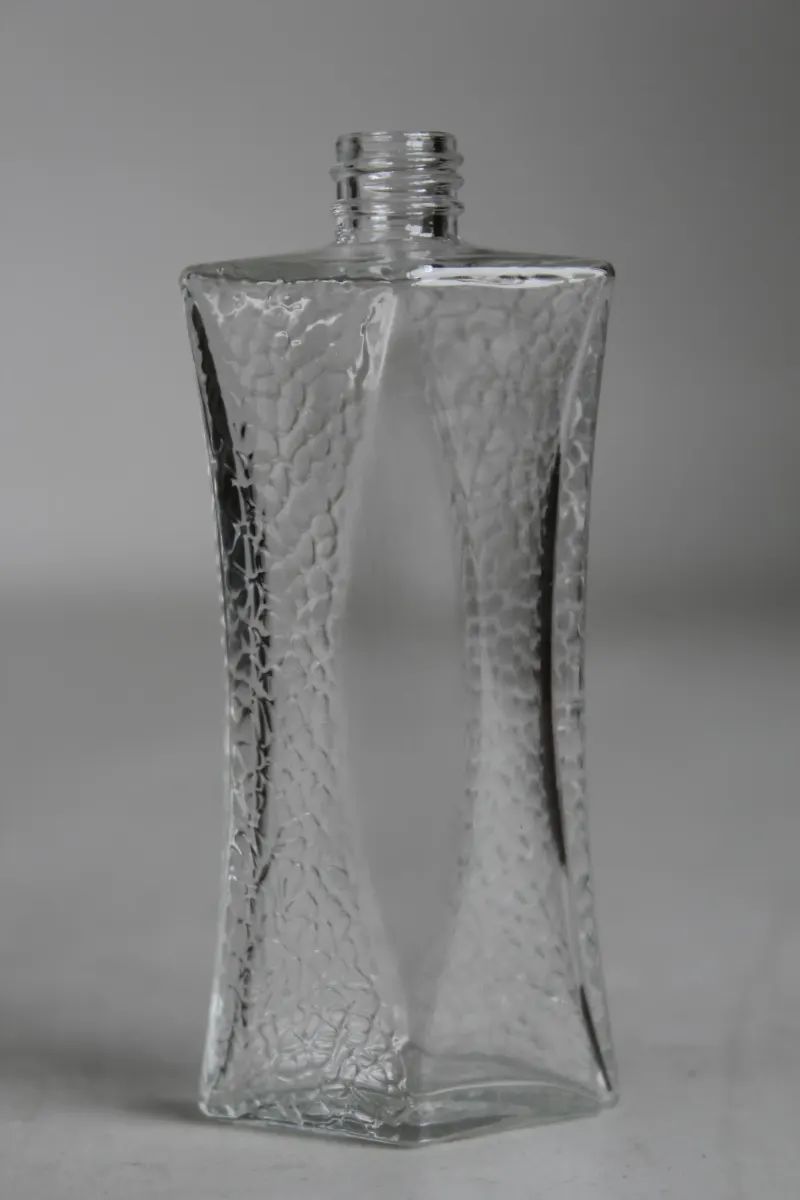
Bottle material, colour and neck finish
Glass is the default for essential oils because terpenes do not react with it and nothing permeates through it. Amber glass blocks roughly 90 percent of UV below 450 nm, the band that oxidises citrus and conifer oils fastest, so it is the functional choice once shelf life runs past a few weeks. Cobalt blue looks strong on shelf but stops less UV than amber. Choose it for the brand, not for protection.
PET is lighter and does not shatter, which suits travel sizes and gym-bag SKUs. It permeates slowly and can stress-crack with high-citrus blends, although PET with UV inhibitors narrows the light-protection gap. Many brands therefore keep glass for retail SKUs and use PET only for sample or travel formats. For retail aromatherapy at 100 ml and above, amber glass or a UV-coated flint is the specification that is easiest to defend.
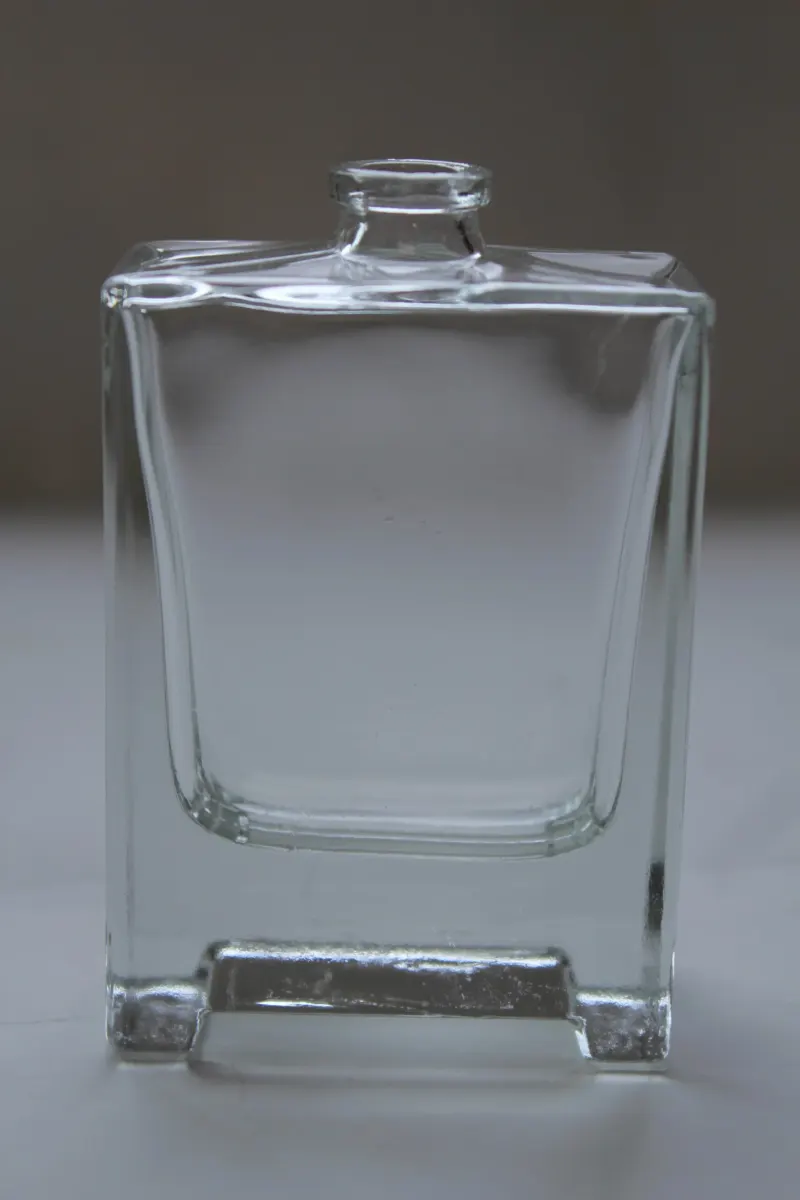
The neck finish follows the pump. 18/410 and 20/410 are the common finishes on 5–30 ml bottles; 24/410 and 28/410 serve 100 ml and larger. Match the pump's closure specification exactly. A 400-series mismatch can screw on and still leak in transit.
Sampling and planning a spray programme
We arrange matched bottle-and-pump sample kits with both EPDM and Viton gaskets, so the compatibility screen runs on the parts that will actually be ordered. Send your formulation profile and target SKUs through the quote form to start.
Sprays are often one format in a wider range. Carrier-oil body products usually go into glass bottles with lotion pumps, and the two can be consolidated into one shipment. Oils applied by roller are covered in our guide to wholesale roller bottles, and serums or tinctures dispensed by the drop in the page on sourcing glass dropper bottles.
Frequently asked questions
How does a fine-mist pump differ from a trigger sprayer?
A finger-operated fine-mist pump gives 0.05 to 0.14 ml per stroke in droplets of around 30 to 80 microns, for personal and ambient products. A trigger moves 0.8 to 1.3 ml per pull through an adjustable nozzle and belongs on 250 ml-plus cleaning or linen products.
Will essential oils damage the pump?
Some will. Citrus, cinnamon and clove oils degrade standard polyethylene parts and certain gaskets. Specify a pump rated for essential-oil service with a Viton or EPDM gasket, then confirm it with the immersion test on your own formula.
What MOQs apply to wholesale spray bottles?
Minimum quantities are quoted per project. They depend on the bottle mould, the pump chosen and the decoration.