Audit a glass spray bottle supplier at the neck finish first, because that is where the pump seals and where nearly every leak begins. Ask for per-lot go/no-go gauge reports on the exact finish you intend to buy, whether 18-415, 20-410, 24-410 or 28-410. A supplier who can show that data controls the fit between bottle and pump; one who cannot is putting parts together and hoping they match.
Stock formats and the tolerances to get in writing
A spray bottle is really two components, a glass container and a pump, that have to meet at a single tolerance. A competent supplier publishes the range below, so you can match capacity, finish and pump output before you ask for samples.
| Capacity | Common finish | Weight range | Pump output | Typical application |
|---|---|---|---|---|
| 10-15 ml | 13-415, 15-415 | 20-35 g | 0.05-0.08 ml | Perfume atomizers, travel sprays |
| 30 ml | 18-415, 20-410 | 50-70 g | 0.10-0.12 ml | Facial mists, essential oil sprays |
| 50 ml | 20-410, 24-410 | 75-100 g | 0.12-0.14 ml | Body sprays, hair mists |
| 100 ml | 24-410, 28-410 | 130-180 g | 0.14-0.16 ml | Room sprays, linen sprays |
| 250-500 ml | 28-410 trigger or lotion pump | 250-450 g | 0.8-1.3 ml (trigger) | Cleaning and home-care refills |
Three tolerances belong in the purchase specification: finish dimensions to the GPI standard for the size you name, capacity within ±3%, and a vertical load above 250 N on 30-100 ml bottles. Always choose the finish code from the pump maker's specification and then hold the glass to it. Our spray bottle category gives the wider context, and the room spray bottle range covers the larger home-fragrance sizes.
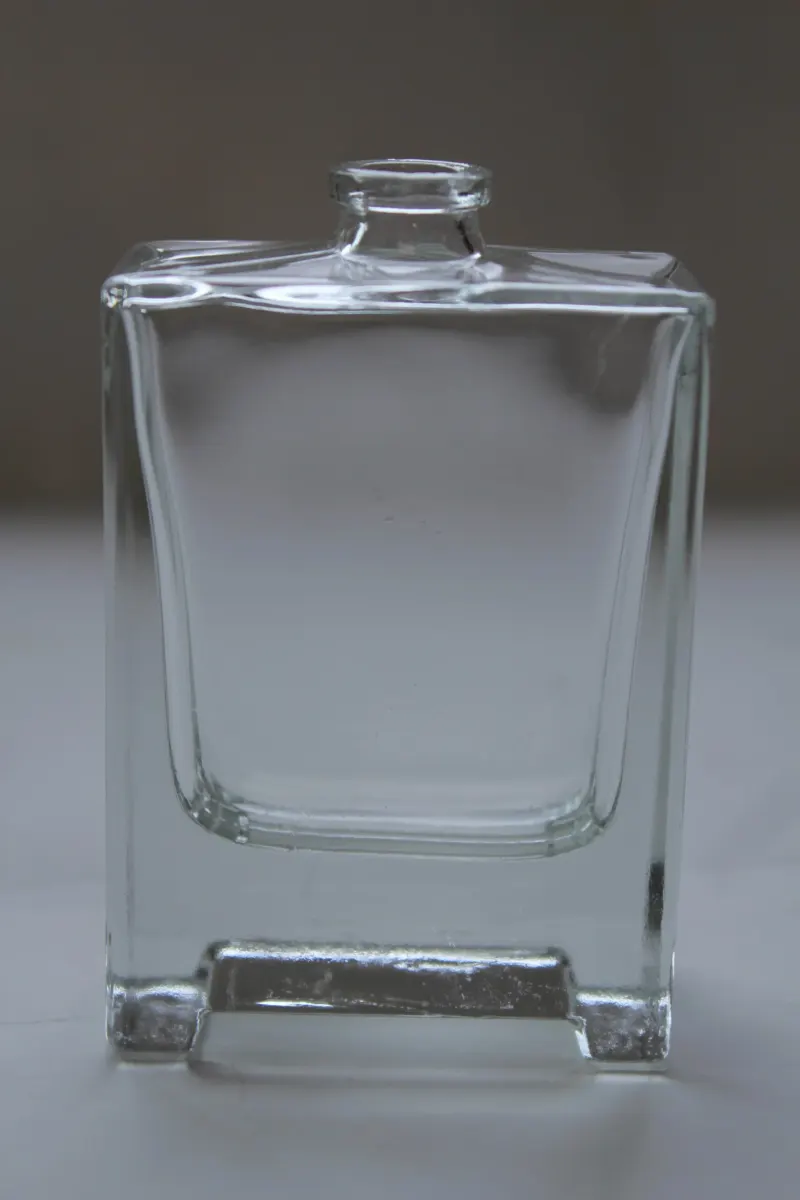
Why leaks start at the neck and not in the glass body
The pump closes on the neck finish through a gasket held by a crimped or screwed collar. A finish diameter that wanders by ±0.3 mm gives you a lot in which some bottles leak and others crack their collars. A wavy sealing land compresses the gasket unevenly, and the seal weeps when cabin pressure changes during air freight.
In the failures we have investigated, the cause was always finish control, gasket material or torque. The glass body was never at fault. That is the reason the audit below spends most of its effort on the interface.
Seven checks to run on a spray bottle supplier
- Finish gauging. Go/no-go gauge reports for every lot of your finish size. This is the most telling document in the category, and its absence is reason enough to walk away.
- Pump origin. Find out whether the supplier makes the pump, buys it from a named maker, or buys it anonymously. Get the output per stroke (typically 0.10-0.16 ml for fine mist), the spring material and the gasket elastomer.
- Immersion compatibility. Filled bottles stored upside down at 40°C for 4-12 weeks, using your own formula family. Alcohol-based room sprays and oil-based body sprays attack gaskets in different ways.
- Torque and retention. Application and removal torque windows measured across samples, and a pull test on crimped collars.
- Annealing. Polariscope sampling on each lot. Few glass formats are squeezed, pumped and dropped as often as a spray bottle.
- Dip tube length. Tubes cut to the internal height of the bottle within a stated tolerance. If they are not, the last 10% of the product never comes out.
- Transit proof. Drop-test results for the packed carton. A rigid pump stands proud of the bottle, so the case design decides whether it arrives intact.
Who actually controls the bottle-to-pump fit
| Supplier type | What it controls | Interface risk | Where it fits |
|---|---|---|---|
| Glass manufacturer working with pump partners | Finish tolerances, named pump makers and joint testing | Low, because a single party owns the interface | Brands running volume programs |
| Pump or cap assembler that buys in glass | The closures only | Medium, since glass lots can vary without its knowledge | Closure-led projects and short runs |
| Trader bundling the two | Neither part | High, and hidden until complaints come in | Prototyping only |
Warning signs
- The bottle and the pump are quoted as separate lines from different unnamed sources.
- Gauge reports are missing, or describe only the body dimensions.
- Sample pumps spray in visibly different patterns.
- The supplier will not run immersion tests on your formula family.
- Dip tubes arrive uncut, which tells you the set was never assembled and validated.
Compliance documents for cosmetic and home sprays
Tie the paperwork to EU Regulation 10/2011 migration limits and to Proposition 65 heavy-metal declarations that name the bottle family. The gasket and pump polymers need separate food-contact or cosmetic-safety declarations of their own.
Thermal shock performance under ASTM C149 is worth asking about when the spray will live in a bathroom or a car. For alcohol-forward formulas, get an explicit compatibility statement from the pump maker, because ethanol stress-cracks certain plastics and swells certain gaskets.
What changes when the bottle is meant to be refilled
A durable 100 ml flint bottle fed with concentrate refills can stand in for a dozen plastic trigger bottles over its life. If refill is part of the plan, say so at the RFQ stage, since the specification shifts in three ways:
- Cosmetic standards tighten, because the bottle is handled for years and not weeks.
- The pump has to be rated for thousands of actuations, where hundreds would do for a single-use pack.
- Finish tolerances are held closer, as consumers will re-crimp and re-screw the closure many times.
The positioning only holds up if the hardware really does survive repeated use.
What to put in the RFQ
- Volumes: quantity for each SKU and the yearly total.
- Capacity and finish code: stated by name, anywhere from 18-415 through 28-410.
- Pump: output per stroke, mist or stream, closure color, and the spring and gasket materials.
- Formula family: alcohol %, oils or water-based, so the gasket can be validated against it.
- Glass and decoration: flint, amber or frosted, and whether you will print or label.
- Logistics and channel: destination port, Incoterm, and retail or refill.
Frequently asked questions
What causes glass spray bottles to leak in transit?
Four things account for nearly all cases: drift in the finish diameter, an uneven sealing land, a gasket elastomer that does not suit the formula, and too little collar torque. Pressure changes in air freight find the marginal seals. Hot inverted storage with the real formula before mass production exposes all four.
Which finish size suits which bottle?
For 30 ml the usual choices are 18-415 and 20-410. Bottles of 50-100 ml generally take 24-410, and larger formats and triggers take 28-410.
Will a glass spray bottle cope with a high-alcohol formula?
The glass will, at any strength. The pump is the limit, so for an alcohol-forward room spray the compatibility statement and the immersion test should both be complete before you commit.
What is the minimum order for glass spray bottles with pumps?
Minimums are quoted per project. They follow the mold, the line the bottle runs on and the pump chosen.
Which documents should come with a shipment?
Expect finish gauge and annealing reports by lot, the pump specification with output per stroke and materials, safety declarations for gaskets and polymers, EU 10/2011 and Proposition 65 statements naming the bottle family, a packing specification that references the drop test, and the standard export documents.