Part of our series on empty perfume bottles — read the overview first if the format is new to you.
A room spray glass bottle is specified in four parts: the atomizer and its output, the neck finish that carries it, a glass weight that passes your drop test, and an overcap that seals. For most lines that means a fine-mist sprayer delivering 0.05 to 0.14ml per actuation, on a 15mm or 20mm FEA crimp neck or an 18-415, 20-410 or 24-410 screw finish, with a 100ml flacon weighing 150 to 200 grams. The choice between crimp and screw also decides whether the bottle can be refilled.
Atomizer output and spray pattern
Room spray is typically fragrance oil in 20 to 40 percent alcohol. That is thinner than a cosmetic and close to fine fragrance, so it runs through the fine-mist sprayer families perfumery uses. Output and droplet quality have to be specified together. At the low end of the 0.05 to 0.14ml band the mist is fine and dry, which suits linen sprays; at the high end the cloud is wetter and knocks down odour faster.
Droplet size comes from the insert and swirl chamber inside the sprayer. The bottle does not influence it, so on the glass side the task is to fix the neck interface. Ask for spray-pattern samples made with your production formula: viscosity and surface tension move the pattern visibly between an alcohol-based and a water-based version of what is nominally one product.
Screw sprayer or crimp atomizer
| Screw-on fine-mist sprayer | Crimp atomizer | |
|---|---|---|
| Neck finish | 18-415, 20-410, 24-410 | 15mm or 20mm FEA |
| Refilling | Refillable; sprayer can be replaced in the field | Permanent, so the bottle is single-use |
| Strength | Flexibility for the owner and the brand | Sleekest outline and the most consistent spray engine |
| Suits | Mid-market lines, refill programs, eco-positioned brands | Gift and upper-tier channels that accept single use |
Channel positioning settles it. A brand that sells on sustainability should not put its spray in a bottle the customer cannot reopen. Stock formats for both builds are listed under glass spray bottles and on our spray bottle supply page, and the home fragrance packaging overview covers diffusers and neighbouring formats.
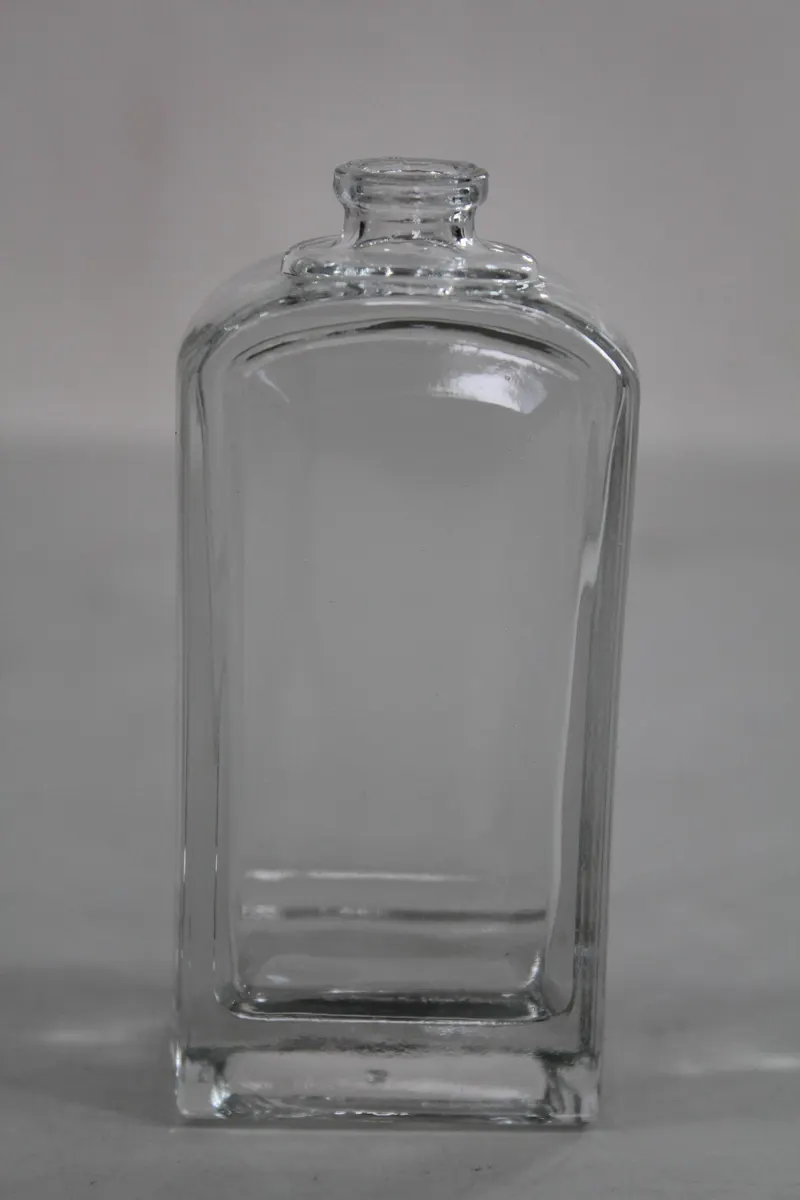
Typical formats and specification ranges
The figures below are planning values. Project drawings and the atomizer datasheet confirm them before production.
| Format | Capacity | Neck finish | Atomizer and output | Bottle weight |
|---|---|---|---|---|
| Travel or linen spray | 30ml / 50ml | 15mm FEA crimp, 18-415 | Fine mist, 0.05–0.09ml | 70g / 105g |
| Standard room spray | 100ml / 120ml | 15mm / 20mm FEA crimp, 20-410 | Fine mist, 0.08–0.12ml | 150g / 185g |
| Large format | 200ml / 250ml | 24-410 screw | Standard mist, 0.12–0.14ml | 240g / 290g |
| Refill | 500ml | 28-410 | Trigger sprayer, 0.9–1.3ml | 430g |
Bottles ship in export cartons with individual dividers. Atomizers and overcaps travel bulk-packed or pre-assembled, whichever your filling line needs. Depending on format, a 40ft container takes roughly 50,000 to 95,000 units; carton and pallet details are fixed per project.
Glass weight and the loads it has to take
A pump spray is not pressurised in use, yet the glass meets three real loads. Crimping leaves a sustained radial clamp on the neck. Alcohol vapour in the headspace expands and contracts as warehouse temperatures swing, cycling the pressure. Distribution adds drops and stacking. For those reasons room spray glass is heavier than its looks suggest, and the wall thickness should be measured, not taken on trust.
Too much glass is also a fault. A 100ml bottle at 250 grams costs more than it needs to and feels clumsy in the hand. The target is the lightest bottle that passes your drop protocol, typically one meter in the shipper, and we propose a weight tier against that test.
Overcap fit and retention
The overcap is the part the customer handles first, and it is also the secondary seal. If it sits loosely, a slow weep from the spray head evaporates and leaves oily residue on the inside of the cap. The customer lifts it, smells stale concentrate and concludes the product has gone off.
Three points belong in the cap specification:
- A defined retention force.
- An internal profile that clears the actuator button.
- For metal-weighted caps, a liner or a tolerance check so the cap does not rock.
On crimp formats the cap also has to accommodate the diameter tolerance of the crimp collar, a wider band than buyers used to screw finishes expect. Check it at first article. Matching a cap to a finish is covered in our closure selection guide.
Stock, modified stock or custom mould
| Route | What changes | Best stage |
|---|---|---|
| Stock mould | An existing flacon with your atomizer, cap and coating | First lines, seasonal scents, retail tests |
| Modified stock | Stock body with a custom colour, embossing or proprietary cap | A core range that needs one ownable detail |
| Full custom mould | Your own silhouette and weight | Design-led flagship collections |
Most programs get 90 percent of their differentiation from coating, cap and label on a stock flacon. Where the shape itself must be proprietary, the custom spray bottle development route starts from a drawing. Cost and sampling time are quoted per project and depend on the mould, the decoration and the quantity.
Shipping filled or empty
Filled alcohol-based sprays may be classed as limited-quantity dangerous goods, which matters most for air freight. Those rules set quantity limits per inner package and require specific marking. Many brands avoid the classification by importing empty bottles and filling at destination. Make the decision early, because it changes which formats are practical.
Frequently asked questions
What output should a linen spray atomizer have?
Between 0.05 and 0.09ml per actuation, in a fine droplet band. A wetter spray risks marking fabric.
How heavy should a 100ml room spray bottle be?
Plan on 150 to 200 grams, then settle the figure with a drop test in the final shipper.
What is the minimum order for a custom-coated bottle?
It is quoted per project. The mould, the coating, the quantity and the line the bottle runs on determine it.