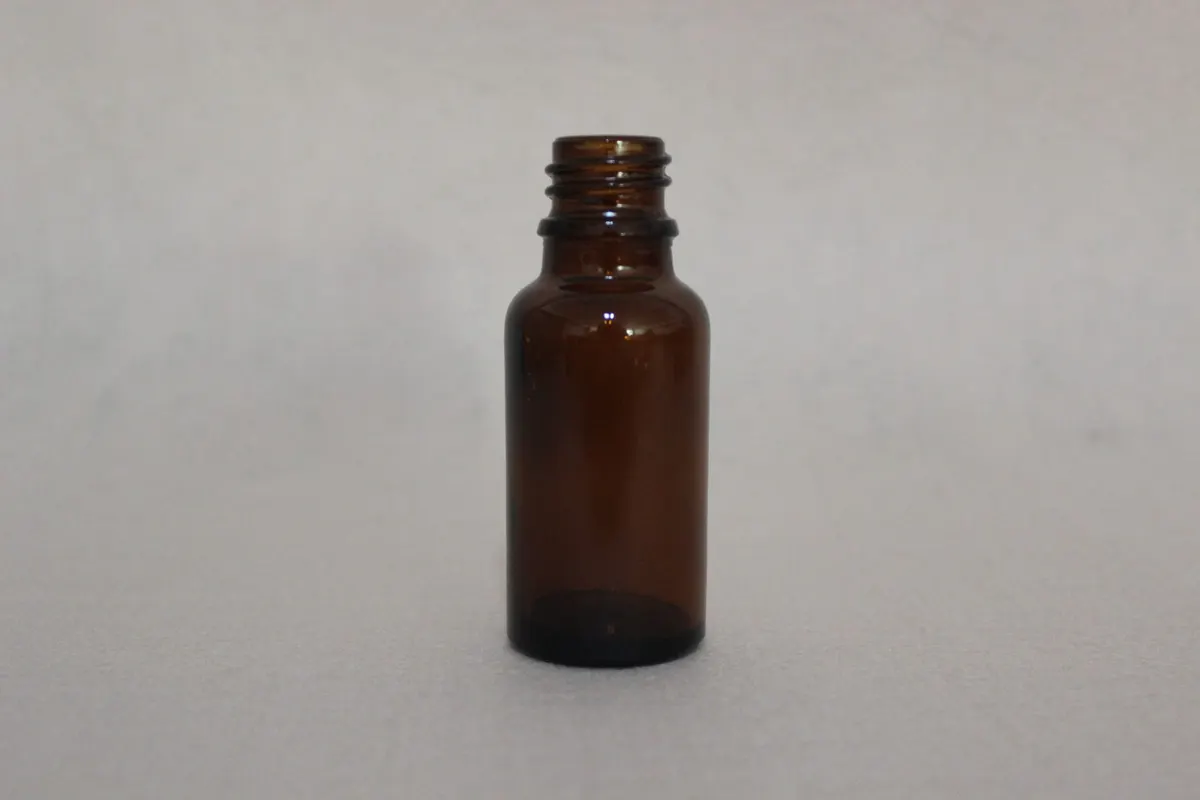
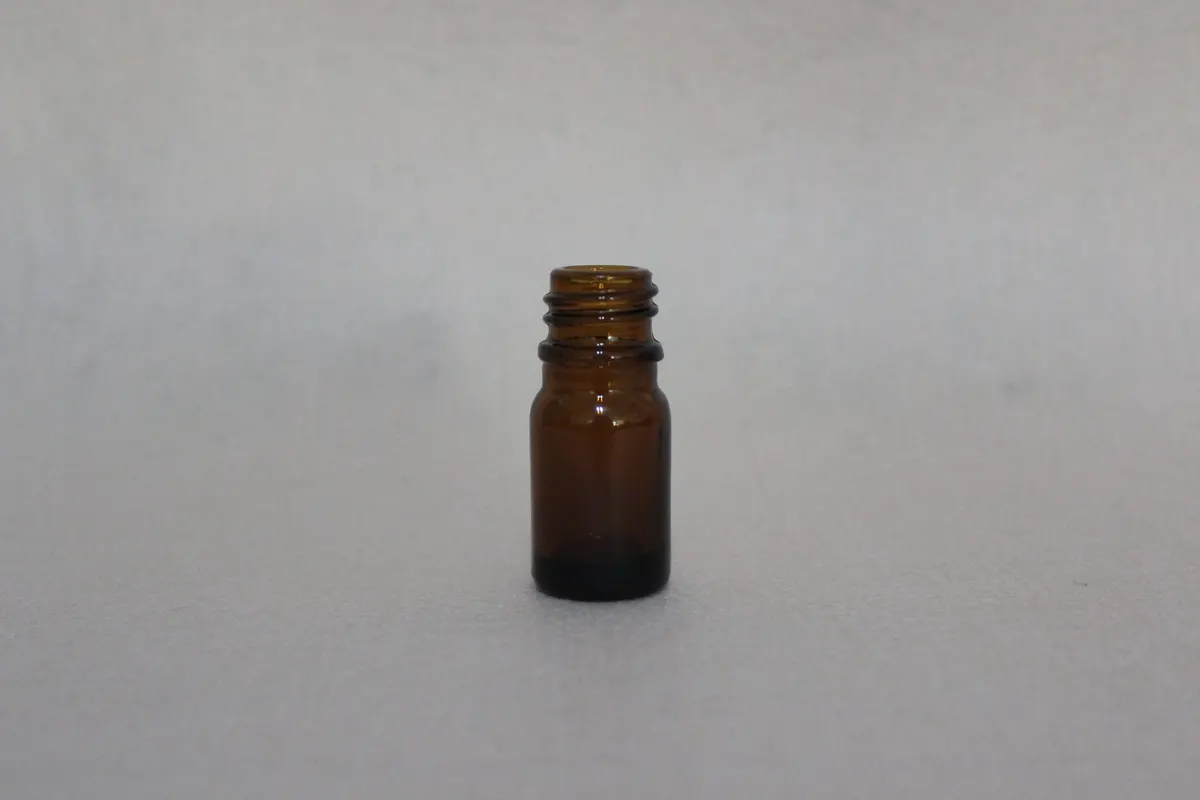
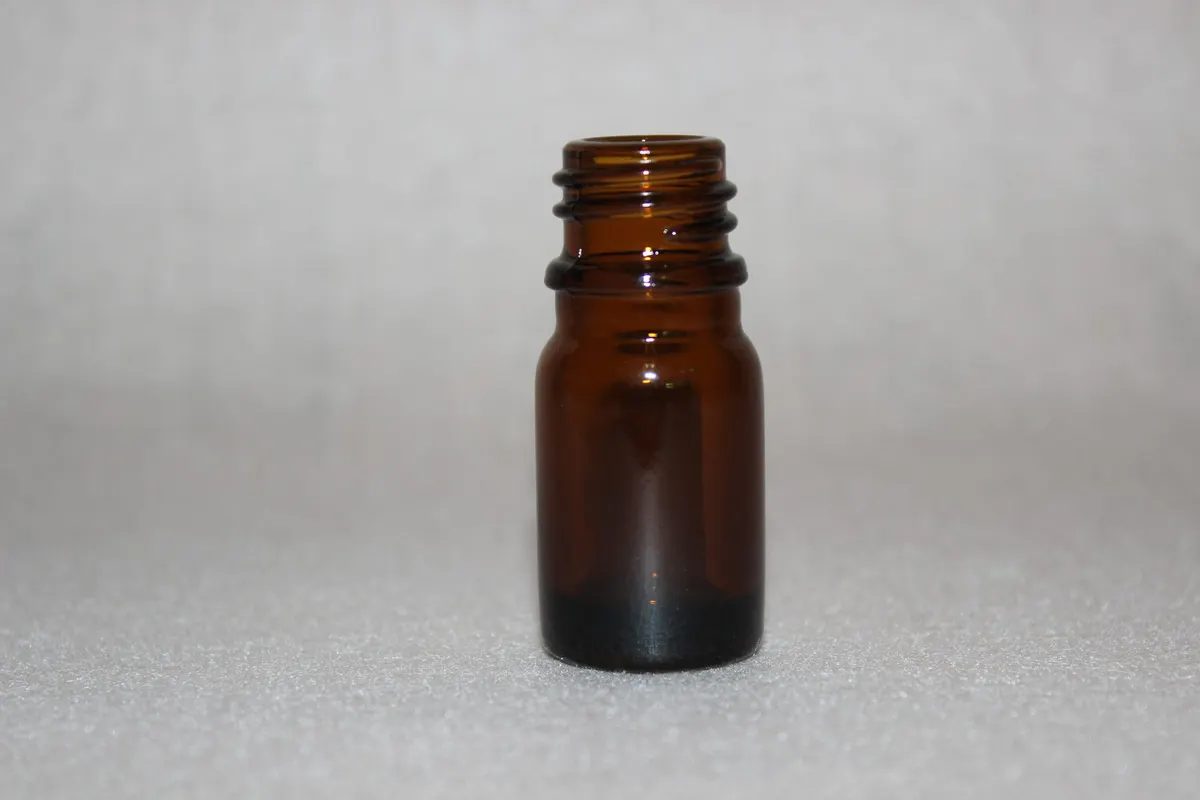
Part of our dropper bottles wholesale range; the stock moulds are pictured at the end of this guide.
Most custom tincture bottles are amber Boston rounds in 15, 30 or 60 ml, fitted with a calibrated dropper and decorated by screen print, hot stamping, frosting or a label. Fix the neck finish first (18-400, 20-400 or 22-400, depending on size), since the dropper and every alternative closure are sized to it. Then match the pipette length to the bottle and confirm how much flat label area the glass really offers.
Sizes, neck finishes and glass weight
The amber Boston round dominates this category, and three capacities account for most orders. Sizes of 100 ml and 120 ml also exist, mainly for professional and refill lines.
| Capacity | Approximate ounces | Usual GPI finish |
|---|---|---|
| 15 ml | Half an ounce | 18-400 |
| 30 ml | One ounce | 18-400 or 20-400 |
| 60 ml | Two ounces | 20-400 or 22-400 |
These are GPI 400-series continuous-thread finishes. The dropper collar, any tamper-evident band and a spray or pump option all depend on that one number, so it should be settled before the rest of the design.
Put a weight on the drawing as well. A 30 ml Boston round should weigh about 45 to 55 grams, with the glass spread evenly through the wall. A thin shoulder is the first place to fail once cartons are stacked five high inside a container.
How much light amber glass blocks
Amber is chosen because it screens out ultraviolet and short-wave visible light. Good amber soda-lime glass lets through under 10 percent of light between 290 and 450 nm, the band that does the most harm to light-sensitive botanical and aromatic formulas.
"Amber" on a quotation is not a specification. For products displayed under bright retail lighting, state the amber density you want and request a spectral transmission curve. Our overview of amber glass bottles goes further into the material.
Specifying a calibrated dropper
A calibrated dropper assembly is made of up to four parts: a glass pipette printed with graduation marks, a bulb in nitrile or silicone, a polypropylene collar threaded for the neck finish, and, if required, a child-resistant or tamper-evident overcap.
The usual graduations for herbal and cosmetic dosing are 0.25, 0.5, 0.75 and 1.0 ml. They should be printed in fired ceramic ink, which stays legible after repeated contact with oils and alcohol-based liquids.
Pipette length depends on the bottle. The tip should stop 2 to 3 mm above the base, close enough to empty the bottle without touching bottom. That works out to roughly 66 to 70 mm for a 30 ml bottle and about 80 to 85 mm for a 60 ml bottle.
Two test reports are worth requesting from any dropper supplier:
- Draw consistency. One full squeeze of the bulb should pull at least 0.8 ml, and the delivered volume should fall within plus or minus 5 percent of the printed mark.
- Torque retention. After 500 open-close cycles, the collar's removal torque should remain above 8 inch-pounds, otherwise the assembly may work loose in transit.
Facial serums and essential oil blends follow the same logic in other shapes and sizes, which are covered on our custom dropper bottle page.
Decoration methods and their durability
Tincture bottles are handled constantly and now and then splashed with their own contents, whether they sit in a bathroom, on a kitchen counter or in dispensary-style retail. That makes resistance to oil and alcohol the main test of any finish.
| Method | What it does | What to confirm |
|---|---|---|
| Direct screen print | One or two colors in two-component epoxy ink, cured at 180 to 200 degrees Celsius; the most durable route, unaffected by alcohol wipes and oil smears | Artwork fits the printable area |
| Hot stamping | Metallic gold or silver accents, well suited to a logo on the shoulder | Position relative to the label |
| Frost or matte spray | Changes how the whole bottle feels in the hand and photographs well for e-commerce | A cross-hatch adhesion test passed after 24 hours of oil contact |
| Pressure-sensitive label | The quickest and least costly route; a clear BOPP label with no-label-look adhesive gives a more refined result | A flat panel of at least 25 by 60 mm on the 30 ml size |
Label space and what the artwork should say
Label area is the constraint buyers tend to notice too late. The body of a 30 ml amber round gives roughly 40 mm of flat label height, and that has to hold the brand mark, botanical name, volume declaration and barcode. Rather than shrink the type until it cannot be read, most brands shift regulatory text onto a wraparound back label or a small carton.
We can provide a label-panel height drawing for each stock mould in this range. On a custom mould, we keep one panel flat and free of curvature so compliance text remains legible at 6-point type. Get the panel drawing before artwork is finalised, because changing a label after plates are made is the more expensive order of events.
The same bottles serve botanical extracts, aromatherapy blends, cosmetic facial oils, beard oils, food-flavoring extracts and craft bitters. The glass is neutral and the label defines the category. Keep the copy factual: ingredients, use as a cosmetic, aromatic or culinary product, net contents and company details, with no wellness promises. Labels written that way cause fewer problems at retail onboarding and in customs review.
Export packing and what drives the quote
A standard export carton for 30 ml bottles uses egg-crate dividers and holds 300 to 330 pieces. Droppers travel in poly-bagged trays of 100. They can be shipped already assembled onto the bottles, which removes a step from your filling line but takes up more carton volume, or packed separately for fitting at filling.
In bulk packing, a 40HQ container takes roughly 1.1 million 30 ml bottles. That is why freight per unit falls sharply once an order passes half a container.
Price, minimum quantity and timing are quoted per project. They move with the decoration route (label only, single-color print, or multi-color print with hot stamping or frosting), whether calibrated droppers are included and assembled, whether a stock or custom mould is used, the quantity and the freight terms.
Related pages: wholesale tincture bottles for ready inventory, dropper glass bottles for stock programmes, the 5570 amber dropper bottle as a specific stock reference, and custom essential oil bottles for pure aromatherapy formats.
Frequently asked questions
Why does a calibrated dropper matter?
The graduation marks on the pipette let the end user measure the same amount each time. Without them, a dropper only delivers "about a squeeze".
Can the logo go directly on the glass?
Yes. Epoxy screen printing is the hardest-wearing choice. Hot stamping contributes metallic detail, and a frost or matte coating alters the feel of the whole bottle.
What is the minimum order for custom printed tincture bottles?
There is no fixed number. It depends on the mould and on the production line the job is assigned to, so we confirm it with the quote.
Are these bottles only for herbal products?
No. Cosmetic oils, aromatherapy blends, flavoring extracts and bitters all use the same amber dropper formats.