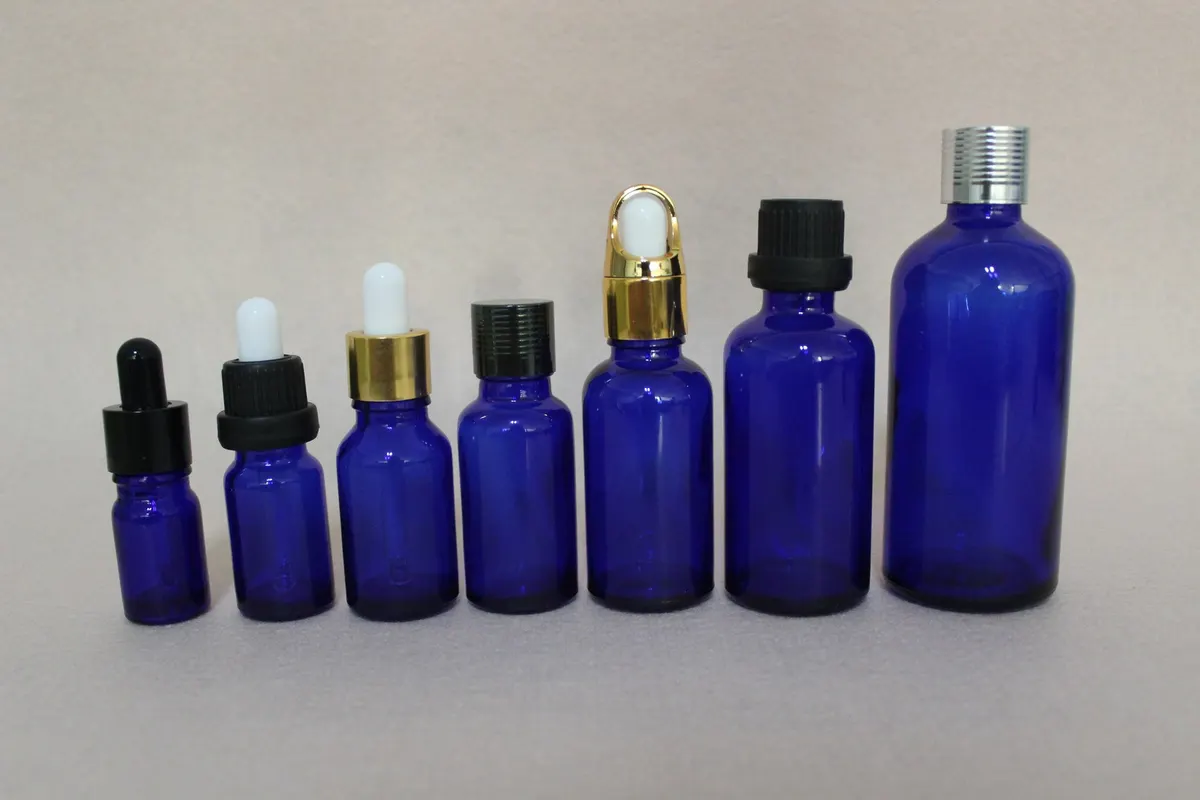
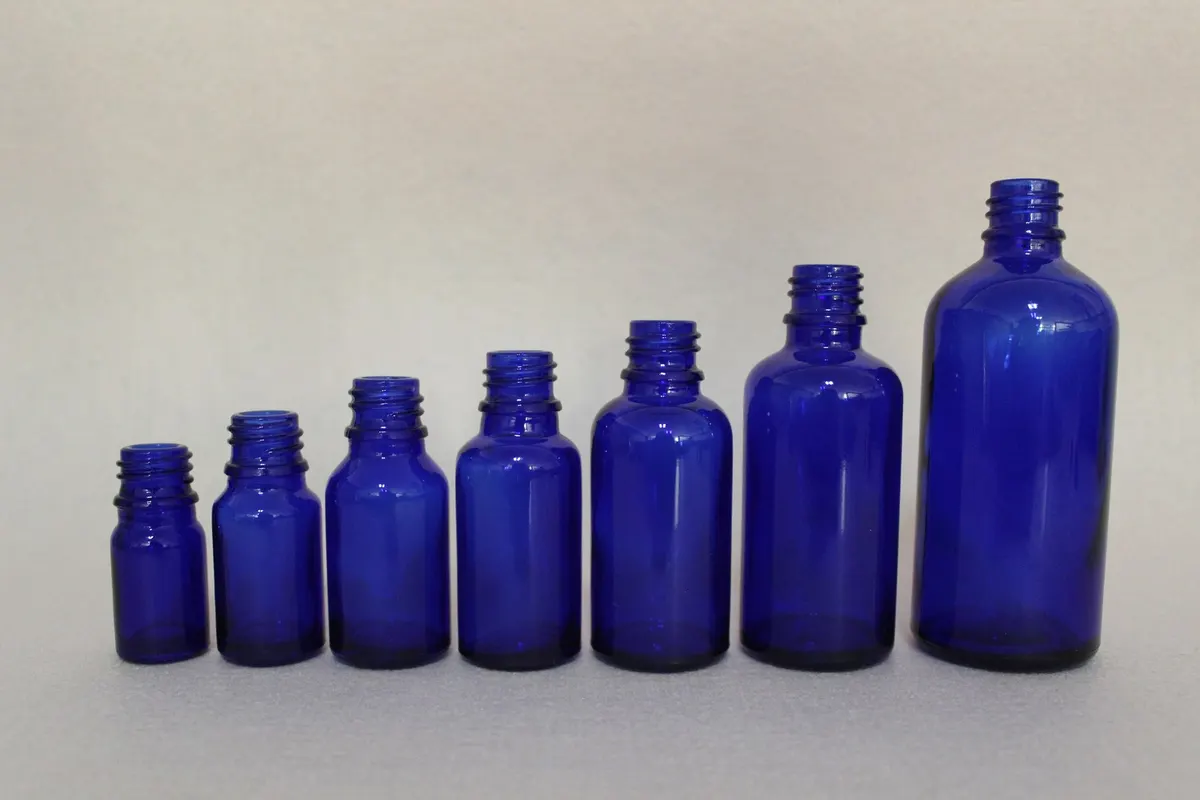
Filed under cosmetic glass bottles wholesale; the moulds we quote for this are pictured at the foot of the page.
This page is for the brand owner, product developer or sourcing manager who has decided that a lotion or cream will be sold in a glass bottle and now has to settle two things that cannot be separated: how much the bottle holds, and how the product leaves it. The decision it serves is specific. Given the way the product is used, how thick it is, and where it is sold, which capacity band is defensible, and which dispensing method has to sit on that band. It is not a general cosmetic sizing page, it does not cover how to buy or to price lotion bottles, and it does not touch production line equipment of any kind.
Several neighbouring pages bound this one, and the boundaries are worth stating before the numbers begin. The essence side of the cosmetic range is sized on serum-bottle-sizes, which deals with small capacities, the dropper system and light protection; a lotion bottle is a different problem because it is dispensed by the handful, not by the drop, and because its capacity is set by an application habit rather than by a dose. The product and sourcing layers sit elsewhere: the glass body range is on lotion-glass-bottles, the commercial layer of order structure and case packing is on lotion-bottles-wholesale, and the wider container family is on the glass bottle range. The closure engineering for a press pump belongs to glass-bottle-pump-dispensers, and an entirely separate product system, where volumes are small and dosing is by the drop, is on essential-oil-bottles. This page stays on the capacity band and the scenario mapping. The production side, meaning the conveyors, elevators and handling equipment that move bottles through a filling hall, is on glass-bottle-elevator-lowerator and is not discussed here at all. Everything below is a planning magnitude for narrowing a brief, to be confirmed against a real fill rather than treated as an approved specification.
What Makes a Lotion Bottle Different From Other Cosmetic Bottles?
A lotion bottle is not a serum bottle scaled up, and treating the two as the same container with a different label is the most common reason a capacity has to be rebuilt halfway through a project. Four constraints separate the two categories, and each of them narrows the capacity band before any branding consideration is applied.
The first constraint is the dose. A serum is dosed in drops or in fractions of a millilitre, so its capacity is chosen to protect a scarce and expensive concentrate over a defined treatment period. A lotion is dosed by area. A face application is measured in a thin film over a small surface; a body application is measured in a generous layer over a large one. Those two habits can differ by an order of magnitude in millilitres per use, which means the same capacity can be a two-month supply for one product and a two-week supply for another. Capacity therefore has to be derived from a use rate, not chosen from a size list.
The second constraint is viscosity. Lotions sit on a wide spectrum that runs from a thin, almost watery fluid to a dense cream, and in many cosmetic ranges the word lotion covers both ends. That spectrum decides how the product is dosed far more than the label or the price does, because a thin fluid and a thick paste do not behave the same way in a pump, in a narrow neck or under gravity.
The third constraint is how the bottle is handled at the moment of use. A lotion bottle is used with one hand, often on a wet basin or a dressing table, frequently with a residue of product already on the palm. Grip, base stability and the position of the centre of gravity are therefore functional requirements rather than styling choices, and they change with capacity in a way that a serum bottle of the same category does not experience.
The fourth constraint is regulatory rather than physical. A cosmetic product carries a mandatory declaration set, and the space for it depends on the surface area of the pack rather than on its volume. On a small bottle the mandatory text claims a larger share of the label and can crowd out the brand. That trade-off is worked through later on this page because it often removes the smallest capacity a brand had considered for commercial reasons.
In What Order Should Lotion Capacity and Dispensing Method Be Fixed?
Capacity is rarely chosen well when it is chosen first, and it is never chosen well when it is chosen apart from the closure. The reliable order runs from the user back to the bottle, and each step removes options rather than adding them.
Begin with the application, because it is the one item the project cannot change. Face, body, hands, scalp, baby care and professional back-bar use each imply a different amount of product per application and a different number of applications per container. A body lotion sold for daily use after a shower and a face lotion sold as a light daytime layer are not the same capacity problem, even if both are called lotion on the shelf. Write the use rate down in millilitres per application as a range before anything else is decided.
Then fix the dispensing method, because it converts a use rate into a stroke count and therefore into the capacity the user will actually experience. A pump dispenses a fixed and repeatable volume per full stroke; a disc top or a flip top dispenses whatever the user tips out, which for a thin fluid is poorly controlled and for a thick cream is slow; a wide mouth with a spatula or a finger scoop dispenses by the fingertip. The method you choose determines how many times the user interacts with the bottle, and that interaction count is what makes a bottle feel generous or mean.
Then check the viscosity, because it decides whether the chosen method will physically work. A pump that handles a thin lotion easily may stall or drip on a dense cream, and a narrow orifice that suits a fluid may block on a paste. Viscosity is also the reason a capacity can move: a thick product that must be scooped needs a wide opening and therefore a wider, shorter body for the same volume.
Then check the shape and the grip, because capacity and body proportions are linked once the bottle is held. A tall narrow 250 ml bottle and a squat 250 ml jar hold the same volume and behave completely differently in the hand, at the moment the user tips the last portion out. Finally reconcile the capacity band against the label obligation and against the case, because a size that satisfies the user can still fail on mandatory text or on packed volume. The table below applies that whole sequence to the scenarios lotion products actually sell into.
Which Capacity Band Does Each Lotion Scenario Actually Need?
The table below is the working core of this page. Each row takes an application scenario, names the capacity band that scenario usually occupies, the dispensing method that suits it, the content type and viscosity it is normally paired with, and the handling note that matters in the hand. The capacity figures are planning magnitudes for narrowing a brief, not catalogue sizes, and the last column is deliberately left as questions rather than answers, because the output per stroke, the orifice and the neck finish all depend on the specific pump and on your own product.
Two patterns are worth reading before the rows. The first is that capacity rises with the surface the product is applied to, not with the price of the product. A premium face lotion often occupies a smaller band than a mass-market body lotion because the treated area is smaller, so a higher price per millilitre does not mean a bigger bottle. The second is that the dispensing method, not the volume, is what most often forces a change of shape: any row in this table can be produced in a pump format, but the rows that suit a scoop or a tip-out cannot borrow a pump body without the viscosity being checked first, because the pump has to be able to lift the product at the temperature it is stored at.
| Application scenario | Typical capacity band (planning magnitude) | Dispensing method that suits it | Content type and viscosity fit | Handling and grip note | What to confirm with the factory |
|---|---|---|---|---|---|
| Facial lotion for daily daytime use, retail and direct-to-consumer | Roughly 30 to 50 ml; the small end of the lotion range, because the treated area is small | Fine-lotion pump, or a disc top where the fluid is thin and the brand wants a clean look | Thin to medium fluid emulsion; a dense cream is normally sold as a jar rather than a narrow bottle | A small bottle is held between two fingers, so a stable base matters more than a large grip surface | The stroke volume of the pump you intend, the fill level at your product temperature, and the neck finish the pump is made for |
| Hand and nail lotion kept at a basin, retail and hospitality | Roughly 50 to 100 ml; sized to sit on a sink edge without dominating it | Lotion pump with a defined stroke volume, or a flip top for a thin fluid | Medium fluid emulsion, frequently with a slight gel structure | Used with damp hands, so a pump that returns fully is worth more than a decorative actuator | Whether the pump primes reliably at your viscosity, the drip behaviour after a stroke, and the closure torque the neck was designed for |
| Body lotion for daily use after showering, retail and gift | Roughly 200 to 250 ml; the default band for a repeat-purchase body product | Large-output lotion pump; a disc top is possible only where the fluid is thin | Medium to thick emulsion, often with a high oil phase | A wet hand around a wet bottle, so body diameter and the pump head diameter both need to be comfortable | The pump output per stroke, whether the dip tube length matches your fill height, and how the pack behaves after a temperature rise in transit |
| Family or value body lotion, club store and bulk retail | Roughly 250 to 500 ml; a large bottle sold on volume comparison rather than on ritual | High-output pump, occasionally with a wide mouth for a spatula where the cream is heavy | Thick emulsion and dense creams; a very heavy cream is better scooped than pumped | Half-full large bottles must still pour or pump from a tilted position, which is a centre-of-gravity question | The weight of the filled bottle, the base diameter against the shelf or case footprint, and the pump lift height at your viscosity |
| Travel and cabin-baggage size, retail and airline amenity | Roughly 15 to 50 ml; the band is set by the container limit applied to cabin liquids, not by the product | Small pump, disc top or flip top; a screw cap where the format is refillable | Thin to medium fluid, chosen so that the product flows in a small opening | A small bottle in a wash bag is squeezed and dropped, so the closure must not open under pressure | The stated net content against the container limit of your destination markets, and the tamper or travel-lock feature of the closure |
| Trial, sampling and gift-with-purchase | Roughly 15 to 30 ml; the smallest band and the one most compressed by mandatory text | Small pump, flip top or screw cap; a mini disc top where the fluid is thin | Thin fluid only; dense creams are hard to dispense from a miniature pump | The bottle is judged in seconds, so the label must read before the hand has time to grip | Whether the label surface can carry the mandatory declarations at this size, and whether the pack survives a mailer without a secondary support |
| After-sun and cooling gel lotion, seasonal retail | Roughly 150 to 250 ml; sized to a summer repeat-use pattern rather than a daily one | Lotion pump or a disc top; a gel is usually thin enough for either | Thin fluid and gels, frequently alcohol-bearing or water-rich | Used outdoors and often on a towel, so the bottle is likely to be set down on sand or grass | The seal compatibility of the pump with your formulation, and the resistance of the label adhesive to a humid environment |
| Baby and child care lotion, retail and pharmacy | Roughly 100 to 200 ml; a mid band sized to a frequent but small application | Lotion pump with a low-effort stroke, or a flip top for a thin fluid | Thin to medium fluid, often fragrance-free and water-rich | Often applied with one adult hand while the other holds the child, so a one-hand pump action is a real requirement | The force needed to actuate the pump, the closure format’s resistance to being knocked open, and the label area for a longer declaration set |
| Massage and professional back-bar use, spa and clinic | Roughly 250 to 500 ml; bought on repeat use rather than on appearance | High-output pump or a wide-mouth jar with a scoop | Medium to thick oil-rich emulsion; professional oils are often very thin and need a different closure | Used from a fixed position on a trolley, so base stability and a long dip tube matter more than hand feel | The number of strokes a full bottle delivers, the dip tube length at your fill height, and whether the neck accepts a high-output pump |
| Refill and eco range, brand-direct and refill station | Roughly 200 to 500 ml in a durable body, refilled from a larger container | A pump or disc top that is designed to be unscrewed and refitted many times | Any viscosity, chosen so that a single body can carry several products | The bottle is handled more often over its life, so neck thread wear and body weight both matter | The thread durability over repeated open and close cycles, and whether the closure is available as a replaceable spare |
| Gift set and multi-piece kit, premium retail | Roughly 30 to 100 ml per piece; capacities are set by the carton footprint, not by the individual bottle | Whatever suits each product, but the pieces usually share one closure family for visual consistency | Usually a matched set of thin to medium fluids | The pieces are seen together, so a height or diameter mismatch reads as a fault rather than as variety | Whether the pieces can share one body diameter at different heights, and the packed dimensions of the assembled set |
How Many Uses Does a Bottle Deliver, and What Sets the Output Per Stroke?
The number of applications a lotion bottle delivers is the figure a buyer should be working from, and it is not the same as the capacity. It is the capacity divided by the amount used per application, and where the product is pumped, the amount per application is itself the output per stroke multiplied by the number of strokes the user actually presses. That second factor is where most capacity plans go wrong, because a user rarely presses the same number of times for a face and for a body application.
Output per stroke is a property of the pump, not of the bottle, and it varies widely across the pump families that fit a cosmetic neck. Small cosmetic pumps used on facial and travel sizes commonly deliver in the region of a fraction of a millilitre per full stroke, while the larger pumps used on body formats deliver noticeably more per stroke. The exact figure has to be read from the pump specification and then verified on your own product, because a stated stroke volume is normally measured with water at a reference temperature and a viscous emulsion will not always reproduce it. Treat every output figure in this page as a planning range and confirm the real value on a sample with your own formulation.
The arithmetic that matters is straightforward once the stroke volume is known. Take the capacity, divide it by the output per stroke to get the number of full strokes in the bottle, then divide by the strokes per application to get the number of applications. A bottle that holds a large volume but is fitted with a small-stroke pump feels generous on the shelf and mean in the hand, because the user has to press many times per use. A bottle with a large-stroke pump feels efficient but can deliver more product than a face application needs, which wastes a premium fluid quickly and shortens the apparent life of the pack.
Three practical rules follow. First, match the stroke volume to the application area rather than to the capacity: facial formats want a small stroke, body formats a large one, and the same capacity can legitimately ship with either. Second, check the strokes per application against the dose the label implies, because a product sold on a thirty-day supply has to deliver roughly thirty applications at the dose the user will actually take, and that dose is usually a little higher than the formulator expects. Third, allow for the tail of the bottle: the last portion of any pump format is harder to extract, and a dip tube that is slightly too short leaves product the user can see but cannot reach. The dip tube length is a specification item to confirm against your fill height, not an afterthought.
Why Does Viscosity Change Both the Capacity and the Opening You Choose?
Viscosity is the input that most often forces a capacity to change late in a project, because it decides which dispensing methods are physically available and therefore which body proportions are possible.
A thin, water-rich lotion behaves much like a liquid. It flows readily, it levels itself in the bottle, and it can be dispensed through a narrow opening, a small orifice or a fine-lotion pump. Because a thin fluid can use a narrow neck, the body can be tall and slim, which means a given capacity can be delivered in a small footprint. The trade-off is control: a thin fluid tipped from a disc top or a flip top comes out faster than the user expects, so a thin lotion is usually better served by a pump that meters the dose than by an opening the user pours from.
A dense cream behaves in the opposite way. It does not level, it traps air, and it resists being drawn up a narrow tube. A heavy cream in a narrow-neck pump bottle tends to leave product clinging to the wall, to draw a channel through the middle of the mass, and to run out of usable strokes well before the bottle is empty. For that reason a thick product is more often packaged in a wide-mouth jar or in a wide-mouth bottle with a spatula, and the wide opening forces a wider and shorter body for the same volume. That is a shape consequence driven entirely by rheology, and it is worth accepting early rather than discovering at the fill trial.
Between the two extremes sits the majority of commercial lotions, which are structured emulsions that pump well but slowly. For these the practical questions are the pump’s ability to prime on first use, the temperature at which the product is stored in the market, and the recovery of the pump after each stroke. A product that is stiff in a cool bathroom may pump easily in a warm one, so a pump validated at one temperature is not automatically validated across the whole seasonal range a market experiences. Where a cream is genuinely borderline, the safest route is to test the actual product with two candidate pumps on a sample basis and to compare the strokes delivered from a full bottle, rather than to decide on a single stroke figure quoted for water.
One further point connects viscosity back to capacity. Dense products are measured out less precisely by the user, so their real consumption per application varies more than that of a thin fluid. That variance is a reason to leave a little headroom in the capacity for a cream and less for a fluid, and it is also a reason to prefer a pump, which at least fixes the output per stroke, over an opening the user tips.
What Is Different About Travel, Sample and Gift Sizes?
The small end of the lotion range is governed by rules that do not apply to the rest of the range, and it is worth treating the travel band and the retail band as two different problems rather than as one range with a smaller version at the bottom.
Travel sizes are set by external limits rather than by the product. Cabin baggage rules in most markets restrict the volume of each individual container that may be carried in hand luggage, and the commonly applied figure is a container of no more than one hundred millilitres, held within a transparent bag of a stated capacity. That rule is a container limit, not a content limit, so the bottle itself has to respect it and not merely the amount of lotion inside it. A brand selling a travel format internationally should confirm the container limit for every destination it ships into, because the figure and its enforcement are set locally and can change. The practical consequence is that travel packs cluster tightly below that limit and are usually built on the smallest bodies in the range.
Sample and trial sizes are governed by a different problem, which is the label. A miniature bottle has very little surface area, and the mandatory declaration set for a cosmetic does not shrink with the bottle. As capacity falls, the mandatory text claims a larger share of the available surface until the label stops being a marketing surface and becomes a compliance surface. There is a point in every range below which the pack is better served by attaching the declaration on an outer leaflet, a tag or a carton than by compressing it onto glass, and that point is usually found by laying out the actual label rather than by estimating. A sample also has a handling problem that a full size does not: it is often shipped loose in a mailer, so the closure has to resist being knocked open in transit and the glass has to survive a drop that a boxed retail bottle never sees.
Gift and kit sizes are a third distinct case. Here the capacities are not driven by the user at all but by the carton. A set of three or four pieces has to fit a defined outer box, and the pieces are normally built on one body diameter with different heights so that the set reads as a family. That constraint usually settles the individual capacities before any of the products are sized on their own merits, and it is the reason a set often contains one piece that would never have been chosen as a standalone size. Where a set is planned, fix the carton and the shared diameter first, then derive the capacities.
Which Bottle Shape and Grip Suit Which Capacity?
Capacity and body shape are decided together whenever the bottle is held, and the reason is mechanical rather than aesthetic. A given volume of glass can be arranged as a tall slender body or as a squat wide one, and the two arrangements behave differently at the exact moment a lotion bottle is used: one-handed, sometimes wet, and often when the bottle is nearly empty.
A tall body places the mass of the product high above the base, so as soon as the bottle is tilted the centre of gravity moves outside the footprint and the bottle wants to go over. That is manageable on a facial format, where the bottle is small and light and is held between the fingers, but on a large body lotion the tall arrangement is the reason bottles are knocked across a bathroom shelf. A squat body keeps the mass low and the base wide, so it is more stable and it pours or pumps from a tilt more predictably, at the cost of a larger shelf footprint and a shorter label panel. Where a large capacity must be tall for brand reasons, the practical mitigations are a wider base than the body strictly needs and a pump head large enough to be operated without a firm grip on the body.
The pump head itself is part of the grip. A user with a lotion-slicked hand presses the head with the fingers and steadies the bottle with the palm, so the diameter of the actuation surface needs to be generous enough to be pressed without slipping. On a small facial bottle the same logic runs the other way: an oversized pump head on a small body looks clumsy and tips the bottle when pressed. The head should be proportional to the body it sits on and to the hand that operates it, and that proportion is a decision to be made with a physical mock-up rather than from a drawing.
Two further handling details are worth specifying rather than leaving to chance. The first is the base: a small moulded punt or a slightly recessed base gives a bottle a better seat on a wet surface and reduces the rocking that leads to a knocked-over bottle. The second is the shoulder, which on a pump format carries the whole load of the pump assembly and the hand pressure applied to it; a sharp shoulder is comfortable only until the bottle has to be gripped hard, which is exactly what happens when a thick product is slow to flow. Where the product is dense and the capacity is large, a rounded shoulder and a defined waist give the hand somewhere to sit. All of these are shape questions that follow from capacity, and they are cheapest to settle on a sample before a mould exists.
How Much Label Surface Does Each Capacity Leave for Ingredient Declarations?
A cosmetic product carries a mandatory declaration set in virtually every destination market, and the room for that set depends on the surface area of the pack rather than on its volume. Surface area does not grow in proportion to capacity, so a small bottle is under more label pressure than a large one.
The obligations normally include the product name and function, the nominal content, the list of ingredients in the required order, the name and address of the responsible party, the batch code, any precautions and, where relevant, a durability date and country of origin. A cosmetic sold into the European Union has to present the ingredients according to the nomenclature set out in the applicable cosmetic regulation, and a product sold into the United States follows a different but equally specific framework. Those frameworks are named here only to make the planning point, and neither is a substitute for advice on the specific market you are selling into; the requirement is that the label be designed against the pack rather than assumed to fit.
The practical consequence for sizing runs as follows. As capacity falls, the mandatory text takes a larger share of the available surface, and the brand is left with proportionally less room for the name and the visual identity that justify a premium price. There is a capacity below which the label becomes a compliance document, and that capacity is different for a brand with a short ingredient list and a brand with a long one. A formulation with many actives can therefore force a larger bottle than the marketing plan wanted, purely because the ingredient list will not fit legibly on the smaller one.
The counter-pressure comes from the other end. Increasing capacity to gain label room increases glass weight, which changes the packed mass and the case and pallet configuration for the whole range, and in a retail fixture the shelf footprint is frequently the binding constraint rather than the weight. Where a label wraps a tapered or a shouldered body, the usable flat area for text is smaller than the total surface, and mandatory text must sit where it is not distorted. A straight-sided body at the same capacity is often the cheaper answer where the declaration set is demanding. The sizing decision is therefore a balance between the application habit, the declaration obligation and the physical cost of the pack, and it is normally settled by looking at all three at once. The way each capacity then multiplies into container volume and freight is a separate calculation, and it is the point at which a size that is right for the user can still be wrong for the order.
Where Does Lotion Sizing Stop and Which Neighbouring Page Takes Over?
This page covers one layer of the lotion packaging decision: how the application scenario, the viscosity and the channel together narrow the capacity band, how the dispensing method converts that band into a number of uses, how the small travel and sample bands are governed by rules that the rest of the range does not face, and how grip and label surface follow from the size. It deliberately does not cover the shape specification of a lotion bottle in engineering terms, and it does not cover how to buy lotion bottles in volume, because those are separate decisions with their own answer pages.
The pages either side of this one are worth naming explicitly so that the boundary is unambiguous. If the question is which glass body and which neck combination to build, including body proportions and finishes for a lotion line, that work sits on lotion glass bottle formats. If the question is how to source lotion bottles commercially, including order structure, decoration, case packing and how a programme is assembled for supply, that is on lotion bottle wholesale supply. If the question is which pump fits a given neck and how the pump body, dip tube and orifice are matched, that is closure engineering and belongs to the pump dispenser finish guide, not to this page. If the product is an essence or a serum dosed by the drop, with a dropper and a light-protection requirement, the capacity logic is entirely different and is set out on serum-bottle-sizes. If the container is an aroma product rather than a lotion, the very small volumes and the drop-based dosing of that system are on essential oil bottles. If the container material is still open, the family-level view is on the glass bottle range. This page stops before all of those: it tells you which capacity band to brief and which dispensing method to pair with it, and those pages tell you what to build and how to buy it.
Lotion Bottle Sizing Questions Buyers Ask Before Tooling
What bottle size is normal for a lotion?
There is no single normal size, because lotion sizes track the area the product is applied to rather than the product category. Facial formats commonly sit in the small end of the range, hand and travel formats in the small to mid range, and body formats in the mid to large range, with professional and refill formats at the top. Treat those as planning bands and confirm the net content against your own fill method, your fill height and your own use rate rather than against a catalogue. The useful exercise is to write down millilitres per application and applications per container before choosing any capacity at all.
How many uses will a lotion bottle deliver?
It is the capacity divided by the amount used per application, and where the product is pumped the amount per application is the output per stroke multiplied by the number of strokes the user presses. Take the capacity, divide by the stroke volume to get the strokes in the bottle, then divide by strokes per application to get the applications. The stroke volume is a property of the pump and is normally quoted for water, so verify it on your own product with a sample. A bottle with a small-stroke pump feels generous on the shelf and mean in the hand, and the reverse is also true.
Does a thicker lotion need a different capacity?
It usually needs a different shape, and that can move the capacity. A dense cream does not level, resists being drawn up a narrow tube and leaves product clinging to the wall, so it is more often packaged in a wide-mouth jar or a wide-mouth bottle with a spatula. A wide opening forces a wider and shorter body for the same volume, which changes the shelf footprint and the usable label panel. A thin fluid can use a narrow neck and a tall slim body, so the same capacity can be delivered in a much smaller footprint. Where the cream is borderline, test two candidate pumps on a sample rather than deciding on a single quoted stroke figure.
Which dispensing method should a lotion bottle use?
The method follows the viscosity and the application habit together. A pump meters a repeatable volume per stroke and is the natural choice for a product used one-handed on a wet basin; a disc top or a flip top is simple and cheap but gives poor control on a thin fluid; a wide mouth with a spatula suits a dense cream that will not pump. The method you choose sets how many times the user interacts with the bottle, which is what makes a pack feel generous or mean, and it also sets the neck and therefore the possible body proportions.
What is the limit for a travel-size lotion bottle?
Travel formats are governed by external rules rather than by the product. Cabin baggage rules in most markets restrict the volume of each individual container carried in hand luggage, and the commonly applied figure is a container of no more than one hundred millilitres held within a transparent bag of a stated capacity. That is a container limit rather than a content limit, so the bottle itself has to respect it and not merely the amount of lotion inside. Confirm the container limit and its enforcement for every destination you ship into, because the figure is set locally and can change.
Can a small lotion bottle carry the full ingredient declaration?
It can carry it, but legibility becomes the constraint. A cosmetic product has a mandatory declaration set that does not shrink with the bottle, and because surface area does not grow in proportion to capacity, the mandatory text takes a larger share of a small label. There is a capacity below which the label stops being a marketing surface and becomes a compliance document, and a formulation with a long ingredient list pushes that point upward. Where the size is fixed by the channel, the usual answers are an outer carton, a leaflet or a tag rather than compressing the text onto glass.
Do all capacities in a lotion range need different bottles?
No, and keeping one body diameter across the range with different heights is usually cheaper to operate than building each capacity on its own diameter, because a diameter change normally needs line change parts while a height change is a straightforward adjustment. The limit is the shape consequence of viscosity: a range that spans a thin fluid and a dense cream may genuinely need two body families, since the cream requires a wider opening. Whether a given capacity exists as a standard body depends on the factory, so treat that as a question for the enquiry rather than an assumption.
Why do gift sets use capacities that are not sold separately?
Because the carton sets the capacities, not the product. A set of three or four pieces has to fit a defined outer box, and the pieces are normally built on one body diameter with different heights so that the set reads as a family rather than as a collection of oddments. That constraint usually settles the individual capacities before any of the products are sized on their own merits, which is why one piece in a set often sits at a size that would never have been chosen as a standalone bottle. Where a set is planned, fix the carton and the shared diameter first, then derive the capacities.
What Should You Send With a Lotion Bottle Size Enquiry?
To get a capacity band and a dispensing recommendation rather than a general list of bottle options, send three things. The first is the application scenario and the surface it is applied to, meaning facial, hand, body, baby, professional or refill, together with the use rate in millilitres per application if that figure is already known, because that single answer eliminates most of the capacity range immediately. The second is the content type and its viscosity, including whether it is a thin fluid, a structured emulsion or a dense cream, and the storage temperature range it will see in market, because viscosity decides whether the product can be pumped at all and therefore whether a narrow or a wide opening is possible. The third is the channel, meaning retail, pharmacy, travel, gift or professional, because the channel fixes the occasion and often imposes a container limit or a carton footprint of its own.
Useful additions, where they are already known, are the target net content and whether that figure is fixed by the brand or by a retail specification, the intended output per stroke if a pump type is already favoured, the closure family you would prefer, the destination markets and any container limit or declaration obligation that applies there, and whether the size is part of a multi-piece range that should share one body diameter. With those in hand, a reply can set out a recommended capacity band, the dispensing method that suits the viscosity and the application habit, the fill and headspace considerations that come with it, the likely number of applications at a planning stroke volume, and the label surface implication of the sizes under discussion. Where the product is a thin fluid and the channel is mainstream retail, the answer usually converges quickly on a capacity band and a pump; where the product is a dense cream or the size is a gift-set piece, the answer usually starts with the opening and the carton, because those are the constraints that can remove a capacity that looked ideal on a shelf plan. All figures in this page are planning magnitudes; the real capacity, output per stroke and application count are to be confirmed against a sample fill of your own formulation.