One of our guides on glass perfume bottles; start there for the overview.
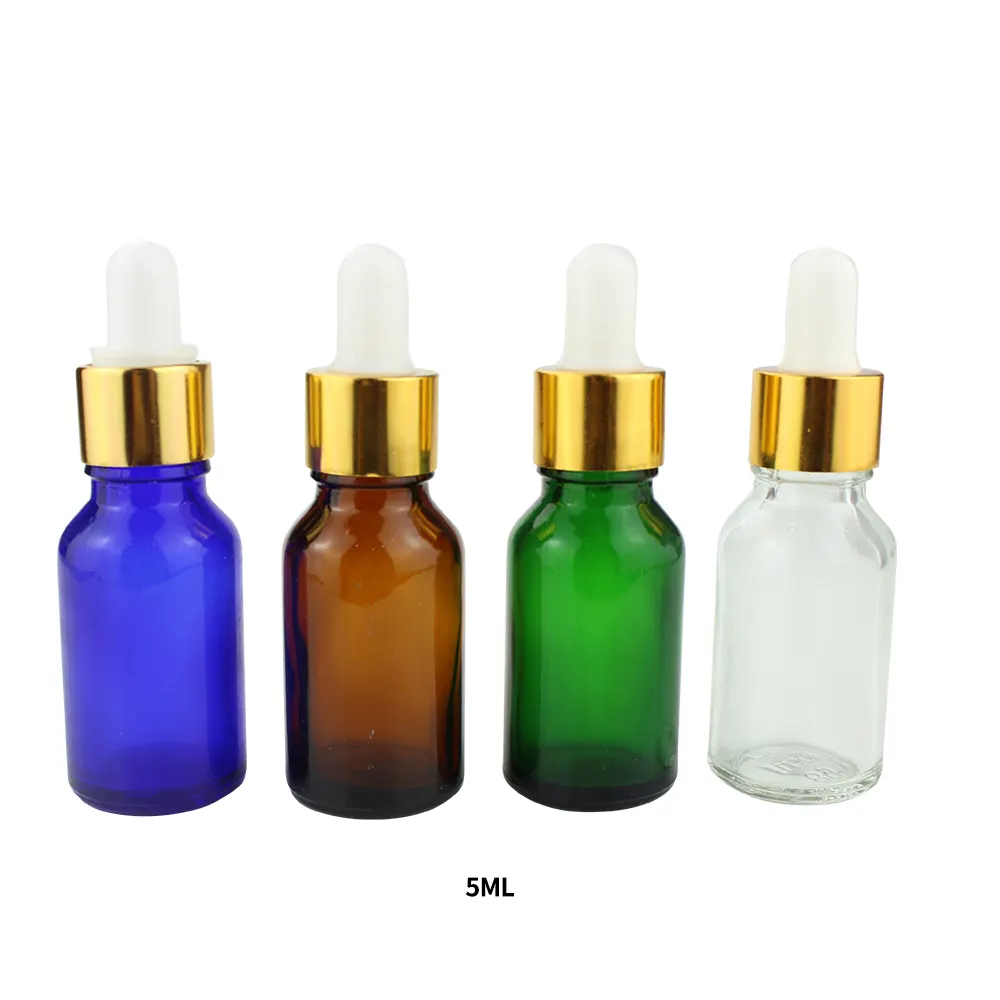
Mini perfume bottles for gift sets run from 1.5ml to 15ml, and the capacity you choose largely decides the closure: 5ml with an FEA 11 crimp finish is the practical floor for a dependable fine-mist pump, while smaller vials are better closed with a dabber or a press-fit plug. Plan the miniature as its own engineering job, not a reduced 50ml drawing, because the wall, the neck and the heel all have to be redrawn. These are brand-original pieces filled before sale for coffrets, gift-with-purchase counters and discovery sets, not atomizers the consumer tops up.
Capacity bands and the closure each one takes
Deluxe miniatures divide into four bands. Each has a typical channel, a typical closure and one specification that causes most of the trouble.
| Band | Where it is used | Closure | What to watch |
|---|---|---|---|
| 1.5ml to 2.5ml vials | The border between sampling and retail | Press-fit or crimp finish | Molded at very high cavitation with almost no tolerance to spare. Neck bore variation has to stay inside ±0.15mm; outside it, stopper rejects on the filling line climb past 3%. |
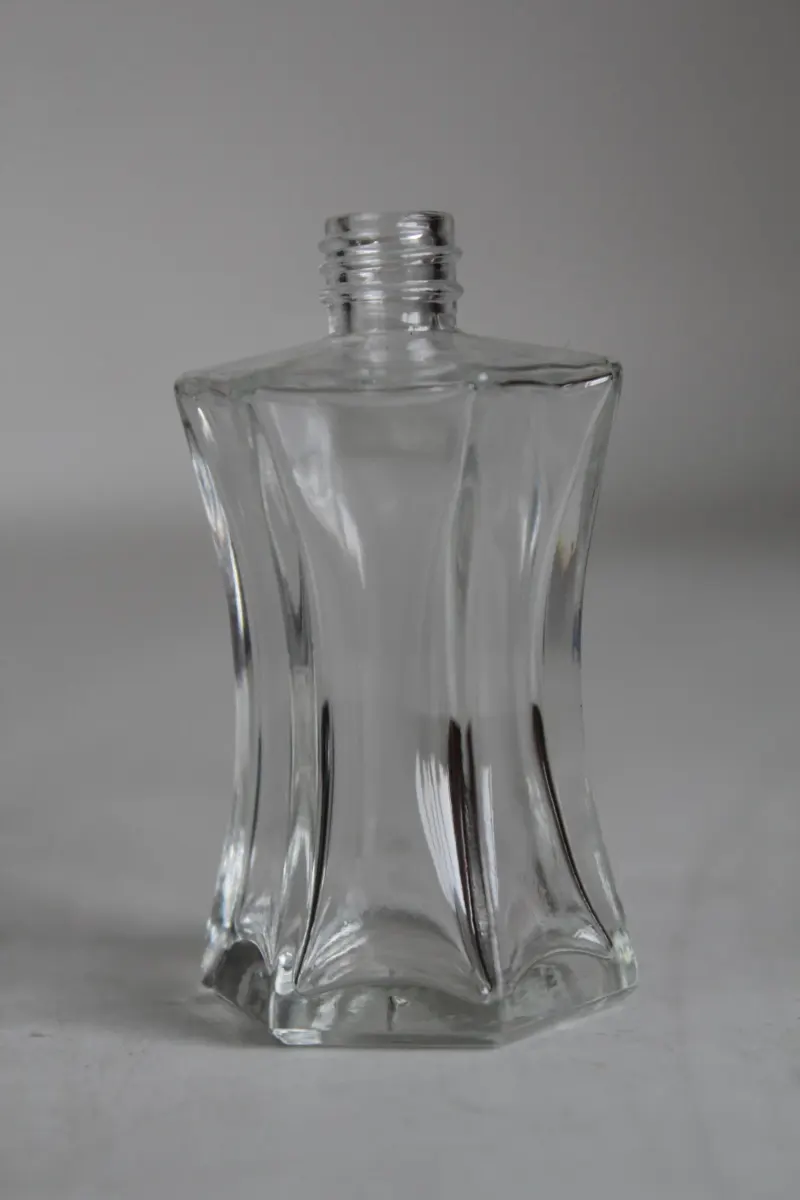
| 3ml to 5ml deluxe minis | Discovery sets, usually copying the flagship at one-tenth scale | Dabber or plug at the low end, crimp pump at 5ml | A faithful 5ml copy of a faceted 100ml flacon typically needs its own 8-to-12-cavity mold with hand-finished engraving. Shoulder glass distribution is the leading source of defects. |
| 7.5ml to 10ml gift-set miniatures | Coffrets | A real pump instead of a dabber, plus a decorative collar | The cap is sometimes expected to match the full-size SKU, so cap and collar need drawing alongside the bottle. |
| 12ml to 15ml purse sprays | Top of the range, often sold singly | Standard FEA 13 or FEA 15 pumps | Runs in production much like a small flagship bottle. |
Department stores ask for exclusive miniature SKUs for their gift-with-purchase calendars, and niche houses build a revenue line on five-piece assortments of 2ml or 7.5ml bottles. In both cases the piece has to look like a small jewel and not a sample vial, so base weight, wall thickness and pump feel count for more per unit than they do on a 100ml bottle.
What has to be redrawn when a flagship is scaled down
Glass does not behave the same way at miniature wall thickness. A 50ml bottle with a 3.2mm wall can absorb a ±0.4mm swing in distribution. A 5ml bottle with a 1.6mm wall has no such margin: a thin spot of 0.3mm at the shoulder shows as distortion once the bottle is decorated and becomes the place it breaks during crimping.
The gob, the charge of molten glass that forms one bottle, weighs 18 to 40 grams for miniatures depending on capacity. Distribution stays consistent only if gob temperature is held within ±5°C across an 8-hour shift, so that figure is worth asking a plant about. Three mold decisions then set the quality level.
- Cavity count. A 16-cavity mold delivers volume, but weight can spread by ±0.8g from cavity to cavity. For coffret work we recommend stopping at 8 cavities and accepting a higher unit cost, because the spread tightens to ±0.3g and pump torque and crimp depth stay uniform.
- Neck finish. Miniature necks are cut, not blown, so the finish ring is machined into the mold and has to be right on the drawing.
- Heel and base. Thin heels chip during cartoning. On anything under 10ml we specify a heel radius of at least 1.2mm and a push-up depth of 1.5mm.
Pump finish, crimp depth and dip tubes
Under 10ml most brands choose a crimp pump on an FEA 11 or FEA 13 finish. Screw finishes are available, but they add height and cost, and a 5ml neck gives so little thread engagement that variation in torque turns into leaks.
Crimp depth for miniatures belongs between 0.9mm and 1.1mm, with the collet chuck calibrated for each cavity set. Carrying over the setting from a 50ml bottle over-crimps the small neck and cracks the neck ring.
The dip tube deserves its own line in the specification. On a 7.5ml bottle it should be trimmed to within 1.5mm of the base push-up. Stock pump tubes arrive long, and when a co-packer shortens them by hand, 2% to 5% of units end up with a kinked tube and a weak spray. Order tubes pre-cut by the pump supplier to the bottle drawing. Collar and cap matching is covered separately in our guide to perfume caps and closures.
Fit with the filling line
A monobloc filler that runs 50ml flagships at 60 bottles per minute is usually re-tooled to 90 to 110 per minute for miniatures. The change parts are specific to the size: star wheels, centering bells and crimp heads all have to be made for the new bottle.
For that reason we ask for the filler OEM and model number at the start of a project and return a bottle drawing marked with the handling diameter and the center of gravity. Skipping the step has a familiar result at line trial, where a 7.5ml bottle tips on the conveyor because its base-to-height ratio dropped below 0.55.
Decoration limits on a small surface
Each decoration process needs a minimum area to work in, and miniatures push against all of those limits.
- Silk-screen printing holds down to about 6pt type on a 7.5ml bottle.
- Hot stamping and pad printing keep finer detail than screen printing below that type size.
- Acid frosting needs masking accurate to ±0.3mm, otherwise the frost line visibly wanders.
- Metallization and vacuum coating are fully workable from 5ml upward. Adhesion should be tested on every batch, since miniatures anneal on faster curves and carry different surface stress from full-size bottles.
Color matching across the capacities in a coffret
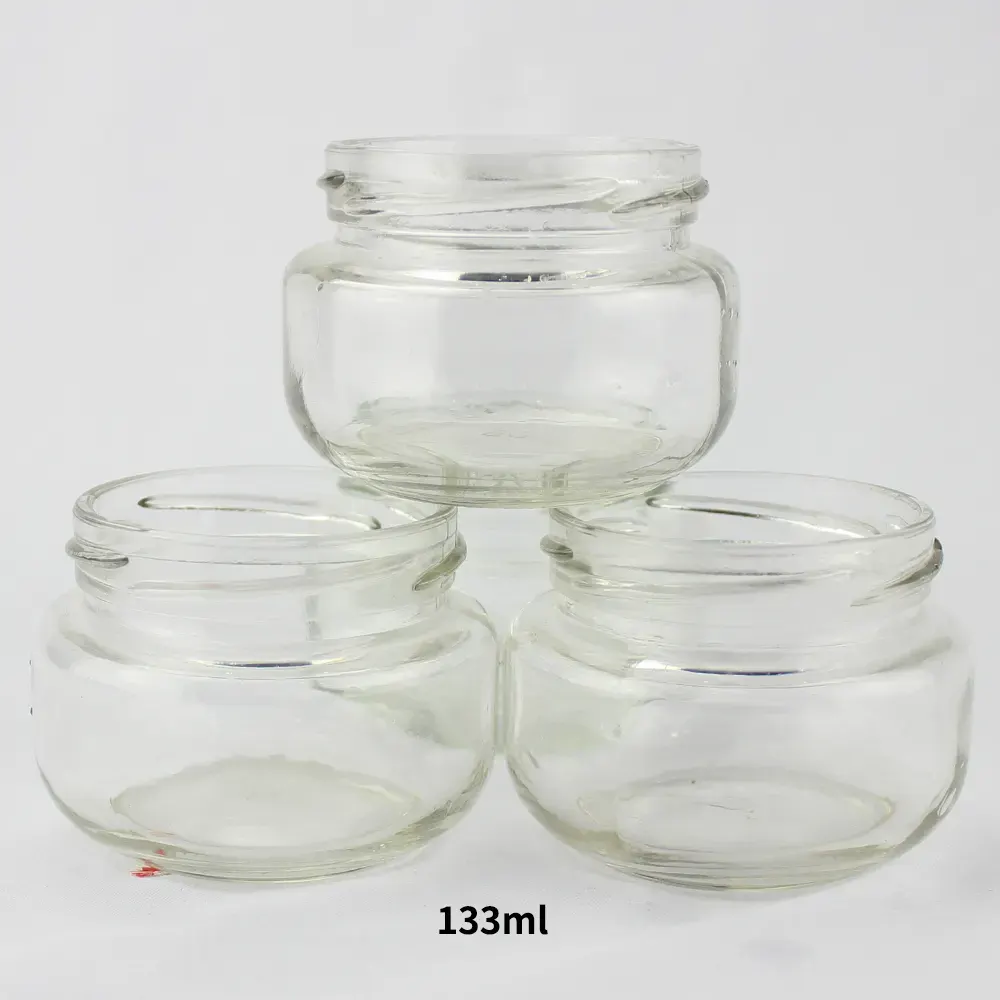
The complaint that recurs on coffret programs is color drift between sizes. A brand's 100ml, 30ml and 7.5ml bottles may come out of three different molds and two different annealing lehrs, and the set then sits side by side in one box.
We handle it by scheduling every capacity of a set in the same campaign week and taking spectrophotometer readings across all of them before release, with Delta E under 1.5 as the limit. Put the same question to anyone quoting bulk mini glass bottles. If cross-capacity color is controlled by visual inspection alone, allow for rejects at sorting.
Packing and the seasonal calendar
Miniatures need divider cartons or blister trays, which lowers packing density, and on vials below 5ml the dividers can cost more than the bottles they separate. Our usual packing specification is corrugated E-flute dividers with 100 pieces per inner and 400 per master carton, drop-tested to ISTA 1A.
Demand follows the retail calendar. E-commerce discovery sets sell all year but peak ahead of Mother's Day and Singles' Day, so mold trials and glass production have to be scheduled backwards from the event. Timing is confirmed per project once the mold and decoration are known.
FAQ on mini perfume bottles
Which is the smallest size that works with a spray pump?
In practice 5ml on an FEA 11 crimp finish. Smaller bottles are more robust with a dabber stopper or press-fit plug, and they are simpler to run on the filling line.
What minimum quantity applies to a custom miniature mold?
It is quoted per project. The figure depends on the mold, its cavity count, the decoration and the line the bottle runs on.
Can the miniature be an exact copy of our flagship?
In proportion, yes. The wall thickness, heel radius and neck finish are re-engineered instead of reduced, and it normally takes a sampling round or two before the small version looks right.
How is breakage controlled in transit for bottles under 10ml?
Through three measures set at the specification stage: a heel radius no smaller than 1.2mm, E-flute divider cartons packed 100 pieces to an inner, and an ISTA 1A drop test on the finished master carton before it is released.
Are these bottles refillable?
No. A brand-original miniature is filled before sale and closed with a crimp, so it is bought once and not reopened. Refilling by the consumer belongs to the travel atomizer category, which uses different bottles and valves and has its own compliance testing. For glass amenity formats, see travel size toiletry bottles in 30-50ml glass.
Which decoration suits a 5ml bottle?
Pad printing or hot stamping for fine lettering, since both outperform silk screen under 6pt. Metallization is available from 5ml, and frosting is possible provided the masking is held to ±0.3mm.