One of our guides on glass perfume bottles; start there for the overview.
A perfume bottle manufacturer is worth shortlisting when it can document six things: the furnace and its pull rate, gob-weight control, the forming cycle for your shape, annealing stress grades, its own mould shop, and decoration under the same roof. Ask for the records behind each claim rather than a brochure. A supplier that cannot produce evidence for three or more of them should not be running a custom fragrance project, and most of that evidence can be gathered remotely before anyone books a flight.
Fragrance glass is the hardest work a container-glass plant takes on. It needs cosmetic-grade clarity, FEA crimp finishes gauged to a tenth of a millimetre, surfaces clean enough to metallise, and decoration that stays on the brand's master sample over hundreds of thousands of pieces. That is why comparing plants is an engineering exercise first and a commercial one second. This audit covers the glass maker only; sourcing the bottle, pump, cap and box as one tolerance-matched set is a separate job.
Six capabilities to verify, and the evidence for each
Use the table as a pre-qualification gate. Keep it as a spreadsheet with one column per candidate so that answers from different plants line up side by side.
| Capability | What to request | Convincing evidence | Answer that should end the conversation |
|---|---|---|---|
| Furnace | Melter type (end-fired or cross-fired regenerative), pull rate in tonnes per day, number of IS machine sections it feeds | Furnace logbook or a utility bill that shows continuous melting, plus a line-layout drawing | "We have several furnaces" with no tonnage, section count or drawing |
| Gob-weight control | Control method (servo shears, electronic timing) and standard deviation measured on a 30-piece sample | SPC chart with ±0.5–1.0 g control limits on a 30–120 g bottle, recorded per shift and per cavity | "Weight is standard", no figure, no chart |
| Forming | The cycle used for your shape and the blank/final mould cavity count (4/6/8/10/12-up) | Machine setting sheet and a weight report broken down by cavity | The plant cannot name the cycle for your bottle |
| Annealing | Lehr curve (belt speed against temperature) and the residual-stress grade read on a polariscope | Stress log kept per lehr showing Grade 4 or better | No polariscope on site |
| Mould shop | Size of the stock mould library, in-house design, CNC and hand-finishing | Mould-shop photos with machine plates readable, and a pilot-mould cost sheet | "We outsource all tooling" |
| Decoration | How many lines are in-house and how many subcontracted; ΔE data against your master | Spectrophotometer report at ΔE ≤ 1.5 and draw-down samples | "All decoration is sent out" |
Furnace and forehearth
A furnace making cosmetic ware typically pulls 40–200 tonnes/day. A plant running perfume-grade extra-flint over several 6/8/10-section IS machines, in single, double or triple gob, has the scale to keep colour and weight steady through a long run. When the answer has no numbers attached, the speaker is almost always reselling glass from somebody else's plant.
The forehearth conditions molten glass before the gob drops into the blank mould. If gob weight and temperature wander, every bottle in the run wanders with them, and the result is ware that overflows or under-fills at the crimp. A recorded SPC chart is therefore a real signal of capability and not a formality.
Forming and annealing
Perfume blanks today come off IS (individual section) machines. Press-and-blow and blow-and-blow multi-station cycles leave a cleaner finish and more even walls than older suck-and-blow tooling. A plant that cannot say which cycle your shape runs on is quoting a mould it has never put on a machine.
Glass leaves the mould carrying thermal stress. The annealing lehr takes it through the strain point and cools it under control so it does not crack by itself or fracture at the crimp. Nothing about this is visible in a sample, which is why the polariscope log matters: without the instrument a plant has no way to prove its bottles are annealed.
Moulds and decoration
A genuine maker holds hundreds of stock moulds and cuts its own tooling. Where tooling is bought in, each design change passes through a third party and you have no direct relationship with whoever holds the steel. Ask who owns the mould and get the answer in writing.
Lacquering, vacuum metallisation, frosting, screen printing and hot-stamping belong in the same quality system as the glass, so that colour and registration are controlled together. Each subcontracted process is a hand-off where tolerance and schedule both slip.
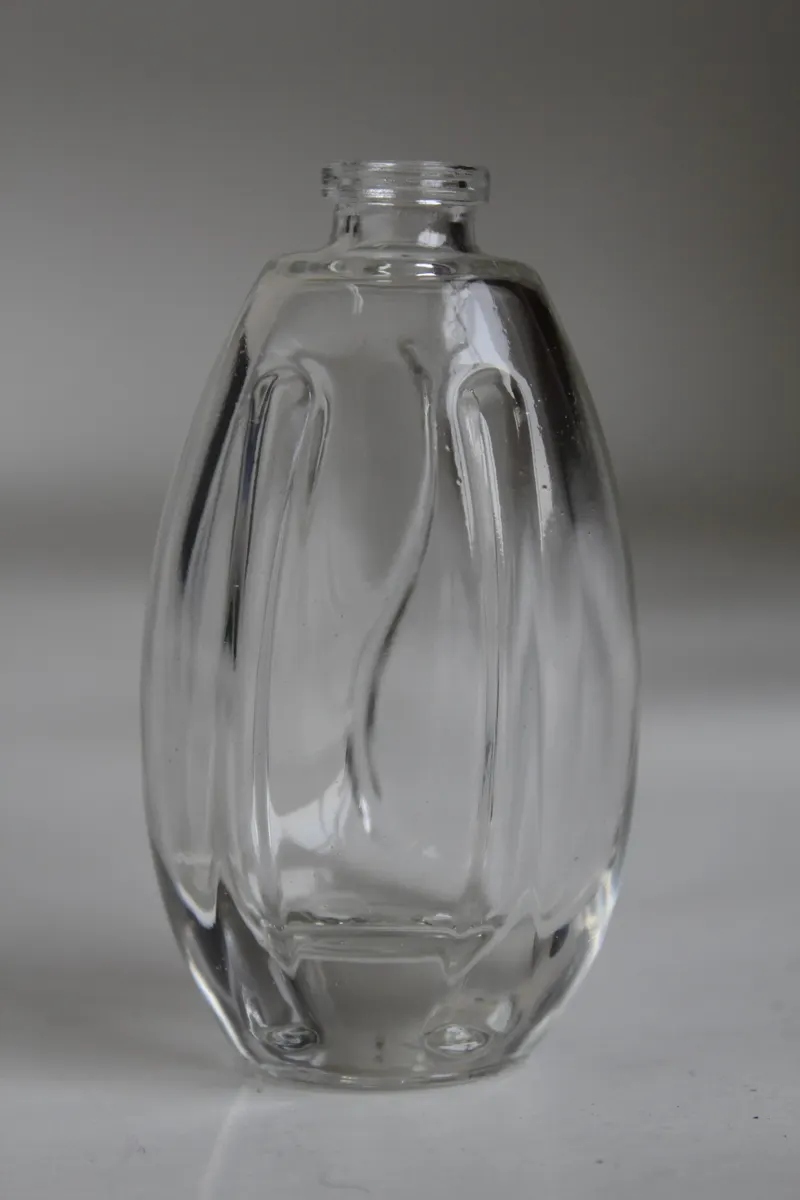
Where each defect starts on the line
A bottle is easier to audit once you know which stage produces which fault. Production moves from batch house to melting, gob, forming, annealing and inspection, and a slip at any point turns up later as a reject. Knowing the sequence lets you replace "is your quality good?" with a request for a specific record.
| Stage | What happens | Defect it causes when it goes wrong | Record to ask for |
|---|---|---|---|
| Batch house | Silica sand, soda ash, limestone, dolomite and cullet are weighed and mixed, with low-iron sand for extra-flint | Uncontrolled iron tints the base green; dirty cullet seeds the glass | Batch formula sheet, incoming sand COA, documented Fe₂O₃ spec |
| Melting | The batch melts at ~1,450–1,550 °C and is fined | Bubbles and cords that nothing downstream can take out | Furnace temperature log and fining record |
| Gob | The forehearth feeds a measured gob to the blank mould | Uneven walls and drifting fill volume | Gob-weight SPC chart |
| Forming | Press-and-blow or blow-and-blow shapes the parison, then the bottle | Parting-line flash and chipped finishes from worn or badly set tooling; thin spots from a mistimed blow | Weight report for every cavity |
| Annealing | The lehr cools the bottle through the strain point on a set profile | Residual stress; bottles crack weeks afterwards on the filling line | Lehr curve and polariscope grade log |
| Inspection | Cameras gauge finish and brimful; cosmetic viewing under standardised light | Faulty ware reaching the pallet | Gauge calibration and rejection log, ISO 7459 thermal-shock results |
| Packing | Dividers and case pack shield the finish | Finish chipping, which often happens at pack-out | Case-pack spec and drop-test note |
Two points in this chain deserve extra weight. Low-iron sand does more for clarity than any other single input, so segregated handling of the extra-flint batch is good practice. And a furnace that runs cold or with the wrong redox is behind most cosmetic rejects that nobody can otherwise explain.
At the cold end, a plant that gauges the finish on 100% of ware and samples brimful to ±1% can be audited. One that "visually checks" by hand cannot. The by-cavity weight report is useful for the same reason: it shows which cavity is drifting before a leaker reaches you.
Defect limits and test methods to write into the PO
Six defects do the damage in a fragrance launch:
- Bubbles and seeds, gas inclusions left by an unstable melt.
- Cords and striae, streaks of differing refractive index in glass that was not homogeneous.
- Wall-thickness variation, where a thin spot cracks under the crimp.
- Residual internal stress from weak annealing.
- Finish chipping on the crimp collar.
- Cut and parting-line flash from worn tooling.
Every one of these can be measured. Before production, agree a limit sample, also called a golden sample. Its commercial value is that an opinion about appearance becomes a signed standard you can enforce at pre-shipment.
Name the methods in plain text: ISO 7459 for thermal-shock resistance, ASTM C148 for grading internal stress, and an AQL plan of 1.0 for major defects such as finish or leak and 2.5 for minor ones such as a cosmetic seed, applied lot by lot. The AQL and the lot size go in the purchase order, never just in a call. For FEA finish control specifically, a strong plant gauges 100% and works to AQL 0.65. Our pre-shipment inspection protocol lists what we measure on a lot before it leaves.
Capacity, yield and certificates in comparable terms
"We can do your volume" tells you nothing. Capacity should be stated as nameplate tonnes per day together with the IS sections actually free for your colour. Ask what share of the line your order would occupy and whether it needs a colour change.
Yield means qualified good pieces against fired pieces, and the target for cosmetic ware is 90–98%. A plant that looks cheap while running at 80% yield passes the loss back to you as rejects or rework.
On certificates, check validity and scope before anything else. ISO 9001, ISO 22716 and BSCI/Sedex are the names to look for, and the scope has to cover glassware. For clarity claims, ask for the Fe₂O₃ content of the batch: ≤0.02%, certified, is what extra-flint looks like, while "same as crystal" with no data is not an answer.
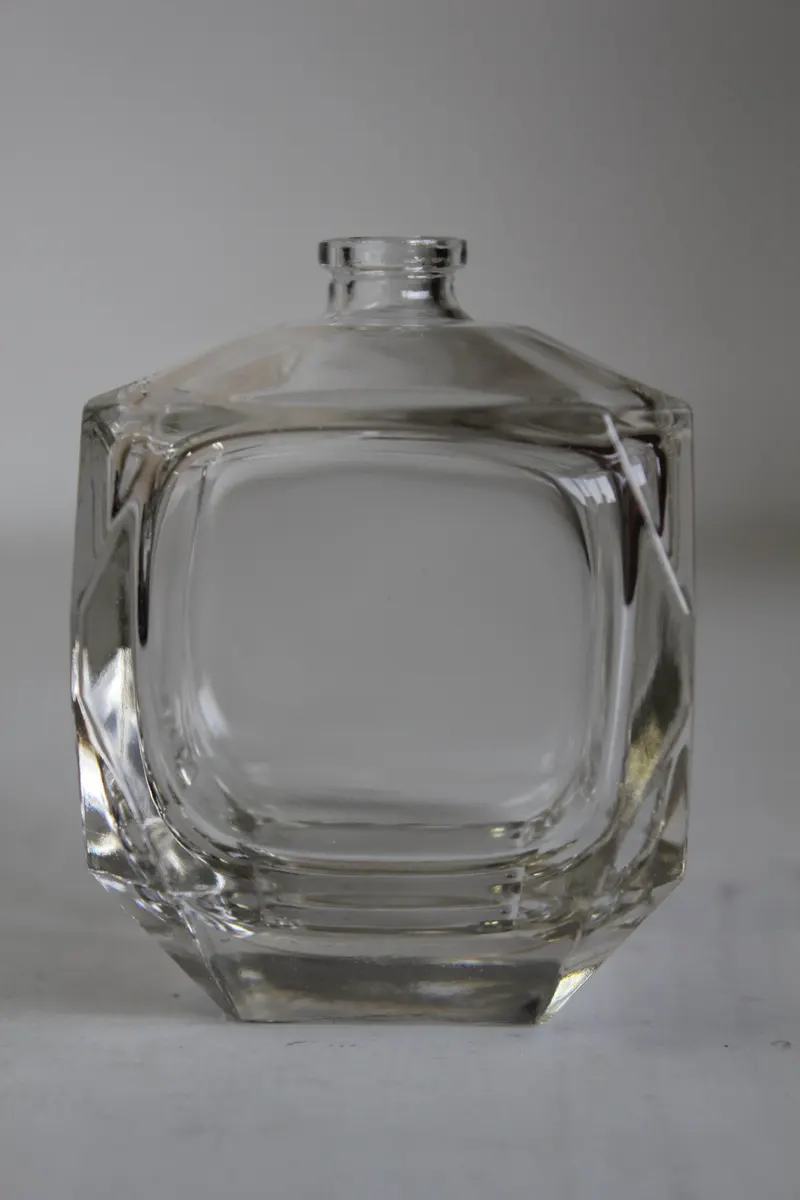
What a remote audit proves and what needs a visit
Visiting every candidate is rarely realistic. Check documents and live evidence first, then spend the travel budget on the one or two plants you are about to award.
Evidence you can collect from your desk
- A live, uncut video walk through cold-end inspection and the decoration lines, with the operator naming each line as they go. A staged tour does not count.
- Real-time photos that carry a verifiable timestamp and your PO number.
- Batch production reports with furnace pull, gob-weight SPC, rejection rate and polariscope grade.
- A first-article video showing your pilot sample being crimped and filled.
- Third-party inspection from SGS or Bureau Veritas covering AQL, thermal shock to ISO 7459 and finish gauging.
A supplier willing to stream 20 unedited minutes of the line and send a dated batch report has already passed most of the trader tests below.
What only a walk-through settles
The furnace is the first item: its true pull rate, the state of the refractory, and whether it is melting your colour at all. The mould library and CNC shop come next, because that is where claims about pilot tooling are confirmed. Work-in-process and warehousing show how chipped finishes and mixed lots really occur on the floor. Environmental and labour conditions complete the list, since a camera can be steered around them and a visitor cannot. If a supplier performs well remotely and then declines an on-site element, treat that gap as your answer.
Five signs the "manufacturer" is a trading company
- Nobody can name the furnace or the IS section that would feed your shape.
- All mould work and all decoration is described as subcontracted.
- A video walk of the cold-end line is refused.
- The quote shifts with "factory price this week", the way a buyer's would.
- Mould ownership is never confirmed on paper.
A real glasshouse shows its melt willingly, because a furnace is the single asset a reseller cannot fake. Make the video walk and the batch report a condition before any deposit is paid.
Cost structure, minimums and timing
The ex-works cost of a flint perfume bottle usually divides along these lines. Treat them as proportions for negotiation and confirm the split on each project.
| Cost line | Typical share | What moves it |
|---|---|---|
| Raw material and batch | 30–45% | Low-iron sand and decolourisers put extra-flint near the top |
| Energy and labour | 20–30% | Melting accounts for most of the energy |
| Mould amortization | Small per piece at volume, large on short custom runs | Quantity |
| Decoration | 10–30% | Number of processes; metallising plus screen print costs far more than plain glass |
| Packing | 5–12% | Carton, divider, pallet and shrink |
Minimum quantities and lead times are set per project once the mould, the decoration and the line schedule are known, so we do not publish general figures. Be wary of unusually low minimums on a custom shape: either the bottle is someone else's stock with a margin added, or your design may appear in the supplier's catalogue after your run. Written mould ownership protects you in both cases.
Whatever the audit route, run 30 pieces from the pre-shipment sample through your own pump-crimping and filling tests before you release the balance. The RFQ checklist for bottles and jars puts every supplier on the same cost lines so the proportions above can be compared. For the design side, see how a custom perfume bottle is developed, and for the wider range the cosmetic glass packaging collection. When you have a shape, a target capacity, a finish type (FEA 15/20 or snap-on collar) and a decoration spec, send us the brief and we will match it to a plant that can show this evidence.
Frequently asked questions
What is an FEA 15 neck finish, and why is it audited so closely?
FEA 15 is the European standard 15 mm crimp finish for perfume pumps; the letters stand for Fédération Européenne des Aérosols. The pump ferrule is crimped over a collar whose bore, height and chamfer are held to ±0.1 mm, and those tolerances decide whether the seal lasts as long as the product. Ask for the gauge calibration certificate and the log of finish rejects. A photograph of the gauge proves nothing, and a plant without 100% finish gauging will send you leakers.
How do flint and extra-flint glass differ?
Standard flint carries about 0.04–0.06% iron oxide, enough to give thick sections a faint green edge. Extra-flint, also sold as super-flint, is made with low-iron sand at ≤0.02% Fe₂O₃ and stays water-clear even in a heavy luxury base. It costs more and is effectively required where the colour of the juice has to read true. Confirm it with a batch Fe₂O₃ certificate and a thick-section sample you examine yourself.
What minimum order should I expect?
It is quoted per project. The figure depends on the mould and on the line the bottle runs on, along with decoration and quantity.
Which certifications should the plant hold?
ISO 9001 for quality management is the baseline. ISO 22716, the cosmetics GMP standard, applies to cosmetic packaging, and most Western beauty brands also require a BSCI or Sedex social audit. Then look past the paper to the QC lab: a polariscope, a thermal-shock tester working to ISO 7459, and brimful measurement to ±1%. A certificate that has expired or covers only "plastics" is worth less than a dated batch report from a plant holding no certificate.
How are perfume bottles polished and decorated?
Better bottles are fire-polished at the mould: the parison surface is flashed hot so it comes out glossy with no secondary polishing. Decoration follows, using lacquer for colour, vacuum metallisation for a mirror base, frosting for a satin touch, and screen print or hot-stamping for logos and lines. Colour drift between lots usually traces back to outsourced decoration, so ask which lines the plant owns and request draw-downs for each process.