Part of our series on empty perfume bottles — read the overview first if the format is new to you.
Wholesale attar bottles come in three standard sizes: 3 ml for discovery and gift inserts, 6 ml for daily wear, and 12 ml as the main retail unit. Most programs use an octagonal, engraved or cut-glass-style bottle closed with either a glass dip stick or a roller ball, and finished with gold decoration. The choices that matter most are the applicator, which depends on how thick the oil is, and the capacity tolerance, because a small error is very visible in a bottle this size.
Why the sizes are 3, 6 and 12 ml
Attar is concentrated perfume oil made without alcohol, and traditional Gulf retail sells it by the tola. One tola is 11.66 grams, so the 12 ml bottle became the standard unit on the shelf. The 6 ml size covers daily-wear and mid-priced lines. The 3 ml size is the sampler: brands tuck it into Ramadan gift boxes and add it to online orders.
The oil is applied a drop at a time, so a 12 ml bottle lasts two to four months of daily use. That much value in so small a container is the reason buyers accept ornate glass and heavy caps. On a private mould, capacities from 2 ml to 15 ml are possible.
Octagonal, engraved and cut-glass-style bottles
| Form | How it is made | Where it fits |
|---|---|---|
| Octagonal | Eight pressed panels that taper toward the shoulder | The regional classic. Facets catch light the way cut crystal does, and the flat panels accept gold hot stamping well |
| Engraved or hobnail | Surface texture cut into the mould so the glass looks carved | Heritage brands and oud-led lines |
| Cut-glass-style mini | Heavy base with 8-10 mm of glass at the heel | Gift tier, where buyers read bottle weight as a sign of oil quality |
Clear flint is the standard colour for all three. Amber, cobalt and black are run for oud and musk oils that degrade in light. If the line later grows into attar-inspired sprays, the 30-100 ml flacons sit in our perfume bottle range, and the 50 ml perfume bottle is the usual first spray size.
Glass dip stick or roller ball
The dip stick is a polished glass rod, fused or press-fitted into the cap, that the wearer dabs on pulse points. It is the application ritual the category grew up with, it is inexpensive, and it cannot clog. Its weaknesses are an uneven dose and the fact that the rod carries skin lipids back into the oil.
A roller ball sits in a PP housing and is made of stainless steel or glass, 7-10 mm across. It lays down a controlled film, the bottle stays closed while in use, and it copes better with pockets and handbags.
Viscosity settles the question. Attar thinned with a lighter carrier such as IPM or fractionated coconut oil rolls without trouble. Heavy pure oud oil behaves better on a stick. Plenty of brands now sell both, with the stick for the Gulf home market and the roller for export and travel retail. Ball-housing tolerances and the leak-test routine are set out on our roller bottle page.
Decoration and caps
Ornament does much of the selling in this category. Gold hot stamping on the panels is the core look, ceramic decals fire permanent multicolour artwork into the glass for higher lines, and hand-painted accents mark the top tier. Caps finish the bottle: zamak electroplated in gold or silver, jewelled crown caps, or brushed aluminium for a contemporary range.
One drawing rule applies to octagonal bottles. Foil artwork has to stop 1.5 mm short of every facet edge. If it runs closer, the foil bridges the crease between panels and cracks.
Gulf retail buyers also expect the bottle itself to state origin and grade, so leave room in the artwork for the oud source, the oil concentration and the country of blend.
Quality checks to write into the order
Below 15 ml, every production variable shows, so an attar order needs tighter limits than ordinary flacon work. We ask the plant for records of four tests, and we suggest buyers request them by name from any supplier. A plant that runs them as routine can produce the reports quickly; one that does not will stall.
- Capacity. A ±0.3 ml error is 10 percent of a 3 ml bottle and the customer can see it. Specify brimful capacity within ±2 percent, controlled through gob weight held inside ±0.5 g.
- Finish gauging. Both closure types seal on very small surfaces. Stick-cap bores are checked with GO/NO-GO pins on each cavity every shift. Roller housings are torque-tested to a retention window of 8-12 in-lb, so the ball neither pops out under pouch pressure nor binds against the oil.
- Cosmetic grading. A single 1 mm blister on a front facet of an octagonal bottle counts as a major defect. Attar lots are graded at AQL 0.65 major, against the 1.0 typical for commodity small bottles.
- Adhesion and leakage. Decorated lots take a cross-hatch adhesion test on the foil, and assembled closures take a 24-hour inverted oil-immersion leak test. These are the two faults that actually reach consumers.
Dip-stick caps rely on a PE or silicone gasket, so name the gasket material on the drawing along with the oil it will hold.
Packing, freight and the Ramadan calendar
Demand peaks around Ramadan and Eid gifting, and a shipment that lands after the holiday has missed its season. Treat the cargo as date-critical: mark export cartons with the delivery window and agree the schedule before artwork is approved. Production and shipping time is quoted per project, driven by the mould, the decoration and the freight route.
Gift sets, usually 3 x 6 ml or 2 x 12 ml in a rigid box, travel as components. Bottles go 500 to an inner carton with fitted dividers, caps are poly-bagged separately, and boxes ship flat. We specify compartmented trays instead of bulk bags, because octagonal facets chip when glass touches glass, and a chipped shoulder looks like a defect on a gift item even if the bottle still seals.
A 40HQ container holds over two million 12 ml bottles, so sea freight per bottle is negligible and the real cost drivers are decoration and caps. A master carton of 500 bottles at 12 ml weighs under nine kilograms, which makes air freight workable for a seasonal launch. Many buyers split the order: base stock by sea, then a top-up of 20 to 30 percent by air closer to the holiday.
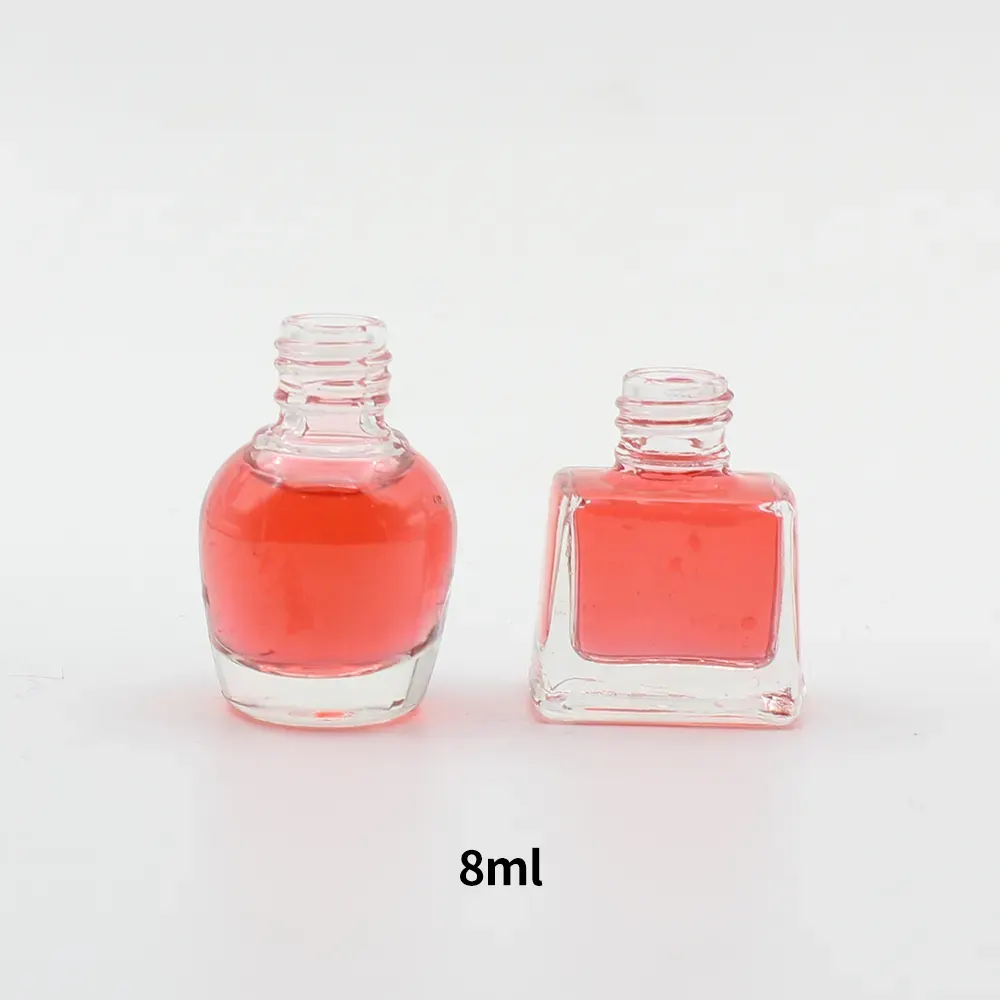
For a first order we suggest one octagonal shape in 6 ml and 12 ml with two decoration levels, a hot-stamped core line and a hand-accented upper line. Concentrating volume in one shape keeps quality control simple, where four shapes would spread it thin. For neighbouring small formats, the 8 ml crystal-style glass bottle is a useful reference.
Frequently asked questions
Which sizes are standard for attar bottles?
3 ml, 6 ml and 12 ml. The 12 ml corresponds to the traditional one-tola unit. Other capacities between 2 ml and 15 ml need a private mould.
Is a stick or a roller better for my oil?
Go by viscosity and market. Heavy pure oils and Gulf retail favour the stick. Lighter carrier-oil blends, export and travel retail favour the roller.
What is the minimum order for gold-stamped attar bottles?
Minimums are quoted per project. They depend on the mould, the decoration and the quantity per size.
Will the bottles leak oil?
Not when the closure is specified correctly. Roller housings are torque-tested, stick caps carry a PE or silicone gasket, and assembled closures go through the 24-hour inverted leak test before packing.
When should I order for Ramadan?
As early as your artwork allows. Timing is confirmed per project, and the fixed point is that goods must be in market before the holiday.
Can caps and applicators be bought separately?
Yes. Bottles, electroplated caps, glass sticks, roller housings and gift boxes can each be quoted as its own line, so sets can be assembled at your filler.