Part of our bulk wine bottles range; the stock moulds are pictured at the end of this guide.
A 750ml wine bottle has no single list price: it is quoted per project, and the figure moves with glass color, bottle weight, the mold, decoration, order quantity, closure and freight terms. Three suppliers asked the same loose question will answer on three different bases, so their numbers cannot be set side by side. Compare quotes only when they rest on one specification and are broken into the same lines.
What moves the price of a 750ml wine bottle
A quote for flint glass at the furnace gate in truckload volume, a landed per-case figure with closures included, and a heavy specialty mold at container quantity are all "a wine bottle price". Each is built from the same five drivers:
- Glass color. Flint (clear) is the least costly; antique green and amber sit above it.
- Bottle weight. Lightweight designs use less glass; heavy molds use more glass and more energy per piece.
- Profile and mold. Standard Bordeaux and Burgundy shapes against specialty or proprietary molds.
- Order volume. The strongest driver of the five.
- Decoration. Frosting, printing, embossing.
Wine differs from spirits here because of color sorting, lightweighting and the cork-finish standard. For the spirits side, see our notes on what drives vodka bottle pricing and tequila bottle pricing.
Color and weight options at 750ml
Color and weight act together. Colored glass needs its own furnace chemistry and a dedicated stream of cullet (recycled glass), and green campaigns run less often than flint. The common combinations are these:
| Bottle type | Weight | Where it is used |
|---|---|---|
| Flint Bordeaux, lightweight | 380–420g | Entry-tier whites and rosés in high-volume programs |
| Flint Bordeaux, standard | 450–500g | Mainstream whites and rosés, tasting-room lines |
| Antique green Bordeaux, standard | 450–520g | Reds that need UV protection; traditional branding |
| Dead-leaf or Champagne green Burgundy | 480–550g | Pinot, Chardonnay and Burgundy-style ranges |
| Amber | 450–500g | Specialty and natural wine lines |
| Heavy punted bottle, 600g+ | 600–750g | Reserve tiers, gifting, prestige SKUs |
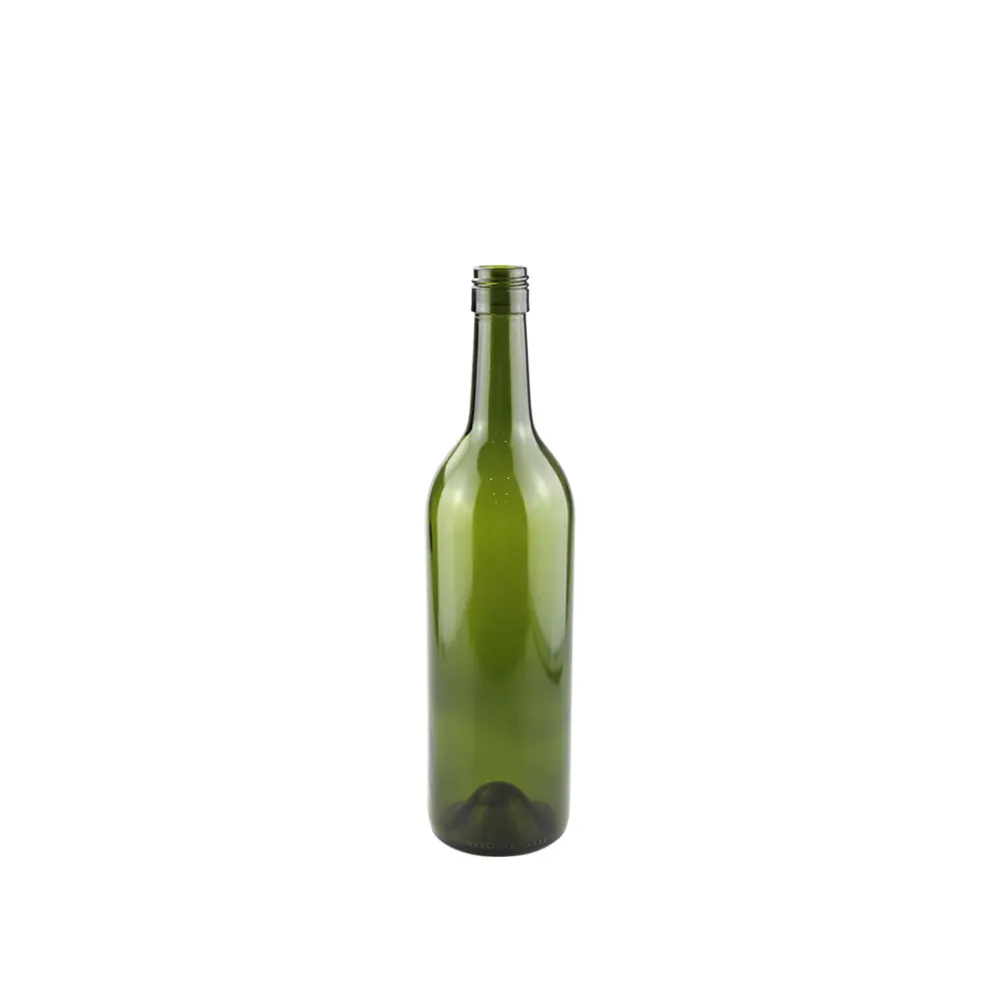
Lightweight bottles do cut glass cost, with caveats. They raise the risk of breakage on the filling line and have less presence on shelf, which makes them a better fit for value-tier wines than for reserve ranges.
Closures belong in the same budget
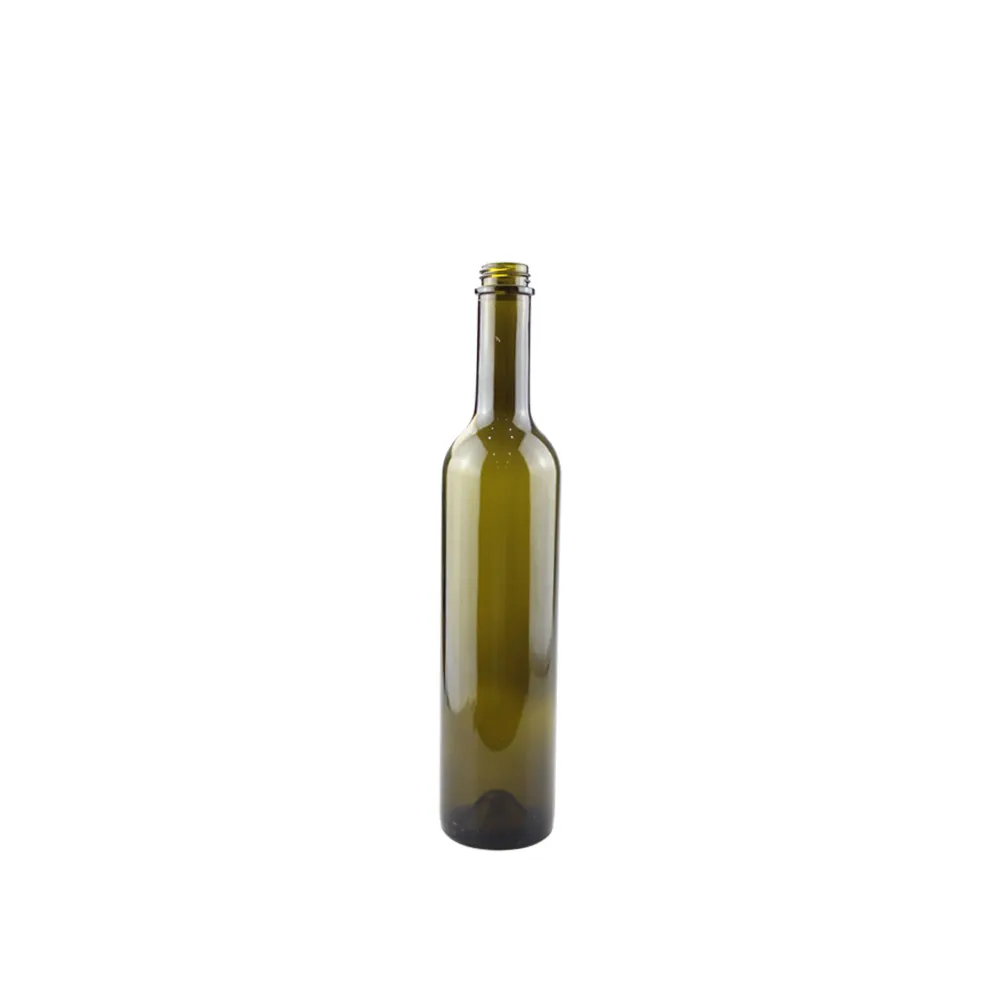
Wineries tend to cost the bottle with care and the closure as an afterthought. The closure also fixes the neck: a screwcap needs a Stelvin (BVS) finish and a cork needs a CETIE cork finish, and once the mold is cut the two cannot be swapped. Budget the sealed package.
| Closure | What to know |
|---|---|
| ROPP screwcap with liner | Needs a Stelvin-finish bottle. Dominant in Australia and New Zealand, gaining ground in US whites. |
| Agglomerated cork | Value tier; consistent, with low TCA risk. |
| Technical cork (1+1) | Agglomerated body with natural cork ends; the mid-tier standard. |
| Natural cork | Used on higher-tier reds; cost follows the quality grades of the cork oak harvest. |
| Bar-top or T-cork | Fortified wines and specialty bottles. |
| Capsule (tin, polylam, PVC) | Added over any cork; tin is the most costly of the three. |
Order volume and container loading
Glass furnaces reward long runs, so the unit cost falls as quantity rises. The largest step comes when an order fills a container and the plant can schedule the mold in an efficient campaign. A 40HQ holds roughly 30,000–36,000 standard 750ml Bordeaux bottles; heavy bottles, Burgundy profiles and divider-packed loads bring that down to 24,000–30,000. How fully the container is used is the biggest freight lever in importing wine bottles.
Two practical consequences follow. One larger order usually works out better than two half-size ones, even after warehousing. And a mixed program of reds, whites and rosés can be consolidated across shared mold families so the combined volume is negotiated as one; the Bordeaux wine bottle and Burgundy wine bottle pages show the shapes involved.
Ocean rates per container move with the season. Q3 bookings for harvest delivery are the most expensive, so fix freight early or plan for the surcharge.
Where domestic supply wins and where import wins
For a US winery the choice depends on volume and bottle type more than on any single quote.
- Domestic suits just-in-time restocks of standard molds, small top-ups between campaigns, standard flint at truckload volume, and brands that market American-made packaging.
- Import suits program volumes above one container, green glass, specialty and heavy molds, and bottles whose frosting or printing is done at the glass plant.
Many US wineries combine the two: the annual program is imported, and domestic stock covers the gap at harvest when a forecast falls short.
How to brief suppliers for comparable quotes
Give every supplier the same five-line specification:
- profile and mold drawing reference;
- glass color and target weight in grams;
- neck finish code (CETIE cork finish or BVS Stelvin);
- annual volume and how often you order;
- destination port or zip code.
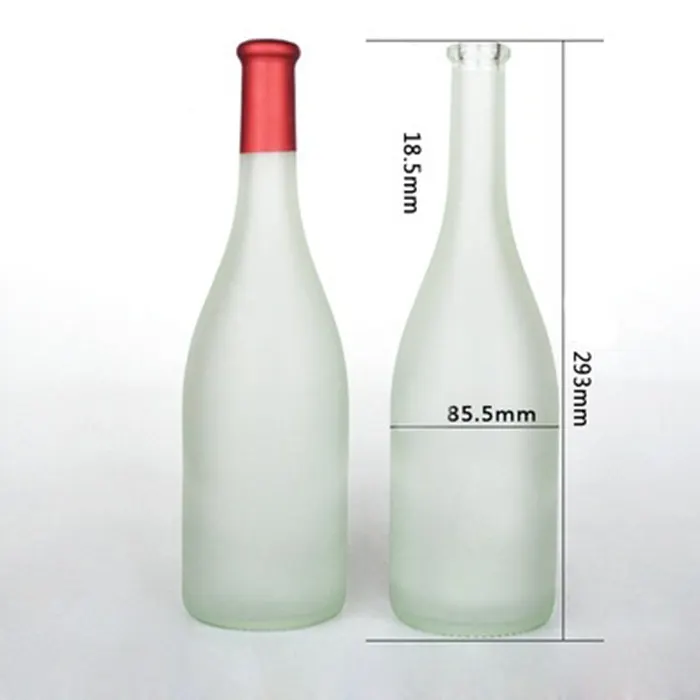
Then ask for the quote in separate lines: FOB piece price, packing specification, freight, duty allocation, and any decoration or closure bundled in. A single delivered figure is not necessarily higher, but you cannot negotiate a component you cannot see.
Ask also for the mold campaign calendar. A bottle that runs only in March and September forces you to hold inventory that a monthly-run mold would not, and that carrying cost is part of the comparison.
Frequently asked questions
What is the average wholesale price of a 750ml wine bottle?
There is no meaningful average. Each project is quoted on its own mold, decoration, quantity and freight terms, so the useful figure is the one built on your specification.
Why do green wine bottles cost more than clear ones?
Green glass needs different furnace chemistry and its own cullet supply, and plants schedule green campaigns less frequently than flint.
How much do a cork and capsule add?
That is quoted per project too. It depends on the cork type and grade and on the capsule material, so ask for the closure as its own line in the quote.