One of our guides on tequila glass bottles; start there for the overview.
A tequila bottle has no single price. The figure is built from glass weight, mould type, decoration, order volume, closures and freight, and it is quoted per project against current material, energy and shipping costs. What a buyer can control is the specification: a stock-mould 750ml bottle in standard weight sits in the middle of the range, while heavy bases, layered decoration and a private mould each move it upward.
Formats and what sets their relative cost
Tequila, mezcal and other agave spirits are packed in a small set of established formats. Each one has a structural reason for sitting where it does.
| Format | Typical use | Why it sits where it does |
|---|---|---|
| 50ml miniature | Samples, gift sets, airline minis | Little glass, yet each piece still bears full handling and packing cost |
| 375ml | Half-bottles, premium samplers | Moderate weight, frequently from the same mould family as a 750ml |
| 700–750ml standard | Core retail blanco, reposado and añejo | Industry-standard moulds produced in long, efficient campaigns |
| 750ml heavy-base | Premium reposado and añejo | More glass in base and walls means more material |
| 1L and 1.75L | Duty-free, on-trade, value tiers | Heavy pieces, so fewer fit on a pallet and in a container |
| Custom-mould signature bottle | Ultra-premium and celebrity brands | Proprietary design, mould engineering and dedicated campaigns |
The same reasoning applied to whiskey, rum, vodka and gin is set out in our spirit bottle price overview.
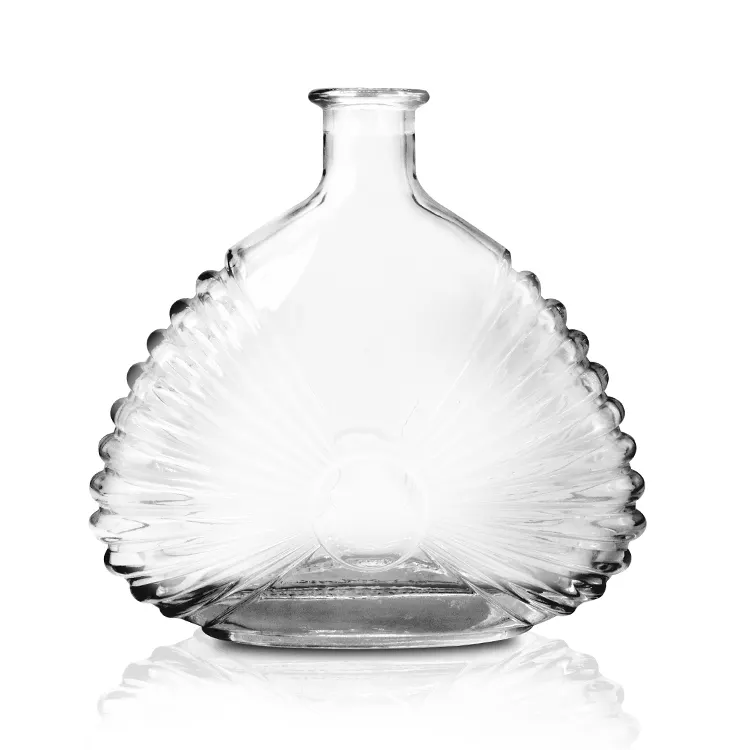
Five cost drivers behind a quotation
Two offers for "a 750ml tequila bottle" can differ widely and both be fair, because they rarely describe the same object.
Glass weight
Glass is priced by weight before it is priced by the piece. Most of the gap between a 450g standard bottle and an 800g prestige bottle with a heavy base is raw material; a heavy-base design can hold nearly twice the glass, forms more slowly and packs less densely on a pallet. Super-flint, the extra-clear low-iron glass, costs more than standard flint. It is the usual choice for premium tequila because the colour of the liquid shows through undistorted.
Mould type
Stock moulds carry no tooling charge and run in efficient campaigns. A semi-custom approach, such as a stock body fitted with a custom embossed plate, adds a modest amount. A private mould is costed from the approved technical drawing, and its investment depends on complexity, weight and cavity count.
Decoration
Each process is an added cost, rising roughly in this order: screen printing, frosting or spray coating, metallization, decals, hand finishing. A plainly printed stock bottle and a fully decorated, ceramic-coated showpiece can come out of one mould and finish several bands apart.
Order volume
Job changes, line validation and colour changes are fixed costs of a campaign and are shared across every bottle made in it. Container-level and programme quantities therefore price better per unit than a trial pallet. Our bottle collections show the stock shapes that suit volume buying.
Closures and freight
Corks, wood-top stoppers and tamper-evident caps each follow their own cost curve. Heavy spirits bottles reach a container's weight limit before they fill its volume, which makes freight per bottle higher than for lighter formats. Both items belong in a landed-cost comparison.
Stock, semi-custom or custom mould
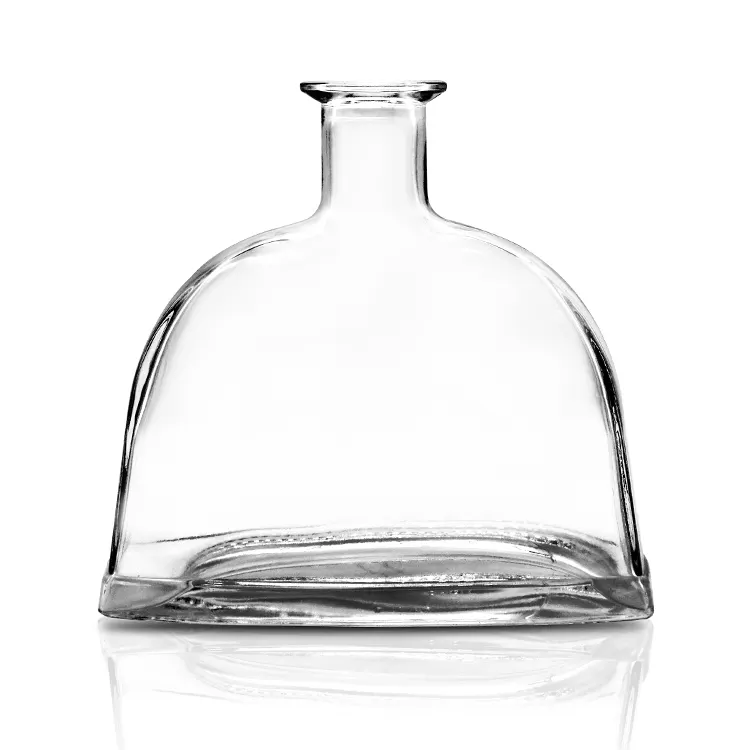
New tequila brands tend to assume a custom bottle is necessary. Usually it is not, at least at launch. A stock mould in super-flint glass with strong decoration regularly holds its own on shelf without any tooling outlay. Semi-custom embossing sits between the two: the brand mark is in the glass, the mould is proven, and full tooling is avoided.
A custom mould pays for itself when the bottle is the brand, meaning the outline has to be recognised across a dimly lit bar. We set out both routes side by side so the choice rests on numbers. For small formats, closure pairing is covered with our miniature liquor bottles.
What to send for a firm quotation
A quotation can only be as exact as the brief behind it. With these eight items a plant can return a number that is firm and comparable with others. Our page on requesting a bottle quotation explains how the lines of an offer are put together.
- Capacity: 50ml, 375ml, 750ml, 1L and so on, with brimful versus nominal fill requirements.
- Bottle style: a reference photo, drawing or link, plus a weight target if you have one.
- Glass type: standard flint, super-flint or coloured.
- Finish and closure: cork finish, screw or bar-top, and whether closures are to be supplied with the bottles.
- Decoration: printing, coating or embossing, with artwork or a clear description.
- Quantity: the first order and a realistic annual volume, since tiers are priced differently.
- Destination port: needed for a true landed-cost figure.
- Compliance: export markets and any test documentation you require.
Comparing offers on landed cost
Judge quotations by total landed cost per saleable bottle and never by the ex-works unit figure alone. A cheaper bottle that arrives with more breakage, a closure that does not match, or a wasteful pallet plan has cost more by the time it reaches the filling line. An itemised offer makes this visible: bottle, decoration, closures, packing plan and freight, each on its own line. When two suppliers price an identical specification, treat willingness to itemise as a point in favour.
Frequently asked questions
What is the minimum order for tequila bottles?
Minimums are set per project. They depend on whether the bottle comes from a stock or a private mould, and closures and decoration processes can have minimums of their own, which we gather into one quotation.
Are corks or caps included in the quoted figure?
Either way is possible. Bottles can be quoted alone or as a package with matched corks, bar-top stoppers or screw caps. Most buyers take the package, because the closures are then validated against the bottle finish and everything travels in one container.
How is a custom mould costed?
Against the approved technical drawing, with complexity, weight and cavity count as the main variables. We normally present it next to a semi-custom embossed-stock option, so the real difference is clear before any commitment.
How can the cost come down without altering the design?
Three levers do most of the work: volume, by reaching the next pricing tier; freight, by optimising pallet and container plans for heavy bottles; and decoration, by consolidating processes into a single pass. Modelling all three in the quotation shows the trade-offs plainly.