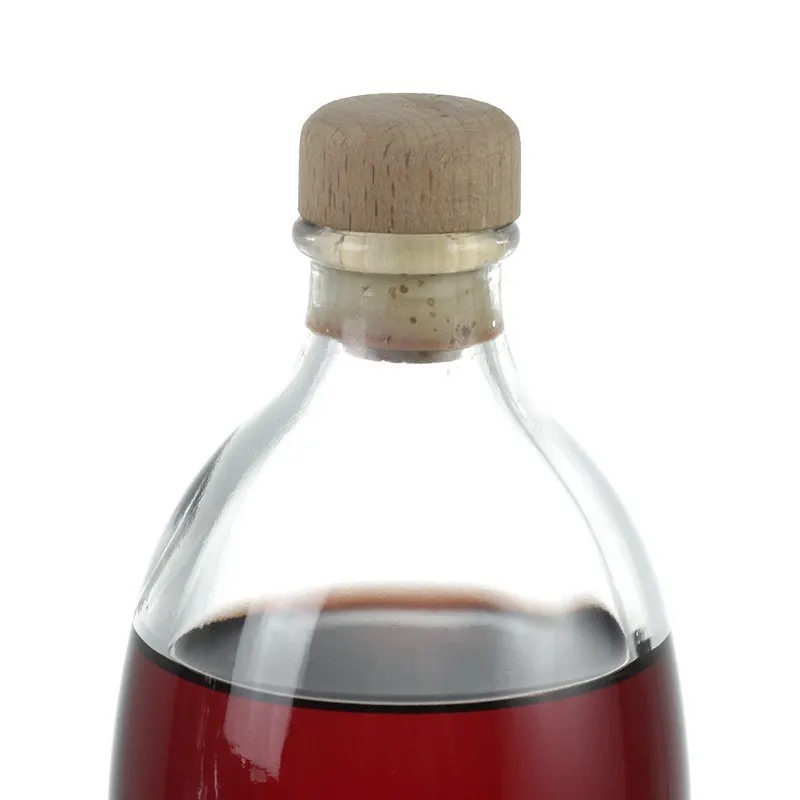
Part of our brandy and cognac bottles range; the stock moulds are pictured at the end of this guide.
This page is written for the buyer who is putting a brandy or a cognac into glass and has to translate a category, a price tier and a market into a bottle. It is a scenario and bottle-language page, not a technical drawing page and not a generic spirits page. The question it answers is which silhouette, which capacity and which closure arrangement the category and the channel expect, and what that language costs in weight and money. The general overview of spirit bottle formats, including the standard shoulder families used across spirits, sits on the liquor bottles page, the nominal-capacity and dimension reference for the most common single size is on the 750 ml liquor bottles page, and the small formats used for miniatures and hospitality are covered on the small liquor bottles page. If the product is a whisky, the capacity family and market habits are different enough to be treated separately on the whiskey bottle sizes page, and that page is the correct reference for a whisky programme. This page deliberately stays on one category and its core scenario set. No minimum order quantity, unit price, tooling cost, certification claim or lead time appears here, because each is confirmed against a finished specification on enquiry.
Who Buys a Brandy Bottle and What They Are Actually Choosing
The buyer for a brandy bottle is rarely choosing glass in isolation. Behind the bottle there is usually a liquid with a defined category, a price tier with an expected margin, a channel with its own shelf conventions, and a market with its own habits about size. The bottle is the point at which all four come together, which is why the same spirit is sold in visibly different packages in different countries, and why copying a competitor’s bottle without understanding the tier behind it tends to produce a package that sells at the wrong price.
There are four buyer profiles behind most enquiries. The first is a distillery or a négociant that already has an established liquid and is adding a new tier, a new market or a new gift pack. For this buyer the bottle language already exists and the work is consistency: a new pack has to look like it belongs to the family without competing with the flagship. The second is a brand owner without production who sources liquid and glass together, and who is therefore free to define the whole visual language, including a silhouette that no one else uses. The third is an importer or distributor who needs a private-label brandy for a specific market and channel, where the pack has to meet the retailer’s shelf expectations more than it has to express a house style. The fourth is the gift and travel retail buyer, who is buying a presentation object as much as a spirit and for whom the box, the stopper and the weight in the hand matter as much as the liquid.
Those four profiles pull in different directions, and the tension is worth naming early because it decides most of the subsequent specification. A private-label programme wants a well-understood, widely available bottle format that is easy to fill, easy to label and cheap to ship. A brand-building programme often wants the opposite: a distinctive silhouette, a heavier bottle and a closure with a visible head, all of which raise unit cost and freight and reduce the number of bottles that fit in a container. A gift programme wants a box that protects the closure and lifts the perceived value, which adds packaging cost and cube without changing the glass at all.
This is also where the vocabulary of the search itself matters. A buyer looking for a brandy bottle wholesale programme is usually comparing formats that already exist in a mould bank, while a buyer looking for a cognac bottle supplier for a new silhouette is really starting a tooling project, and a brandy glass bottle manufacturer handling the first kind of enquiry will ask different questions from one handling the second. Sorting out which of those two conversations is actually happening is the fastest way to make progress, because the first is a specification exercise and the second is a development project.
The Constraints That Come With the Liquid, the Channel and the Market
Before a shape is chosen, three sets of constraints should be written down, because each of them removes options rather than adding them.
The liquid’s category and its rules. A product sold under a protected appellation is not free in the same way that a generic brandy is. The appellation rules govern how the spirit is produced, aged and described, and in some cases they also govern where and how it may be bottled, which can decide whether the brand owner bottles at source or buys bottled goods. Those are questions for the appellation body rather than for a glass supplier, and the current rule should be confirmed directly, but they have a packaging consequence either way: they decide who does the filling, and therefore which format and which closure the filling operation can actually run. The age statements that appear on the label are also governed by the category rules, and they are the label’s business rather than the glass’s, but they are the reason a tier usually has a defined price band, which in turn constrains what the bottle can cost.
The channel. Off-trade retail wants the bottle to read clearly at shelf distance, which favours a large front label field and often a shorter, wider silhouette. On-premise and back-bar use wants a bottle that pours well from a heavy base and looks deliberate on the shelf behind the bar, which is where the stopper with a visible head becomes a practical choice rather than a decorative one. Travel retail wants a pack that survives intensive handling, fits a planogram, and often justifies a larger capacity or a gift configuration. E-commerce and parcel delivery introduce a constraint that no shelf channel has: the pack has to survive a courier network, which usually means a rigid outer and an internal cradle rather than a sleeve alone.
The market’s capacity habit. Nominal capacity is the single most market-dependent variable in this category. The 700 ml bottle is the standard spirit size through much of Europe and in duty-free and travel retail, the 750 ml bottle is the reference size in the United States, and the litre appears in travel retail and in several markets where a larger bottle is the expected purchase. Half bottles and 500 ml formats serve hospitality, tasting and gift channels. A programme that sells into two of those markets at once normally needs two sizes or a deliberate decision about which market sets the standard. The prepacked-quantity rules of the destination, such as the EU rules on nominal quantities for prepacked products, decide which nominal values are permitted and how the declared volume must be marked, so the capacity decision should be checked against the destination rule set before the mould is committed.
One further constraint belongs to materials rather than to markets. The glass and any closure or decoration that contacts the spirit fall under food-contact frameworks, which in Europe means the materials rules behind EU 1935/2004 and in the United States the FDA 21 CFR framework. These are named here so that they can be addressed in the brief and documented as part of the specification; nothing on this page should be read as a statement about any particular plant’s approvals.
The Decision Chain From Spirit to Bottle Language
Brandy packaging is decided in a sequence, and the sequence is not arbitrary. Each step narrows the next one, and a step taken out of order usually has to be redone.
The tier comes first. The price band decides how much the bottle may cost, and the cost budget decides whether the silhouette can be a new tooling project or has to come from an existing mould, whether the glass can be heavy, and whether the closure can be a cork with a finished head or has to be an aluminium screw cap. Starting from a shape that a buyer liked at a trade fair and working backwards into the tier is the most common reason a project stalls, because the shape usually implies a tier the margin cannot support.
The silhouette and the shoulder come second, because they carry most of the category signal. A brandy or cognac bottle traditionally reads through its shoulder: a soft, sloping shoulder with a long neck, a rounded or gently oval body, and a base that carries weight. Against that tradition, some programmes use a deliberately geometric shape, a squared body or a named cross-section, to signal a modern or a prestige tier. Whichever direction is chosen, the shoulder is not only a visual field; it is a structural region, and the more steeply the shoulder curves in towards the neck, the more the forming process has to control the glass distribution there. Shape ambition and process capability are linked, and that link is worth testing with a mould drawing and a sample before artwork is committed.
Capacity comes third, and it is driven by the market habit described above rather than by the shape. The practical rule is to choose the capacity first among the candidates and then check that the silhouette exists, or can exist, at that capacity, because a shape that looks right at 700 ml can look squat or stretched at 750 ml. Body diameter, total height and shoulder position all change with nominal capacity, and each of them changes the label field and the carton.
The closure comes fourth, because the closure has to match the tier and the finish. A premium tier usually carries a natural cork, frequently with a decorative head, and a capsule over it; a standard tier more often carries an aluminium screw cap. The finish has to be specified for the closure that will actually be used, and the closure supplier should confirm it, because a stopper head that is heavier than the neck geometry was designed for is a problem that only appears on the line.
The glass colour, decoration and the pack come last. Colour, embossing, coating and the gift box all depend on the body diameter, the shoulder geometry and the usable label field, all of which follow from the earlier decisions. A decoration or box designed before the bottle is fixed is a design that will be rebuilt.
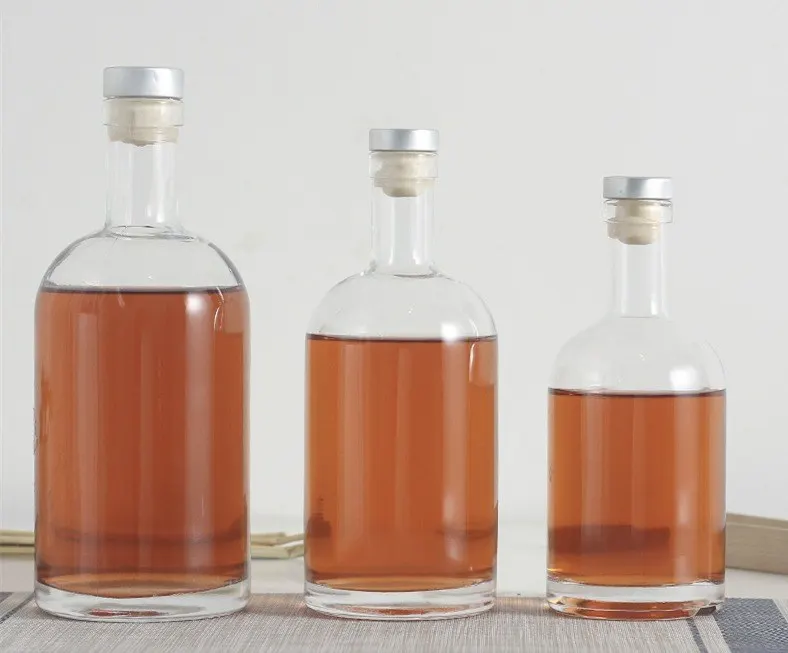
Spirit Category, Bottle Shape, Capacity and Market Mapped
The table is the working tool on this page. It connects a category and a tier to the shape language the market expects, to the capacity tiers that usually appear, to the closure convention, to the market preferences that drive the choice, and to the questions that have to be answered by the factory rather than assumed. The capacity column lists conventions rather than rules: the destination’s prepacked-quantity rules and the buyer’s own channel decide what is actually permitted and actually sells. Read the final column as the pre-order checklist.
| Spirit category | Common bottle shape traits | Main capacity tiers | Closure convention | Target market preference | What to confirm with the factory |
|---|---|---|---|---|---|
| Cognac, volume tier (the entry and mid tiers of an appellation range) | Soft sloped shoulder with a long neck and a rounded or gently oval body; base with a pronounced punt; glass often amber or dark for the entry tier | 350 ml half bottle, 700 ml and 750 ml, with a litre where the market expects it | Aluminium screw cap on the most price-sensitive lines; natural cork with a capsule and a plain head on the tier above | Europe and duty-free lean to 700 ml, the United States to 750 ml; hospitality and tasting accounts take the half bottle | Which capacity the existing mould actually runs, the brimful capacity against the nominal value, the shoulder emboss area and its depth, and the neck finish code the intended closure needs |
| Cognac, prestige and limited release | A distinctive silhouette, sometimes geometric or with a named cross-section; heavy glass and a deep punt; the shoulder often left clear for an embossed mark | 700 ml or 750 ml, with larger formats for limited editions and gift releases | Natural cork with a decorative head in wood, metal or composite, plus a capsule; occasionally a glass stopper | Gift, travel retail and prestige retail across all regions, where the weight and the head are part of the value signal | The empty weight range and where the mass sits, the punt depth and base stability, whether the silhouette carries a registered design or trade mark, and the closure head that the neck geometry can actually hold |
| Armagnac and other French brandies outside the best-known appellation | Often a flatter, wider flask or a straight-sided body that reads as rustic or traditional rather than luxurious; clear or light amber glass is common | 700 ml and 750 ml, with 500 ml and half bottles in gift and regional retail | Natural cork with a capsule; screw caps on the lower tiers and on some private label | Domestic French and European specialty retail, plus export gift channels that want a visibly different silhouette from cognac | Whether the intended silhouette exists at the chosen capacity, the glass colour options and their effect on label legibility, and the filling line’s handling for a wider or flatter body |
| Non-French grape brandy (Spanish, South American, Eastern European, Asian) | Closer to a generic spirits silhouette, with a shorter neck and a squarer shoulder; clear glass is common so the liquid colour does the selling | 700 ml and 750 ml, with 500 ml and 1 litre in value and hospitality channels | Aluminium screw cap dominant; cork reserved for the top tier of the range | Price-led retail and on-premise volume, where the bottle must stack and pour efficiently and the label must read at distance | The nominal capacity permitted in the destination market, the closure torque the filling line runs, and whether the label field is wide enough for the mandatory information the market requires |
| Fruit brandy and eau-de-vie (clear, unaged or lightly aged) | A tall, slim body with a short shoulder, designed to show clarity; clear glass almost universal; little or no punt | 500 ml, 700 ml and 750 ml, with small formats for tasting and gift | Screw cap common; cork with a long head used where the presentation is traditional | Central European and specialty retail, where bottle clarity and label transparency are the visual language | Glass clarity and any colour cast, the base form, and how a tall slim body behaves on a filling line designed for wider bottles |
| Other brown spirits sharing the same shelf (whisky, aged rum) | Squarer shoulders, shorter necks and wider label fields than the brandy tradition; heavy bases also common at the premium end | A wider capacity family than brandy, including 750 ml, 1 litre and larger formats | Screw cap at volume, cork or stopper at premium, with cask-strength lines favouring a cork | Similar channels to brandy, which is why the two compete for shelf space and why the shape difference has to be deliberate | The capacity family the destination expects, since these categories are more size-diverse than brandy and the comparison is direct |
Thick Walls and Heavy Bases: What the Weight Buys and What It Costs
A premium brandy bottle is usually heavy, and the weight is not an accident. Weight in the hand signals value before the label is read, a thick base slows the light through the glass and deepens the apparent colour of the spirit, the punt adds a tactile cue when the bottle is poured, and the mass makes the bottle feel deliberate rather than disposable on a back-bar shelf. In a category where the liquid inside two competing bottles may be similar, the bottle is often the most legible difference between the tiers, which is why the weight question comes up in almost every prestige brief.
What the weight costs is less visible and worth stating plainly. More glass per bottle means more raw material and more energy per unit, and a heavier parison takes longer to form and longer to cool, which affects how the plant sequences a run. The annealing step has to be controlled so that the thicker base does not carry residual stress, because a bottle with internal stress may pass a visual inspection and still fail later under filling or transport load. A heavy bottle also costs more to move: freight is charged on mass as well as volume, so an increase in empty weight is paid for on every unit, on every voyage, for the life of the programme. And in markets where packaging fees are weighted by material mass or where light-weighting is a stated retail policy, a heavy bottle can carry a commercial penalty that has nothing to do with the spirit.
The practical way to handle this is to specify weight rather than to admire it. A buyer should ask for the empty weight as a range, for the wall thickness at defined points such as the shoulder and the body, for the punt depth, and for the brimful capacity against the nominal value, and then require a sample that can be compared with the target. Weight is only useful if it is designed and checked; an uncontrolled heavy bottle is simply a more expensive one. It is also worth asking what the mass does to the filling line, since a noticeably heavier bottle can change how it behaves at the in-feed, and asking how the heavier variant interacts with the carton, because the same bottle at a higher weight changes the assumptions behind a packaging specification.
Filling and Closure: What the Bottle Has to Accept
A bottle is not finished until its closure is fixed, and in this category that statement has practical teeth. Spirits are typically filled at ambient temperature rather than hot, so the dominant stress on the container is mechanical rather than thermal, but the mechanical stresses both matter: the container has to take the internal handling load on the line, and the closure has to take the extraction and insertion loads in the hand of the consumer.
The first decision is the closure type. A natural cork with a capsule is the traditional premium choice, and where the presentation calls for it the cork carries a head in wood, metal or a composite material so that the closure is a visible part of the object. An aluminium screw cap is the volume choice: it is easier to apply consistently, it travels well, and it re-seals reliably, which matters in markets where the bottle is not finished in one sitting. A glass stopper is used on some prestige lines and behaves like a reusable closure, but it requires a neck geometry designed for it and it is not interchangeable with a cork finish.
The second decision is the neck finish, and it is not an aesthetic question. The finish is the part of the neck that the closure engages, and its dimensions determine which closures will seal and which will not. A finish intended for a screw cap will not accept a cork soundly, and a finish designed for a straight cork will not hold a stopper with a heavy head. Because the finish dimension chain runs between two suppliers, the cleanest practice is to have the closure supplier confirm the finish in writing against the glass drawing, and to test the assembled pair rather than assuming that both halves are standard. Two questions show up repeatedly after a first production run: whether the stopper head has enough grip on the finish to survive being pulled by a consumer, and whether the capsule fits over the head without wrinkling at the shoulder.
The third decision is fill height and headspace. In a bottle with a heavy base and a deep punt, the visible fill line is the line the consumer reads, so the fill height is part of the design rather than an outcome of it. A programme that changes the punt depth or the base thickness without adjusting the fill height will change how full the bottle looks, even though the declared volume is unchanged. Where a range shares one bottle across two tiers, the fill height is often the only visible difference, which makes it worth specifying explicitly rather than leaving to the line.
Finally, the pack has to be designed around the closure rather than after it. A tall stopper head changes the total bottle height, which changes the carton’s internal height, the pallet build and the number of units in a container. Where a gift box is involved, the head is also the most vulnerable point in a drop, and the insert has to support it. This is why the closure decision should be settled before the packaging specification is written rather than alongside it.
Brandy Bottle Language Against Whisky Bottle Language
Brandy and whisky sit on the same shelf, in the same channels, and often at the same price points, but they do not look alike, and the difference is a useful way to check whether a proposed bottle is speaking the right language. Whisky packaging tends towards squarer shoulders, a shorter neck and a wider label field, with clear glass dominant at the volume tiers and the front label carrying most of the communication. Brandy packaging in the cognac tradition runs the other way: a softer, sloping shoulder, a longer neck, a rounder or gently oval body, a base that carries more weight, and a shoulder that is frequently left unlabelled so that an embossed or printed mark can occupy it. Where whisky often sells the label, brandy often sells the silhouette.
The consequences of that difference are practical rather than decorative. A brandy bottle with a long neck and a sloped shoulder has less flat front area for a label than a squarish whisky bottle of the same capacity, so the label artwork and the mandatory information both have to be planned against a smaller field, and some of it may have to move to the back label or the neck. The heavier base and punt change the centre of gravity and the fill-line appearance. The shoulder, when it is used as a signature area, constrains the mould work and makes the shape harder to change later. And the closure convention differs at the volume tier, with more screw caps in the whisky mainstream and more cork-and-head closures retained in brandy at comparable prices.
The trap is a hybrid. A buyer who wants the shelf presence of a whisky bottle with the brandy category signal usually ends up with a silhouette that reads as neither, and the market’s reaction is quiet rather than immediate: the bottle does not look wrong, it simply fails to communicate a tier. Deciding deliberately which tradition the bottle follows, and then being consistent about the shoulder, the neck length, the glass colour and the closure, is a more reliable route than combining the most attractive features of both. Programmes competing in more than one brown-spirit category sometimes solve this by giving each category its own silhouette within one corporate visual language, which keeps the brands related without making them interchangeable.
Gift, Travel Retail and Hospitality Scenarios
Three scenarios in this category put pressure on decisions that barely matter elsewhere, and each has its own failure mode.
The gift pack. A gift box is not a carton with a better print. It has to hold the bottle rigidly enough that the closure cannot move, protect the most vulnerable point in a drop, present the bottle when the box opens, and survive stacking in a retail stockroom. The insert does most of that work: molded pulp and formed foam both conform to the bottle, and the insert has to reach the shoulder or the neck so that the stopper head is not the thing that takes the impact. A magnet or a rigid sleeve adds cost and a quality judgement — a magnet that releases too easily reads as cheap. Where two glasses are included, the glass cavities need their own support, and the box grows in every dimension.
Travel retail. This channel combines the highest handling intensity with the strictest display constraints. The pack has to survive repeated loading, and it has to fit the retailer’s planogram, which caps the shelf height and the display-unit footprint. Barcode visibility is a condition of listing, so the artwork has to leave a clear window that survives the wrapping. Capacity expectations also shift here: the litre is a common travel retail size, and a gift configuration is often expected to be visibly larger or more generous than the domestic one. All of that is decided before the box artwork, which is why a travel retail edition should be planned as its own project rather than as a variant of the domestic pack.
Hospitality and back-bar. Here the bottle is used, not displayed in a box, and the criteria reverse. The weight in the hand, the balance when pouring and the reliability of the closure under repeated opening matter more than the packaging, and the pack that matters is the case the bar receives rather than the box the consumer sees. Half bottles and smaller formats appear more often in this channel, and the fill height and the closure’s re-sealing behaviour become practical questions rather than presentation ones. A single programme frequently serves all three scenarios with one bottle and three packs, which is only possible if the glass decision was made with all three in mind.
Where This Page Stops and Which Page to Read Next
This page owns one decision: which bottle language and which scenario fit a brandy or cognac programme at a given tier and in a given market. The adjacent questions have their own homes. If the open item is the general family of spirit bottle formats, including the standard shoulder shapes used across the spirits industry and how they are named, that overview is on the liquor bottles page. If the open item is the nominal capacity reference for the most widely used single size, including nominal against brimful capacity and the dimensions that follow from it, that detail is on the 750 ml liquor bottles page. If the programme needs miniatures, hotel formats or a tasting range, the small formats and what they can and cannot carry are treated on the small liquor bottles page. And if the product is a whisky rather than a brandy, the capacity family, market habits and closure conventions differ enough that the correct reference is the whiskey bottle sizes page rather than this one.
Read together, those pages cover one chain: what the category expects, what size the market buys, what the closure needs, and how the bottle is packed and shipped. Each answer depends on the one before it, and the most expensive sequence is the one that starts with a silhouette and works backwards into the tier, the capacity and the closure.
Frequently Asked Questions About Brandy Bottles
What is the difference between a brandy bottle and a cognac bottle?
Cognac is a protected appellation within the wider brandy category, and the appellation rules govern the liquid, its production and how it may be described, rather than prescribing a particular glass shape. In practice the bottles do differ in language: cognac packaging traditionally uses a soft sloping shoulder, a long neck, a rounded or gently oval body and a shared set of capacity conventions, and it often carries a cork with a decorative head at the premium tiers. A generic brandy is freer to use a squarer, shorter-necked silhouette closer to mainstream spirits, and more often uses a screw cap. If the product will be sold as cognac, confirm the current bottling and labelling rules with the appellation body, because they can affect who bottles it and where.
Should I choose a 700 ml or a 750 ml brandy bottle?
Let the market decide, then check the rules. The 700 ml bottle is the standard spirit size through much of Europe and in duty-free and travel retail, while 750 ml is the reference size in the United States, so a programme selling into both normally needs both sizes or a deliberate decision about which market sets the standard. Half bottles and 500 ml formats serve hospitality, tasting and gift channels, and the litre appears in travel retail and in markets where a larger bottle is expected. Because prepacked-quantity rules in the destination market determine which nominal values are permitted and how the declared volume is marked, the capacity should be checked against the destination regulation before a mould is committed.
Why do premium brandy bottles have thick walls and a heavy base?
Weight carries meaning in this category. It signals value before the label is read, the thick base deepens the apparent colour of the spirit, and the punt gives a tactile cue when the bottle is poured. The cost is real on four fronts: more glass and energy per unit, longer forming and cooling time with tighter control of annealing to avoid residual stress, higher freight per bottle because mass is charged on every voyage, and in some markets a packaging fee weighted by material mass or a retail light-weighting policy. The practical way to manage it is to specify the empty weight as a range together with wall thickness at defined points and the punt depth, and to check a sample against the target.
What closure should a brandy bottle use?
It depends on the tier and the channel. A natural cork with a capsule is the traditional premium choice, and at the top of a range the cork often carries a head in wood, metal or composite so the closure becomes part of the object. An aluminium screw cap is the volume choice: consistent to apply, reliable in transit and easy to re-seal where the bottle is not finished in one sitting. A glass stopper suits some prestige lines but needs a neck geometry designed for it. Whatever is chosen, the finish has to be specified for that exact closure and confirmed by the closure supplier in writing against the glass drawing, because a finish designed for a screw cap will not hold a cork soundly.
Is a brandy bottle the same as a whisky bottle?
No, and the difference is a category signal rather than a technical rule. Whisky packaging tends towards squarer shoulders, shorter necks and wider label fields, frequently in clear glass, with the front label carrying most of the communication. Brandy in the cognac tradition runs to a softer sloped shoulder, a longer neck, a rounder body and a heavier base, and it often leaves the shoulder clear for an embossed or printed mark. The consequence is practical: a sloped shoulder offers less flat label area than a squarish body of the same capacity, so the artwork and the mandatory information have to be planned against a smaller field. Hybrid silhouettes that borrow from both traditions usually read as neither.
Which glass colour works best for brandy?
It follows the tier and the story the brand is telling. Amber and darker tints are traditional and give the spirit a deeper apparent colour through a thick base, and they also reduce light transmission. Clear glass lets the liquid colour carry the message, which suits younger, fresher or competitively priced ranges, and it is the usual choice for fruit brandies and eau-de-vie where clarity is the point. Colour also changes how the label reads: a dark tint reduces contrast for dark artwork and increases it for light artwork, and it changes how the capsule and the shoulder emboss register visually. The colour decision is best made together with the label and the closure rather than before them.
Can a bottle shape be protected so competitors cannot copy it?
A distinctive silhouette can, in some markets, be protected as a registered design or as a trade mark, and some brands also rely on unfair-competition rules. That is a legal question for the destination markets, not a glassmaking question, and it runs in both directions: if you want exclusivity you need advice on how to obtain it, and if you are adopting a shape associated with another brand you need to know the risk before the tooling is cut. From a supplier’s point of view, a shape that is protected for one buyer cannot be sold to another, and a genuinely exclusive shape usually implies dedicated tooling and a commercial commitment rather than a catalogue pick.
What should I send to a brandy bottle supplier?
Three inputs move the conversation forward. The first is the spirit: the category and tier, whether the product is sold under a protected appellation, the alcohol content and the intended ageing or shelf story. The second is the market and channel: the destination country, the expected nominal capacity there, and whether the bottle sells through retail, on-premise, gift or travel retail. The third is the positioning: whether the programme can fund a new silhouette or should use an existing mould, how heavy the bottle should feel, which closure the tier implies, and whether a gift box is part of the plan. Add the label’s mandatory content if it is already known, because the label field and the shape are decided together.
Send Spirit Type, Target Market and Positioning
A bottle recommendation in this category only becomes concrete once three inputs are on the table. The first is the spirit type: whether it is a cognac or another protected appellation, a French brandy outside the best-known appellation, a grape brandy, a fruit brandy, or another brown spirit, and which tier of the range it belongs to. The second is the target market: the destination country and the nominal capacity it expects, the channel it sells through, and whether the destination imposes a specific rule on prepacked quantities or on packaging materials. The third is the positioning: whether the bottle has to create a new visual language or fit an existing family, how much weight the tier can fund, whether the closure is a cork with a head or a screw cap, and whether a gift or travel retail edition is planned alongside the standard pack.
With those three, the silhouette direction, the capacity, the finish and the closure can be narrowed to combinations that fit the tier and the market rather than merely looking acceptable on a screen, and the questions put to the factory become specific: which capacities the shape actually runs, what the brimful capacity is against the declared nominal value, what the empty weight range and the punt depth are, which finish code the intended closure requires, and how the label field measures at the chosen body diameter. It also helps to state where a number is not yet fixed and mark it open, because it is considerably cheaper to compare two candidate specifications before tooling and before the first filling run than to resolve a closure or capacity mismatch afterwards. Where a gift pack is planned, sending the intended box concept at the same time is useful, since the box dimensions and the bottle height are decided together and a change to either one changes the number of units that fit in a container.