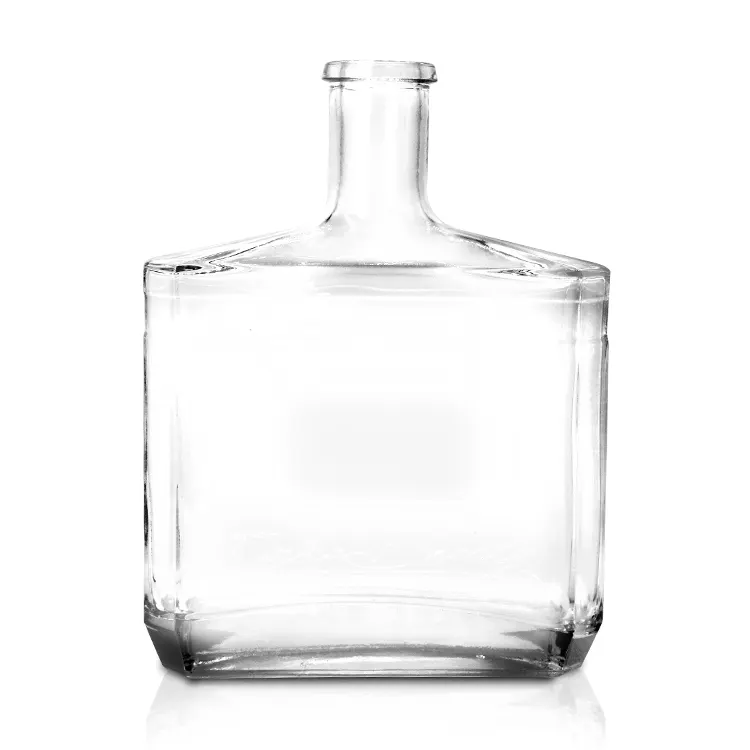
Filed under vodka and gin bottles; the moulds we quote for this are pictured at the foot of the page.
Vodka bottles are decorated with six processes: frosting, spray coating, ceramic screen printing, hot stamping, decals and pressure-sensitive labels. Most premium designs combine two or three of them, typically a frosted body, a one-color print and a foil accent. Each layer is a separate process with its own batch size and its own line on the quotation, so the stack should be planned before the artwork is final.
What each process does
| Process | Result on the bottle | Point to watch |
|---|---|---|
| Frosting, by acid etch or spray frost | Translucent matte "ice" surface, over the whole body or part of it | Etched frost is permanent; sprayed frost can scuff |
| Spray coating | Opaque or gradient color in gloss, matte or metallic | Hides the liquid; needs adhesion testing |
| Ceramic screen printing | Fired, permanent branding in 1–6 colors | Every color is another screen and another pass |
| Hot stamping | Metallic foil logos and accents | Surface process; keep it away from abrasion zones |
| Decals | Fired multicolor and photographic detail | Somewhat less abrasion resistance than screen print |
| Pressure-sensitive labels | Flexible branding and market variants | Can be applied at the plant or by the brand |
Surface finish: frosting or spray coating
These two treatments answer different needs. Frosting leaves the glass translucent, so the vodka stays visible and the bottle carries the cold, matte look the category is known for. Spray coating puts color over the surface, which hides the liquid but gives exact control of the shade.
Acid etch and spray frost
Acid etching changes the glass surface chemically. The matte is part of the glass, cannot be scratched away and has a stone-like feel in the hand. Spray frosting lays a matte organic coating on top instead. It suits partial coverage and smaller runs, but it is still a coating, so it depends on good adhesion and careful packing to arrive unmarked.
Our usual advice is etched frost on the faces a customer looks at for a long-running premium line, and sprayed frost for promotional runs. Either can be masked, and a clear window left in the frost to show the fill level is a familiar premium detail.
Color by spray coating
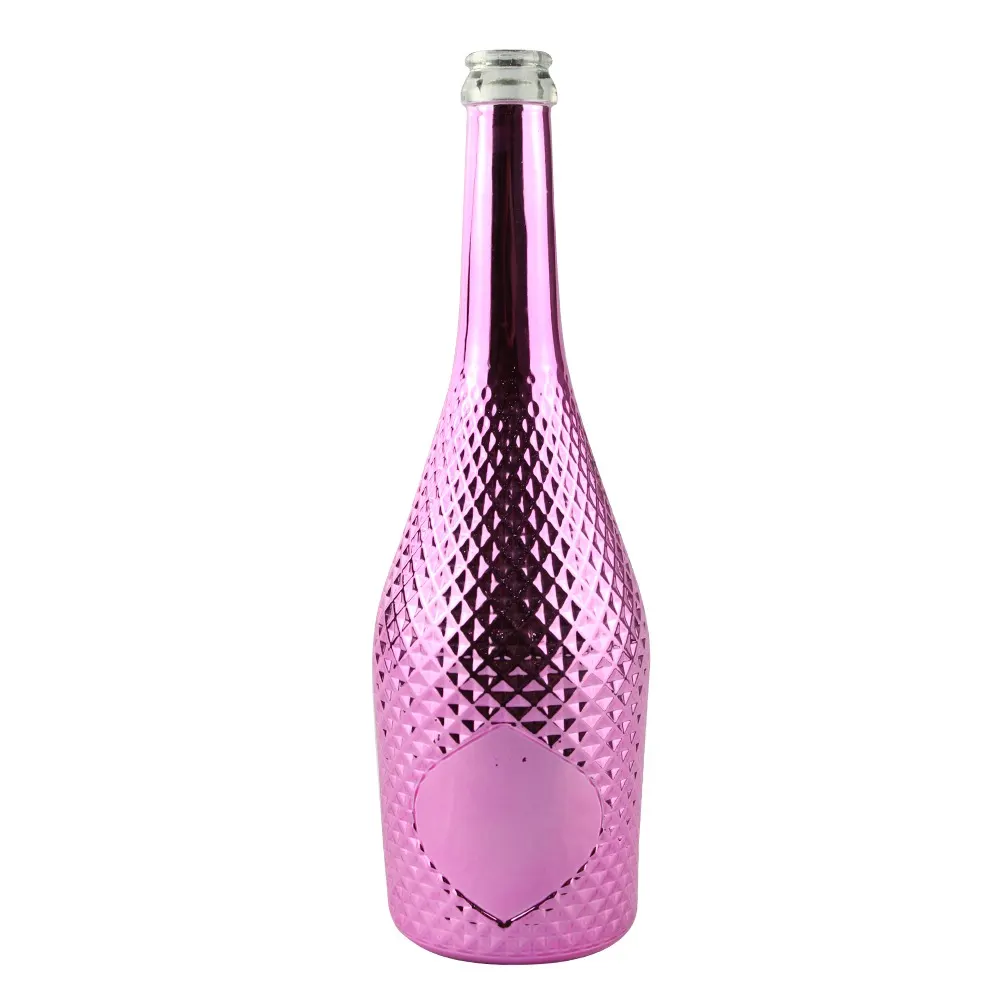
Glass colored in the furnace is only practical for very large campaigns, yet a brand often needs one precise blue. Coating standard flint solves that. The color can be opaque, translucent or graded, in matte, gloss or metallic, and it also masks any tint in the glass itself.
Three controls decide whether a coated bottle survives the journey: adhesion, checked with a cross-hatch test; the cure schedule; and scuff protection in the packing. Electroplated and mirror-metallic finishes extend the same idea for gift packs and limited editions.
The two finishes are often used together: color sprayed on the lower body, frost on the shoulder, and print across both.
Branding on the glass: print, foil and decals
Ceramic screen printing is fired at 560–620 °C, which fuses the ink into the surface. The result lasts through dishwashers, ice buckets and back-bar handling for the life of the bottle, and regulators in many markets accept fired print for mandatory markings for that reason. Its limits are resolution, since fine gradients clog the screen, and color count. Well-planned vodka designs therefore tend to stay at one or two colors.
Hot stamping supplies the metallic note, usually on the shoulder or the logo. Because the foil sits on the surface, it should not be placed where bottles rub, such as the heel at the base.
Decals take over where screens fail: gradients, small type and photographic artwork. They fire at a lower temperature and resolve much finer detail, with slightly lower resistance to abrasion than screen print. Adhesion on decorated batches is checked by cross-hatch test following ISO 2409 logic before packing.
Preparing artwork for curved glass
Artwork has to be drawn for the process that will carry it. Keep printed line weights above 0.15 mm, allow a registration tolerance of ±0.5 mm between colors, and supply vector files laid onto the curvature template of the bottle.
Decoration and closure also need to agree visually and physically, a point covered in our guide to closures for vodka bottles.
Decorating at the plant or in your own market
Decorating where the bottle is made keeps one quality standard across glass and finish. Decorating locally suits small batches, market-specific versions and late personalization, but freight is then paid on plain glass and the work is done at local labor rates.
Growing brands often split the work: the core SKU is decorated at source, while seasonal or regional editions receive labels locally. Write that split into the annual plan so both supply chains can quote on realistic volumes.
Cost, batch size and how to brief the stack
Decoration cost and batch size are quoted per project. What drives them is the number of layers, the color count in each, how much of the surface is covered, the bottle mold and the order quantity. A decoration line needs a larger batch than the bare bottle to run economically, which is the most common surprise for first-time buyers.
To have each layer quoted separately, send these with your quote request:
- the bottle silhouette or mold number, and the target volume;
- artwork, final or draft, with the color count for each layer;
- the processes under consideration, or a photo of a reference bottle;
- a target landed cost per bottle, if one has been set.
Frequently asked questions
How long does screen printing last on a vodka bottle?
Fired ceramic print lasts as long as the bottle does. It is the most durable of the branding processes, ahead of decals and well ahead of foil.
Is frosting or spray coating the better choice?
Choose frosting when the liquid should stay visible and the finish must resist scratching; acid etch is the permanent version. Choose spray coating when an exact brand color matters more than seeing the vodka.
What does decoration cost per bottle?
There is no single figure. Each layer is priced on its own against the artwork and coverage, so the total follows the stack you choose and the quantity you order.