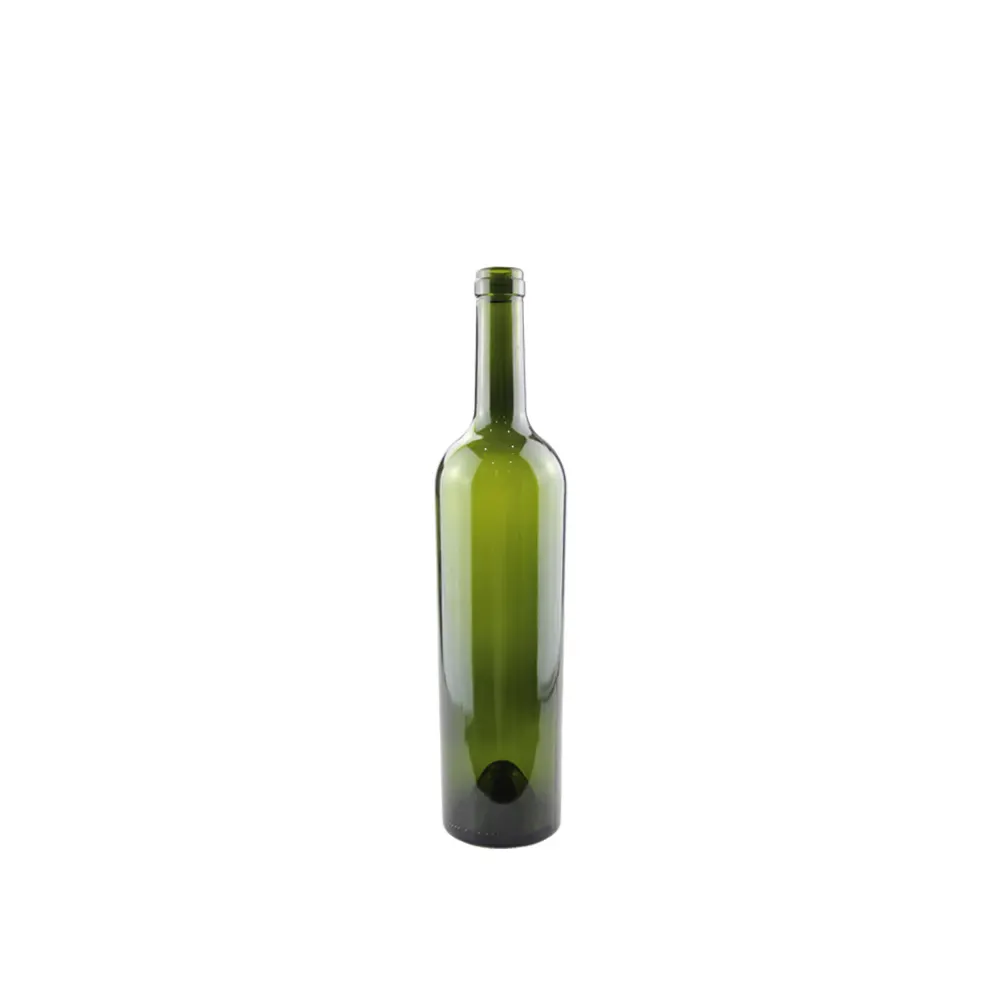
Part of our vodka and gin bottles range; the stock moulds are pictured at the end of this guide.
Full-size gin is bottled at 700 ml or 750 ml, and the destination market decides which. The EU lists 700 ml as its standard spirits size and does not list 750 ml. The US TTB authorises 750 ml and, since Treasury Decision TTB-165 in 2020, 700 ml as well, so one 700 ml bottle can be sold in both. Around the full sizes sit 50 ml, 200 ml, 375 ml and 1 L formats, each tied to a particular sales channel.
Which capacity fits which channel
- 50 ml miniature: airline carts, hotel minibars, promotions and discovery sets. Unit cost per millilitre is high, but nothing samples a gin as well.
- 200 ml flask: gifting, festivals and convenience formats.
- 375 ml half-bottle: premium sampling and travel retail.
- 700 ml and 750 ml: the core retail business.
- 1 L: duty-free and on-trade, where buyers work from pour cost per serve.
Capacity is a legal matter before it is a design one. A size that is not on a market's list cannot be sold there, so settle the question at the sourcing stage and not after the first container has left.
Selling in both the EU and the US
A brand selling in London and New York has two options. It can run a single 700 ml bottle for both markets, or it can keep 750 ml for the US and accept two capacities, which usually means two moulds.
A single mould cannot safely serve both nominal sizes, because the cavity fixes the brimful capacity. A mould designed for 750 ml typically has a brimful volume around 770–785 ml. Filled to 700 ml, it leaves roughly 70–85 ml of empty space. The bottle looks underfilled on the shelf and may fail fill-point inspection in some markets.
The sound approaches are a dedicated mould for each nominal capacity or one capacity for each cluster of markets. To hold down tooling cost, some distillers commission their proprietary mould in 700 ml and use a stock mould for the US 750 ml SKU.
Typical dimensions, weights and finishes by size
These are planning values from across the gin range we source. The project drawing confirms the final figures.
| Nominal capacity | Brimful (approx.) | Typical height | Weight range | Common finishes |
|---|---|---|---|---|
| 50 ml | 58–62 ml | 95–115 mm | 70–95 g | ROPP 18 mm, GPI 22-400 |
| 200 ml | 215–225 ml | 150–175 mm | 180–240 g | Bar-top 18.5 mm, GPI 28-400 |
| 375 ml | 390–405 ml | 180–210 mm | 300–420 g | Bar-top 18.5 mm, GPI 28-400 |
| 700 ml | 720–740 ml | 215–250 mm | 480–900 g | Bar-top 18.5 mm, GPI 28-400, ROPP 28/31.5 mm |
| 750 ml | 770–790 ml | 220–260 mm | 500–900 g | Bar-top 18.5 mm, GPI 28-400, ROPP 28/31.5 mm |
| 1 L | 1,025–1,050 ml | 260–300 mm | 750–1,100 g | Bar-top 18.5 mm, ROPP 31.5 mm |
Height depends on the silhouette as much as on the capacity. A round Oslo-style 750 ml stands approximately 220–235 mm tall with a diameter of 80–88 mm. Square and flask shapes are shorter and wider, and apothecary styles are taller.
The standards behind these figures are ISO 8106 for capacity tolerance, ASTM C148 for annealing, and ISO 7459 for thermal-shock resistance where distribution involves a harsh cold chain or a hot climate. For food contact, bottles ship with EU 1935/2004 declarations. US-bound projects get capacity certificates laid out for TTB label approval.
Fill height and brimful capacity
Nominal capacity is the legal number. Brimful capacity and fill height are the physical ones. Take a 750 ml bottle with 770 ml brimful: the legal fill level sits roughly 20 mm below the finish. That gap, the ullage, absorbs thermal expansion and leaves the corker room to work.
Put the fill height on the drawing alongside the capacity. Fill-point inspectors in the EU and the US measure down from the finish, and an error of 5 mm either way can fail an inspection or make the bottle look short on the shelf.
Label panel and neck finish
Two further parts of the drawing change with size and should be fixed together with it.
The first is the label panel. A round Oslo-style bottle offers a usable cylindrical zone of about 90–120 mm between the shoulder curve and the base curve. Square bottles have flat panels, though their corner radii are tighter than designers tend to assume. A label die 110 mm tall will not fit a panel that clears 100 mm, and no artwork revision changes that. We compare label dies with bottle drawings as a routine step; applying labels to curved glass is treated in full on the gin bottle label page.
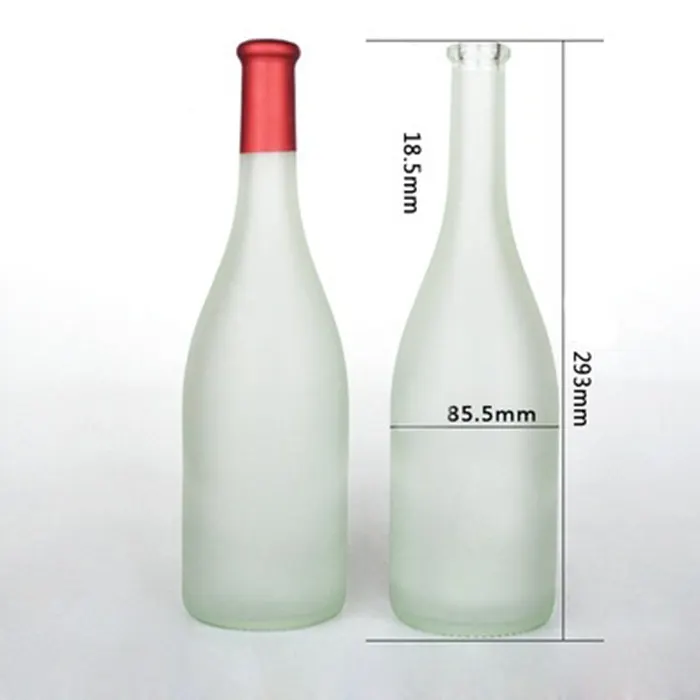
The second is the neck finish, which sets closure cost, line tooling and tamper-evidence compliance at every size. Premium gin mostly uses the bar-top cork finish with an 18.5 mm bore, which takes T-top stoppers in natural or synthetic cork with wooden or polymer heads. Screw-cap programs use GPI 400 continuous threads, 28-400 and 33-400. ROPP aluminium in 28 mm and 31.5 mm serves duty-free and markets that regulate tamper evidence, and miniatures almost always take ROPP 18 mm. Liners, torque windows and seal tests are explained under gin bottle closures.
Glass weight
A standard flint 750 ml gin bottle weighs 500–650 g. Premium and super-premium bottles reach 700–900 g through heavy bases and thick walls. Builds above 1,000 g still exist but are becoming rare because of freight cost and carbon reporting. With modern forming a bottle can be lightweighted to 480–520 g and still pass vertical-load and impact tests.
Weight is the largest single cost lever in a gin bottle program. Reducing a 750 ml bottle from 650 g to 520 g lowers the glass cost per unit and raises the container payload in the same move. We model weight against shelf presence before a specification is frozen. Container loading and the wider economics are set out in the wholesale guide to gin glass bottles.
Stock, modified or custom mould
| Route | Stage it suits |
|---|---|
| Stock mould | Launch, market tests, second SKUs |
| Modified stock: emboss plate, spray or print | Differentiation on a proven mould |
| Full custom mould | A proprietary icon bottle |
Checks before ordering a custom size
- Legal capacity and fill-point rules in every destination market.
- Brimful capacity and its tolerance per ISO 8106, stated on the drawing.
- Label panel geometry that accepts your label die.
- A neck finish that matches your closure supplier's gauges.
- Line compatibility with your contract filler: total height for corker and case clearance, body diameter for star wheels and the labeler, and base profile.
After that, run physical samples on the actual line. We supply 2D drawings, capacity certificates and line-trial samples ahead of any production commitment.
For a quotation we need the target capacity and destination markets, the preferred silhouette and weight range, the neck finish (bar-top cork, GPI thread or ROPP), label die dimensions or an artwork draft, and the annual volume with the first-order quantity per SKU. The specification and quote request covers each of these.
Frequently asked questions
Is 750 ml still needed for the United States?
No. Both sizes are authorised there. Distillers who keep 750 ml for the US need a second mould or a second fill specification next to their 700 ml bottle.
Which neck finish is most common on gin bottles?
The 18.5 mm bar-top cork finish, followed by GPI 400 threads for screw caps and ROPP for roll-on aluminium caps. Because the finish affects closure cost and line tooling, it should be chosen at the same time as the capacity.
Does a lighter bottle hurt shelf presence?
It can, which is why weight should be judged against the positioning of the gin and not minimised automatically. Heavy bases and thick walls are part of how premium bottles signal their tier, while lighter glass saves on material and freight.