Judge a spray bottle manufacturer on the fit between glass and pump, not on the glass alone. Most leaks that get blamed on the bottle start at the neck finish, where a crimp pump needs diameter and height held to roughly ±0.1–0.15mm. Before shortlisting anyone, find out who makes the pump, how the neck is gauged, and which leak tests are run on the assembled pack.
Where the pump comes from
A spray bottle is two products sold as one: a container and a dispensing mechanism. Suppliers organise that in three ways, and each puts the risk in a different place.
| Supply model | How it works | What it means for the buyer |
|---|---|---|
| Fully integrated | One company moulds pumps, springs and actuators and fits them to its own glass | Uncommon. A single party answers for a leaking batch, and neck and pump tolerances sit inside one quality system |
| Glass plant with a pump partner | The bottle maker buys pumps from a specialist and assembles them or ships a kit | The usual arrangement. Reliable when the partnership is long-standing and documented, unreliable when the pump source keeps changing |
| Glass only | Bottles and pumps are bought from separate sources | Most freedom of choice, but neck tolerances, dip-tube length and crimp or screw fit become the buyer's engineering problem, as does any dispute over a transit leak |
Put the question plainly: who produces the pump, how long has the supplier bought from them, and can the pump maker's test reports be shared. A supplier with a settled arrangement can answer all three in a single reply. Integrated production is not required; what counts is that somebody is contractually responsible for testing glass and pump together.
Neck finish standards and tolerances
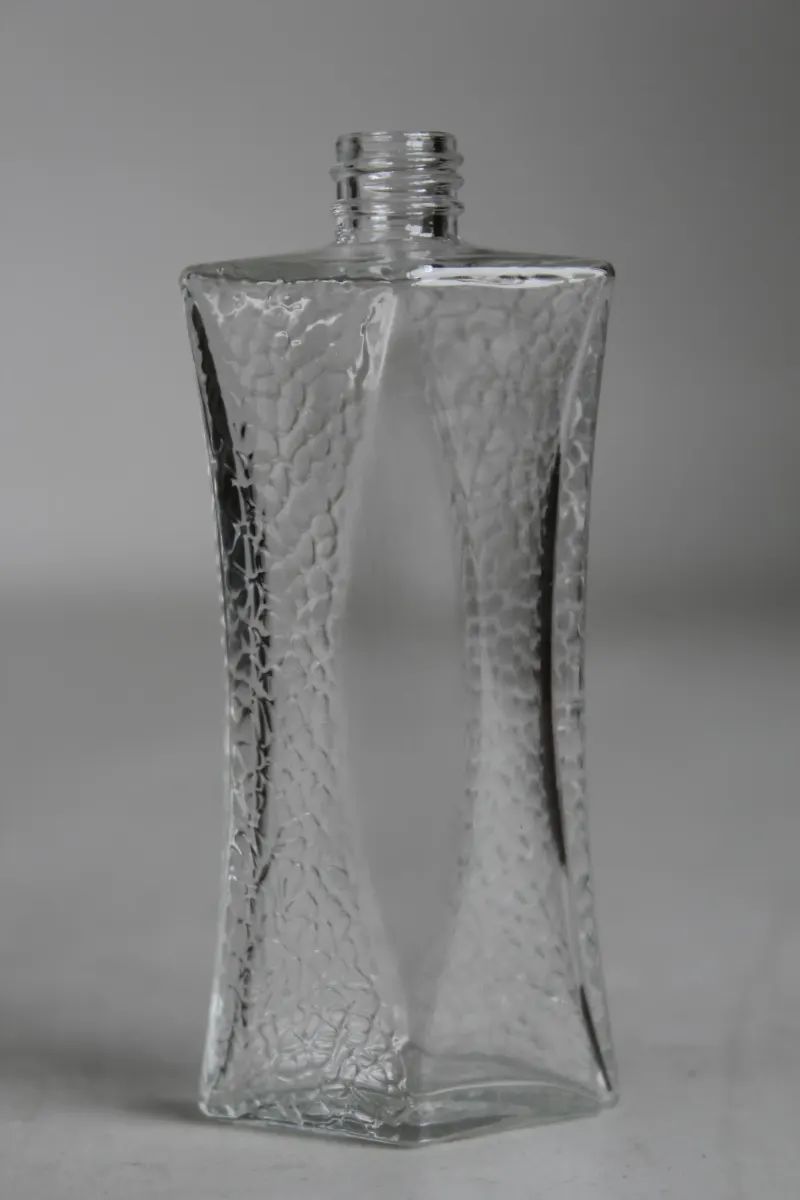
Spray closures fall into two groups. Crimp pumps follow the FEA standards used on fragrance-style sprays, commonly 15, 18 and 20mm, and are fixed permanently to the neck. Screw pumps use threaded finishes such as 18/410, 20/410 and 24/410, and can be removed for refilling.
Crimp finishes are far less tolerant than an ordinary bottle neck. If diameter or height drifts beyond about ±0.1–0.15mm, the crimp either cuts the gasket and leaks at once, or compresses it too little and lets product seep and evaporate slowly. A screw neck allows more variation, but the thread profile must stay consistent and the sealing land must be flat and free of chips.
Ask how the plant gauges the finish. The minimum is a go/no-go plug gauge on every cavity each shift. Stronger plants also measure samples on an optical comparator and keep SPC charts. A QC lab that cannot hand over a neck drawing with tolerances marked is a reason to drop the supplier, because no pump can compensate for glass nobody measured.
Leak and seal tests to write into the contract
A claim of leak testing is only useful with a method and a figure attached. The tests below apply to the complete pack of glass, gasket, pump and actuator, and can be named in a purchase contract.
| Test | Typical method | Faults it finds |
|---|---|---|
| Vacuum leak | ASTM D3078 bubble emission, or vacuum decay | Under-compressed gasket, chipped neck, damaged crimp |
| Inverted storage | 48–72h upside down at 40°C | Slow seepage, gasket swelling from an incompatible formula |
| Filled drop | 1.2m onto concrete in 6 orientations | Weak base or shoulder, pump sheared off |
| Pump endurance | 5,000–10,000 actuations | Tired spring, drifting dose |
| Altitude and pressure cycle | Simulated decompression in air freight | Venting, weeping at the actuator |
The endurance report should state a dose volume, not simply confirm that the pump still works. Fine-mist pumps usually deliver 0.06–0.14ml per spray, and a specification normally gives the target dose with a permitted variance, often ±10%, measured at the beginning and end of the test.
Formula compatibility with pump parts
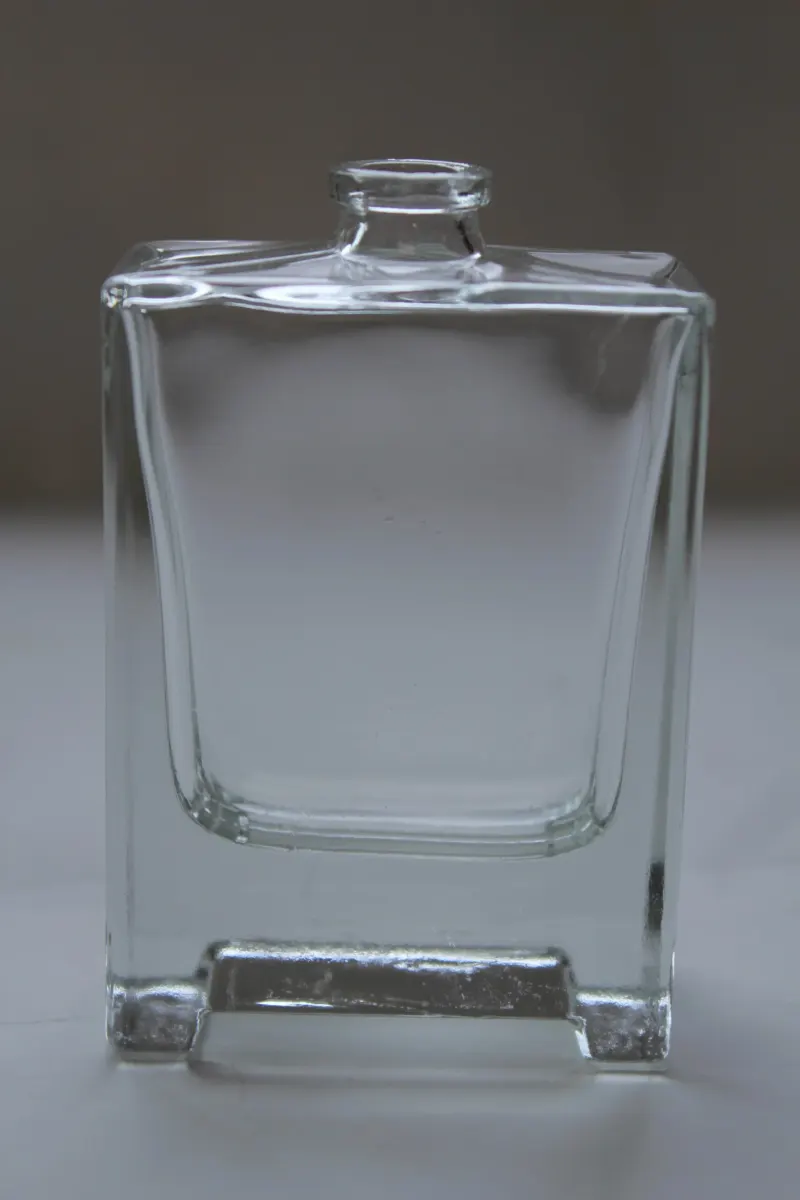
Glass is close to inert. The parts at risk are the pump's plastics and elastomers, plus any lacquer applied inside the bottle. Essential-oil room sprays can attack nitrile gaskets, high-alcohol sanitizers can stress-crack some actuators, and thick linen sprays block fine-mist inserts.
Give the supplier your main solvents, alcohol content and viscosity, then ask for a filled compatibility test before mass production. Filled units are held at 40°C for four weeks and checked for weight loss, dose drift, gasket degradation and discoloration. Suppliers used to the US personal-care market know the procedure.
For formulas above 60% alcohol or with aggressive solvents, ask for the gasket material, usually a PE, PP or butyl liner, to be documented against your SDS. A general statement of chemical resistance is not evidence. Our page on spray bottles for essential oils goes further into material pairings for oil-based products.
Glass line capabilities to verify
Cleaning and personal-care sprays are squeezed, dropped and posted in poly mailers, which is harder on the glass than life on a fragrance counter. Four points decide whether the bottle survives e-commerce fulfilment.
- Wall distribution. A light bottle, such as a 100ml unit under 120g, cuts freight but fails the drop test when the shoulder is thin. Request section-weight data for each cavity.
- Internal pressure. Standard spray bottles are generally not pressure-rated. Carbonated or propellant-adjacent formulas need ware that is.
- Colour and coating. Amber and cobalt glass for light-sensitive products, and UV lacquers, should come from the same plant or a qualified decorator. The decoration routes are set out on our custom glass spray bottle page.
- Assembly and packing. Check whether the supplier fits the pumps, torque-tests screw pumps and packs with actuator clips. Without clips, pumps discharge inside the carton during transit and the loss goes unnoticed until arrival.
To turn these points into a scorecard for a plant visit, use the factory audit checklist alongside our overview of how to assess a glass spray bottle supplier.
Shortlisting and the RFQ
Send the same RFQ to three manufacturers. It should name the pump standard, attach the neck drawing, and state the dose volume and the test protocols listed above. Then read how each one replies as well as what it offers: a supplier that asks for your SDS and details of your filling line has dealt with compatibility failures before and is the safer choice.
The pump accounts for a large share of the cost of a small spray bottle, and choosing the cheapest one tends to come back as returns. Minimum quantities and prices are quoted per project, since they depend on the mould, the line it runs on, decoration, quantity and freight terms. Buyers comparing finished stock formats can start from our bulk spray bottle page, and the home-fragrance side of the category is covered under room spray bottles.
Frequently asked questions
Is a manufacturer that makes its own pumps the better choice?
It offers single-source accountability and closer control of the neck-to-pump fit, but few suppliers work that way. A glass plant with a documented, long-running pump partner does the job equally well.
What minimum order applies to custom glass spray bottles?
Minimums are set per project. They follow from the mould and the production line the bottle is assigned to.