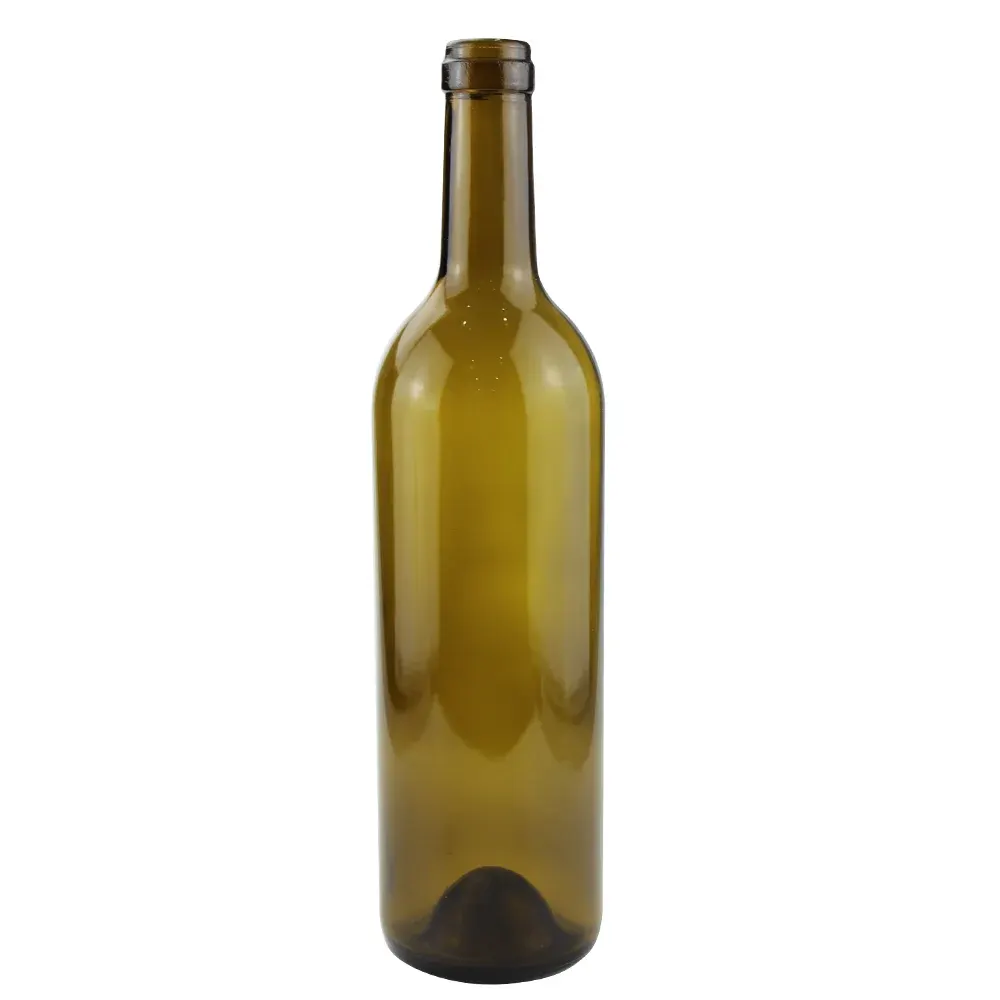
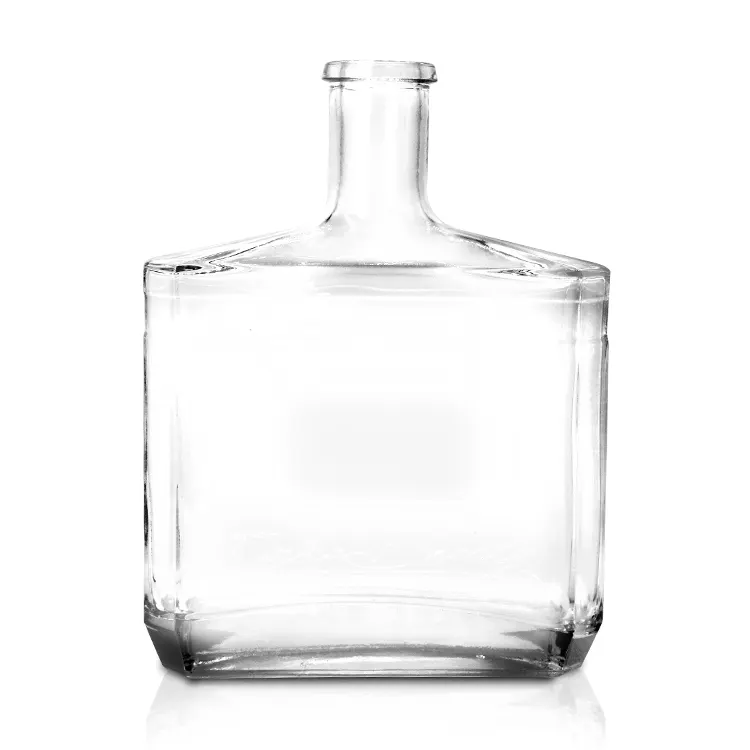
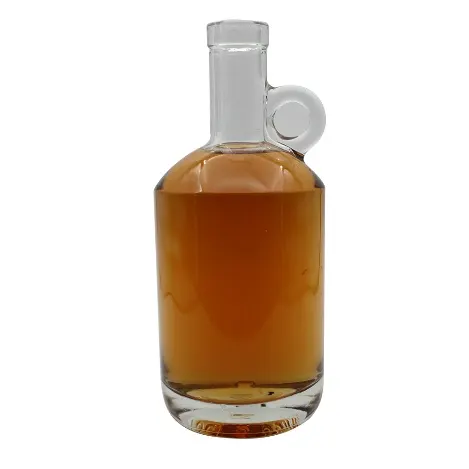
Part of our vodka and gin bottles range; the stock moulds are pictured at the end of this guide.
A custom vodka bottle is a bottle made from your own mold, so the brief has to settle five things before any steel is cut: capacity, glass weight, glass clarity, surface finish and closure. A single-cavity sample mold then gives you 20 to 50 bottles to test on closures and on the filling line before the production mold set is machined. Minimum order quantity is not a fixed figure; it is quoted per project because it follows the mold and the line the bottle runs on.
A stock shape from the vodka and gin bottle range is the simpler route when none of those points needs to change. What a private mold adds is exclusivity: no other client can run bottles from your tooling.
Capacity and target market
Choose the capacity first, because the mold is built around it. Three sizes carry most vodka volume, each tied to different markets.
| Capacity | Where it is sold | Typical bottle weight | Usual neck finish |
|---|---|---|---|
| 375 ml | Gift packs, travel retail, US splits, trial sizes and flavored lines | 350-550 g | 18.5 mm bar top / GPI 400 |
| 700 ml | EU, UK, most of Asia-Pacific | 550-1,000 g | Bar top cork / ROPP 28 mm |
| 750 ml | USA, Canada | 550-1,100 g | Bar top cork / screw cap |
Many brands ask for one mold that takes both a 700 ml and a 750 ml fill. That works only where tolerances allow it: brimful capacity (the volume with the bottle filled to the very top), fill height and the label panel all have to be checked for both markets at the drawing stage. Our vodka bottle size reference lists the wider dimensional range.
Glass weight, clarity and finish
Vodka is a neutral liquid, so nearly any flint glass is suitable. Three choices then decide how expensive the bottle looks and feels.
Weight and base thickness
A stock 750 ml bottle weighs about 450 to 550 grams. Heavy-base custom designs take the bottle to 750, 900 or as much as 1,100 grams, with solid glass 25 to 40 mm deep under the liquid. The mass reads as quality in the hand, and the thick base gathers light on a bar.
The trade-off is more glass per bottle and more weight in every shipment. We compare the landed cost of the heavier design with the intended retail price before the brief is frozen.
Flint or extra-flint
Iron in the raw batch gives ordinary flint glass a slight green or blue cast. Extra-flint, also sold as super-flint or crystal glass, is melted from low-iron materials under tighter control and comes out almost colorless. It typically adds 10 to 18 percent to material cost.
It is usually worth it for a vodka sold on purity, such as glacier water or a Nordic minimalist look. Frosting, screen print and metallic decoration also look cleaner on it, since no tint shows through the applied layer. Write it into the technical brief from the start.
Frosting and texture
Frost is the signature vodka finish, and there are two ways to get it. Acid etching leaves a permanent, smooth satin surface that stands up to scuffing in transit. Spray frosting costs less and is somewhat less durable.
Variations on a full-body frost include:
- a clear vertical window left in the frost so the liquid stays visible;
- gradient frost that fades upward from the base;
- ice-crackle texture formed in the mold itself.
Applied finishes from our vodka bottle decoration options, including screen printing and electroplating, can be trialled on stock bottles before the custom mold exists, which takes much of the risk out of the finish decision.
Closures and anti-counterfeit features
Higher-priced vodka attracts counterfeiting, so decide the closure with the bottle, not after it. The main options are:
- non-refillable pourer fitments that lock permanently into the bore;
- bar-top corks with a custom-embossed, proprietary head shape;
- ROPP aluminum caps carrying laser-etched serial numbers;
- shrink capsules with a holographic tear strip;
- UV-reactive ink on the closure or the neck label.
Two or three of these together protect better than any one alone, and brand marks embossed into the shoulder or base by the mold are very hard to reproduce. The vodka closure comparison shows which systems fit the neck finishes common on 700 and 750 ml custom molds.
Stages from brief to production mold
- Brief. Send mood boards, competitor bottles you want to sit beside, the capacity, the closure type and the decoration you intend. These are turned into 2D technical drawings.
- 3D render. Photorealistic images confirm the outline, base thickness and label panel before a mold is cut.
- Sample mold. One cavity is cut and 20 to 50 hand-finished bottles are made. They are for internal review, closure fit and a filling-line trial. The mold development page covers this stage in detail.
- Production mold. Once samples are approved, the multi-cavity set is machined, usually four to twelve cavities according to bottle weight and the forming machine.
- Production and decoration. A first article inspection comes before the full run. Frosting, printing or electroplating follow as a second pass.
Freeze the design early and count back from the launch date.
Minimum order and costs to plan for
There is no standard minimum for a custom vodka bottle; the figure depends on the mold and the line it runs on. The cost items can be listed in advance:
- the production mold set, paid once, which rises with cavity count and with the complexity of the shape;
- decoration plates and screen charges;
- closure tooling, if the bar-top or cap is proprietary too;
- heavier glass and extra-flint, which raise both unit and freight cost.
The vodka bottle price breakdown sets out how weight and decoration feed into cost.
FAQ
What is the minimum order for a custom vodka bottle?
It is quoted for each project, as explained above.
How long does a custom bottle project take?
Timing is confirmed per project, once the mold, decoration and line schedule are known.
Can a single mold serve both 700 ml and 750 ml?
Sometimes. Say so in the brief, so the mold is engineered with both fill lines in mind.
Is extra-flint glass worth paying for?
For the upper price tiers, generally yes, for the clarity and decoration reasons given above.
Which anti-counterfeit combination works best?
A layered one: a non-refillable fitment or proprietary bar-top, a holographic shrink capsule, and serialized laser etching on the cap or the glass.
Who owns the mold once tooling is paid?
The customer does, on the projects we coordinate, with exclusive rights to use it. The mold stays at the plant, where it is stored and maintained.