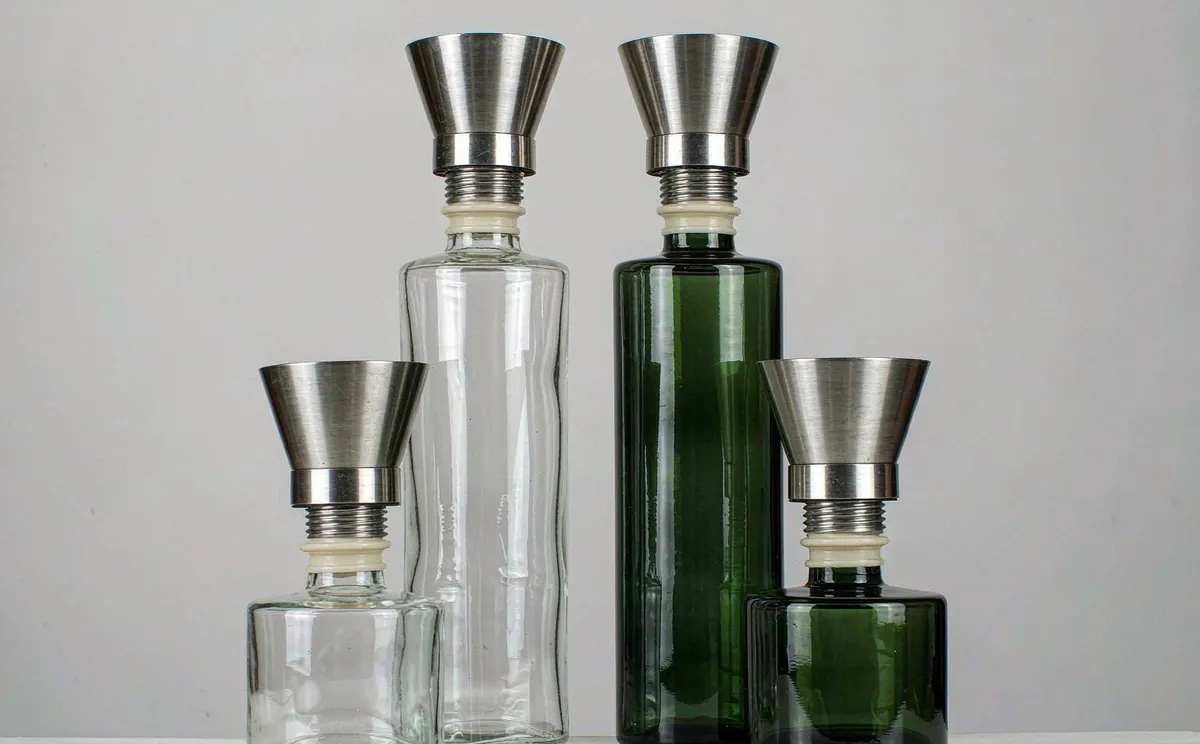
Part of our olive oil bottles wholesale range; the stock moulds are pictured at the end of this guide.
Glass oil and vinegar cruets come in three working sizes: 250 ml (8.5 fl oz) for gifts and personal use, 500 ml (16.9 fl oz) for the table, and 750 ml (25.4 fl oz) for service counters and display. Each is a clear or green soda-lime bottle with a stainless steel pour spout whose built-in air-return tube keeps the stream smooth and stops it cleanly. A cruet is a refillable dispenser, so the pourer, the glass colour and the accessory set matter more than a custom bottle shape.
Cruet or packing bottle
Settle this before anything else, because the two are specified differently. A packing bottle is filled once at the mill, sealed, and has to survive distribution and a long shelf life. A cruet sits on a table or prep counter, gets opened many times a day, and is topped up from a bulk jug. The oil or vinegar it holds was already packaged at source; the cruet only presents and portions it.
That makes the cruet a secondary dispenser. It is not treated as a filled, sealed, shelf-stable container, and it does not follow the closure and migration rules that apply to primary packs. If you need the original fill container, look at olive oil bottles made for single-fill sealing, or at bulk syrup bottles for another primary-packaging example. To weigh cruets against carafes, vinegar bottles and syrup dispensers before asking for samples, the food glass packaging overview puts those families side by side.
Cruets are supplied empty. Pourers, caps and gift components are specified either as separate items or as an assembled set.
Sizes, dimensions and neck finishes
The volumes below are usable capacity to the fill line. Every size takes the same style of drip-free stainless pourer and is available in clear or green glass.
| Size | Usable volume | Height | Body diameter | Neck / finish | Usual channel |
|---|---|---|---|---|---|
| 250 ml | 250 ml (8.5 fl oz) | 215 mm (8.46 in) | 62 mm (2.44 in) | 18 mm / 21.5 mm | Gift sets, personal use |
| 500 ml | 500 ml (16.9 fl oz) | 265 mm (10.43 in) | 72 mm (2.83 in) | 21.5 mm / 24 mm | Retail table, foodservice |
| 750 ml | 750 ml (25.4 fl oz) | 305 mm (12.01 in) | 82 mm (3.23 in) | 24 mm / 28 mm | Service, deli, display |
Do not plan on filling to the brim. The return tube needs a small air gap at the neck to vent, so the working fill is roughly 90 percent of the marked volume. An overfilled cruet vents poorly and tends to pulse or drip.
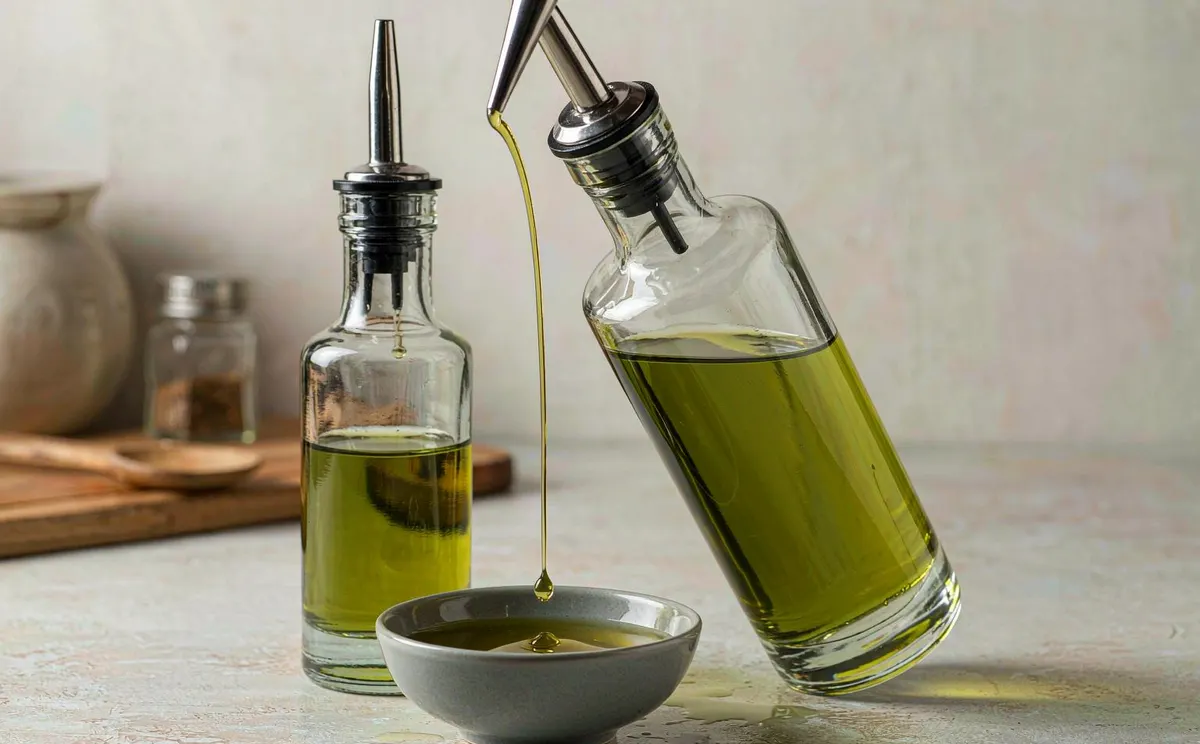
How the stainless pourer stays drip-free
The spout is the part end users judge first. It is a stainless steel tube seated in a food-grade silicone collar that seals against the neck, so nothing weeps past it while the bottle stands. Inside runs a thin return tube: as liquid goes out, air comes back in through that tube, and the flow stays even instead of glugging.
The shape of the outlet does the rest. When the bottle is tilted upright the stream breaks off rather than trailing down the glass, which keeps table linen, plates and shelf labels free of oil marks.
Two spout shapes are available, a classic tapered one and a broader cruet-style one, in brushed or mirror stainless. Both pour cleanly, so the choice is about matching the rest of the brand's hardware. The same pourer platform is used on vinegar bottles, which keeps a two-bottle oil and vinegar set looking consistent.
Clear or green glass
Both options are soda-lime glass, fully recyclable and suitable for food contact with no interior coating. Which one to pick depends on where the cruet will stand.
| Glass | What it does | Where it fits |
|---|---|---|
| Clear flint | Shows the golden-green of an oil or the amber-red of a wine vinegar; lets staff read the level at a glance | Indoor retail and home kitchens, away from direct sunlight |
| Emerald green | Filters part of the visible and near-visible light that drives oxidation in unsaturated fats, slowing off-flavours | Cafes, delis and gift displays under track lighting or near windows |
Green glass is a protective measure and nothing more. It lengthens the period in which the oil tastes fresh, but it does not replace a capped pourer or sensible storage out of the sun.
Amber and cobalt tints are possible as well. They need a dedicated furnace run, so they only become available above a qualifying volume. If a gift programme depends on a particular colour, raise it at the start of the brief.
On the glass itself, the points we check are wall thickness and base stability. Even walls matter most on the slender 250 ml bottle, which should not feel fragile in the hand. The bottles are annealed after forming to relieve stress, then inspected to confirm they stand flat; a cruet that rocks on a slate board comes back as a return. The surface takes a paper or silicone label, and it can carry a light etch or print.
Matching the size to the setting
The three capacities sort themselves fairly cleanly by how much is poured and how often the bottle is refilled.
- Home kitchens. A 500 ml cruet holds the everyday oil for sautéing and finishing. The 250 ml size suits what is used by the drop or the teaspoon: an infused oil, a chili oil, a finishing vinegar. A controlled stream also helps cooks who measure oil instead of free-pouring from a bulky jug.
- Restaurants and foodservice. The 500 ml and 750 ml sizes work at the pass and the salad station for drizzling oil, vinegar and infused blends. One pourer type across the kitchen cuts training and waste, and stainless hardware outlasts plastic spouts in the dish pit.
- Delis, cafes and tasting bars. A 750 ml cruet portions balsamic glaze, infused oil or house vinegar at a counter without the cross-contamination that ladles and spoons bring.
- Gift and gourmet retail. The 250 ml and 500 ml sizes are sold singly, paired with an oil, or as a set with funnel and rack for holiday and housewarming ranges.
- Hotels and holiday rentals. Cruets filled with local oil and vinegar serve as a branded amenity. A resealable stainless pourer keeps the contents fresh between guests and tolerates frequent handling better than a cork.
- E-commerce. A 250 ml or 500 ml cruet with a printed scale and bamboo cap is a common lead item for subscription boxes and seasonal gift guides. The uniform bottle shape keeps a multi-size listing coherent, and a photograph of the pour carries most of the selling.
Caps, decoration and gift-set components
The standard slender bottle already suits table and kitchen use, so most cruet programmes set themselves apart through the closure and the accessories and leave the mould alone.
Storage caps
For closed storage or gifting, the neck takes a bamboo cap, a natural cork stopper or a stainless screw cap. Bamboo and cork give a warm, natural look that suits gift sets and home kitchens. A stainless cap looks more modern and seals tightly, which is what foodservice refill programmes want. The cap is normally a separate item from the pourer, so a set can ship with both.
Etching and printing
Light acid etching, ceramic printing and pad printing can be applied to the shoulder or body, for a logo or for a measurement scale. A fill scale in millilitres and fluid ounces is popular on cooking cruets: it helps the user portion dressings and marinades, and it shows where to stop when refilling.
Sets
A full gift set can combine the cruet with a small stainless funnel for clean refilling, a wooden or metal rack that holds two or four bottles, and a printed recipe or care card. We coordinate these parts so they reach your fulfilment partner as one packed carton, not as loose components.
Claims and care wording
Claims printed on the glass or cap should describe the dispenser: drip-free pour, food-grade stainless, recyclable glass. Statements about the oil or vinegar belong to the filler. A short care card that recommends hand-washing the stainless pourer and storing the cruet away from direct sun reduces returns caused by misuse. We review proposed wording so it stays within what a glass and hardware supply can support.
Private-label ranges
Kitchenware and gourmet distributors often run one label across cruets, carafes and related tableware. Such a range typically begins with the 500 ml cruet and adds the 250 ml and 750 ml sizes once the line has proved itself in the channel. Keeping glass colour and stainless hardware matched makes the range read as one system, and pairing the cruet with a carafe from the same glass family simplifies both the compliance file and warehouse picking.
Ordering, documents and shipping
Minimum quantities, timing and sample terms are quoted per project. What moves them is the glass colour (clear and green versus a special tint), the decoration method, the cap and pourer choice, whether the order is bare bottles or assembled gift sets, and the freight terms. Confirm the cap and pourer before the bottle order is placed, so that every part arrives for a single assembly pass. For a gift set, an assembled sample with funnel and rack lets you validate the packed carton and the retail presentation before committing to a full run.
Each shipment is documented with a material certificate, a food-contact compliance statement and lot traceability. The pourers come with confirmation of the stainless grade, and the silicone collars are documented as food-grade. Migration and heavy-metal extraction reports can be requested to support retailer and import audits. Where a buyer also takes glass carafes in the same clear and green glass, the paperwork can follow one format for both.
For transport, cruets are palletised with moulded or corrugated dividers that separate the bottles and shield the slender necks, then secured with corner boards and stretch film. Gift-set cartons get extra bracing so the rack and funnel cannot shift. Shipment is FOB from the port of origin, as a full container or as consolidated freight, and cruets can be loaded together with other tableware glass to use the container better.
Frequently asked questions
Can one set hold both oil and vinegar?
Yes. The same glass and pourer handle oil, vinegar and most infused blends, and a rinse is enough to prevent flavour carryover. Many gift sets pair one oil cruet with one vinegar cruet in the 250 ml or 500 ml size, with matching caps so the two look alike on the table.
Are cruets suitable for hot liquids?
No. They are specified for room-temperature and cool contents such as oil, vinegar and salad dressing. Thermal shock can stress the glass, and the silicone collar is rated for ambient use. If the application involves heated service, ask about a tempered option before ordering.
Does the cap replace the pourer?
It complements it. The pourer stays in the neck during service; the bamboo, cork or stainless cap closes the bottle for storage or gifting. Because they are separate items, decide early whether your set ships with one or both.
Why does a cruet glug or drip after refilling?
Usually because it was filled too high. With no air gap at the neck the return tube cannot vent, and the stream pulses. Filling to about 90 percent of the marked volume, guided by a printed scale, solves it.
Can carafes be sourced alongside the cruets?
Yes. Carafes share the clear and green glass system and the same quality documentation, so a broader tableware range can be built from one glass family. Ordering both together keeps the compliance paperwork simple and often fills a consolidated shipment more efficiently.