Part of our beer bottles wholesale range; the stock moulds are pictured at the end of this guide.
A stout bottle is a short, wide-bodied glass bottle with a broad shoulder, a heavy base and a continuous-thread (CT) neck that takes an ordinary twist-on cap. The stock formats are 12 oz with a 38-400 finish, 16 oz with 43-400 and 32 oz with 53-400, and because all three use the same closure standard, one capping setup can serve the whole range. The shape suits thick or resealable products such as barbecue sauce, syrup, kombucha and cold brew, where a wide mouth and a bottle that stays upright matter more than a thin, controlled drip.
Stock sizes, finishes and dimensions
Three formats cover most wholesale orders. The figures are nominal and can shift slightly between production lots, so take the mouth diameter and height from the current spec sheet before you order caps, liners or label stock.
| Capacity | CT finish | Mouth diameter | Height | Unit weight | Case pack |
|---|---|---|---|---|---|
| 12 oz (355 ml) | 38-400 | 38 mm | 105 mm | 175 g | 24 / case |
| 16 oz (473 ml) | 43-400 | 43 mm | 128 mm | 215 g | 12 / case |
| 32 oz (946 ml) | 53-400 | 53 mm | 172 mm | 360 g | 6 / case |
Other capacities, and wider finishes such as 48-400, 58-400, 63-400, 70-400 and 83-400, are possible but need a mould project rather than a stock order. Glass weight can also be adjusted. Lightweighting takes glass out of low-stress areas of the wall while leaving the base and shoulder strong, which cuts freight weight without giving up vertical load strength on a stacked pallet. Ask for the acceptable weight band in writing so reorders and freight estimates stay consistent.
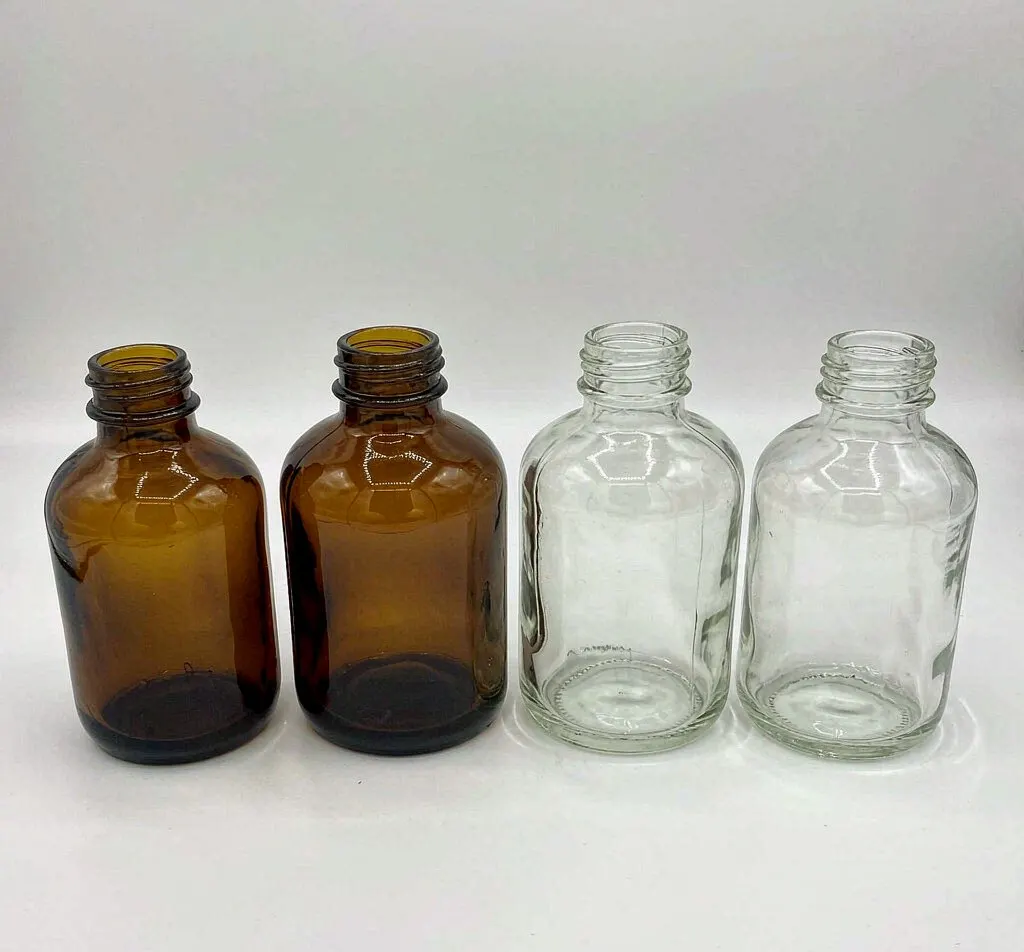
Why the squat shape works on the line and the shelf
A low centre of gravity is the practical advantage. Stout bottles are steadier on a conveyor and under a capping head than tall, narrow ones, and they are harder to knock over on a crowded retail shelf or in a fridge door.
The wide body also gives a larger wrap-around label panel than a narrow-neck bottle, which helps when the label has to carry an ingredient list, a nutrition panel and brand copy together. In the hand the bottle feels heavy and substantial, a cue many craft brands rely on to separate themselves from squeeze bottles and cans.
The saving that tends to matter most in procurement is closure commonality. With one CT standard across the family, a single cap line, torque setting and spare-parts list covers every size, so the format often wins on line efficiency before glass cost is even compared.
Stout or woozy for sauce
Sauce makers usually start with the woozy, a tall bottle with a slender neck designed to release thin hot sauce a few drops at a time. That is the right tool when the drip is the point. When the recipe is thick, the pour is heavy, or the brand wants a bold, small-batch look, the stout is the better fit.
The two shapes belong in the same catalogue and are chosen by viscosity, pour style and shelf strategy. A moderately viscous hot sauce can go in either. If you are undecided, compare the neck finishes on our woozy bottle range against the table above before any tooling is discussed.
Matching a format to the product
Kombucha and other live-culture drinks
These drinks need a closure that contains gentle carbonation and still reseals easily. A pressure-rated CT cap with a suitable liner does both, without the extra equipment a crown or cork system requires. The squat body sits steadily on cold-chain shelving, and the wide shoulder leaves space for the regulatory text a living product has to carry.
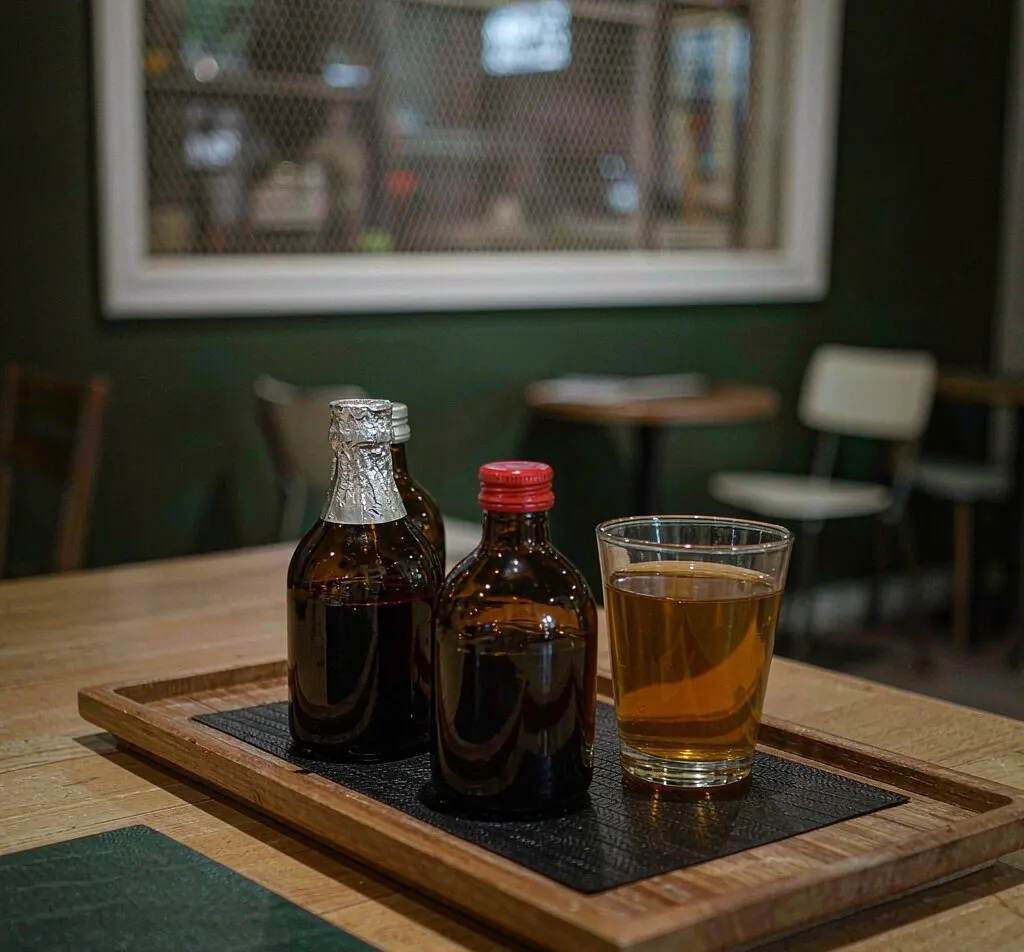
Kombucha is mildly acidic and sensitive to light, so amber or frosted glass is the usual recommendation to protect flavour. The 12 oz and 16 oz sizes in our wholesale kombucha bottle range share a closure and label footprint, so a brand moving from taproom refills into retail can add a size without re-tooling.
Barbecue sauce and thick condiments
Thick sauce is where the stout has the clearest edge. A 38 mm or 43 mm mouth lets a filling nozzle deliver product quickly without stringing, and at home it admits a spoon or a pour spout. The 12 oz and 16 oz sizes are the common choices, with either smooth or ribbed sides depending on grip and appearance.
Liner choice needs attention here. Tomato- and vinegar-based recipes are acidic enough to degrade an unsuitable liner over a long shelf life, so state the formula's acidity when you specify the cap.
Syrups, sweeteners and concentrates
Coffee syrups, cocktail syrups, agave and flavour concentrates call for a measured pour rather than a drip, and for a bottle that tolerates repeated handling between production and front of house. The 16 oz and 32 oz sizes, on 43 mm and 53 mm finishes, are the usual picks, and the heavier glass protects a dense, sugar-rich product in transit.
Our bulk syrup bottle formats come in flint, amber and custom tints. For syrup dispensed cold, choose a liner that stays stable at low temperature so the seal survives repeated trips in and out of the refrigerator. Hot-filled syrup holds its heat longer than a thin liquid, so the cooling step has to be planned alongside the fill temperature.
Cold brew and ready-to-drink beverages
The 12 oz and 16 oz bottles fit a cup holder or a lunch bag, and the resealable cap suits multi-serve cold brew that is finished over several days. Lightly carbonated tea or craft soda uses the same pressure-rated cap as kombucha. For coffee and tea, amber or another UV-reducing tint slows light-driven flavour drift.
A brand running cold brew, kombucha and syrup concentrates together gains the most from standardising on stout glass: one set of closures to buy, a smaller warehouse footprint and less operator training.
Caps and liners
A CT finish accepts polypropylene, urea and aluminium caps, plus pressure-rated versions of each for carbonated fills. The liner is chosen separately, from polyethylene, polystyrene or foil laminate, according to the product's acidity, its fill and storage temperature, and how often the bottle will be reopened.
Two pairings come up often. On custom syrup bottle projects, a 43 mm or 53 mm cap is combined with a dispensing insert or a foam liner that resists sugar attack. Kombucha and craft soda take a pressure-rated liner matched to the expected CO2 volume.
Specify cap colour, print and liner in the same brief as the bottle. A cap and neck that do not match is a common cause of line downtime, and it is avoided by ordering the two as one system.
Glass, food-contact compliance and hot-fill limits
Stout bottles are made of soda-lime glass, the standard food-packaging material. It is clear, strong, recyclable and inert, so it neither reacts with acidic sauces and live cultures nor lends them any taste.
For food contact, the reference points are U.S. FDA and EU LFGB requirements, with heavy-metal release and extractable limits documented by lot so your import and quality teams have a file to work from. Buyer audits in 2026 increasingly ask about PFAS as well, which concerns the closure rather than the glass. Specify PFAS-free caps and liners so the whole package meets the question.
Standard stout bottles are rated for hot fill at approximately 85 to 90 degrees Celsius, followed by controlled cooling. The exact window depends on the finish and appears on the spec sheet. Going above the rating, or cooling too fast, risks thermal shock and stress cracks. Cool gradually on a conveyor or in a temperature-zoned room, and never quench with cold water straight after filling. In practice the liner tends to fail before the glass does, so treat liner selection as part of the compliance work.
Annealing, the controlled cooling that removes internal stress after forming, is what keeps a bottle from being fragile, and it is verified by polariscope inspection of sampled bottles. Vertical load, drop and pallet-stacking data for the three stock sizes can be requested with the quotation.
Colour and decoration options
Most branding can be done on a stock bottle. Only a custom relief, a non-standard capacity or a different finish calls for new tooling.
| Option | What it gives you | Points to settle |
|---|---|---|
| Glass colour | Flint (clear), amber or green as standard; custom tints by adjusting the cullet and additive mix | Amber and green reduce UV and visible light; flint shows off the product's own colour |
| Silk screen printing | Ceramic or organic ink applied directly to the glass in one or several colours | One print station for a simple logo, two to three for a detailed pantone-matched design; colour approved against a signed proof |
| Hot stamping | Gold, silver or coloured metallic foil transferred under heat and pressure | Needs a smooth surface in the stamped area, since embossing beneath it can make the foil bridge |
| Embossing | A logo, monogram or pattern raised in the glass wall, which cannot scratch or wash off | A small mark can run on a shared mould; a full custom relief needs a dedicated one |
Custom tints typically blend 30 to 60 percent recycled glass cullet, the exact share depending on the target colour and how clear the glass must be. The ratio can be documented on request, which lets a marketing team quote a verified recycled-content figure.
Printed ink holds up to refrigeration, condensation and handling better than a paper label in wet conditions. It also removes a labelling step from the supply chain and leaves no label to strip at recycling. On a stout bottle the shoulder offers a large print area, and multi-colour artwork is registered to stay aligned around the curve.
Foil shows best against amber or frosted glass, where it contrasts with a dark background, and it is popular for limited editions and gift lines. It costs more per bottle than screen printing, so brands tend to reserve it for a hero product.
Embossing can also carry functional marks such as capacity calibration rings and pour guides without ink. Relief depth has to be designed so it does not interfere with label adhesion or capping clearance, and so it does not weaken the wall at the drop height your distribution channel expects.
How to order
Begin with plain stock samples and use them to confirm the neck finish and cap fit on your own line. Next, approve a decorated pre-production sample for colour and print before the full run. That sequence catches a mismatch while it is still cheap to fix, not after the shipment has been loaded.
Pricing, minimum quantities and timing are quoted per project. They move with the mould, the decoration, the quantity and the freight terms, and different sizes can be consolidated into a single shipment. A brief that lists target capacities, volumes and decoration gets a usable quote fastest. For jars and other wide-mouth formats that sit alongside stout bottles, see our wide-mouth food glass packaging overview.
Frequently asked questions about stout glass bottles
What is the difference between a stout bottle and a woozy bottle?
The stout is short and broad-shouldered with a wide CT mouth; the woozy is tall with a narrow neck. Thick sauces, syrups and resealable or carbonated drinks go in a stout, and thin liquids that should drip go in a woozy.
Which capacities are available from stock?
The 12 oz, 16 oz and 32 oz sizes, on 38-400, 43-400 and 53-400 finishes respectively. Anything else is a mould project.
Are stout bottles safe for hot-filled sauce and syrup?
Yes, provided the fill stays inside the rated window on the spec sheet and the bottles are cooled gradually. Choose a liner rated for both the fill temperature and the acidity of the recipe.
Can stout bottles hold carbonated kombucha or craft soda?
Yes, with a pressure-rated CT cap and a liner selected for the expected CO2 volume. The cap reseals after opening.
What customisation is possible without a new mould?
Stock colours, silk screen printing, hot-stamped foil and the standard caps and liners. Print and foil are costed per setup and per colour station, separately from the glass.
What are the MOQ and lead times for wholesale orders?
Both are quoted per project, because they depend on the mould and the line it runs on, the decoration and the quantity.
Is food-grade and compliance documentation provided?
Documentation is lot-based and covers heavy-metal release and extractable limits against FDA and LFGB food-contact expectations, a PFAS-free liner specification, and annealing and drop test data on request.
How do samples and mould costs work?
Sample, inspection and claims terms are agreed per project before an order is placed.