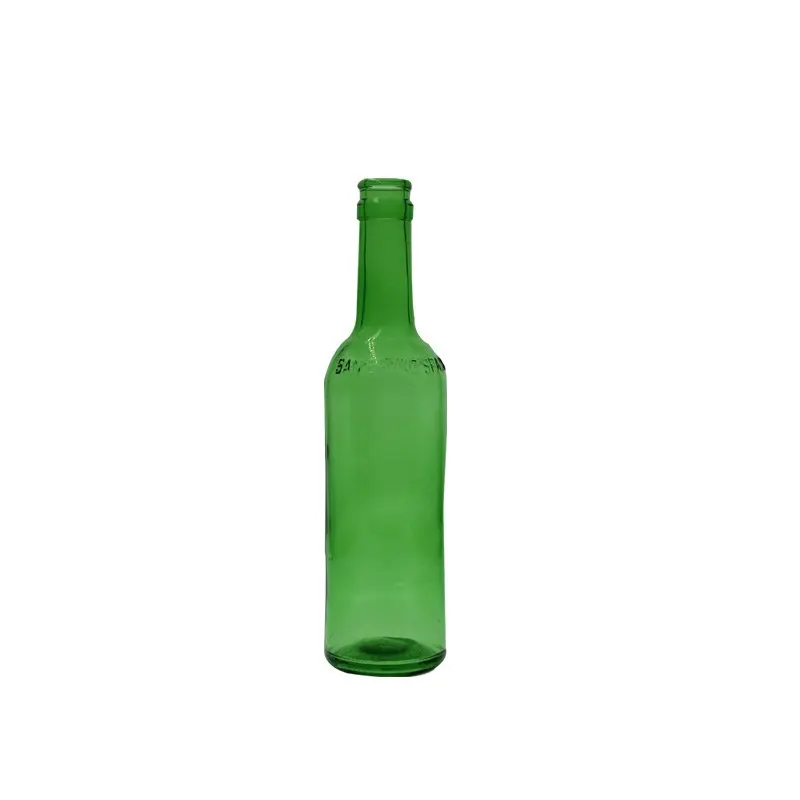
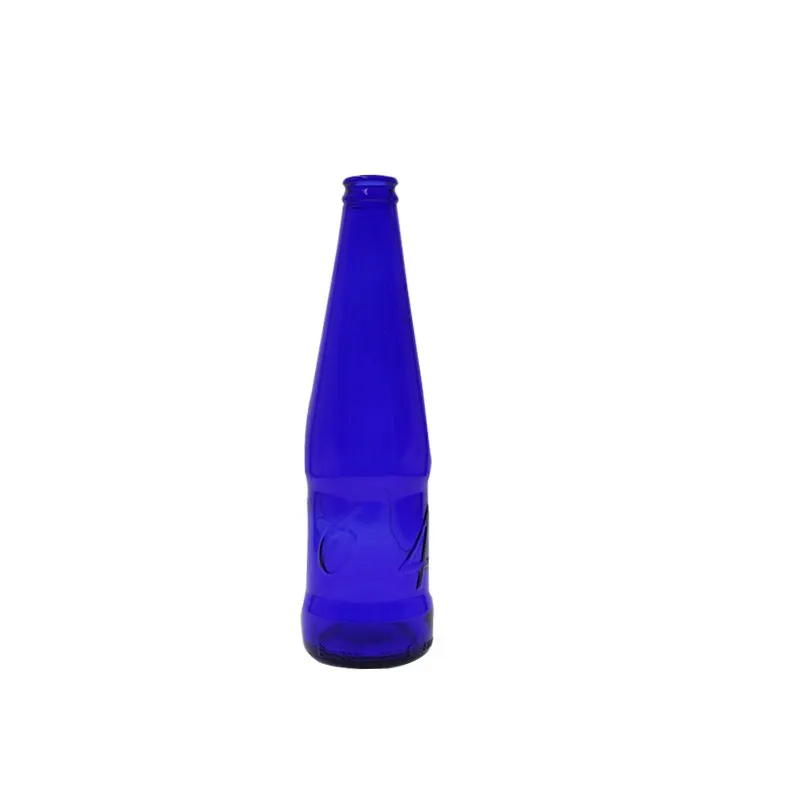
Part of our glass beer bottles range; the stock moulds are pictured at the end of this guide.
This page is the overview node for beer bottles, and it exists for one buyer: the one who has to choose a bottle rather than engineer a detail of one. It answers a single question in three passes — which body format family, which capacity band and which closure route — and then routes every remaining question to the page that treats it properly. That routing is deliberate. This article does not calculate brimful capacity or fill height against your filler, because the capacity reference material does that; it does not size a gasket, a bail wire or a loading ring, because the swing top closure page does that; it does not build a pallet or fill a container, because the wholesale page does that; it does not quote a mould, because the custom bottle page does that; and it does not audit a supplier, because the manufacturer page does that. If you are looking for one format treated in isolation, the pages on the short 330 ml shape and on the 12 oz format each take a single format and go deep. If you are still choosing, read on: the three axes below place almost every beer bottle requirement in a small number of families, and the matrix after them tells you where your next open question belongs. Nothing on this page quotes a price, a minimum order quantity, a certification or a lead time, because those follow from a finished specification and are confirmed on enquiry.
The Three Axes That Decide a Beer Bottle Order
A beer bottle is a container, a filling interface and a marketing surface at the same time, and buyers who try to settle all three at once usually end up re-opening the specification after the artwork is finished. The way out is to treat the decision as three axes and resolve them in a fixed order.
Axis one is the body format family. This is the silhouette the market recognises: the long neck, the short and wide stubby, the taller European standard shape, and the straight-sided or Belgian-style body. The family sets the body diameter and the overall height, and those two numbers decide far more than appearance. They decide whether the bottle sits stably in your conveyor lane, what grid your shipper carton has, and how many layers fit on a pallet. Choosing a family is therefore a decision about your filling and packing equipment as much as about your brand.
Axis two is the capacity band. Capacity looks like the simplest axis and is usually the one that causes the quietest problems, because the number on a quotation sheet is nominal, while the number that matters on the line is the fill height and the headspace above it. A bottle chosen for its nominal capacity and then found to have an unsuitable fill height will overfill or underfill, and neither is visible until the first production run.
Axis three is the closure route. Crown, swing top, cork and cage, or an aluminium roll-on closure. This axis is placed third in the reading order but it is the most expensive to change late, because the closure decides the neck profile and the neck profile is cut into the mould. A buyer who selects a closure after tooling has effectively selected a new bottle.
The reason the order matters is that the axes constrain each other in one direction only. The market convention fixes the capacity band and usually the format, the format narrows the practical closure routes for that body, and the closure then fixes the neck. Working in that sequence costs nothing. Working backwards — choosing a closure for its look, then a body to suit it, then discovering the capacity does not match the target shelf — is how a programme loses a season.
Axis One in More Detail: A Format Is a Family, Not a Silhouette
Buyers often arrive with a reference bottle and a photograph. What they actually need to specify is the family the bottle belongs to, because families come with established dimensions, established carton grids and established filling-line behaviour, while a photograph does not.
The long neck family is the mainstream container in North America and in many export markets that follow North American shelf conventions. Its defining feature is a shoulder that tapers into a comparatively narrow and long neck, which suits a hand-held pour and a standard crown closure. Because the neck is narrow and the body is comparatively tall, the family is usually described by its capacity rather than by its body diameter.
The stubby family is the opposite trade: a short, wide body with a proportionally shorter neck, common in European and Australasian markets. The wide body gives a large label panel and a lower centre of gravity, which some buyers read as a more stable pack on a fast line. The cost of that width is a larger footprint per bottle in the carton and on the pallet, which is a real logistics consequence and not a detail.
The European standard shape, often seen at 330 ml and at 500 ml, sits between the two in height, and the 500 ml version in particular is a workhorse in continental Europe and in several Asian markets. It is frequently specified where a market expects a taller bottle but not the weight of a premium format.
The straight-sided and Belgian-style bodies are usually chosen when the bottle has to carry a premium or craft message. They are heavier, their body diameter is often larger, and they are the family in which swing top closures, cork and cage closures and bottle conditioning most often appear. Weight and height both move upwards here, which changes carton strength, pallet build and the total landed cost per bottle even when the capacity is unchanged.
Two practical consequences follow from thinking in families. First, a family is a starting point for a specification and not a finished specification: two suppliers can both describe a bottle as a 330 ml long neck and differ in body diameter, shoulder height and weight, and those differences are what a filling line feels. Second, family choice is where the largest hidden cost sits. Moving from a narrow long neck to a wide straight-sided body at the same capacity increases the volume each bottle occupies in a carton, which reduces the number of bottles on a pallet, which changes the number of containers a year of demand actually requires. That is a purchasing consequence that appears years before it is visible on a quotation.
Axis Two in More Detail: Capacity Is a Fill Specification First
Every beer bottle number is one of three different quantities, and confusing them is the most common source of an expensive re-order.
Nominal capacity is the label figure: 330 ml, 355 ml, 500 ml, 640 ml, 750 ml. It is a commercial and regulatory statement, and it is the number buyers compare. Brimful capacity is the volume the bottle holds when filled to the very top of the finish. It is always larger than the nominal figure, and it is the number that tells a filler how much headspace is available. Fill height is where the liquid surface actually sits in production, which is set by your filler and your carbonation, not by the bottle alone. Two bottles with identical nominal capacity and different brimful capacity will run at different fill heights for the same fill volume.
The capacity band also interacts with carbonation. Higher carbonation raises the internal pressure, which raises the demands on the glass and on the closure, and pressure behaviour is influenced by the headspace volume above the liquid. A buyer moving from a moderate to a highly carbonated product in the same bottle is changing a pressure case, not a packing case, and the closure and the glass both have to be re-checked. That is why the target carbonation figure belongs in the enquiry even at the overview stage.
Market convention usually settles the capacity band faster than any technical analysis. North American retail programmes gravitate to 12 oz, roughly 355 ml. Continental European programmes gravitate to 330 ml and 500 ml. Belgian-style and bottle-conditioned releases commonly use 750 ml. Some markets expect 640 ml, and some expect an 11.2 oz, or 330 ml, long neck described in North American terms. The convention matters because it drives the shelf expectation, the case configuration and sometimes the excise treatment of the pack. Fighting a market convention is possible, but it is a marketing decision that should be made deliberately rather than by accident.
Axis Three in More Detail: The Closure Chooses the Neck
The closure route is the axis with the longest lead time, and the reason is simple: it is the only one of the three that changes the glass rather than the packing around the glass.
A crown closure needs a finish with a crown seat and a bead that the metal skirt crimps over, and crowns come in pry-off and twist-off profiles that are not interchangeable at the same nominal diameter. A swing top needs a flat or lightly profiled seating surface and a moulded loading ring below the finish for the wire bail to hook under; a bottle that does not have the ring cannot be adapted later. A cork and cage route needs a neck bore and length that suits the cork dimensions and a body strong enough for the pressures that bottle conditioning produces. An aluminium roll-on closure needs a thread profile moulded to the closure manufacturer’s specification, which means the closure supplier and the glass supplier have to agree on a finish code before either starts.
There is one genuinely useful flexibility worth knowing about at the selection stage: some necks are moulded with both a crown finish and a swing loading ring, which allows the same glass to run with a crown on a high-speed line and with a swing top for a special release. That flexibility has to be designed into the mould from the start. It cannot be retrofitted, and the dual profile changes the neck dimensions, so standard swing dimensions should not be assumed to apply unchanged to a dual-neck bottle.
The practical rule for the overview stage is this: decide the closure route before you approve a mould drawing, and if the closure is still open, say so explicitly, because the neck is the one part of the bottle that a later decision cannot modify cheaply.
Purchasing Variables That Change the Answer
Once the three axes are placed, the following variables decide the commercial shape of the order. None of them is answered on this page; they are listed so that they are raised before a quotation rather than after it.
- Annual volume and order rhythm. A single annual booking, a quarterly pattern and a monthly call-off are three different production programmes, and the packing specification that suits one may be wasteful for another.
- Target market and destination port. The market convention sets the capacity band, and the port of discharge sets the packing standard the consignment has to survive.
- Closure supply. Crowns, swing assemblies and cages may be supplied with the glass or sourced locally at destination, and the two routes have different implications for spare parts, spares policy and intercompany accounting.
- Label method. Paper labels, direct printing and shrink sleeves each need a different panel height and a different surface finish, and a panel that is too short cannot be recovered by artwork.
- Pasteurisation. Tunnel pasteurisation subjects glass to thermal cycling, and the thermal history belongs in the specification rather than in a later complaint.
- One-way or returnable. A returnable programme adds washing, gasket replacement and a reuse policy, and it changes what has to be specified at the order stage.
- Case and pallet standard. Shipper carton dimensions, layer count and pallet footprint interact with the market’s distribution system and with warehouse racking at destination.
- Light protection. Amber and other coloured glass reduce the effect of light on the contents, and the colour choice is a specification item rather than a finishing option.
- Fill temperature. Ambient filling, cold filling and warm filling each place different demands on the glass and on the closure.
- First-order breadth. How many formats the first order includes decides how much tooling, artwork and stock-keeping complexity is being taken on at once.
The Three-Axis Selection Matrix
The matrix maps the decisions a beer bottle buyer actually faces onto the three axes and onto the page that treats each question in depth. Read the last two columns together: the page column says where the detail is, and the confirmation column says what has to be settled with the factory before the order, whatever the page recommends. The capacities shown are the bands in which each decision usually sits; they are conventions, not limits, and the final capacity is confirmed against your market and your filler.
| Decision question | Format options | Capacity band | Closure route | Page that covers it in depth | What to confirm with the factory |
|---|---|---|---|---|---|
| I need the mainstream North American retail pack | Long neck | 12 oz, about 355 ml | Crown, pry-off | The 12 oz wholesale page | Finish code, carton grid, and whether the label panel height matches the planned artwork |
| I need the mainstream European or export pack | Long neck or European standard | 330 ml or 500 ml | Crown, pry-off or twist-off | The beer bottle sizes reference | Brimful capacity against nominal, the fill height your filler targets, and body diameter for carton fit |
| I need a shape that stands apart on the shelf | Stubby | 330 ml | Crown | The stubby format page | Overall height and body diameter against conveyor, labeller and carton settings |
| I need a resealable bottle or a gift presentation | Straight-sided or Belgian-style | 330 ml to 750 ml | Swing top with gasket, or cork and cage | The swing top closure page | Loading ring geometry, gasket compound, target carbonation and whether the closure can be supplied as a spare |
| My format and closure are fixed and I am buying by the container | Any family already selected | Any band already selected | Any route already selected | The wholesale buying page | Pallet build, carton specification, loading pattern, and the packing standard the consignment is tested against |
| The bottle itself is the product innovation | Bespoke body or a modified family | To be defined | Decided together with the neck profile | The custom bottle page | Drawing feasibility, embossing or debossing depth, and whether a standard finish can be retained |
| The format is agreed and the open question is the supplier | Any family | Any band | Any route | The manufacturer review page | Which production evidence accompanies a trial order, and who signs and holds the approved specification |
| Only the capacity is still undecided | Any family | 330 ml to 750 ml | Crown in most cases | The beer bottle sizes reference | Nominal against brimful capacity, and the fill height and headspace the line is set up for |
Adjacent Categories: Where a Beer Bottle Programme Stops
The three-axis method is specific to beer, and it is worth saying where the analogy to other glass packaging breaks down, because buyers regularly compare a beer bottle with a bottle from an adjacent category and are surprised when the comparison does not transfer.
Cider and perry sit closest to beer in format terms and often use similar bodies, but the pack is frequently carbonated to a different level and is sometimes sold in a larger format, so the pressure case and the closure route have to be revisited rather than copied.
Kombucha, kvass and other lightly fermented drinks borrow beer bodies readily, but the fermentation continues in the pack in some products, which raises the internal pressure after filling and puts the closure under a load that a still beverage never applies.
Wine and spirits are different problems. Wine formats are defined by a different convention of capacities and neck profiles, and spirits formats are usually chosen for pour control and premium signalling rather than for carbonation. A beer bottle is not a substitute for either, and the reverse is equally true.
Non-alcoholic beer and soft drinks can use beer bodies, and often do, but the fill temperature, the pasteurisation regime and the closure liner chemistry are separate conversations that belong to the filling process rather than to the bottle.
Glass jars are a different selection logic altogether. The jar family is driven by filling temperature, by vacuum closure behaviour and by the ability to be processed after filling, none of which is a primary beer variable. A buyer who needs a processed pack should be working in the jar category, not adapting a beer bottle to a hot fill.
The useful takeaway is that the body format transfers between categories more readily than the closure and the process do. When a buyer borrows a bottle across categories, the format usually survives the move and the neck, the closure and the pressure case rarely do.
Where Each Question Goes Next
The pages below carry the detail behind the matrix. Each one is written to a single intent, which is why the hub does not duplicate their content; the sentence after each link is there so you can tell in one reading whether it is your question or not.
- beer glass bottles wholesale — this page solves the buying and moving problem: pallet build, container loading, packing standards, commercial terms and the cost structure of a repeat order, for whatever format you have already chosen.
- beer bottle manufacturers — this page solves the sourcing question: how to judge a glass plant, what production and inspection evidence to ask for, how capacity is described, and how to read the answers you get.
- custom beer bottles — this page solves the tooling question: which features can be customised, how a drawing becomes a sample and then a production mould, and what the staged costs are.
- stubby beer bottles — this page solves the short-format question: how the 330 ml stubby behaves on a modern line and what changes when a wide body replaces a long neck.
- beer bottle sizes — this page solves the measurement question: nominal against brimful capacity, fill heights, neck finish codes and whether a given format actually fits your filler, labeller and crowner.
- swing top beer bottles — this page solves the resealable closure question: bail geometry, gasket materials, carbonation retention and reuse intervals.
- 12 oz beer bottles wholesale — this page solves the North American volume question: how the 355 ml long neck is packed, palletised and loaded, and how a replenishment rhythm is kept.
What a Useful Enquiry Contains
An enquiry that can be answered in one reply contains three things, and an enquiry missing any of them usually turns into a second and third round of questions. The first is the format preference, stated as a family and, if you have one, a reference bottle or a photograph. The second is the annual volume, with some indication of the order rhythm: one booking, a quarterly pattern, or a monthly call-off. The third is the destination port, because the port decides the packing standard and the loading plan as much as it decides the freight.
Four further items make the answer sharper without lengthening the exchange. State the closure route if it is already decided, and say so clearly if it is still open, because an open closure keeps the neck profile open. State the label method, since a shrink sleeve and a paper label need different panel heights. State whether the product will be pasteurised, and by which route, because thermal history belongs in the glass and closure specification. State the case and pallet convention expected at destination, because a market that expects a particular shipper carton will not accept a different one gracefully, however well the bottles travel.
Two items are worth avoiding in a first message. The first is a request for a single price without a specification, because the price of a beer bottle is a function of weight, finish, packing and volume, and a number quoted without those inputs is a placeholder that will be revised. The second is a target delivery date treated as fixed before the packing and the port are known, because the schedule depends on both. Where a figure is genuinely not yet decided, the most useful thing a buyer can do is mark it as undecided; a marked gap is faster to close than an assumed value that later turns out to be wrong.

Frequently Asked Questions About Beer Bottles
How do I choose between a long neck and a stubby beer bottle?
Choose on three grounds in this order. First, the market convention: a market that expects a long neck will read a stubby as unfamiliar, and the reverse is also true. Second, your line: a wide, short body behaves differently in a conveyor lane, on a labeller and in a carton than a narrow, tall one, so the family has to suit the equipment you actually run. Third, the label panel: the stubby offers a wider panel for a graphic-led design, while the long neck suits a tall, narrow layout and a neck label. Price per bottle should be the last consideration, because the packing consequence of a wider footprint usually outweighs it.
What capacity should I order for my market?
Start from the convention in the destination market rather than from a competitor’s bottle. North American retail programmes usually sit at 12 oz, about 355 ml; continental European programmes usually sit at 330 ml or 500 ml; Belgian-style and bottle-conditioned releases commonly use 750 ml. Then check two things before confirming. Confirm the brimful capacity against the nominal figure, and confirm the fill height your filler targets, because two bottles of the same nominal capacity can behave differently at the same fill volume. If your market is unusual, say so, since the convention is a starting point and not a rule.
Does the closure have to be decided before the mould?
Yes, if the closure route is anything other than a standard crown on a standard finish. A swing top needs a loading ring moulded below the finish, a cork and cage needs a suitable neck bore and length, and an aluminium roll-on closure needs a thread profile agreed with the closure supplier. All three are cut into the mould. A crown finish is the most forgiving route because it is widely available, which is one reason it dominates commercial beer, but even a crown has to be matched to the capping head on your line.
Can one bottle take both a crown cap and a swing top?
It can, and the combination is genuinely useful for a brewery that runs most of its volume on a crown line and a special release on a swing top. The neck is moulded with a crown finish and a swing loading ring together. The consequences to accept are that the neck profile changes, so standard swing dimensions should not be assumed to apply unchanged, and the flexibility has to be designed in from the start. It cannot be added to an existing mould, and it should not be expected as a standard option on a catalogue bottle.
Which beer bottle format is easiest to source in volume?
The formats that follow established market conventions are the easiest, because more than one plant can produce them and their dimensions are widely understood. The long neck and the mainstream European standard shapes fall into this group, as does the 330 ml stubby. Bespoke bodies, unusual colours and dual-profile necks narrow the field considerably and lengthen the development path. If volume is the priority and the design is flexible, choosing the most conventional family available and differentiating through label, closure and secondary packaging is the shortest route to a stable supply.
Do pasteurised and unpasteurised beer need different bottles?
Not necessarily a different bottle, but a different specification conversation. Tunnel pasteurisation subjects the glass and the closure to a thermal cycle, and the thermal history belongs in the specification rather than in a later claim. Unpasteurised or bottle-conditioned beer usually raises the pressure question instead, because refermentation in the pack continues after filling. In practice this means the bottle may be the same while the closure liner, the carbonation target and the packing specification change, and it is the closure and the pressure case that are re-checked rather than the whole format.
How many formats should a first order include?
Fewer than most buyers assume. Every additional format brings its own carton, its own artwork, its own stock line and often its own mould, and the operational cost of breadth is paid every month rather than once. A common and workable pattern is one core format carrying the volume and, at most, one secondary format for a premium or seasonal line, with the two chosen so that they can share a carton or a pallet grid where possible. If diversification is a marketing requirement, it is usually cheaper to diversify through label, closure or gift packaging than through a second body.
Send the Format, the Volume and the Destination Port
Three inputs are enough to start. Send the format preference, meaning the family you have in mind or a reference bottle, and say whether that preference is fixed or open. Send the annual volume with the order rhythm you expect, so that the packing specification can be matched to how the goods will actually be consumed rather than to a single shipment. Send the destination port, because it determines the packing standard the consignment has to survive and the loading plan that the container will follow. Add the closure route and the label method if they are settled, and flag them as open if they are not. With those three items, a format recommendation, a packing and loading plan and a container quantity proposal for the year can be prepared and discussed on numbers rather than on assumptions. Where a figure is still undecided, mark it; an open item that is declared is useful, while an assumed value is a delay waiting to happen.