Filed under wide-mouth food jars; the moulds we quote for this are pictured at the foot of the page.
This page is for the buyer who is portioning jam, marmalade, fruit preserve or a similar spoonable product into a jar of roughly one to two ounces, and who is doing it for a reason that is not ordinary retail: a hotel or airline breakfast tray, a wedding or corporate favour, an in-store or online tasting sample, or a small gift box built around several different portions. The decision in front of that buyer is not which jar is prettiest. It is which single small format to standardise on, how a dense hot jam is actually got into a narrow neck and closed so the portion survives a tray or a parcel, and how several jars are combined into one box without the box costing more than the preserve inside it. That is a different question from the one handled on the page for mini mason jars, which works through the cost structure and closure practice of portioning across the wider one to four ounce range, and it is different again from the broad container hub, where formats are surveyed rather than the portioning job. The boundary here is the job and the channel, not the size: this page assumes a one to two ounce jam portion sold through hospitality, favours, sampling or gifting, and it stops when the portion leaves that band. If the jar you need does not exist at all, the conversation becomes tooling rather than portioning and belongs with a mould project, which is not what this page covers.
What a One to Two Ounce Jam Portion Has to Do
A jam portion is not a scaled-down jam jar, because the way it is used is different. A retail jar is opened, closed, put back and opened again over days or weeks; its closure has to reseal reliably and its label has to carry the full declaration for a product that is bought once and kept. A portion in a breakfast service, a favour or a tasting flight is opened once and finished in one sitting. The consumer does not expect to close it again, so the buyer’s problem shifts away from shelf life after opening and towards presentation and integrity before opening.
That shift changes the specification in four places. First, opening force and access. A portion on a tray has to be opened by someone who did not buy it, often without a tool, sometimes with one hand, and the jam has to come out on a spoon or a knife. A neck that is wide relative to the body helps; a narrow neck with a deep shoulder traps the last of the product and looks half empty when the guest gives up. Second, visual consistency. Portions are presented in rows, three or four side by side on a tray or in a tray insert, and a row of jars whose fill heights differ by two or three millimetres reads as careless even though the net content is identical. Portion consistency is judged by eye before it is judged by weight. Third, tamper evidence. In hospitality and food service the portion is handled by staff who did not pack it, and many operators require a visible tamper feature as a condition of supply whether or not the product is high risk. Fourth, the secondary pack. A portion alone is a jar; a portion in a tray or a box is a unit, and the unit is what the buyer’s customer sees.
There is also a commercial difference. A one ounce jam portion sells at a price per gram that no sixteen ounce jar can reach, because the buyer is paying for the occasion and the presentation rather than for volume. That price advantage only survives if the portion does not carry a full retail cost structure. A lid, a label, a printed tray, an insert, a case, an inspection and a handling step cost broadly the same on a one ounce jar as on a four ounce one, so a jam portion has to be designed against its cost structure from the start rather than copied from a larger format and priced afterwards.
The Buyer Constraints: Contents, Channel and Rule Set
Three constraints decide almost every small jam format, and they interact. The contents set the fill temperature, the acidity, the texture and the headspace. The channel sets how the pack is handled, presented, shipped and priced. The rule set for the destination market sets what has to appear on a surface that may be only a few square centimetres.
Contents. A sugar preserve is normally hot filled. The product is cooked, poured at a temperature high enough to heat the jar and the headspace, and then closed so that the cooling contents pull a vacuum and the closure is drawn down onto the finish seat. That has three consequences at small size. The headspace is a larger fraction of the jar height than it is in a tall jar, so the room left above the product for the vacuum to form is a bigger design constraint. The product is acidic and hot, and the closure lining has to be selected for that combination rather than for a neutral ambient product. And the texture matters: a smooth jelly fills and levels predictably, while a conserve with whole fruit, peel or seeds will bridge across a narrow neck, leave voids and refuse to level, which makes a fill-by-level strategy unreliable and pushes the pack towards net weight filling.
Channel. Four routes dominate this band and each imposes a different requirement. Hospitality and food service, meaning breakfast trays and condiment portions, buy by the case, want a tray or case count that matches their own tray, want the portion to survive rough handling by staff, and usually want tamper evidence; they are also the least tolerant of a jar that will not open cleanly, because a guest who cannot open the portion complains to the operator rather than to the packer. Favours, whether wedding or corporate, are normally a single fixed quantity produced to a date with personalisation on the jar or the box, and the cost of a late delivery is a missed event rather than a stock-out. Tasting samples travel through retail or e-commerce, are judged on appearance before taste, and if they are shipped as parcels they meet a parcel distribution environment rather than a pallet one. Gift sets sit between favour and retail: several portions are boxed as one product, which introduces a box, an insert and a set declaration. Buyers often combine two of these routes, for example a favour that is also a gift set, and that makes the stricter requirement the governing one.
Rule set. Two rule areas arrive earlier than buyers expect. The first is net content. Most markets work on an average system for prepacked products: the average net content of a lot must not fall below the declared figure, and only a limited proportion of individual packs may fall short of it by more than a permitted amount. On a thirty gram fill that rule is met either by filling accurately or by overfilling, and overfilling is the expensive way. The second is food contact. Compliance applies to the glass and to every part of the closure that touches the product, including the sealing compound and any plastic component; the references a buyer is usually asked to accept evidence against are the EU framework regulation 1935/2004, the plastics measure 10/2011 where a plastic part contacts food, and the food contact provisions in FDA 21 CFR for the United States. Labelling then has to fit: mandatory particulars compete for a surface only a few centimetres across, and the thresholds that allow an abbreviated format differ between markets. None of this is unusual, but all of it has to be settled before the jar is chosen, because the printable area and the closure lining are difficult to change once a pilot run has been approved.
The Decision Chain for a Portioned Jam Pack
A portioned jam programme goes wrong in a predictable order, and following the order is what prevents it. Work through these steps in sequence rather than in parallel.
Fix the portion in grams, not in ounces of jar. The two are not the same figure. A jar described as two ounces has a water capacity of roughly sixty millilitres, while a two ounce declared net weight of jam is about fifty-seven grams of a product denser than water, and it still has to fit below the fill line with the headspace the vacuum needs above it. Buyers who order a one ounce jar to hold a one ounce declared net weight of conserve routinely find at the first fill trial that the product reaches into the finish, which is the single most common cause of a closure that will not hold. Write the target net content in grams, the product density and the fill temperature into the enquiry and let the capacity be derived from them.
Derive the working volume and the headspace. Divide the net content by the density to get the product volume, add the headspace the process needs, and check that the resulting fill height sits well below the closure seat. On a small jar a vertical error of two millimetres is a much larger fraction of the neck than it is on a tall one, so the clearance has to be specified rather than assumed.
Decide wide mouth or narrow mouth from the product. If the preserve contains pieces, if it is filled by hand, or if it will be eaten with a spoon from the jar, a wide mouth earns its cost. If it is a smooth jelly poured by a nozzle, a narrower neck with a smaller, cheaper closure is usually the better pack. This decision is made before the closure, because it sets the finish.
Choose the closure family before the decoration. The closure determines the finish, the finish is cut into the mould, and on a new format the mould is the longest lead item in the project. A two piece metal lug closure and a one piece continuous thread closure are different systems and do not share a jar.
State a fill target with a tolerance and a sampling rule. A target net weight without a tolerance is not a specification. State the target, the permitted deviation and how the sample is drawn, then choose the filler that can hold it. This decision drives both the product loss and the overfill margin the pack needs.
Model the cost per portion, not per jar. Build the cost from the glass, the closure, the decoration, the fill loss and overfill, the tray or box, the insert, the case and the handling time, then divide by the grams of product in the pack. If the difference against your larger format is not recovered in the selling price, the issue is the pack design and it will not be solved by negotiating the glass price.
Design the tray or the gift box last. The outer pack has to fit a jar whose dimensions vary within a stated tolerance, and it has to survive the distribution mode it will actually travel in. It is the last decision because it depends on all the others.
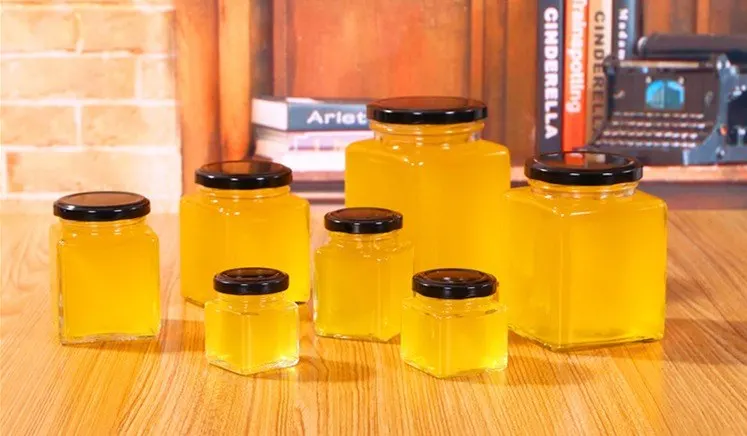
Mini Jam Jar Portioning Reference Table
The table below is a working map from portion size to channel, not a catalogue. Capacities are nominal, and the volume actually available for jam depends on the wall distribution and the fill height, which is why the final column exists: every item in it is something that should come back from the factory as a number, a drawing or a sample, not as a reassurance. Where a figure would change with the recipe, the closure or the market, it is described as a range rather than stated as a fact, and nothing here should be read as a quotation.
| Portion size and jar format | Where the portion goes: hospitality, favour or tasting | How it is filled and closed | Fill accuracy and where the loss sits | Gift box combination route | What to confirm with the factory |
|---|---|---|---|---|---|
| 1 oz, approx. 30 ml, narrow mouth | Breakfast tray or condiment portion with a smooth jelly or marmalade; also a single tasting sample in a small carton | Nozzle or piston filling at the production temperature, then a small lug or continuous thread closure; hand filling is practical for short favour runs | A one gram band is over three per cent of the fill, so the overfill margin needed to satisfy an average net content rule is proportionally the largest in the range | Usually not the main jar in a set; better used as the smallest portion alongside larger jars, or as a single portion in its own tray | Actual water capacity, fill height at the target net weight, tare weight and its variation, and whether a vacuum can be pulled at this headspace |
| 1 oz, approx. 30 ml, wide mouth | Chunky conserve or candied fruit portion where a spoon has to reach the bottom without a narrow shoulder; favour jar with personalisation | Net weight filling preferred; the wide neck reduces bridging and lets a small nozzle or a hand filler work cleanly | Product structure rather than the machine usually sets the achievable accuracy; a declared average approach is normal | Works well as one of three identical jars in a narrow gift box, because the low height keeps the box shallow | Finish diameter and thread code, the vacuum the closure is rated for, and the printable area left on the body and lid |
| 1.5 oz, approx. 45 ml | Hotel breakfast portion, tasting flight portion, or a favour for a two jar set; a common size for marmalade and honey-style conserves | Piston or net weight filling; a continuous thread or lug closure depending on whether the pack is vacuum sealed | The same fixed costs as the one ounce jar are spread over half again as much product, so the cost per gram improves quickly with each step up | The most flexible size for a two jar favour, because it is large enough to read on a box front and small enough to keep the box light | Whether the same closure size is offered across the sizes you intend to run, and the fill temperature the lining is rated for |
| 2 oz, approx. 60 ml, regular mouth | Full tasting portion, single favour, sample set core size, hotel amenity with a printed sleeve | Piston or net weight; the same filler setting can often cover the whole small range, which reduces changeover loss | Accuracy demand is moderate for the band, and the overfill margin is easier to absorb than at one ounce | The natural core jar for a three jar gift box, with one or two smaller or larger jars around it to create contrast | Brimful capacity, the case and tray configuration offered, and whether the size shares a closure with your larger jars |
| 2 oz, approx. 60 ml, wide mouth | Whole fruit conserve, chunky marmalade, dessert or dessert topping portion for food service | Net weight filling; the wide finish makes hand filling and inspection practical, which suits fixed quantity favour runs | Voids and bridging rather than the filler dominate the loss, so the fill trial should use the real recipe | A wide mouth jar of the same capacity occupies more box footprint in a set, so the insert has to be cut for the larger diameter | Whether a two piece vacuum closure is available in this finish, and the diameter and height tolerances that the box insert has to clear |
| 2 oz, approx. 60 ml, shaped or fluted body | Favour and gift jar where the body carries the personalisation, for example a printed label applied to a flat panel | Filling is unchanged, but a shaped body reduces the flat area available for a label and can complicate automatic label placement | Decoration rather than filling drives the unit cost at this size, because the printable flat area is small | Best in a single jar box rather than a set, since the shape makes a multi jar insert more expensive to tool | Flat panel dimensions, label placement tolerance, and whether the shape is available in more than one capacity |
Read the table as a cost curve rather than a menu. As the left column shrinks, the third and fourth columns get worse and the fifth narrows. If the unit economics only work at the two ounce end, the programme is a two ounce programme and the one ounce jar is a decorative element in a set rather than a product in its own right, which is a perfectly good outcome but should be a decision rather than a discovery.
Getting a Dense Hot Jam Into a Small Jar
The filling step is where a portioning project is most often surprised, because a small jar exposes physics that a large one hides. Four effects matter.
Viscosity and temperature. A hot preserve is thinner than the same preserve at room temperature, so it is filled warm and it thickens in the jar as it cools. That is helpful for levelling but it means the fill temperature is a process parameter, not a convenience: the same recipe filled ten degrees cooler will not level in the same time and will not pull the same vacuum. A volumetric filler calibrated on water will be wrong on a conserve whose density changes with temperature, sugar content and fruit load. Calibrate on the real product at the real temperature and record the density used.
Pieces and bridging. In a narrow neck, a piece of peel or a whole cherry can bridge across the opening and stop the flow, leaving a jar that looks full at the shoulder and hollow below. Wide mouth formats substantially reduce this, and so does a nozzle sized above the largest expected piece. If neither is possible, hand filling with a wide funnel is a legitimate answer for a fixed favour quantity, but it has to be planned for in the labour model, because hand filling a hot product into a small jar is slow and the operators need a safe working method.
Drip, strings and the finish. Jam drips. A drip that lands on the finish thread is product in the seal path, and on a small jar the finish is short enough that a single drip can spoil the seal. The practical controls are a clean pouring cut-off, a wiper or air blow before capping, and a fill height that leaves real clearance below the seat rather than a token one. Wiping has a second benefit on a hot fill: it removes product that would otherwise bake onto the neck.
Headspace, cooling and vacuum. The vacuum is formed by the headspace gas contracting as the jar cools. Too little headspace and the vacuum is weak or the product is drawn into the closure; too much and the jar looks half empty and the vacuum may be excessive. Because a small jar has less absolute volume to work with, the tolerance on headspace is tighter than on a large jar, and the check should be done on the real product after cooling rather than on the line immediately after capping. Where a vacuum is not actually needed, because the portion is ambient filled and consumed quickly, a simple continuous thread closure with a suitable liner is a lower cost and lower risk answer, and it should be offered as an option rather than assumed away.
Closures at One to Two Ounces: Lug, Twist and Continuous Thread
Small jam jars use the same two closure families as large ones, and the choice is a system choice rather than a preference. A lug, sometimes called a twist-off, closure is pressed down and turned a short distance so that lugs on the skirt engage interrupted threads on the finish. It is the classic vacuum closure and it closes in roughly a quarter turn, which is an advantage on a tray. A two piece lug closure separates the shell from the band, which lets the band be re-tightened after opening and lets the lid flex visibly if the vacuum is lost. A continuous thread closure turns through a fuller revolution onto a helical thread, and the finish is described by a diameter and a thread code, for example a forty-three millimetre finish with a four hundred thread type, written as 43-400. The suffix matters: two closures that both read as forty-three millimetres are not necessarily interchangeable if the thread type differs.
Three consequences apply at small size. A lug closure and a continuous thread closure do not fit the same jar, so the family has to be fixed before tooling or before an existing mould is chosen. Seal quality depends on the closure, the finish and the capping head being set for each other, and a small jar gives the head less material to work with, so a head set for a larger size is not automatically right at a smaller one. And vacuum behaviour is a property of the combination of headspace, fill temperature and lining, which is why the fill temperature belongs in the closure enquiry rather than in a separate conversation.
The cost opportunity worth chasing is standardisation. A range of two or three jam portions can often be built on one shared finish, which means one closure item, one capping head setting, one label die if the lid is decorated and one inventory line. A buyer who specifies each size independently gains a little design freedom and pays for it on every subsequent order. The question to put to a factory is not whether a particular lid fits a particular jar but which of the sizes in the intended range can be supplied on a shared finish, and what that does to the closure options that remain available.
Where tamper evidence is required, the answer is usually a band rather than the lid: a shrink band, a breakaway ring on a plastic closure, or the raised button on a metal lug closure that shows the vacuum has formed. The choice follows the channel. Hospitality and food service portions frequently require a visible tamper feature even when the product is not high risk, because the pack is handled by people who are not the packer. Confirm the tamper option when the closure is chosen, because a shrink band adds a station to the line and a consumable to the cost.
Building a Gift Box From Several Small Jars
Most buyers who start with a jam portion eventually assemble a set, and a set is a different packaging problem from a single jar. The jar is a container; the set is a piece of furniture that has to hold several containers, close, protect them, and present them when opened. Four constraints decide whether the set works, and one commercial question decides whether it is worth doing.
The dimensional constraint. A jar varies within the tolerance on its drawing, so an insert pocket cannot be cut to the nominal diameter or the box will not close on the day the jars run at the upper limit. Cut the pocket to the maximum permitted diameter plus a handling allowance, and size the box on the resulting footprint. This means the jar drawing and the box specification have to be developed together, and the diameter and height tolerances are packaging inputs, not only quality figures. Where the set is deep, the same applies to the height: pocket depth and lid clearance depend on the tallest permitted jar.
The distribution constraint. A set for retail travels on a pallet inside a case and needs a case that stacks and a box that does not scuff. A set shipped direct to a consumer travels as a parcel and meets drop, vibration and compression events that a palletised case never sees, so the box and insert have to be tested as a parcel. Parcel carriers and marketplaces frequently reference the ISTA series of distribution tests by protocol number, and asking whether the finished set has been tested to the protocol your channel uses is a more useful question than asking whether the packaging is strong, to which the answer is always yes.
The volumetric constraint. A set of three or four small jars in a rigid box with an insert is light and bulky, and parcel and less-than-container freight is often priced on the greater of actual and volumetric weight. The box dimensions therefore drive delivered cost more than the weight of the glass does, and reducing the box by a centimetre in each direction can be worth more than reducing the jar weight.
The declaration constraint. The individual jars may or may not carry full mandatory labelling depending on the market, and the outer box usually has to carry the declaration for the set. Some markets permit a declaration of the number of units multiplied by the net content where the units are identical and visible. Verify the rule for the destination market rather than assuming that what works for a single jar works for a set, because a gift set crossing a border is a prepack like any other.
Cost allocation across the set. This is the question buyers most often get wrong, and it decides the configuration. The glass, the closures and the labels scale with the number of jars; the box, the insert, the printing plate and the set declaration do not. The second and third jars in a set therefore cost noticeably less than the first, and a set of three is usually a better commercial proposition per jar than a set of two, while a set of four begins to pay for a larger box and a more expensive insert. The right way to see it is to price the set as one unit, then divide by the total grams of jam in the box rather than by the number of jars. If that figure does not improve as jars are added, the constraint is the box, not the glass, and a shallower box with flatter jars is often the fix.
Two practical rules follow. Keep the number of distinct jar sizes in a set as low as the story allows, because every distinct size is a distinct closure, insert pocket and inventory line. And confirm the case and pallet build at the same time as the jar specification, because a light case with a large footprint and a weak stacking pattern fails as deformed boxes and scuffed jars at the destination rather than as breakage.
Where This Page Stops
This page covers jam, marmalade and preserve portions from one to two ounces, the hospitality, favour, sampling and gift routes they travel, the filling and closure practice that a small hot fill demands, and the gift box that usually follows. Three adjacent decisions are deliberately outside it.
If your portion is small but not jam, and you are choosing between sizes across the one to four ounce band on the basis of cost per gram, closure options and set packaging rather than on the behaviour of a preserve, the page on mini mason jars is the closer fit. If the product decides the container rather than the portion size, because its viscosity, crystallisation or fill behaviour is the governing constraint, the relevant page is the one for honey jars, where the neck and the fill are chosen around a thick, slow-moving liquid. And if what you actually need is the wider survey of container formats, capacities and closure families before the portioning decision is made at all, start from glass jars, which is the hub for this range.
Stating the boundary matters because the questions overlap. A portioned preserve is often asked to look like a miniature of the parent product, and that instinct pushes a buyer towards a new mould, a new closure and a new box all at once. Keeping the portioning decision on this page, the use-specific behaviour on the product pages and the tooling in a separate development conversation stops three different risk profiles from being settled in one order.
Frequently Asked Questions About Mini Jam Jars
What is the difference between mini jam jars and mini mason jars?
The size band overlaps and the difference is the job rather than the glass. A mini mason jar is a format defined by a lug, or twist-off, finish intended for a two piece metal closure and a vacuum seal, and it can hold jam, honey, salsa or a dry mix equally well. A mini jam jar is a portioning decision: the contents are a preserve, the portion is one to two ounces, and the pack is designed for a tray, a favour, a sample or a gift box. The two often converge on the same jar. When you specify, describe the finish, the closure and the fill rather than the style name, because a lug finish and a continuous thread finish of the same diameter do not accept the same lid.
Can a one ounce jar hold a declared one ounce of jam?
It can be close, and it needs checking rather than assuming. A one ounce jar has a water capacity of roughly thirty millilitres, and a one ounce declared net weight of jam is about twenty-eight grams of a product denser than water, so the product volume is a little smaller than the capacity figure suggests. The binding constraint is not the volume but the headspace: a hot filled vacuum pack needs clear space above the product for the vacuum to form, and on a small jar that space is a large share of the height. Write the declared net weight, the product density and the fill temperature into the enquiry and ask for the fill height at that net weight, then validate on the real recipe.
Which closure is better for a hot filled jam portion, lug or continuous thread?
For a genuine vacuum pack, a metal lug or twist-off closure is the conventional answer, because the closure is designed to be drawn onto the finish seat as the headspace contracts, and the lid gives a visible indication if the vacuum is lost. A continuous thread closure is a good answer when the portion is ambient filled, consumed quickly or shipped as a favour where a quarter-turn lid is not essential. Neither is universally better, and the two do not fit the same jar. State the fill temperature and whether a vacuum is required, and let the closure family be chosen for that combination rather than for appearance.
Does a wide mouth jar hold less jam than a narrow mouth jar of the same capacity?
Not by design, but it can hold less in practice. Two jars with the same nominal capacity hold the same volume of water; the difference appears when the product is a conserve with pieces and the fill height has to stop lower than the seat. A wide mouth makes it easier to fill cleanly and to reach the product with a spoon, which usually means a higher usable fill and less product left in the jar. A narrow mouth with a deep shoulder can leave the last spoonful inaccessible, which reads to a guest as a short portion. If the jar is judged on how it empties, the wide mouth is often worth the larger closure.
How many jars should go into a gift box?
Judge it on cost per gram in the box rather than on how the set looks in a photograph. Because the box, the insert and the printing plate do not scale with the number of jars, the second and third jars in a set cost less than the first, and three is usually the point at which the set is most efficient per jar. A fourth jar often forces a larger box and a more expensive insert, which can reverse the gain. Keep the number of distinct jar sizes low, and if the arithmetic stops improving when a jar is added, the constraint is the box rather than the glass, and a shallower box with flatter jars is the usual fix.
How should the gift box cost be split across the jars inside it?
Do not split it. Price the set as one unit and divide by the total grams of jam in the box, then compare that figure with the same calculation for a single jar sold alone. Allocating box cost per jar encourages a set with too few jars, because each jar appears to carry the whole cost of the box; dividing by the total fill shows the real relationship, which is that the container-linked costs are shared and the product-linked costs multiply. If the per-gram figure is worse than the single jar, the box is too large for the fill, and the answer is a tighter box rather than a cheaper jar.
Do mini jam jars need a tamper evident seal?
It depends on the channel rather than on the product. Hospitality and food service portions are usually required to carry a visible tamper feature because staff and guests handle the pack after it leaves the packer, and a shrink band, a breakaway ring or the button on a metal lug closure all satisfy the requirement in different ways. Retail gift sets sold through normal channels frequently rely on the vacuum indication and a sealed outer box. Confirm the requirement for the destination market and the channel before the closure is fixed, because adding a shrink band after the line is designed means an extra station and an extra consumable.
Send Your Use, Single Jar Capacity and Order Quantity
A small format cannot be recommended from a product photograph. Send the use, meaning whether the portion goes onto a breakfast tray, into a favour, out as a tasting sample or into a gift box, together with the single jar capacity you have in mind in millilitres or grams, the target declared net content, the recipe type and density, the fill temperature, whether the pack is a vacuum pack or an ambient pack, and the order quantity with the annual volume behind it. If the pack is a set, add the number of jars per box and the box concept. With those items a factory can answer on format, fill height, closure family, tray or insert configuration and lead time rather than in general terms. If you are still deciding between a one ounce and a two ounce jar, say so, because the answer usually turns on the overfill margin and the closure cost per gram rather than on the glass, and those are the two figures worth comparing before the size is fixed. Bulk ordering in this band is dominated by run length rather than by capacity, so the annual figure matters as much as the first order.