Filed under wide mouth glass jars; the moulds we quote for this are pictured at the foot of the page.
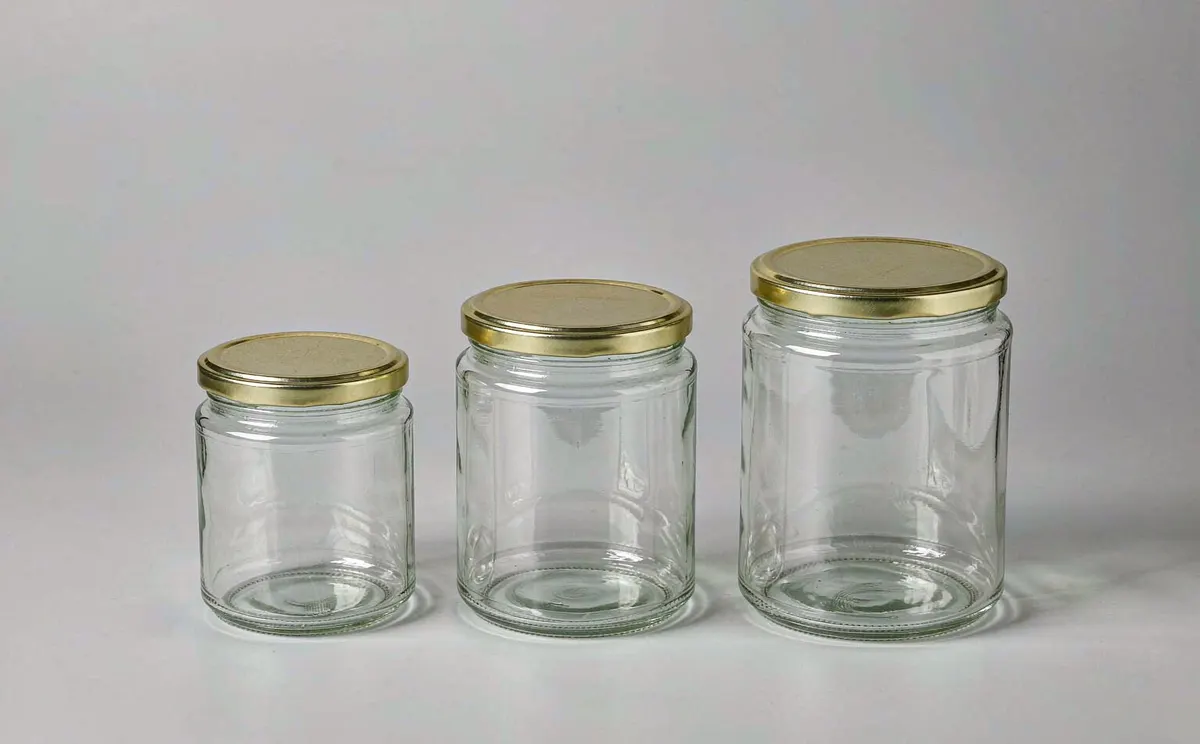
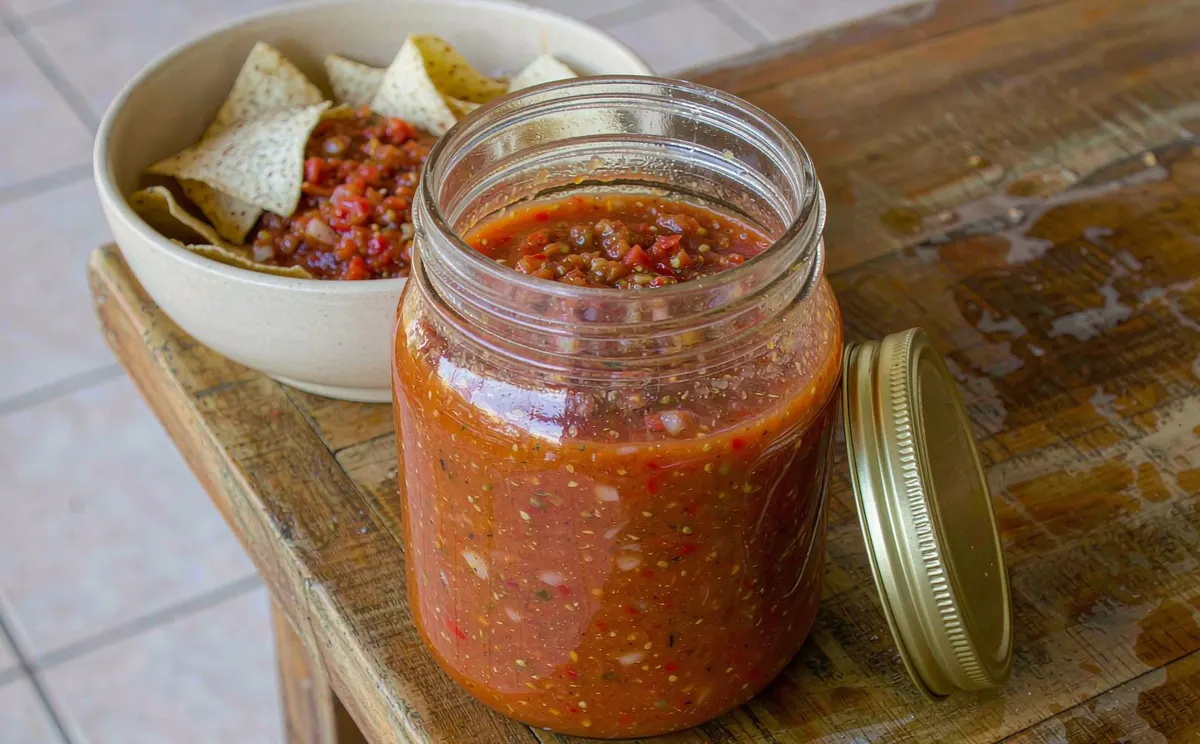
Salsa needs a round, wide-mouth glass jar because it is chunky: diced tomato, onion, pepper and fruit have to drop through the opening on the filling line and come back out on a spoon or a chip. Three sizes cover most programs, 12 oz (355 ml), 16 oz (473 ml) and 24 oz (710 ml), all rated for hot fill up to 85 °C (185 °F) and finished for lug or twist-off metal lids. Choose the size by sales channel, then fix the finish diameter, the headspace and the lid liner.
Sizes, finishes and dimensions
Each of the three is a straight-sided or gently tapered round jar in food-contact soda-lime glass. The mouth is wide enough that particulates do not bridge at the neck. Finish is given in millimetres and corresponds to the lug and twist-off lid diameters that closure suppliers stock as standard.
| Size | Fill volume | Mouth / finish | Body diameter | Height | Wall | Hot-fill limit | Typical use |
|---|---|---|---|---|---|---|---|
| 12 oz | 355 ml (12 fl oz) | 63 mm / 70 mm | 78 mm (3.07 in) | 92 mm (3.62 in) | 2.2 mm | 85 °C (185 °F) | Single-serve, foodservice, dip cups |
| 16 oz | 473 ml (16 fl oz) | 70 mm / 82 mm | 84 mm (3.31 in) | 108 mm (4.25 in) | 2.4 mm | 85 °C (185 °F) | Standard retail salsa, dips |
| 24 oz | 710 ml (24 fl oz) | 82 mm / 89 mm | 94 mm (3.70 in) | 122 mm (4.80 in) | 2.6 mm | 85 °C (185 °F) | Family size, deli, foodservice tub |
These dimensions are nominal. Confirm them on a signed sample before you spend on tooling or decoration.
A wide-mouth salsa jar is the wrong package for some neighbouring products. A smooth, long-cooked passata belongs in jars made for pasta sauce, which are set up for a different viscosity and headspace. A thin, high-acid pepper sauce is better served by bulk hot sauce bottles with a narrow woozy neck. Thicker barbecue-style sauces can use similar finishes with a different shoulder, as on our BBQ sauce bottle range. To set every jar family side by side, use the wide-mouth food jar hub.
Which size fits which channel
- 12 oz. Single-serve, foodservice and gift bundles with tortilla chips. It photographs well, ships without damage and takes a dipped lid or a printed sleeve.
- 16 oz. The standard retail jar for mild, medium, hot and verde salsa. Co-packers running several client recipes often standardise on it with one closure diameter, which shortens changeovers and lets one cap inventory serve several SKUs.
- 24 oz. Warehouse clubs and value retailers, where a larger jar lowers the cost per ounce. Its bigger diameter also leaves more label area for compliance text and bilingual claims.
Delis and restaurants pack queso, bean dip, guacamole-style spreads and layered taco toppings in the 16 oz and 24 oz jars. The opening takes a ladle or a portion scoop, and the jar can be displayed cold or warmed in a bain-marie, depending on the formulation and the food-safety plan.
Export programs deserve early attention to label space. Buyers in North America and Europe often need Spanish-English or French-English text, a nutrition panel and a country-of-origin mark. The 16 oz and 24 oz jars have room for these without squeezing the brand mark. Settle the required label fields before the decoration proof is drawn, so the statutory text has its space reserved.
Hot-fill limits, thermal shock and headspace
Thermal shock resistance is the glass property that matters most here. The jars in this range withstand a rapid temperature change of at least 40 °C (72 °F) without fracture. That covers the step from a jar at ambient line temperature to salsa filled near 82–85 °C (180–185 °F). If you fill hotter, or use a steam-flow closure, ask for the heavy-weight option, which has a thicker sidewall and a reinforced shoulder.
Headspace is the other variable to fix before the first run:
- 12 oz jars: at least 6 mm (0.24 in)
- 16 oz and 24 oz jars: at least 9 mm (0.35 in)
This gap leaves room for the particulates, for thermal contraction and for the vacuum that forms on cooling. Fill too high and product is pushed into the closure threads, where it causes leaks and mould at the finish. Fill too low and the vacuum is weak, the seal loses strength and shelf life shortens.
Glass colour and forming quality
Flint, meaning clear, is the default. It shows the chunky texture and lets the red, green and orange of the peppers and tomatoes do the selling. Emerald green is the alternative for recipes with herbs or oils that degrade in light: it screens part of the light and still looks natural for a Mexican food line. Both colours are soda-lime glass made to food-contact standards for heavy metals, with arsenic-free clarifying, and both go into ordinary glass recycling.
Wide-mouth jars are formed by press-and-blow, which produces the straight, even sidewall and clean finish that fast capping lines need. Each jar is then cooled slowly in an annealing lehr to release internal stress, and residual strain is checked with a polariscope. Surface inspection looks at finish flatness, sidewall concentricity and base stability, so the jar does not rock on a conveyor or under a capping chuck.
Pay most attention to the finish. The lid seats on the glass itself, not only on the liner, so the thread or lug lands, the sealing surface and the bead all need tight dimensional control. A badly controlled finish is the leading cause of low vacuum, curl and leaker complaints at retail. The glass must also meet the extraction limits for lead and cadmium on food-contact surfaces, and no decorative ink should touch the food zone above the fill line. Brands that pack preserves as well can run the same checks and lid compatibility across our jam jar range.
Lids and liners
Lug and twist-off metal closures come in 63 mm, 70 mm, 82 mm and 89 mm to match the jar finish. Lug lids suit high-speed lines and open with the pop that tells the shopper the vacuum held. Twist-off lids are easier to reopen and reseal at home.
The liner is chosen from your fill temperature and pH. Standard plastisol handles hot-fill vacuum, and a specialised compound is used for high-acid recipes. Inner seals, tamper-evident bands and dispensing inserts can be sourced too, but for salsa the plain metal lid with a safety button is still the option shoppers recognise most readily.
Decoration and customisation
Most buyers keep a stock jar shape and differentiate through the lid, the label and the decoration. A new mould is a larger investment that makes sense only at very high volumes.
- Colour. Clear flint is standard, and emerald green and amber tints are available at volume. A Pantone-matched tint needs a dedicated furnace campaign and a qualifying annual volume, so raise it early.
- Printing. Direct-screen printing and applied ceramic labelling (ACL) survive pasteurisation and dishwashing. ACL keeps the brand on the jar after a paper label has come off.
- Labels and sleeves. Pressure-sensitive labels and shrink sleeves are applied through your label supplier, not at the glass plant.
- Embossing. A light logo on the shoulder or base needs a modified mould. It adds tooling cost and time, and gives a tactile cue that private-label competitors find hard to copy.
Keep any claim printed on the glass or lid conservative and tied to the package: hot-fill rating, finish diameter, glass colour, reseal performance. Health and nutrient claims belong to the food producer. We flag requested wording that goes beyond what a glass and closure supplier can verify, which keeps the packaging specification clean for retailer audits.
Samples, documents and shipping
Stock samples are sent in quantities of 2 to 5 units for fit and closure testing. Brands that need to validate decoration and vacuum before a full container can ask for production-matching samples.
Each shipment carries a material certificate, a food-contact compliance statement and a lot traceability record. Third-party migration reports for heavy metals and overall migration are available on request for your food-safety dossier and retailer audits.
Jars are palletised with corner boards and stretch wrap. We help with booking and export documents for full containers and for consolidated loads. Putting salsa jars in one container with other sauce lines means a single booking and a single customs entry for several SKUs.
Minimum quantities and lead times are quoted per project. They depend on the mould, the decoration and the line schedule, and custom colours, embossing or ACL change them.
Frequently asked questions
How hot can salsa be filled into these jars?
Up to 85 °C (185 °F) in the standard range, which is enough for most cooked salsa and dip recipes. Above that, the heavy-weight jar or a steam-flow closure is needed, and we specify the configuration once we have seen your process parameters.
Do the jars work for cold-filled refrigerated salsa?
Yes. The jar is the same, but less vacuum is required and the lid choice moves towards one that reseals tightly. A tamper-evident band and a storage-after-opening note on the label are still advisable.
Are lids supplied with the jars?
Yes. Jars can be supplied together with matching lug or twist-off metal lids, including plastisol-lined lids for hot-fill vacuum. Sourcing both together lowers the risk of leakers from mismatched parts bought from separate vendors.
Should a 16 oz jar have a 70 mm or an 82 mm finish?
Both are common. The 70 mm finish takes a smaller lid and is typical of standard retail. The 82 mm finish opens wider, which some brands prefer for scoopable salsa and dips. Fill method and label layout usually decide it.
Is glass safe for low-pH products such as salsa verde?
Yes. Soda-lime food glass is inert to acidic foods, and the lid liners are selected for low-pH contents. Migration test reports can back up your regulatory file for domestic and export markets.
Can three sizes share one container?
The 12 oz, 16 oz and 24 oz jars can be consolidated in one container when they share a glass colour and furnace campaign. New brands use this to launch a full range in a single shipment.
Which decoration holds up through pasteurisation and cold storage?
ACL and direct-screen printing with ceramic inks cope with pasteurisation, refrigeration and repeated handling better than paper labels, which can saturate or peel. Shrink sleeves also perform well.
What support is there for co-packers with several client recipes?
A stable standard jar, one closure diameter across SKUs to simplify inventory, and confidential decoration for each client. Salsa jars can also be bundled with other condiment lines in one consolidated shipment.