Part of our glass cosmetic packaging range, where the stock moulds for this are listed and quoted per project.
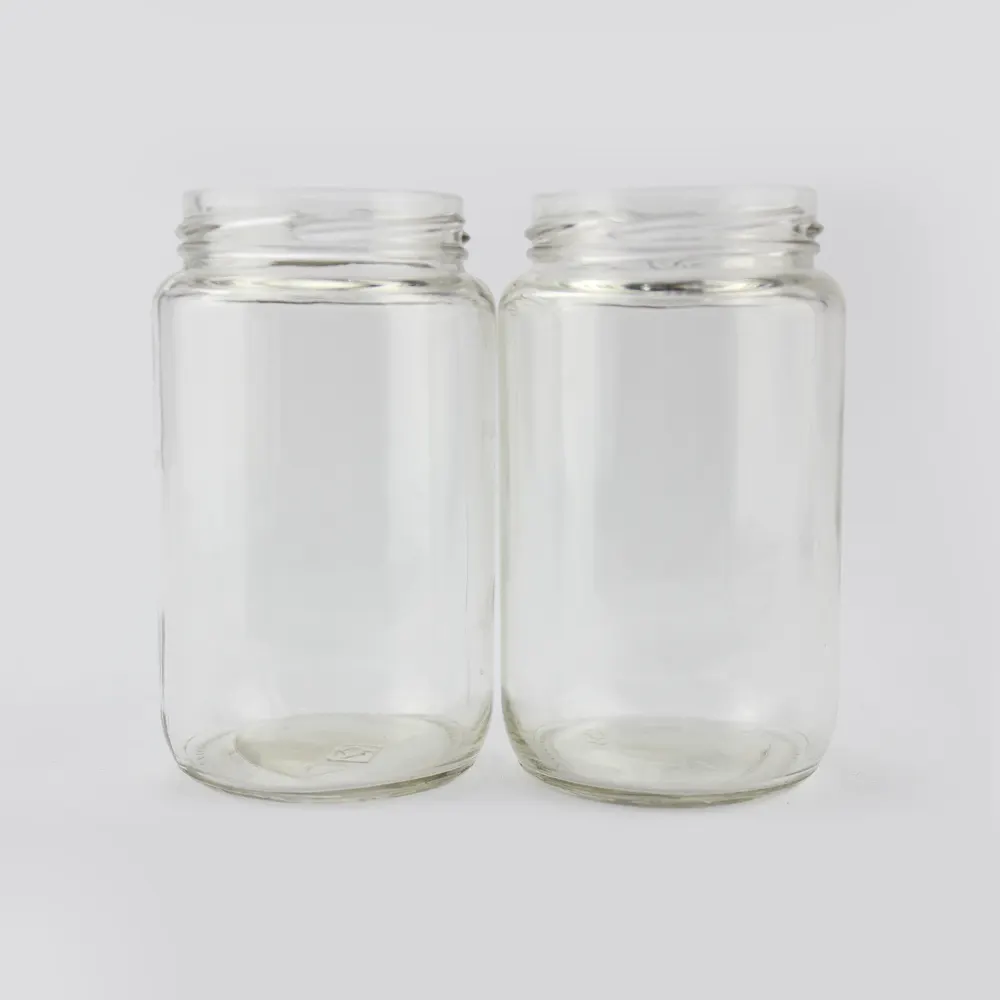
A custom cosmetic jar is defined by five things on the drawing: wall and base thickness, the closure stack of cap, inner lid and liner, the capacity, the order of decoration, and who owns the mould. For a prestige cream jar the usual figures are a sidewall of 4 to 8 mm and a base 10 to 20 mm deep, and most programmes are best started at 50 g. Minimum quantities and mould costs are quoted per project, since they depend on the tooling, the decoration and the line the jar runs on.
Wall and base thickness
Thickness is the strongest cue of quality in a cream jar. The familiar upper-tier shape is a heavy-base jar in which the depth of glass under the product can be greater than the height of the fill. That mass gives the cold, dense feel buyers link with luxury skincare, and it drops the centre of gravity so the jar stays put on a crowded shelf.
State the construction in numbers. Sidewalls of 4 to 8 mm and base depth of 10 to 20 mm are typical at the top of the market. Thick sections cool slowly, which lengthens annealing and cuts the number of jars a line turns out per hour, so a heavy-base jar costs noticeably more than a standard-wall jar of equal capacity. You pay for machine time and energy as well as glass weight.
Specify the push-up too. This is the concave dome moulded into the underside of the base. A deep push-up takes weight out of the jar while the base still looks deep from the side. Ask for two or three push-up geometries compared on weight against perceived depth; it is among the least expensive ways to make a jar look richer.
Cap, inner lid and liner
The seal on a cream jar is three components, and it pays to specify each on its own line.
- Outer cap. Acrylic leads the prestige segment because it can be moulded with glass-like clarity, a double wall and real weight. PP and ABS caps serve masstige and professional ranges.
- Inner lid or disc. The removable piece the user lifts off to reach the cream.
- Liner. It sits between the cap and the jar mouth and does the actual sealing.
The liner needs its own test, because the right choice depends on the oil and water phases of the formula.
| Liner | Strength | Limit |
|---|---|---|
| Foam PE | Dependable default for standard emulsions | Not the strongest barrier |
| Induction seal | Tamper evidence and the best moisture barrier | Requires investment on the filling line |
| Pressure-sensitive | Convenient to apply | Unsuitable for oil-rich balms; it can delaminate against a high oil phase |
Validate the liner against your exact formula with the filler before approval, then run a torque-retention test on the assembled jar. A cap that works loose in transit comes back as a return. Where a range includes both jars and bottles, handling every closure component through a single partner keeps the tolerances in one place; our guide to glass bottle closures explains how.
Capacities from 15 g to 100 g
Demand gathers in four sizes, and each has a different job in a range.
| Capacity | Typical product | What to note |
|---|---|---|
| 15 g | Eye cream, trial sizes | Often a customer's first contact with the brand, so finish quality counts for more than the fill value suggests |
| 30 g | Targeted treatments, serums in balm form | Sits naturally in a family with the larger sizes |
| 50 g | Standard face cream | The busiest size for moulds, decoration and closure engineering, and the sensible starting point for a custom programme |
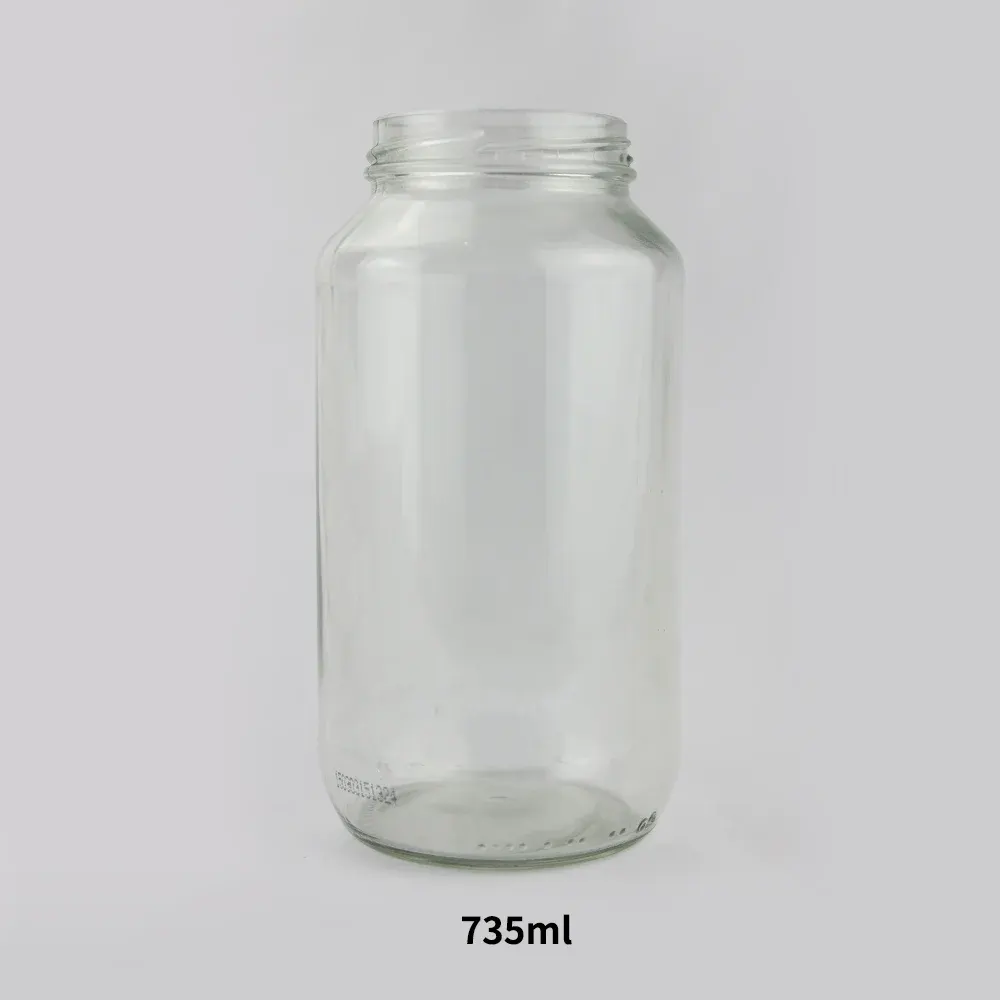
| 100 g | Body butters, masks, professional backbar | Check mouth diameter against the filling equipment; a wide-mouth jar can be too large for the change parts of a smaller line |
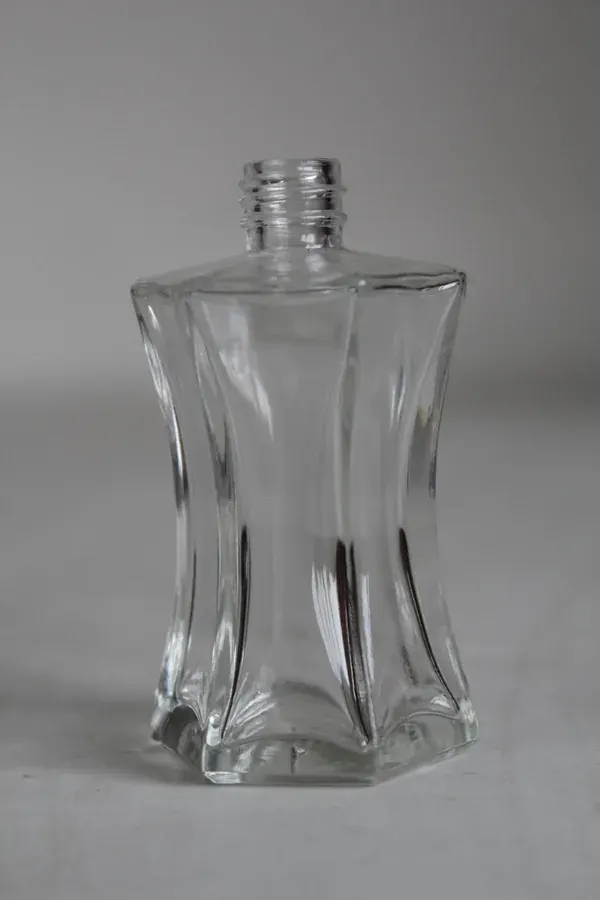
Plan the sizes as a family. If the 30 g, 50 g and 100 g jars share a shoulder radius and a cap system scaled by diameter, a single decoration line and a single cap supplier can cover all three, and the set reads as one collection in product photography. A single cap fits every size only where the neck finish diameter is identical, which restricts the design, so a matched cap family is the more common answer. The stock ranges on our wholesale cosmetic jars page show how this scaling works in practice.
Frosting, screen print and hot stamping
Three processes account for most cream jar decoration, and they have to be applied in a fixed order.
- Acid frosting first. It gives the satin surface common in prestige skincare. Ask for uniform frosting over the whole body and shoulder, done before any print goes on. Frosting alters the glass surface itself; it is not a coating, and it cannot peel or flake.
- Silk screen printing next. It carries logos, ingredient lists and regulatory text in one to three spot colours. Fired ceramic inks are effectively permanent and dishwasher-proof. UV-cured organic inks offer more colours with slightly lower abrasion resistance.
- Hot stamping last. Metallic foil in gold, silver or rose gold suits accent bands and logos. On curved surfaces keep stamped lines wider than roughly 0.2 mm, and never stamp over a coating that has not cured.
Durability problems usually lie in what is printed or stamped over the frosting, so ask for adhesion test results on ceramic inks and cured coatings.
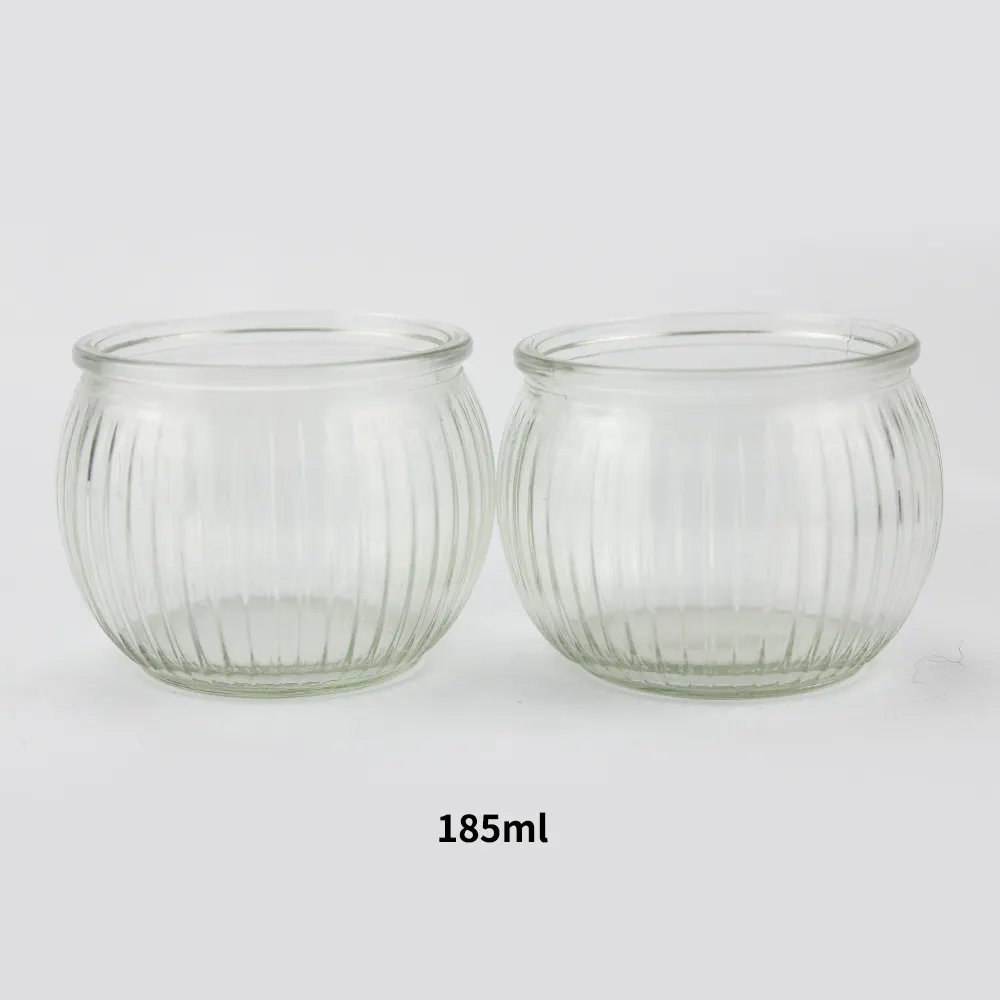
Count the rejects honestly. With frosting passing at 98 percent, printing at 97 percent and stamping at 97 percent, about 92 percent of jars end up sellable. Every extra process adds a queue, another round of handling and another multiplier on yield. A calmer first year limits decoration to two processes and brings in the third once volume supports it. Ribbed or textured glass is another route to grip and shelf distinction with no added decoration pass.
Mould development stages
A custom jar mould moves through the same stages each time. Knowing them makes it easier to see where approvals fall.
- Design and 3D modelling. This ends in a signed drawing that locks capacity, weight, finish and tolerances.
- Prototype. A CNC-machined acrylic or resin model is used to judge hand feel and to shoot shelf photography. It is cheap enough to revise twice.
- Mould machining. The set comprises a blank mould, a blow mould and a neck ring. T1 samples, the first glass from the production mould, follow.
- Decoration proofs and pre-production. Proofs are made on T1 glass, then a run of a few hundred units is tested for compatibility, torque and transit before the main run.
Two terms belong in the tooling agreement itself, not in an email. The first is ownership: the mould belongs to you, is stored at the plant, is not run for anyone else and can be transferred on written notice. The second is cavity numbering: each jar carries a cavity mark, so a defect pattern can be traced to one cavity and does not force rejection of a whole lot.
MOQ, budget and the stock-jar bridge
Minimum order, mould cost and schedule are quoted for each project. They are driven by the mould, the number of decoration processes, the quantity and the line the jar is booked on.
A common bridge is a stock jar finished with your own cap and decoration. A brand launches that way, proves the product sells, and commits to tooling once the numbers support it. Ask for both routes quoted side by side so the comparison is plain.
FAQ
What is the MOQ for custom cosmetic jars?
It is set per project, according to the mould and the production line it runs on.
How long does a custom jar mould take from brief to production?
The schedule is quoted once the mould, the decoration and the line booking are confirmed. The sequence is fixed: drawing, prototype, mould machining with T1 samples, then decoration proofs and a pre-production run.
Which liner suits an oil-rich balm?
Not a pressure-sensitive one. Foam PE copes with most emulsions, and an induction seal gives the strongest moisture and oxygen barrier along with tamper evidence. Test the choice against the real formula with your filler.