Filed under glass cosmetic packaging — start there for the stock moulds, then use the detail below to narrow the spec.
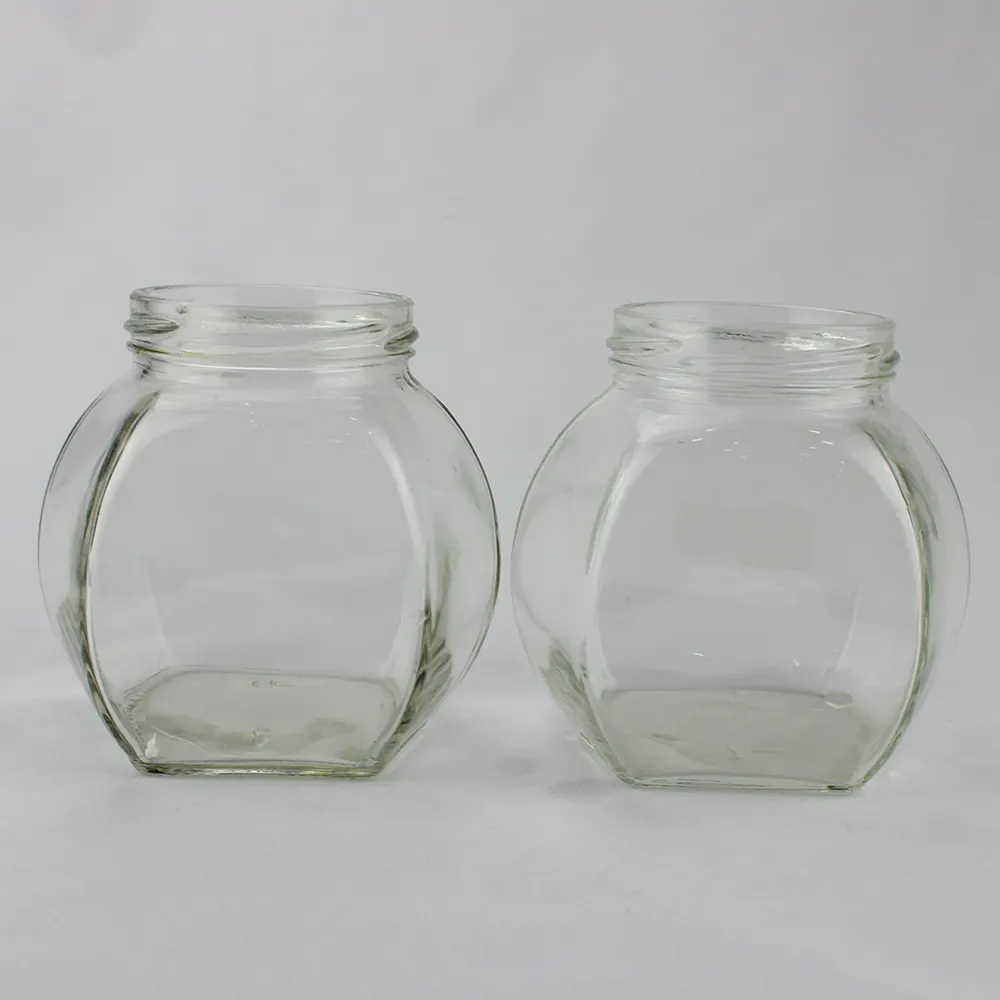
A 4 oz cosmetic jar with a gold lid is a 120 ml brimful flint glass jar on a 70-400 continuous-thread finish, closed with an electroplated aluminum cap over a PP core. It comes on stock moulds in two profiles, straight-sided and round-shoulder, and because both share the finish, one lid fits either. The choices left to you are the profile, the gold tone and the liner, and all three depend on the formula going into the jar.
Capacity and where the size sits in a range
Four US fluid ounces equals 118 ml. The jar is made to 120 ml brimful, so a 118 ml fill leaves headspace for the liner and lid.
In most beauty lines this is the full-size product. The 2 oz jar is sold as a mini or as part of a gift set, the 8 oz jar as a value size for body care, and the 4 oz jar is the main SKU between them. For the mini tier see our 2 oz glass jars with lids; the cosmetic jar overview covers 8 oz, the 30 ml and 50 ml eye-care sizes, and the full closure matrix.
Straight-sided or round-shoulder
The two profiles accept the same closures and differ in how they label and how product leaves the jar.
| Straight-sided | Round-shoulder (ointment style) | |
|---|---|---|
| Finish | 70-400 continuous thread | 70-400 continuous thread |
| Shape | Approximately 72 mm diameter and 60 mm height, with a flat label panel | Wall slopes inward to the mouth |
| In use | The wide mouth takes fingers, spatulas and filling nozzles without dripping on the thread | The slope returns product to the centre as it is scooped |
| Look | The current skincare standard | Closer to an apothecary jar |
| Typical products | Creams, gel-creams, scrubs, hair masks | Balms, salves, clay masks |
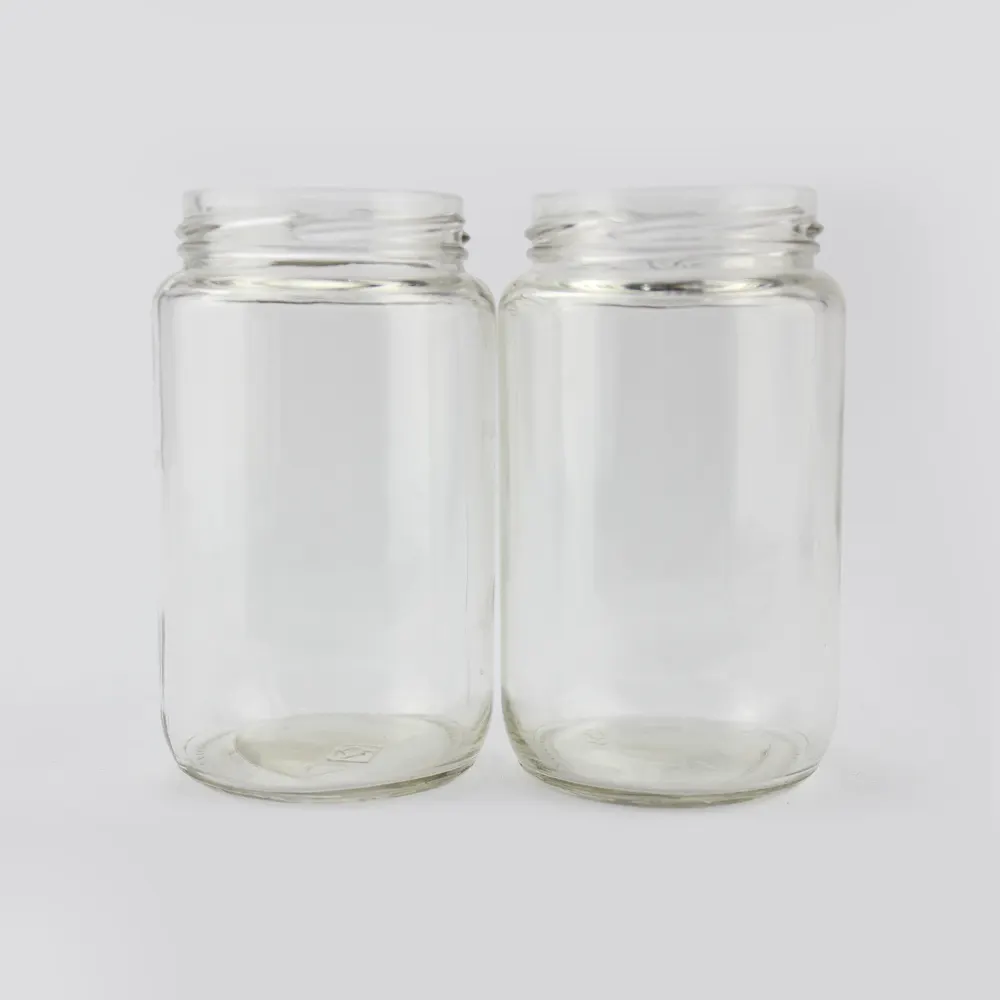
Clear flint is the base colour for both, and amber and frosted versions can be run. A third stock option, the square-shoulder flint jar, takes the same family of gold closures.
Pay attention to glass weight. The straight-sided jar is specified at 145-165 g. Around 150 g the jar feels solid in the hand and photographs well, while anything under 120 g starts to feel cheap for very little saving, so we keep projects inside that window.
To judge the build before choosing, order the glass jar 303 with lids as a physical reference. It is a smaller jar with the same annealing, finish tolerances and lid liner system as the 4 oz line.
How the gold lid is built and tested
The cap is an aluminum shell crimped over a PP inner core, a construction the trade calls electrochemical aluminum. The gold is produced in three layers: vacuum metallizing lays down the aluminum, a tinted topcoat gives the colour, and a UV-cured clear coat protects it from scratches.
Three tones are offered: bright mirror gold, matte brushed gold and rose gold. The lid lives in a steamy bathroom, and one that scratches or corrodes there undoes the reason for buying it. Each production lot is therefore put through an RCA abrasion test at a 175 g load for 50 cycles minimum, plus a 24-hour salt-spray check.
Matching jar profile and liner to the formula
The liner is the disc inside the cap that makes the seal. There are three kinds to choose from: PE foam for general creams, pressure-sensitive liners for dry products, and induction heat-seal liners where the pack must show tampering.
| Formula | Profile | Liner and filling notes |
|---|---|---|
| Face creams and gel-creams, viscosity 20,000-80,000 cps | Either | Fill cleanly through the 70 mm mouth on piston fillers at 30-40 jars per minute |
| Body scrubs with salt or sugar | Straight-sided | Shoulders trap grit during scooping, and the grit wears pressure-sensitive liners; use induction seals |
| Body butters and other oil-heavy formulas | Either | Induction liner. PE foam can take up fragrance oils over a 12-month shelf life and pass the odour to the outer carton |
| Hair masks | Either | At 4 oz these sit in the travel and trial tier; brands often add a matte black disc liner under the gold lid for a two-tone look |
| Waterless balms | Either | The wide mouth lets the user warm the balm in the jar with a fingertip |
Decoration on the stock jar
The stock jar is plain by design, and four decoration routes can be quoted on the same body.
- Pressure-sensitive labels. The usual choice at lower annual volumes. The straight-sided jar has a flat wrap panel 62 mm tall with no compound curves, so a standard four-color label goes on with an inline labeler without flagging or bubbling.
- Clear BOPP labels. On flint glass these give the no-label look.
- Hot-stamped gold band. Placed at the shoulder, it picks up the lid tone and gives two tiers of metallic.
- Ceramic-fired back panel. Keeps the regulatory ingredient text legible after contact with oil and water.
Case packs, pallets and storage
Jars are packed 48 to a divider carton and lids 200 to a poly-lined carton. They travel on the same pallet: 60 cartons of jars with 12 cartons of lids gives a balanced full pallet of 2,880 sets. Minimum quantities and prices are quoted per project.
Plan reorders for jars and lids separately, because they age at different rates. Glass sits on a shelf indefinitely without change. Plastisol and PE liners last about 18 months in practice before the compound stiffens, so order lids for a 12-15 month horizon even when you take a double quantity of jars.
Store cartons off concrete floors and away from direct sun. Ultraviolet light fades the gold topcoat over long storage, and a pallet in clear film beside a window can end up with a visible difference in tone between its top and bottom layers.
Brands that also need a lip product can compare glass with tubes in our guide to lip balm jars in bulk.
FAQ
Do the two jar profiles need different lids?
No. The neck finish is identical on both, so gold lids, disc liners and spatulas are interchangeable between them.
Which liner should an oil-rich body butter use?
An induction heat-seal liner. It forms an oil-tight, tamper-evident barrier, which a foam liner does not.
What is the minimum order for 4 oz jars with gold lids?
It is quoted per project and depends on the mould and the line it runs on.